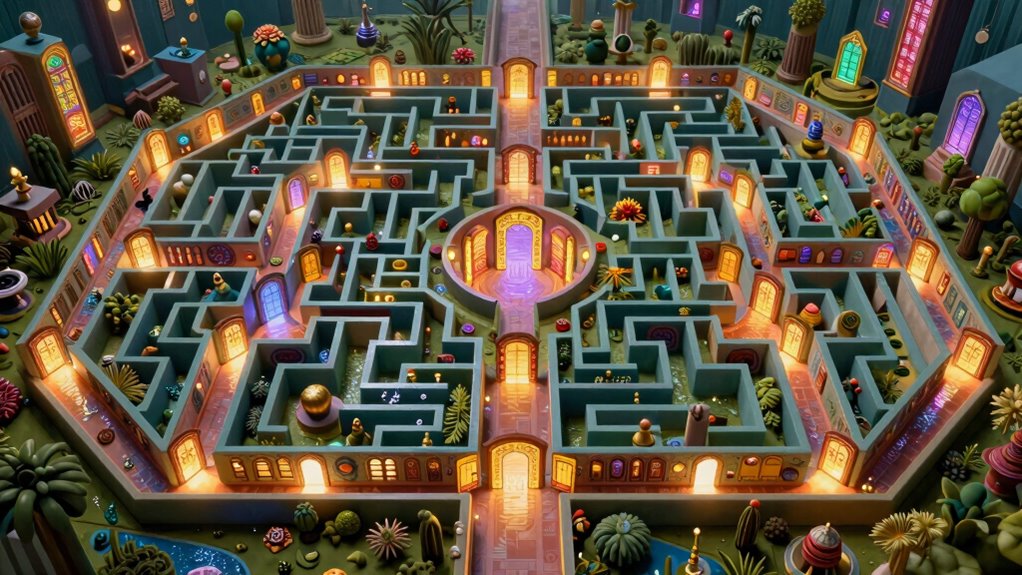

Memory palaces work by tapping into your brain’s natural ability to remember spatial environments. You create vivid mental images linked to familiar locations, allowing you to organize and recall information easily. This technique activates visual and spatial memory pathways, making your memories stronger and more durable. Neuroscience confirms that this leverages brain regions like the hippocampus. Continue exploring to discover how harnessing this powerful method can boost your memory effectively.

Prime made for students and young adults
- Fast, free delivery for dorm and study essentials
- Prime Video and Amazon Music included
- Member-only deals
Key Takeaways
- Memory palaces leverage the brain’s natural spatial memory by associating information with familiar locations.
- They activate neural regions like the hippocampus, essential for spatial navigation and memory encoding.
- Using vivid mental images linked to specific spots creates strong, memorable associations.
- Cognitive mapping organizes information spatially, making retrieval more efficient.
- The technique transforms abstract data into visual scenes, enhancing long-term recall and understanding.
As an affiliate, we earn on qualifying purchases.
Why Memory Palaces Are a Powerful Memory Tool
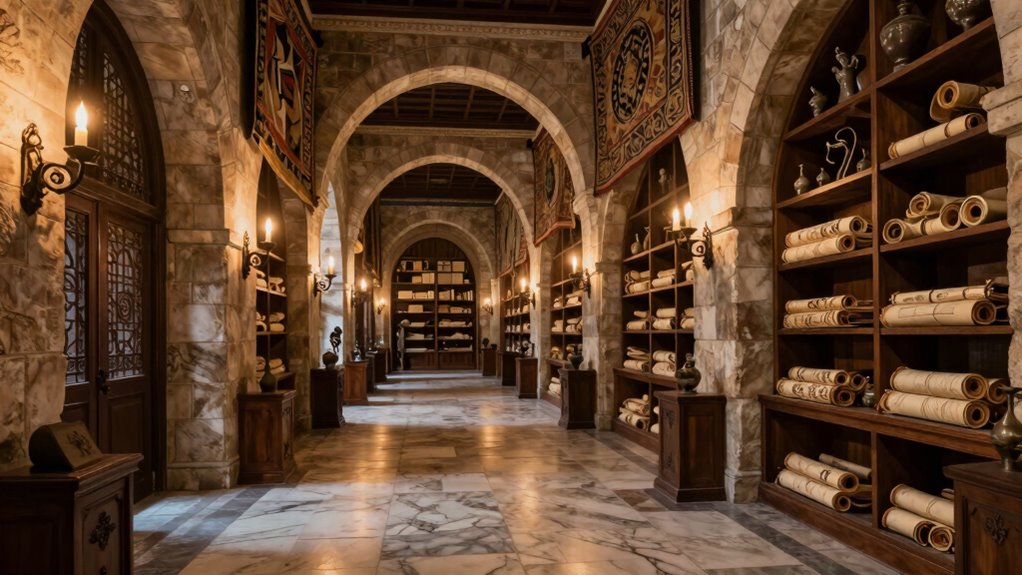
Memory palaces are a powerful tool because they leverage your brain’s natural ability to remember spatial information. By using mnemonic devices, you create vivid mental images linked to familiar locations, making it easier to recall complex data. This technique taps into your brain’s spatial memory, which is highly efficient at storing and retrieving visual and environmental cues. Cognitive training with memory palaces strengthens this ability, enhancing overall memory capacity. Unlike rote memorization, they provide a structured way to organize information, reducing mental clutter. As you mentally walk through your palace, you reinforce connections, creating a durable memory trace. This method not only improves recall but also makes learning engaging and intuitive, demonstrating why memory palaces are considered one of the most effective memory tools available. Additionally, they can be integrated with innovative cloud-based tools to further optimize learning and memory retention. Utilizing visualization techniques within your palace can also amplify its effectiveness, making complex information even more memorable. Incorporating spatial organization into your memory practices taps into a core strength of your brain, boosting overall cognitive performance. Moreover, consistent practice with this method can lead to long-term improvements in your overall cognitive abilities, making it a versatile and valuable skill.
As an affiliate, we earn on qualifying purchases.
What Is a Memory Palace and How Does It Work?

A memory palace is a mental space where you can store and organize information visually. It works by associating what you want to remember with specific locations you know well. For example, you might use rooms in your house to recall different lists or concepts.
Memory Palace Definition
Imagine transforming a familiar space into a mental map that helps you recall information easily; this is the core idea behind a memory palace. It’s a mental technique that uses mnemonic devices to link information with specific locations within a familiar environment, leveraging your natural spatial memory. You visualize a place you know well—like your home or a favorite park—and assign different pieces of information to distinct spots along a mental route. When you want to remember something, you mentally walk through your palace, retrieving data from each location. This method makes complex or large amounts of information easier to access because it taps into your brain’s ability to remember spatial relationships. Fundamentally, a memory palace turns abstract data into vivid, memorable images anchored in familiar spaces.
How It Operates
When you create a memory palace, you actively assign pieces of information to specific locations within your familiar environment. This process relies on mnemonic devices, which are strategies that help you encode and recall information more easily. By associating data with vivid images or cues, you strengthen your memory links. Cognitive mapping plays a key role here, as you mentally visualize and navigate through your chosen space, making it easier to retrieve details later. As you walk through your memory palace, each location acts as a mental placeholder for a piece of information. This combination of mnemonic devices and cognitive mapping transforms your environment into an effective memory aid, allowing you to organize and access complex data effortlessly.
Practical Examples
You can use a memory palace to memorize a grocery list by visualizing your kitchen and placing each item in a specific spot. This technique relies on mnemonic devices, linking each item to a familiar location. Through cognitive mapping, you create a mental route that associates each product with a distinct place, making recall easier. For example, picture bananas on your countertop and eggs by the stove. As you mentally walk through your kitchen, you retrieve each item effortlessly. This practical approach turns a simple list into a vivid story, leveraging spatial memory. Memory palaces turn abstract information into familiar, visual cues, boosting your ability to remember multiple items or details efficiently. It’s a powerful, versatile tool for everyday memorization tasks, especially when designing outdoor spaces that are both functional and memorable. Additionally, integrating sound healing techniques can enhance focus and mental clarity during memorization exercises. Understanding the heritage of memory techniques can deepen your appreciation of their effectiveness and historical significance. Moreover, studies indicate that utilizing visualization strategies can significantly improve long-term retention of information. Recognizing the scientific basis behind these methods can help you apply them more effectively in various learning contexts.
As an affiliate, we earn on qualifying purchases.
The Role of Memory Palaces in Preserving Oral Traditions
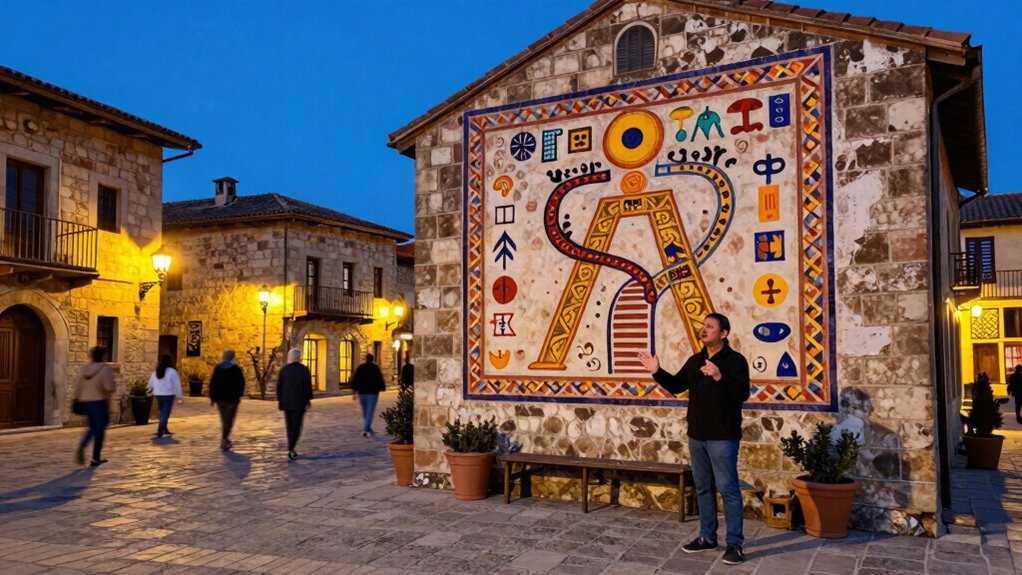
Memory palaces help you improve oral recall by creating vivid mental associations that stick with you. They also play a vital role in preserving cultural narratives by organizing stories within familiar spaces. This technique makes it easier to transmit knowledge accurately across generations. Incorporating visualization techniques with memory palaces can further enhance their effectiveness in retaining information. Engaging the creative process can deepen your connection to these mental structures, making the memories even more enduring. Utilizing technological tools can support the development and application of memory palaces, expanding their reach and utility. Being aware of seasonal variations can help optimize the timing and context for building and using memory palaces, ensuring their effectiveness in different conditions. Understanding how to manage costs involved in creating and maintaining memory palaces can help optimize their use for long-term preservation.
Enhancing Oral Recall
Have you ever wondered how oral traditions have survived through generations without written records? Memory palaces enhance oral recall by leveraging mnemonic devices and cognitive mapping. These mental structures help you organize and retrieve stories more efficiently. To illustrate, consider this table showing how different elements fit into a memory palace:
| Element | Location | Significance |
|---|---|---|
| Hero | Entrance | Courageous leader |
| Ritual | Fountain | Cultural practice |
| Artifact | Library | Historical object |
| Song | Ballroom | Oral tune |
| Legend | Garden | Folklore tale |
Additionally, understanding mnemonic devices can further improve your ability to memorize and recall oral traditions effectively.
Preserving Cultural Narratives
Memory palaces serve as powerful tools for preserving cultural narratives by enabling communities to store and recall oral traditions accurately across generations. When you use a memory palace, you create a structured mental space where stories, myths, and rituals become more than just words—they become part of your cultural identity. This technique helps safeguard storytelling traditions, ensuring they remain vivid and accessible over time. By associating specific stories with distinct locations within your memory palace, you make these narratives resilient to forgetting. This process reinforces collective memory, allowing communities to pass down their history and values intact. Ultimately, memory palaces help keep cultural identities alive, making sure that storytelling traditions continue to shape and define communities for generations to come.
Facilitating Memory Transmission
When communities want to pass oral traditions from one generation to the next, memory palaces act as invaluable tools for ensuring accurate transmission. By creating a mental space through cognitive mapping, you can organize stories, songs, or rituals in specific locations within the palace. This structure helps you recall details more reliably. Mnemonic devices, such as vivid imagery or associations, enhance this process by anchoring information to familiar landmarks. As you mentally walk through the memory palace, each room or object cues specific parts of the tradition, making it easier to transmit accurately. This technique not only preserves cultural knowledge but also strengthens communal bonds. Additionally, incorporating modern technology can further enhance memory retention and accessibility of these oral traditions. Research shows that visualization techniques like memory palaces can significantly improve long-term memory retention, making them especially useful for cultural preservation. Using these techniques, communities can preserve and transmit their oral histories more effectively across generations. Ultimately, memory palaces serve as a bridge, transforming oral stories into lasting mental records.
spatial memory improvement tools
As an affiliate, we earn on qualifying purchases.
As an affiliate, we earn on qualifying purchases.
The Neuroscience Behind Memory Palaces
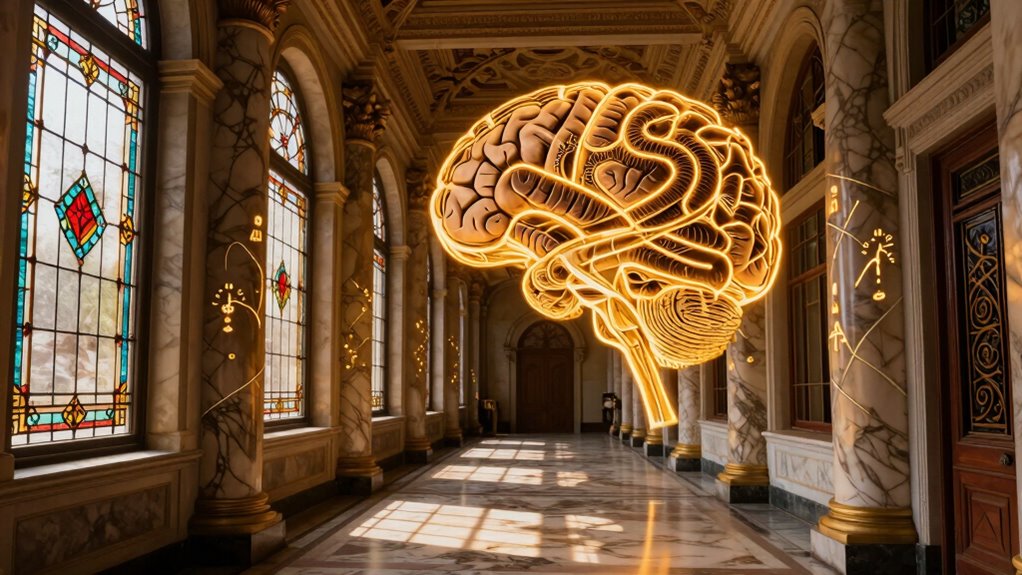
Understanding how memory palaces work requires delving into the brain’s intricate processes. When you create a memory palace, your brain forms new neural pathways that link familiar locations with specific information. This process relies heavily on cognitive mapping, where your brain visualizes and organizes spatial environments. As you mentally walk through your memory palace, your hippocampus activates, strengthening connections between neurons responsible for memory and spatial awareness. These neural pathways become more efficient, making it easier for you to retrieve stored information later. Your brain’s ability to forge these connections is key to the effectiveness of memory palaces. By leveraging spatial and visual cues, you tap into natural neural processes that enhance memory encoding and recall. Additionally, understanding the role of safe and effective home setup practices can help optimize your overall cognitive and physical environment for better mental clarity. Engaging in techniques like spatial memory exercises can further improve the neural pathways involved in memory retrieval, leveraging the brain’s natural propensity for neural plasticity. Moreover, studies show that brain health is crucial for maintaining optimal memory function, emphasizing the importance of a healthy lifestyle. Furthermore, regular physical activity has been shown to promote neurogenesis, supporting ongoing brain development and memory capacity.
How Visualization Enhances Memory Retention

When you use vivid images, you make information more memorable and easier to recall. Spatial context helps your brain organize and strengthen these memories, making them stick better. Adding detailed visuals enhances retention by creating clear, lasting mental impressions.
Engaging Imagery Sparks Recall
Engaging imagery plays a crucial role in boosting memory retention by making information more vivid and memorable. When you create strong visual imagery, you help your brain form powerful cognitive associations that stick. Instead of just reading facts, picture them vividly—imagine the colors, shapes, and actions involved. This mental imagery creates a more concrete connection to the material, making it easier to recall later. By actively engaging your imagination, you turn abstract information into memorable scenes. The more detailed and unusual your visual imagery, the stronger your cognitive associations become. This process transforms passive learning into an active, engaging experience that enhances your ability to retrieve information when you need it most. Incorporating tools like magnifying lamps can further enhance your focus on details, making your mental images even clearer and more detailed.
Spatial Context Reinforces Memory
Visualization doesn’t just create vivid images; it also places those images within a specific spatial context, which considerably boosts memory retention. When you associate information with a defined spatial layout, like a room or route, your brain uses environmental cues to strengthen the connection. These cues—such as the position of furniture or landmarks—help your memory access details more efficiently. By anchoring memories to physical locations, you create a framework that makes recall easier and more reliable. This spatial context acts as a mental map, guiding you back to the information through familiar environmental cues. As a result, you’ll find it simpler to remember complex data because your brain leverages the natural tendency to encode and retrieve memories based on spatial relationships.
Vivid Details Improve Retention
Have you ever noticed how vivid details make a memory stick out more? When you visualize with rich, specific images, you strengthen your memory. Using mnemonic devices during memory training helps you create these vivid mental pictures, making information easier to recall. The more details you add—colors, sounds, textures—the deeper the impression on your mind. To see how this works, consider this table:
| Detail Type | Example | Effect on Memory |
|---|---|---|
| Visual | Bright red apple on a desk | Increases recall |
| Auditory | Loud clock chime | Enhances retention |
| Tactile | Rough bark of a tree | Deepens memory |
| Olfactory | Scent of fresh coffee | Triggers association |
| Gustatory | Sweet taste of honey | Boosts vividness |
Adding vivid details makes your memory training more effective, ensuring information sticks longer.
Create Your Memory Palace in Easy Steps
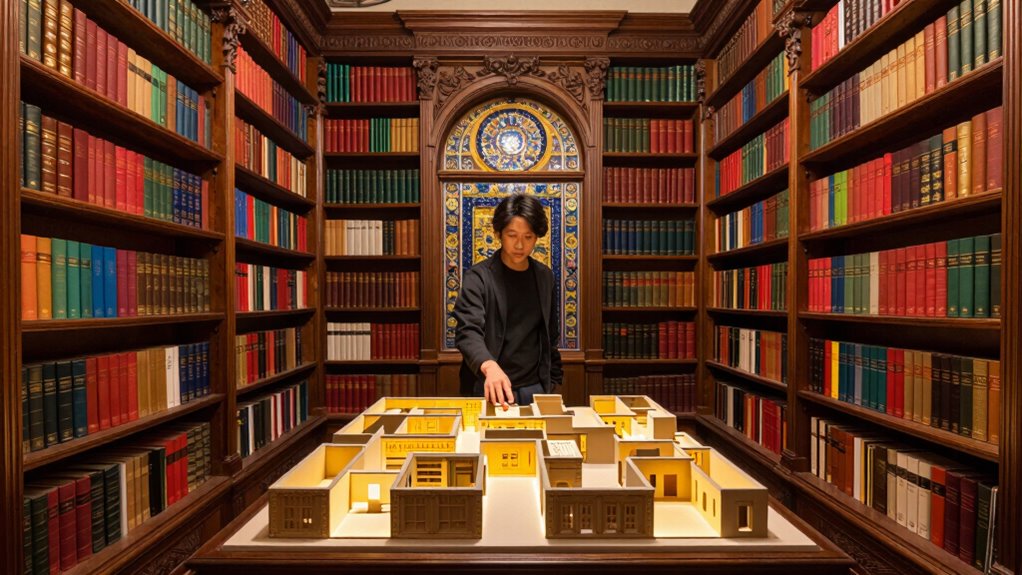
Creating your memory palace is simpler than you might think. Start by choosing a familiar place, like your home or a favorite route, to serve as your mental map. Use mnemonic devices to link new information to specific locations within this space. For example, imagine placing a vivid image representing your data in the kitchen or hallway. Cognitive mapping helps you visualize the layout clearly, making it easier to navigate mentally and recall details later. Break down complex information into smaller chunks and assign each to distinct spots along your path. Practice walking through your palace regularly, reinforcing the associations. With patience, you’ll find that creating a memory palace becomes an intuitive process, enabling you to remember more efficiently and with greater confidence.
Common Mistakes to Avoid When Using Memory Palaces
One common mistake to watch out for is choosing a memory palace that’s too complex or unfamiliar, which can make navigation confusing and hinder recall. This often leads to mnemonic pitfalls, where you struggle to remember the locations or associations you’ve created. Additionally, spatial misalignment can occur if your mental images don’t match the actual layout, causing disorientation and making it harder to find specific information later. To avoid these issues, pick a familiar place with clear, distinct areas. Keep your associations simple and consistent, and ensure your mental map aligns closely with the physical space. Staying organized and realistic about your memory palace’s complexity helps prevent errors that compromise its effectiveness. Remember, simplicity and clarity are key to a successful memory palace.
Practical Ways to Use Memory Palaces in Studying and Daily Life
Memory palaces are versatile tools that can substantially enhance your studying and daily routines. To maximize their benefits, integrate them into your routines with these practical tips:
- Use mnemonic devices within your memory palace to link complex concepts with vivid images, making recall easier.
- Apply cognitive exercises by visualizing different rooms for various subjects or tasks, sharpening your mental agility.
- Create detailed, sensory-rich scenes to encode information, increasing retention during exams or meetings.
- Regularly review your memory palace to reinforce pathways, turning passive review into active memory reinforcement.
How Do Memory Palaces Compare to Other Memory Techniques?
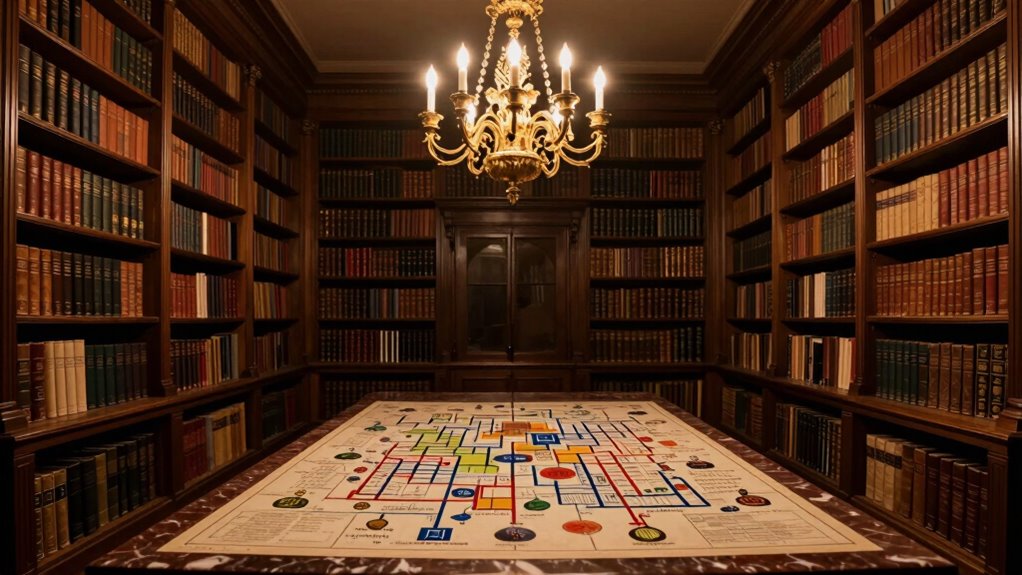
While memory techniques vary in complexity and application, memory palaces stand out for their ability to organize large amounts of information spatially. Unlike simple mnemonic devices that rely on associations or acronyms, memory palaces use cognitive mapping to create a mental layout of familiar places. This spatial framework helps you visualize and recall complex data more effectively. Other techniques, like chunking or rote memorization, don’t leverage spatial relationships as strongly. Memory palaces enhance your ability to encode, store, and retrieve information by engaging your spatial memory. This makes them particularly powerful for memorizing lengthy lists, speeches, or detailed facts. Overall, memory palaces offer a thorough, immersive approach that often surpasses simpler methods in long-term retention.
The Scientific Evidence That Memory Palaces Are Real
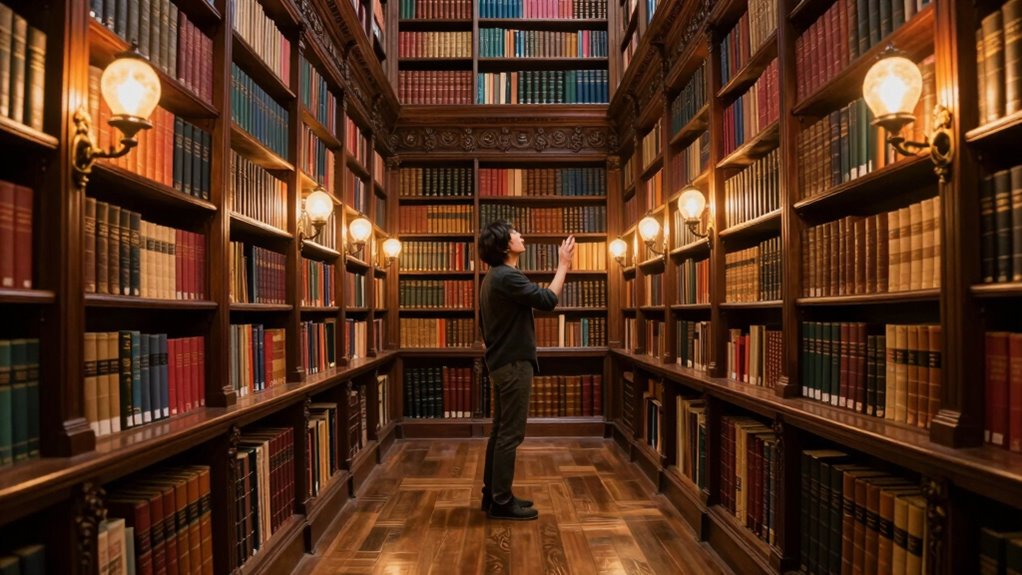
Scientific studies have provided compelling evidence that memory palaces are more than just a mental trick; they are rooted in real brain processes. Research shows that cognitive mapping—the brain’s ability to create mental representations of physical spaces—plays a key role. When you use mnemonic systems like memory palaces, your brain activates specific regions involved in spatial navigation and visual imagery.
Memory palaces activate brain regions linked to spatial navigation and visual imagery, grounded in real neural processes.
- Brain imaging reveals heightened activity in the hippocampus during memory palace use.
- Cognitive mapping allows you to organize information spatially, improving recall.
- Studies demonstrate that mnemonic systems leverage natural spatial memory, making memorization more effective.
- Evidence confirms that these techniques tap into neural pathways involved in spatial and visual processing, proving their legitimacy.
This scientific foundation validates the power of memory palaces in enhancing your memory.
Frequently Asked Questions
Can Anyone Learn to Create a Memory Palace Effectively?
Yes, you can learn to create a memory palace effectively. By practicing mental visualization and enhancing your spatial orientation skills, you’ll become more skilled at building and steering these mental structures. Start with familiar places, visualize details vividly, and gradually expand. With consistent effort, anyone can develop a strong memory palace, improving their ability to recall information quickly and accurately. It’s a skill that improves with practice and patience.
How Long Does It Take to Master Memory Palace Techniques?
Mastering memory palace techniques varies, but with consistent visualization training and enhancing your spatial awareness, you can see progress in a few weeks. It might take a couple of months to become quite skilled, especially if you practice daily. Focus on building vivid mental images and familiarizing yourself with your chosen locations regularly. Over time, your ability to recall information will improve as your spatial awareness and visualization skills strengthen.
Are Memory Palaces Effective for All Types of Memories?
Think of your mind as a vast, open garden where every memory is a unique flower. Memory palaces are highly effective for recalling detailed facts, lists, and sequences through visualization strategies that leverage your spatial memory. While they work well for structured info, they might be less effective for abstract concepts or emotions. To maximize their power, adapt your visualization techniques to suit different types of memories.
What Are the Limitations of Using Memory Palaces?
You might find that memory palaces have limitations, especially with cognitive load. Overloading your mental space can make it harder to recall details accurately. Spatial constraints also matter; if your imagined palace is too small or cluttered, it becomes difficult to organize and retrieve information efficiently. Additionally, creating and maintaining complex memory palaces requires effort, which might not be practical for every type of memory or for quick recall.
How Do Memory Palaces Compare to Digital Memory Aids?
Sure, your memory palace beats digital aids in charm, but it’s like comparing a handwritten letter to a text message. Digital tools offer instant digital integration and easy updates, while mental visualization in a memory palace builds your brain’s muscle memory. You’ll enjoy a richer, more immersive experience that’s less prone to tech crashes. Ultimately, combining both strategies gives you the best of old-school mental visualization and modern digital convenience.
Conclusion
So, next time you forget where you parked your car, just build a tiny memory palace in your mind. Who knew that walking through imaginary hallways could become your secret weapon? Forget flashcards—your brain’s got the ultimate mansion of memory tricks. With a little practice, you’ll impress everyone with your “ancient” skills, all while laughing at how simple it was to outsmart forgetfulness. Welcome to the future of remembering everything—no magic required.
Fall Picks
fall essentials
As an affiliate, we earn on qualifying purchases.