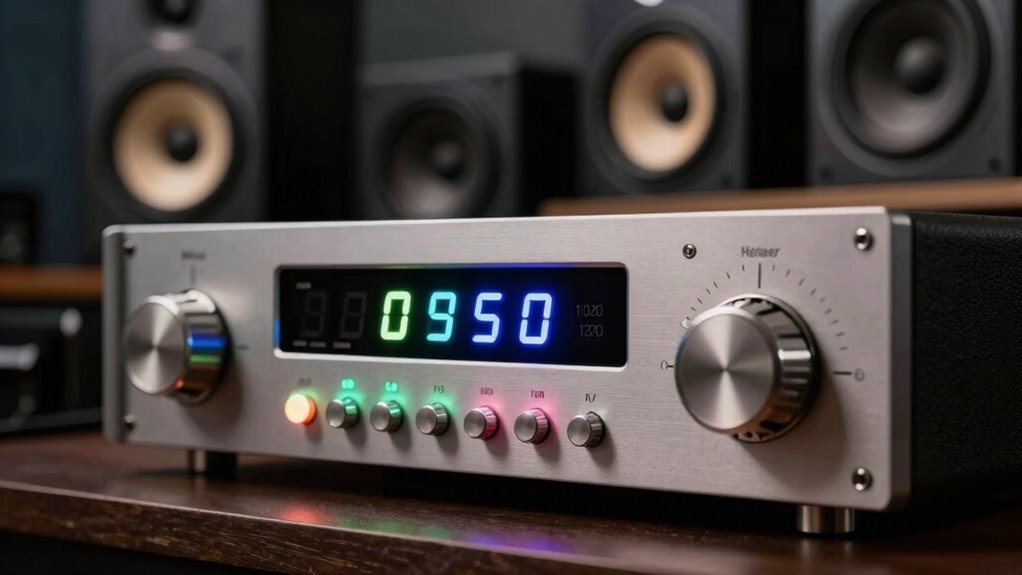

Bigger wattage numbers on speakers might seem like they mean louder sound, but that’s a common myth. Wattage measures how much power a speaker could handle, not how loud it will be. Doubling wattage doesn’t double the volume, thanks to the logarithmic relationship. Factors like sensitivity, room acoustics, and speaker design play a bigger role in perceived loudness. Want to understand what really influences sound and how to choose the right speakers? Keep exploring.
Key Takeaways
- Higher wattage doesn’t automatically translate to louder sound; perceived volume depends on sensitivity and room acoustics.
- Doubling wattage increases loudness logarithmically, not linearly; it takes ten times the power for a perceived doubling.
- Speaker sensitivity determines how efficiently power converts to sound, impacting volume more than wattage alone.
- Most listening occurs at moderate volumes where wattage offers little benefit; design and environment are more influential.
- Room acoustics and overall system quality significantly affect perceived loudness, regardless of wattage ratings.
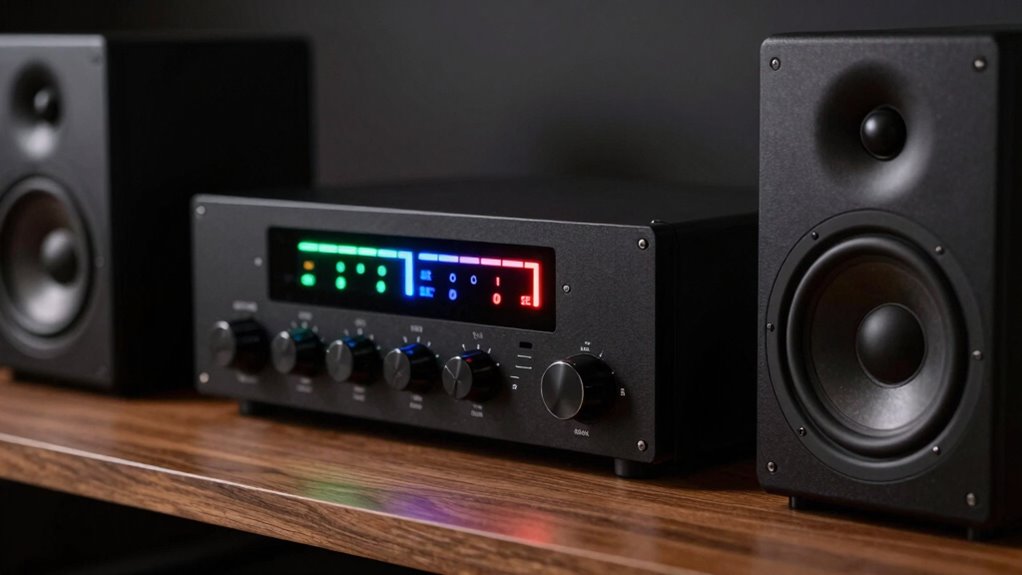
Have you ever wondered if higher speaker wattage always means better sound quality? It’s a common assumption: the more watts a speaker has, the louder and better it must sound. But that’s not entirely true. Perceived power and actual volume are often mistaken for one another, and understanding the distinction can save you from overpaying for wattage that doesn’t translate into real-world performance. Wattage measures a speaker’s potential power handling, but it doesn’t directly equate to how loud it will sound in your room. Instead, perceived power—the way we experience loudness—depends on multiple factors beyond wattage, like speaker design, efficiency, and room acoustics.
Higher wattage doesn’t always mean better sound; efficiency and design matter more.
You might think that doubling the wattage automatically doubles the volume, but that’s a misconception. In reality, increasing wattage results in a logarithmic increase in volume, meaning you need ten times the wattage to perceive a roughly twice-as-loud sound. So, a speaker rated at 100 watts isn’t necessarily twice as loud as one rated at 50 watts. Instead, the perceived power is influenced by how efficiently the speaker converts electrical power into sound, known as sensitivity. A highly sensitive speaker with lower wattage can sound just as loud, if not louder, than a less sensitive speaker with higher wattage. This is where actual volume becomes a more meaningful metric—it’s a combination of wattage, sensitivity, and listening environment, not just wattage alone.
Furthermore, many people get caught up in the idea that higher wattage means more headroom and less distortion at high volumes. While it’s true that larger wattage ratings can help prevent clipping and distortion if you’re pushing the speaker to its limits, it doesn’t automatically mean the speaker will sound better at lower volumes. Most listening happens at moderate levels where wattage isn’t the limiting factor. Instead, it’s the speaker’s design and how well it reproduces sound within its ideal range that matter more.
Another important aspect is how room acoustics can significantly influence perceived loudness and clarity, regardless of wattage ratings.
In short, don’t get fooled by the numbers on the box. Wattage is just one piece of the puzzle. Perceived power, actual volume, and overall sound quality depend on many elements working together. Focus on the speaker’s sensitivity, build quality, and your listening space rather than just the wattage rating. Bigger numbers might look impressive, but they don’t guarantee louder, better sound. Instead, aim for a well-balanced system that suits your environment and listening habits.

Klipsch R-51M Bookshelf Speaker (Pair), Black
- Tweeters: 1-inch Aluminum LTS tweeters
- Horns: 90×90 Square Tractrix Horns
- Woofers: Dual 5.25-inch Spun-Copper IMG woofers
As an affiliate, we earn on qualifying purchases.
As an affiliate, we earn on qualifying purchases.
Frequently Asked Questions
How Does Speaker Wattage Affect Sound Quality?
Speaker wattage doesn’t directly impact sound quality; instead, it influences power handling and volume potential. Higher wattage can provide more headroom, reducing distortion at loud volumes, which improves sound clarity. However, matching wattage with your speaker’s capabilities is vital. Overpowered speakers can distort, while underpowered ones may struggle to reproduce clear sound. Focus on quality components and proper amplification to guarantee ideal sound clarity regardless of wattage.
Can a Higher Wattage Speaker Damage My Ears?
Yes, a higher wattage speaker can potentially damage your ears if you listen at high volumes. Even if the wattage is high, it’s your volume perception that determines ear safety. Always keep the volume at a safe level and avoid turning it up too loud, especially for extended periods. Protect your hearing by being mindful of how loud you set your speakers, regardless of their wattage.
Is Amplifier Power More Important Than Speaker Wattage?
Think of your setup like a dance—amplifier power is the rhythm, and speaker wattage is the dance floor. You need harmony between them; mismatched wattage ratings can cause trouble. Amplifier compatibility guarantees smooth performance, so don’t rely solely on wattage numbers. A powerful amp can drive your speakers better, but only if they’re compatible. Remember, the right balance makes your sound come alive, loud and clear.
How Do I Choose the Right Wattage for My Room Size?
You should choose a wattage that matches your room size and acoustics. For small rooms, a lower wattage amplifier works well, while larger spaces need higher wattage to fill the area without distortion. Pay attention to speaker placement and room acoustics, as they impact sound quality more than wattage alone. Experiment with different power levels to find the balance that provides clear, loud sound without overwhelming your space.
Are Expensive Speakers Always More Powerful?
Expensive speakers aren’t always more powerful; their cost often reflects brand reputation and build quality rather than wattage. You might find budget-friendly options with larger speaker size that deliver impressive sound without costing a fortune. Focus on the speaker’s specifications and reviews rather than just price. A reputable brand can guarantee better sound design, but don’t assume higher prices mean louder or better sound—check the wattage and overall performance instead.

24 Pack 2” Thick Pyramid Acoustic Foam, Sound Proof Foam Panels for Walls
- Effective Sound Absorption: Reduces echo and reverberation
- High-Quality Material: Durable, flame-retardant acoustic foam
- Stylish Pyramid Design: Enhances sound diffusion and decor
As an affiliate, we earn on qualifying purchases.
As an affiliate, we earn on qualifying purchases.
Conclusion
Don’t be fooled by soaring wattage numbers—thinking they make your speakers infinitely louder is like believing a tiny spark can light up a stadium. Bigger isn’t always better when it comes to wattage; your ears and your wallet will thank you for understanding that true sound quality and volume depend on many factors, not just numbers. So, next time you shop, remember: a modest wattage can still blow your mind—no need for an audio tsunami!

Viprh 3000W Peak 5.1-Channel Home Audio Power Amplifier – HiFi Stereo Amplifier with Subwoofer, 3 Microphone Inputs, USB/SD Card Reader, Remote Control for Karaoke & Home Theater
- Immersive 5.1-Channel Audio: Rich surround sound with deep bass
- Multi-Source Playback: Supports USB, SD card, and more
- 3 Microphone Inputs: Adjustable mixing for karaoke and events
As an affiliate, we earn on qualifying purchases.
As an affiliate, we earn on qualifying purchases.

WDiYA 4 Inch Car Speakers 600W Peak Power, 4 Ohm, Glass Fiber Cone for Deep Bass & Clear Mids – High Sensitivity, Shockproof Design, Easy Install for Professional Car Audio Upgrade 2-Pack
- High-Fidelity Sound: Rich, distortion-free audio with deep bass
- 600W Peak Power: Delivers dynamic, room-filling sound
- Durable Shockproof Design: Resists warping and damage from vibrations
As an affiliate, we earn on qualifying purchases.
As an affiliate, we earn on qualifying purchases.