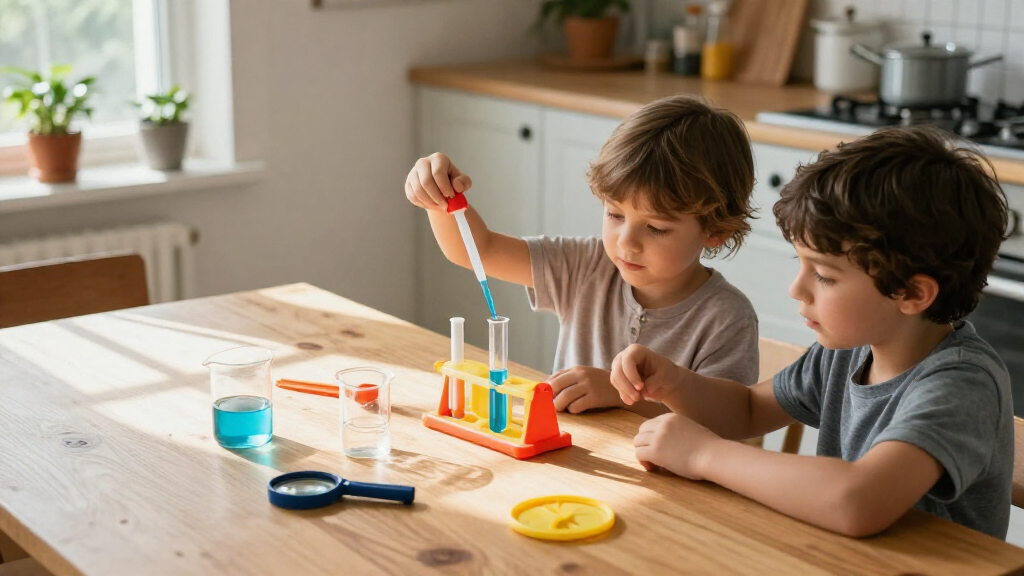

The best overall pick is the National Geographic Science Magic Kit, which pairs a broad selection of experiments with an entertaining way to introduce scientific ideas. For hands-on variety, the UNGLINGA 150-Experiment Science Kit offers many activities, while Snap Circuits Explorer SC-100 is a stronger fit for kids drawn to electronics and building. The main choice is between a kit with lots of short experiments, a focused tool such as a microscope, or a project that unfolds over time, like growing plants. Age, adult help, setup, and cleanup can matter as much as the number of activities. Read on for the full breakdown and guidance on matching a science toy to a child’s interests.

Prime made for students and young adults
- Fast, free delivery for dorm and study essentials
- Prime Video and Amazon Music included
- Member-only deals
Key Takeaways
- Broad experiment kits lead on variety: National Geographic Science Magic and the UNGLINGA 150-Experiment kit cover more activity types than focused picks such as Snap Circuits or the microscopes.
- More experiments do not always mean a better fit: Younger children may get more from Doctor Jupiter’s first experiments or Butterfly EduFields’ age-targeted activities than from a large kit that needs more reading and adult help.
- Hands-on tools teach different skills: Snap Circuits makes electrical connections visible, while the BMDSAE digital and National Geographic 400x microscopes center observation rather than step-by-step experiments.
- Growing kits reward patience: The Dan&Darci Root Viewer and Creativity for Kids Grow ‘N Glow Terrarium extend learning across days, unlike kits built around short activities.
- Premium features should match a child’s habits: The GeoSafari Jr. Talking Microscope adds guided audio, while simpler microscopes may suit families who prefer direct observation and less narrated instruction.
| Dan&Darci Root Viewer Gardening Kit for Kids |  | Best for Plant Biology | Brand: Dan&Darci | Educational objective: Botany and plant growth | Included seeds: Spring Onion and Cilantro | VIEW LATEST PRICE | See Our Full Breakdown |
| National Geographic Science Magic Kit for Kids, 100+ Experiments |  | Best for Science Showmanship | Brand: Blue Marble | Age range: 8 years and up | Included experiments: 20 | VIEW LATEST PRICE | See Our Full Breakdown |
| Snap Circuits Explorer SC-100 STEM Electronics Kit, 100+ Projects, Ages 8+ |  | Best for Hands-On Electronics | Recommended age: 8 years and up | Projects: 100+ | Components: 28 electrical components; also described as 29 parts | VIEW LATEST PRICE | See Our Full Breakdown |
| BMDSAE 1000X Handheld Digital Microscope for Kids |  | Best for Capturing Specimen Observations | Model: 382 | Magnification: 1000X optical and digital | Camera resolution: 2MP | VIEW LATEST PRICE | See Our Full Breakdown |
| Learning Resources STEM Explorers Magnet Movers |  | Best for Younger Beginners | Brand: Learning Resources | Age range: 5–9 years | Piece count: 39 | VIEW LATEST PRICE | See Our Full Breakdown |
| UNGLINGA 150-Experiment Science Kit for Kids | 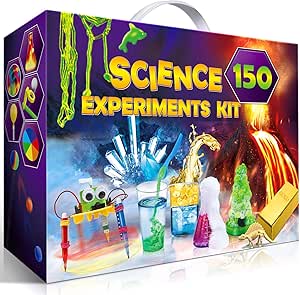 | Best for Broad Science Exploration | Brand: UNGLINGA | Experiment count: 150 | Recommended age: 8 years and up | VIEW LATEST PRICE | See Our Full Breakdown |
| National Geographic Amazing Chemistry Set, 100+ Experiments, Ages 8+ |  | Best for Learning Basic Lab Skills | Brand: Blue Marble | Age range: 8 years and up | Experiment count: 100+ (15 with included materials and 85 using household items) | VIEW LATEST PRICE | See Our Full Breakdown |
| Creativity for Kids Grow ‘N Glow Terrarium Kit |  | Best for Plant-Growth Observation | Recommended age: 6 years and up | Planting cycles: 2 | Seeds: Chia and wheatgrass | VIEW LATEST PRICE | See Our Full Breakdown |
| Butterfly EduFields Wow Science Kit – 100+ Experiments for Ages 4–8 |  | Best for Young Chemistry Beginners | Brand: Butterfly EduFields | Age range: 4 years and up | Experiment count: 100+ | VIEW LATEST PRICE | See Our Full Breakdown |
| National Geographic Kids Microscope Kit, Up to 400x Magnification |  | Best for Hands-On Microscopy | Brand: Blue Marble | Recommended age: 6 years and up | Maximum magnification: 400x | VIEW LATEST PRICE | See Our Full Breakdown |
| UNGLINGA Science Kit for Kids with 40+ Experiments |  | Best Compact Experiment Kit | Brand: UNGLINGA | Experiments: 40+ | Recommended age: 8 years and up | VIEW LATEST PRICE | See Our Full Breakdown |
| National Geographic Junior Chemistry Set with 50 Experiments |  | Best for Young Chemistry Beginners | Brand: Blue Marble | Age range: 4 years and up | Experiments: 50 | VIEW LATEST PRICE | See Our Full Breakdown |
| National Geographic Magic Chemistry Set with 10 Tricks for Kids Ages 8–12 |  | Best for Science Demonstrations | Brand: Blue Marble | Age range: 8 years and up | Experiments: 10 | VIEW LATEST PRICE | See Our Full Breakdown |
| Doctor Jupiter My First Science Experiments Kit for Kids Ages 4+ |  | Best for Big Activity Variety | Brand: Doctor Jupiter | Age range: 4 years and up | Experiments: Over 100 | VIEW LATEST PRICE | See Our Full Breakdown |
| Educational Insights GeoSafari Jr. Talking Microscope Featuring Bindi Irwin |  | Best Preschool Science Explorer | Brand: Educational Insights | Recommended age: 3–5 years | Slides: 20 pre-prepared slides | VIEW LATEST PRICE | See Our Full Breakdown |
| educational science toys for kid | Brand | Recommended age |
|---|---|---|
| Dan&Darci Root Viewer Gardenin | Dan&Darci | 0–8 years |
| National Geographic Science Ma | Blue Marble | — |
| Snap Circuits Explorer SC-100 | — | 8 years and up |
| BMDSAE 1000X Handheld Digital | — | Over 3 years |
| Learning Resources STEM Explor | Learning Resources | — |
| UNGLINGA 150-Experiment Scienc | UNGLINGA | 8 years and up |
| National Geographic Amazing Ch | Blue Marble | — |
| Creativity for Kids Grow ‘N Gl | — | 6 years and up |
| Butterfly EduFields Wow Scienc | Butterfly EduFields | — |
| National Geographic Kids Micro | Blue Marble | 6 years and up |
| UNGLINGA Science Kit for Kids | UNGLINGA | 8 years and up |
| National Geographic Junior Che | Blue Marble | — |
| National Geographic Magic Chem | Blue Marble | — |
| Doctor Jupiter My First Scienc | Doctor Jupiter | — |
| Educational Insights GeoSafari | Educational Insights | 3–5 years |
More Details on Our Top Picks
Dan&Darci Root Viewer Gardening Kit for Kids
For children curious about what happens below the soil, this kit makes root growth visible instead of treating planting as a wait-and-see activity. Its transparent planter lets kids watch roots develop while they grow Spring Onion and Cilantro, and the stickers provide a simple way to track changes. The included guide adds botany activities, giving the observation a learning structure. Compared with the Creativity for Kids Grow ‘N Glow Terrarium Kit, this pick focuses more directly on roots and plant growth than on building a display terrarium. The tradeoff is a compact planter and only two seed varieties, so it offers less scope for comparing different plants. I’d choose it for a small indoor growing project, not for families seeking a broad gardening set.
Pros:- Transparent planter makes root growth observable.
- Includes soil, seeds, stickers, and an instruction guide.
- Growth-tracking stickers encourage recording changes over time.
- Designed for indoor gardening.
Cons:- Compact listed dimensions limit the scale of the growing project.
- Only Spring Onion and Cilantro seeds are included.
Best for: Families who want a compact indoor activity that helps young children observe and record how plant roots grow.
Not ideal for: Buyers seeking multiple plant varieties or a larger garden project; the kit includes only Spring Onion and Cilantro seeds and has compact listed dimensions.
- Brand:Dan&Darci
- Educational objective:Botany and plant growth
- Included seeds:Spring Onion and Cilantro
- Included items:Transparent viewer box with lid, soil, seeds, stickers, and instruction guide
- Item dimensions:7.5 x 2 x 5.5 inches
- Item weight:0.39 kg
- Recommended age:0–8 years
Our verdict“Choose this kit for a focused indoor botany project where watching roots grow matters more than growing a variety of plants.”
National Geographic Science Magic Kit for Kids, 100+ Experiments
This kit suits kids who learn best when they can perform an experiment, then explain the trick behind it. The box supplies materials for 20 magic-style experiments, illustrated instructions, a wand, and white gloves; a bonus booklet adds more than 85 experiments using household items. That gives it a different feel from the National Geographic Amazing Chemistry Set: the emphasis here is on demonstrations and performance, not a chemistry-centered experiment collection. The science explanations help connect the show to the underlying ideas, while the props can make presenting more inviting. The main tradeoff is that only 20 experiments come with the kit; the larger activity count depends on finding household materials. I’d pick it for a child who enjoys performing for others, rather than one who wants every activity fully supplied.
Pros:- Combines hands-on science activities with magic-trick presentation.
- Illustrated instructions explain the science behind experiments.
- Bonus booklet adds more than 85 activities using household items.
- Includes a wand and white gloves for performing.
Cons:- Materials are included for only 20 experiments.
- The bonus activities require families to source common household items.
Best for: Children aged 8 and up who enjoy performing tricks and want science explanations alongside hands-on demonstrations.
Not ideal for: Families wanting a large set of fully supplied experiments; most of the additional activities rely on common household items.
- Brand:Blue Marble
- Age range:8 years and up
- Included experiments:20
- Bonus experiments:85+ using common household items
- Educational objective:STEM
- Included components:Materials for 20 experiments, bonus booklet, magic wand, and white gloves
- Model number:NGMEGAMAGIC
Our verdict“Choose this kit for a budding performer who will enjoy explaining science tricks, but skip it if you want every listed activity supplied in the box.”
Snap Circuits Explorer SC-100 STEM Electronics Kit, 100+ Projects, Ages 8+
For a child ready to move from general science activities to building working circuits, this set offers a clear step toward electronics. Its numbered, color-coded components snap onto a grid, so kids can focus on how a circuit works without soldering or extra tools. More than 100 project ideas, including a musical doorbell and sound-activated switch, give it greater electronics depth than the Learning Resources STEM Explorers Magnet Movers, which introduces magnetism through guided challenges. That breadth is useful for repeat builds, but the projects depend on batteries, and the product information gives inconsistent component counts, describing 28 electrical components and also 29 parts. I’d choose Snap Circuits for an older child who wants to build and revisit devices; younger beginners may find Magnet Movers’ focused activities easier to approach.
Pros:- Offers more than 100 hands-on electronics project ideas.
- Color-coded, numbered pieces snap together on a plastic grid.
- Illustrated manual introduces basic circuitry through builds.
- No soldering or extra tools are needed.
Cons:- Batteries are required.
- The product information gives inconsistent component counts.
Best for: Children aged 8 and up who want to explore circuits through repeatable builds and can follow an illustrated project manual.
Not ideal for: Younger children seeking short, guided introductory challenges, or families who prefer a kit that does not require batteries.
- Recommended age:8 years and up
- Projects:100+
- Components:28 electrical components; also described as 29 parts
- Included items:Plastic snap-grid, electrical components, and project manual
- Assembly:Snap-together, numbered, color-coded pieces
- Tools required:No soldering or extra tools
- Power:Batteries required
Our verdict“Choose Snap Circuits for a child ready to build a range of basic electronic devices, provided batteries and the component-count discrepancy are acceptable.”
BMDSAE 1000X Handheld Digital Microscope for Kids
This handheld microscope is the pick for children who want to save what they see, not just inspect it in the moment. A built-in 2.0-inch screen and 2MP camera let kids view and capture specimens directly, while the manual focus and adjustable LEDs give them control over the image. It also stores photos and videos for later viewing or transfer to compatible computers. Compared with the National Geographic Kids Microscope Kit, this model emphasizes digital viewing and recording rather than a stated magnification ceiling of 400x. Its 1000X magnification claim is paired with no screen-resolution detail, though, and the listed battery life is up to two hours. I’d choose it for portable photo-based observation, not for a child who needs a long-running, traditional microscope session.
Pros:- Built-in screen and 2MP camera allow specimen photos and videos.
- Manual focus and adjustable LEDs support hands-on viewing.
- Built-in storage holds photos and videos for later review.
- Portable design includes a lanyard and USB-C data cable.
Cons:- Listed battery life is up to two hours.
- Screen resolution is not specified.
Best for: Families seeking a portable microscope for children who want to view, photograph, and save specimens on the device.
Not ideal for: Children who need extended sessions between charges or buyers who require specified screen-resolution information before choosing.
- Model:382
- Magnification:1000X optical and digital
- Camera resolution:2MP
- Screen:2.0-inch IPS
- Lighting:8 adjustable LEDs with 3 brightness modes
- Battery:600mAh; up to 2 hours
- Storage:32M; supports 200+ photos or AVI videos
- Connectivity:USB-C data cable; compatible with listed Windows systems and Mac 11.0+
- Recommended age:Over 3 years
Our verdict“Choose this digital microscope for portable specimen viewing and recording, but look elsewhere if longer battery life is a priority.”
Learning Resources STEM Explorers Magnet Movers
For younger children starting to explore physical science, Magnet Movers keeps the subject focused: 10 guided challenges use magnetic tools and accessories to investigate attraction, repulsion, and motion. The activity cards give kids a prompt to follow, while the 39 pieces offer hands-on variety without shifting into the circuit-building demands of Snap Circuits Explorer SC-100. That makes this set a more approachable entry point for ages 5–9, though its learning scope is narrower: it centers on magnetism rather than offering a large range of science topics or projects. It’s also listed without a warranty, a drawback for families weighing long-term support. I’d choose it for short, guided home or classroom explorations, not for children ready for more open-ended electronics builds.
Pros:- Includes 10 guided challenges and activity cards.
- Explores attraction, repulsion, and motion through hands-on play.
- Components are sized for small hands.
- Suitable for home or classroom activities.
Cons:- The activity set focuses on magnetism rather than a broad range of science topics.
- Manufacturer lists no warranty.
Best for: Families and teachers seeking guided magnetism activities for children aged 5–9, especially as an introduction to attraction and repulsion.
Not ideal for: Older children seeking broad science coverage or electronics construction; this set focuses on magnetism and offers 10 guided challenges.
- Brand:Learning Resources
- Age range:5–9 years
- Piece count:39
- Activities:10 guided challenges
- Educational focus:Magnetism, observation, reasoning, and problem-solving
- Model number:LER9295
- Warranty:No warranty
Our verdict“Choose Magnet Movers as a guided first step into magnetism for younger children, rather than as a broad or advanced science kit.”
UNGLINGA 150-Experiment Science Kit for Kids
With 150 experiments spanning chemistry, physics, Earth science, and surface tension, this kit suits kids who want to sample several branches of science rather than focus on one subject. Its illustrated, step-by-step manual gives projects a clear starting point, while the included tools and goggles help make hands-on activities feel more like a small home lab. Compared with the National Geographic Amazing Chemistry Set, UNGLINGA offers wider subject variety; that set has a narrower chemistry focus and introduces recognizable lab tools such as test tubes and pipettes. The tradeoff is that a large experiment count does not mean every activity is ready to go from the box: some call for household supplies. I’d choose it for variety, but skip it if you want a chemistry-only kit with all project materials included.
Pros:- Covers chemistry, physics, Earth science, and surface tension.
- Illustrated, step-by-step instructions help children follow projects.
- Includes science tools and goggles for hands-on activities.
- Some experiments use common household items.
Cons:- Some projects require household materials that are not included.
- The wide topic range may offer less depth in any one science subject.
Best for: Families with children 8 and up who want a varied set of guided activities across multiple science subjects.
Not ideal for: Buyers who want every experiment’s ingredients included or a kit centered on one subject such as chemistry.
- Brand:UNGLINGA
- Experiment count:150
- Recommended age:8 years and up
- Topics:Chemistry, physics, Earth science, and surface tension
- Included components:Science experiment tools and materials
- Material:Plastic
- Dimensions:11.42 x 8.67 x 3.94 inches
Our verdict“Choose UNGLINGA for a broad, guided introduction to several sciences, but expect to supply some household materials.”
National Geographic Amazing Chemistry Set, 100+ Experiments, Ages 8+
This chemistry-focused kit pairs hands-on experiments with recognizable lab tools, including test tubes, beakers, and pipettes. The included materials support 15 activities, such as growing a crystal tree and making color-changing solutions; the guide adds 85 more experiments that use household supplies. Compared with the UNGLINGA 150-Experiment Science Kit, this is a narrower pick: UNGLINGA ranges across several science topics, while this set gives chemistry the whole stage. That focus can help a child build familiarity with measuring and transferring liquids, but the headline count needs context. Only 15 experiments come with materials, so the rest depend on what is already at home. I’d favor it for kids drawn to chemistry and lab routines, not families seeking a fully supplied kit for every listed activity.
Pros:- Includes materials for 15 chemistry experiments.
- Provides test tubes, beakers, and pipettes for practicing basic lab routines.
- The guide adds 85 activities using common household items.
- Projects include visual activities such as crystal growing and color-changing solutions.
Cons:- Materials for the 85 household-item experiments are not included.
- The subject range is limited to chemistry compared with broader kits such as UNGLINGA’s.
Best for: Families with children 8 and up who want chemistry activities that introduce basic lab tools and techniques.
Not ideal for: Buyers who want supplies included for all listed experiments or children looking for a mix of science subjects.
- Brand:Blue Marble
- Age range:8 years and up
- Experiment count:100+ (15 with included materials and 85 using household items)
- Included tools:Test tubes, beakers, and pipettes
- Dimensions:8.78 x 3.19 x 11.93 inches
- Weight:1.8 pounds
- Model number:NGMEGACHEMAR
Our verdict“Pick this set for chemistry activities and introductory lab tools, provided you are comfortable sourcing many project materials yourself.”
Creativity for Kids Grow ‘N Glow Terrarium Kit
This terrarium makes plant growth the lesson, giving children a chance to plant chia and wheatgrass seeds and watch them develop over time. The kit combines two planting cycles with a craft project: kids arrange sand, stones, and forest figures in a plastic jar, then add glow-in-the-dark stickers. Compared with the National Geographic Kids Microscope Kit, which invites close-up examination of prepared slides and specimens, this is a slower, living project that rewards regular observation rather than magnification. That makes it a friendly fit for younger children, though it calls for water and light, and the plants may eventually stop thriving and need replanting. The glow feature also depends on exposure to light. I’d pick it for a child who enjoys tending and decorating; it’s less suited to families wanting experiments with immediate results.
Pros:- Includes materials for two planting cycles.
- Combines seed growing with hands-on terrarium decorating.
- Chia and wheatgrass can begin growing in 3–4 days.
- Glow-in-the-dark stickers add a nighttime display feature.
Cons:- Seeds need water and light, and the glow decorations need light exposure.
- Plants may stop thriving and need to be replanted.
- The project focuses on plant growth and craft rather than several science subjects.
Best for: Children 6 and up who enjoy planting, decorating, and checking on a living project over several days.
Not ideal for: Families seeking quick, repeatable science demonstrations or a project that does not need ongoing light and water.
- Recommended age:6 years and up
- Planting cycles:2
- Seeds:Chia and wheatgrass
- Growing medium:Vermiculite potting mix
- Container:Plastic jar
- Decorations:Forest figurines, colorful sand, river stones, and glow-in-the-dark stickers
- Seed origin:USA
Our verdict“Choose this terrarium for a young child who will enjoy decorating and observing plants, rather than for fast-moving experiments.”
Butterfly EduFields Wow Science Kit – 100+ Experiments for Ages 4–8
This kit is aimed at younger children, with illustrated, step-by-step instructions and a set of tools that includes goggles, gloves, measuring cups, and a volcano mold. Its more than 100 advertised activities introduce basic chemistry through screen-free experiments, and the description identifies the chemicals as non-toxic and the kit as meeting ASTM F963-17 safety standards. Compared with the National Geographic Amazing Chemistry Set, which is intended for ages 8 and up and includes familiar lab vessels such as beakers and pipettes, Butterfly EduFields is positioned for an earlier start and supplies protective gear. The tradeoff is a simpler chemistry focus that may not hold older children’s interest, and consumables such as food colors may need replacing. I’d shortlist it for adult-guided activities with younger kids, not as a long-term challenge set for advanced learners.
Pros:- Offers more than 100 hands-on chemistry activities.
- Includes goggles, gloves, measuring cups, a test tube, and a volcano mold.
- Illustrated instructions support guided activity for young learners.
- The product description states that it meets ASTM F963-17 safety standards.
Cons:- Some consumables, including food colors, may need replacement.
- The basic chemistry activities may not challenge older children.
- The stated age range makes adult guidance a sensible fit for the youngest users.
Best for: Adults shopping for children ages 4–8 who want guided, screen-free introductory chemistry activities with protective gear included.
Not ideal for: Older children who want more advanced chemistry challenges or families seeking a kit that avoids consumable supplies.
- Brand:Butterfly EduFields
- Age range:4 years and up
- Experiment count:100+
- Set name:Wow Chemistry Science Kit
- Included components:50 ml test tube, measuring spoon, stirring stick, three measuring cups, tray, volcano mold, food colors, food additives, snow powder, instruction manual, bonus experiment booklet, goggles, and gloves
- Safety standard:ASTM F963-17
- Model number:516
Our verdict“Choose Butterfly EduFields for guided first chemistry activities for younger children, but look to an older-age kit for greater complexity.”
National Geographic Kids Microscope Kit, Up to 400x Magnification
This microscope kit turns observation into the main activity, with three magnification levels, LED lighting above and below, and an adjustable platform for viewing different specimens. Large focus knobs and a soft-touch eyepiece are designed to make basic operation more approachable for children. It also includes prepared slides, blank slides, six rocks and minerals, and small tools, so a child can start exploring without needing to prepare every sample from scratch. Compared with the Creativity for Kids Grow ‘N Glow Terrarium, this offers more immediate opportunities to inspect details, while the terrarium centers on watching plants grow over time. The tradeoff is that this is a beginner model; older children seeking advanced microscopy features may outgrow it. I’d choose it for a young learner interested in looking closely at specimens, not for advanced microscope work.
Pros:- Three magnification levels reach up to 400x.
- Large focus knobs and a soft-touch eyepiece are designed for easier handling.
- LED lights above and below help illuminate different types of specimens.
- Includes prepared and blank slides, rocks and minerals, tools, and a lab guide.
Cons:- Beginner-oriented features may not satisfy older users seeking advanced microscopy.
- The kit emphasizes viewing specimens rather than a broad range of science experiments.
Best for: Children 6 and up who want a beginner-friendly microscope kit with prepared slides and additional specimens to examine.
Not ideal for: Older learners seeking advanced microscopy features or families primarily looking for broad, experiment-based science activities.
- Brand:Blue Marble
- Recommended age:6 years and up
- Maximum magnification:400x
- Magnification levels:3
- Light source:LED, above and below
- Included specimens:6 prepared plant slides and 6 rocks and minerals
- Included slides:6 prepared slides and 6 blank slides
- Objective lens:Achromatic
- Included accessories:Pipette, specimen dish, tweezers, lab guide, and merit badge stickers
Our verdict“Pick this kit for a child ready to explore prepared specimens and slides, but not for someone who needs advanced microscope capabilities.”
UNGLINGA Science Kit for Kids with 40+ Experiments
UNGLINGA’s compact format makes it a practical pick for families who want a range of activities without storing a large kit. Its 40-plus experiments include bouncy balls and lava lamps, giving kids hands-on chances to observe changes and follow illustrated steps. Compared with the Doctor Jupiter My First Science Experiments Kit, it offers fewer activities and is aimed at older children, but its smaller 8 x 5.7-inch footprint is easier to tuck away. The age-8-and-up guidance also makes this a better fit for children ready to follow directions with more independence than preschool-oriented options such as the GeoSafari Jr. Talking Microscope. The tradeoff is that some experiments call for household items, so the included materials will not cover every activity by themselves.
Pros:- More than 40 experiments offer variety across multiple sessions.
- Illustrated, step-by-step instructions support independent participation.
- Compact listed dimensions make storage straightforward.
- Activities encourage observation and hands-on exploration.
Cons:- Some experiments require common household items beyond the kit.
- The age-8-and-up design is less suited to younger children without adult help.
Best for: Families with children eight and up who want varied, guided experiments in a kit that is easy to store.
Not ideal for: Caregivers seeking a preschool-first activity set or a kit with every material supplied for every experiment.
- Brand:UNGLINGA
- Experiments:40+
- Recommended age:8 years and up
- Material:Plastic
- Dimensions:8 x 5.7 x 2.7 inches
- Weight:0.32 kg
- Included components:Science experiment materials
Our verdict“Choose this for an older child who wants a broad set of guided experiments in a compact package and can gather a few household supplies.”
National Geographic Junior Chemistry Set with 50 Experiments
For a first chemistry set, this National Geographic Junior kit pairs 50 activities with more than 20 lab tools, including test tubes and goggles. That larger tool selection gives young children more of a lab-style setup than the simpler materials-focused UNGLINGA Science Kit for Kids, while the listed age range begins at four. Illustrated steps help children follow each activity, though younger users will likely need an adult to manage instructions and supplies. Compared with the Doctor Jupiter My First Science Experiments Kit, this set lists fewer experiments, but its dedicated lab tools make the chemistry theme especially clear. Some activities still call for household ingredients such as baking soda and vinegar, so the kit is not fully self-contained.
Pros:- Fifty activities provide a substantial range for an introductory chemistry set.
- More than 20 lab tools create a hands-on, lab-like experience.
- Illustrated instructions help children follow activities in sequence.
- The stated age range includes preschool-age beginners.
Cons:- Some experiments require household ingredients not included in the kit.
- Younger children may need adult support to follow steps and handle materials.
Best for: Families introducing children four and up to simple chemistry activities who want child-sized lab tools and guided instructions.
Not ideal for: Buyers who want every ingredient included or an older child seeking more advanced, independent experiments.
- Brand:Blue Marble
- Age range:4 years and up
- Experiments:50
- Lab tools:20+
- Included components:Test tubes, goggles, and other lab tools
- Educational objective:STEM
- Battery required:No
- Dimensions:11 x 4.22 x 9.64 inches
Our verdict“Pick this for a young beginner who will enjoy using lab tools, provided an adult can help supply ingredients and guide activities.”
National Geographic Magic Chemistry Set with 10 Tricks for Kids Ages 8–12
This set turns chemistry into a performance: kids can present 10 experiments as magic tricks, including instant snow, a floating coin, and color-changing liquids. The included wand and gloves support the act, while the illustrated guide explains the science behind each effect, making it more than a prop-based novelty. Compared with the National Geographic Junior Chemistry Set, this kit offers far fewer activities and is aimed at older children, but its demonstration format gives each experiment a clear show-and-tell purpose. It is also more focused than the UNGLINGA Science Kit for Kids, which offers 40-plus varied experiments rather than a small set of tricks. Choose it for a child who likes presenting discoveries; skip it if variety and repeated open-ended experimentation matter more.
Pros:- Ten chemistry activities are framed as demonstrations that can spark discussion.
- The guide explains the science behind each trick.
- Includes tools, a magic wand, and gloves for themed play.
- Materials needed for the listed experiments are included.
Cons:- Ten experiments offer less variety than the 40- and 50-activity kits in this lineup.
- The age-8-and-up recommendation may call for adult help with younger children.
Best for: Children eight and up who enjoy performing demonstrations for family or classmates and want explanations of the effects.
Not ideal for: Families seeking a large activity library or a science kit for preschool-aged children.
- Brand:Blue Marble
- Age range:8 years and up
- Experiments:10
- Educational objective:STEM
- Included components:Experiment tools, full-color learning guide, magic wand, and gloves
- Model number:NGSCIMAGIC
Our verdict“Choose this for an older child who would rather explain a handful of science tricks to an audience than work through a large experiment library.”
Doctor Jupiter My First Science Experiments Kit for Kids Ages 4+
More than 100 experiments give this kit the broadest activity count among the five picks here, making it a strong choice for families who want repeated science sessions rather than a one-off demonstration. Water fireworks and walking water introduce observation and problem solving through concrete, visible changes. Its beakers, flask, goggles, tray, and multiple ingredients provide a more complete activity setup than the UNGLINGA Science Kit for Kids, which lists 40-plus experiments and a smaller included-component description. Compared with the National Geographic Junior Chemistry Set, Doctor Jupiter also lists a much larger experiment library, though both are pitched to young learners and need adult involvement for some activities. Consumable colors and other materials may run out, and caregivers should expect to guide younger children.
Pros:- More than 100 experiments support many sessions and varied activities.
- Includes beakers, a flask, goggles, a tray, and experiment materials.
- Illustrated, step-by-step instructions help adults and children work through activities.
- Activities encourage questions, observation, and problem solving.
Cons:- Some activities may need adult guidance, especially for younger children.
- Consumable ingredients and colors can be used up over repeated experiments.
Best for: Families with children four and up who want a large collection of guided, hands-on activities and can participate in setup.
Not ideal for: Caregivers who need a low-prep kit with no consumable materials or activities requiring adult guidance.
- Brand:Doctor Jupiter
- Age range:4 years and up
- Experiments:Over 100
- Included equipment:2 beakers, 1 conical flask, 1 spatula, 2 stirring sticks, 2 spray bottles, 2 cups, 1 funnel, 1 safety goggles, 1 tray
- Included experiment materials:Rose and mango essences, baking powder, chalk powder, corn starch, lemongrass and peppermint leaves, and food colors
- Instruction materials:Instruction manual and bonus experiment booklet
- Safety standard:ASTM F963-17
Our verdict“This is the strongest pick for families who value a large supply of guided experiments and are comfortable helping with setup and replenishing consumables.”
Educational Insights GeoSafari Jr. Talking Microscope Featuring Bindi Irwin
This talking microscope is the clearest preschool pick in the group: rather than mixing chemicals or following a long experiment sequence, children explore prepared images and hear facts and quiz questions. Its 20 slides hold 60 full-color images, while Fact and Quiz modes turn looking into a simple learning routine. Audio in four languages adds flexibility for multilingual households. Compared with the National Geographic Junior Chemistry Set, it requires no ingredient gathering or experiment cleanup, but it offers less tactile experimentation and no listed magnification details. It also serves a younger audience than the age-8-and-up National Geographic Magic Chemistry Set. The preschool focus is a strength for early learners, yet older children may outgrow the guided format, and three AAA batteries are not included.
Pros:- Twenty prepared slides present 60 images of plants, animals, and household items.
- Fact and Quiz modes combine listening with simple knowledge checks.
- Audio content is available in English, Spanish, French, and German.
- Avoids the ingredient gathering and cleanup involved with chemistry kits.
Cons:- Requires three AAA batteries, which are not included.
- The preschool-age focus may limit usefulness as children grow older.
- Prepared slides offer less hands-on experimentation than chemistry kits.
Best for: Families with preschoolers ages three to five who want short, guided science exploration without mixing materials.
Not ideal for: Older children seeking open-ended experiments or buyers who want an optical microscope with specified magnification.
- Brand:Educational Insights
- Recommended age:3–5 years
- Slides:20 pre-prepared slides
- Images:60 full-color images
- Play modes:Fact Mode and Quiz Mode
- Audio content:Over 100 facts and quiz questions
- Audio languages:English, Spanish, French, and German
- Power:3 AAA batteries (not included)
- Included components:Microscope, 20 slides, two eyepieces, and slide storage compartment
Our verdict“Choose this for a preschooler who benefits from spoken prompts and prepared images, rather than an older child seeking experiments or a traditional microscope.”
How We Picked
I compared these 15 educational science toys by the kind of learning they invite, the age and independence level they appear suited to, the variety and repeatability of activities, and the likely demands of setup, supervision, and cleanup. I also considered whether a toy gives children a clear way to observe a result, test an idea, or build a skill rather than simply follow instructions.
The ranking favors useful learning paired with accessible play, not the largest experiment count or most advanced-sounding feature. Broad kits rank well for families seeking variety, while focused options earn their place when they serve a distinct interest such as circuits, microscopy, or plant growth. Age fit, adult involvement, and whether a toy can hold a child’s attention beyond one session help separate the picks.
Factors to Consider When Choosing Educational Science Toys For Kids
Choose a science toy by how a child likes to learn, not by the biggest number on the box. A kit with many activities can be a poor match if setup is tiring, while one focused tool can prompt weeks of questions. These factors can help narrow the choices before you compare individual kits.
Match the activity to the child’s age and independence
Age labels are a starting point, not a guarantee that a child can work alone. Reading instructions, measuring materials, handling small parts, and following safety steps all affect how much adult support a project needs. For younger children, short activities with visible results may hold attention better than a long sequence of directions. Older kids may enjoy choices that let them make predictions and change one part of an experiment. A common mistake is buying for the child’s future ability rather than the skills they enjoy using now. If you want independent play, check the directions and preparation demands before choosing.
Choose breadth or depth
A large collection of experiments offers variety, but it may introduce many ideas briefly rather than develop one skill in depth. Focused toys, such as circuits or microscopes, give children more chances to repeat a process and notice how their results change. Think about whether the child is still exploring interests or already returns to a particular subject. Broad kits suit families who want options for different moods and topics. A focused tool can be the better choice when a child likes building, observing, or growing things over time. Avoid treating a high activity count as a promise that every activity will be equally engaging.
Account for setup, supervision, and cleanup
Science play can involve preparation before the child reaches the learning part. Some activities may require household supplies, an adult to explain steps, or a workspace that can stay set up. Chemistry and experiment kits can create more cleanup than a microscope or a simple construction activity. Check whether instructions clearly identify what is included and what families must provide. If busy schedules make frequent setup difficult, a toy that can be picked up and used in short sessions may see more regular use. The tradeoff is that low-prep activities may offer less of the extended, adult-guided experimentation some families want.
Think about repeat play, not just the first reveal
A dramatic result can grab attention, but a toy has lasting value when children can repeat an activity, change a variable, or return to it later. Growing projects naturally take time and invite observation across multiple days, while one-off tricks may be more immediately entertaining. Ask whether the child can make a new question from the first result. Reusable components and open-ended tools can support that kind of play, though they may need adult prompts at first. Some kits include many activities but depend on consumable materials, so check what can be repeated. Choose the style that fits the child’s patience and your family’s routine.
Decide how much guidance your child wants
Some children like a narrated explanation or a sequence of clear instructions; others would rather explore with fewer prompts. Guided formats can help a beginner understand what to do and what to notice. They may feel limiting to a child who prefers inventing their own tests. Open-ended tools offer more room for questions, but a parent or caregiver may need to help connect observations to scientific ideas. Think about whether the toy will be used alone, with siblings, or with an adult. The best balance gives enough structure to prevent frustration without turning every activity into a fixed demonstration.
Prioritize the kind of science the child asks about
Science toys can introduce very different habits of thought: testing a reaction, tracing a circuit, examining a specimen, or caring for a growing plant. A child who loves tiny details may get more from a microscope than a general experiment set, while a builder may prefer electronics. Consider what questions the child already asks and what materials they enjoy handling. A highly specific toy can be a strong match, but it may have less appeal if that interest fades. A broad kit can offer a wider entry point, although it may not satisfy a child ready to go deeper. Let the child’s curiosity guide the subject before weighing extra features.
Frequently Asked Questions
Is a kit with more experiments always the better choice?
No. A larger activity count can provide variety, but it does not tell you how much setup each experiment needs, whether supplies are reusable, or how clearly the activities explain the science. A smaller kit with a subject the child already enjoys may get used more often. Check whether the experiments vary in skill and format, rather than relying on the total count alone. For a child who loses interest quickly, short activities with visible outcomes may matter more than having dozens of options.
Which type of science toy works best for a child who needs adult help?
Look for activities with clear directions, manageable steps, and results a child can see without interpreting complex measurements. A toy designed for younger beginners may be a better starting point than a chemistry or electronics set aimed at more independent work. Adult support can make challenging projects rewarding, but it helps to know whether you can consistently be present for setup and supervision. If that time is limited, choose an activity that can be prepared quickly and completed in a short session. The right level of help depends on the child’s reading, patience, and comfort with handling materials.
Should I choose a microscope or a general experiment kit?
Choose a microscope if the child likes close observation and is likely to return to looking at different objects or samples. A general kit offers more varied activity types and may suit a child who is still discovering what science subjects interest them. Microscopes depend on having suitable things to examine and may need guidance to help a child make sense of what they see. General kits can demand more preparation and may include activities that only appeal once. Think about whether the child prefers sustained observation or switching between projects.
Are growing kits a good choice if a child wants quick results?
They may not be the best match if the child expects a finished result in one sitting. Plant projects unfold over time, which can encourage observation and care but also require patience and follow-through. A child who enjoys checking changes day by day may find that pace rewarding. If immediate results are a priority, a short experiment or demonstration kit is more likely to satisfy. You can also pair a growing project with brief observation tasks so the waiting period has a purpose.
How can I tell whether a science toy will get used more than once?
Look for repeatable activities, reusable components, or a tool that supports new questions beyond its first demonstration. Consider whether the child can vary a step, compare outcomes, or use the toy with different materials. A large kit may offer plenty of choices, but activities that rely on supplies that run out can limit repeat play. Focused tools can last longer when the child enjoys the subject, though they may have less breadth. A good match for the child’s existing interests is often a stronger sign of repeat use than the number of included projects.
Conclusion
For most families, the National Geographic Science Magic Kit is my best overall pick because it combines varied activities with an accessible, entertaining entry into science. For value through breadth, I’d compare the UNGLINGA 150-Experiment Science Kit with the National Geographic kit, keeping age fit and setup needs in mind rather than choosing by activity count alone. The Snap Circuits Explorer SC-100 is my premium-style pick for a child who wants to build and explore electronics. For beginners, Doctor Jupiter’s first experiments or Butterfly EduFields’ age-focused kit offer a more approachable starting point. Choose the Dan&Darci Root Viewer or Grow ‘N Glow Terrarium for a child drawn to growing projects, and select a microscope when observation—not a mix of experiments—is the main interest.