
For a versatile first choice, I rank the Doctor Jupiter Ultimate Science Experiments Kit as the best overall because its broad experiment mix suits kids ready to explore several science topics. The Vatos Science Circuit Kit stands out for hands-on electronics and repeatable builds, while the National Geographic Junior Chemistry Set is a more focused option for younger chemistry beginners. The main tradeoffs are breadth versus depth, adult setup and supervision, and whether a child prefers experiments, building, or observing. I compare all 15 educational science kits for kids by age fit, usability, learning value, and how well each supports continued exploration. Read on for the full breakdown and a guide to choosing the right kind of kit.

Prime made for students and young adults
- Fast, free delivery for dorm and study essentials
- Prime Video and Amazon Music included
- Member-only deals
Key Takeaways
- The Doctor Jupiter kit is the broadest all-around starting point in this lineup, while focused kits offer more depth in one area, such as circuits, microscopes, or chemistry.
- Vatos separates itself through project-based electronics: its many circuit builds suit children who like constructing and troubleshooting more than mixing materials.
- National Geographic offers distinct chemistry choices: the Junior set is aimed at younger learners, while the Amazing Chemistry Set covers a wider experiment range for older children.
- Microscopes serve a different kind of curiosity from experiment boxes: the handheld digital models and the Uarzt kit center on observing specimens rather than following a sequence of demonstrations.
- Large experiment counts do not guarantee the best fit. Age guidance, setup demands, adult involvement, and a child’s interest in repeating a topic matter more than the number printed on the box.
| Vatos Science Circuit Kit for Kids Ages 6-12, 68-Piece STEM Educational Electronics Building Set with 450+ Projects |  | Best for Electronics Exploration | Number of pieces: 68 | Project count: 450+ | Age range: 6 years and up | VIEW LATEST PRICE | See Our Full Breakdown |
| National Geographic Junior Chemistry Set with 50 Experiments for Kids |  | Best for First-Time Young Scientists | Experiment count: 50 | Age range: 4 years and up | Lab tools: More than 20 | VIEW LATEST PRICE | See Our Full Breakdown |
| T&K SolarBots: Cosmic Explorers | Sustainable Energy Set |  | Best for Renewable Energy Concepts | Robot models: 5 | Age range: 6–10 years | Power source: Solar panel | VIEW LATEST PRICE | See Our Full Breakdown |
| Playz Mega Kaboom! Explosive Science Kit for Kids Age 8-12 |  | Best for High-Energy Chemistry Activities | Experiment count: 150+ | Age guidance in title: 8–12 years | Recommended age in specs: 8–20 years | VIEW LATEST PRICE | See Our Full Breakdown |
| 1000X Handheld Digital Microscope for Kids STEM Toys Gifts for Boys and Girls 3-12 |  | Best for Portable Specimen Exploration | Magnification: 1000X | Camera: 2MP | LED lighting: 8 adjustable LEDs with 4 brightness modes | VIEW LATEST PRICE | See Our Full Breakdown |
| Science Experiment Kit for Kids 6-12, STEM Chemistry Set with Volcano |  | Best for Broad Experiment Variety | Number of experiments: Over 130 | Age range: 6+ | Included materials: Snow powder, sodium acetate, magic sand, crystal powder, calcium chloride, slime powder, glow-in-the-dark slime powder, corn starch, and bouncy ball powder | VIEW LATEST PRICE | See Our Full Breakdown |
| 1000X Handheld Microscope for Kids, 4K Digital Science Kit |  | Best for Microscopic Observation | Magnification: 200x–1000x | Digital zoom: 1x–4x | Camera resolution: 2MP | VIEW LATEST PRICE | See Our Full Breakdown |
| Doctor Jupiter Ultimate Science Experiments Kit for Kids Ages 8+ |  | Best for Guided Chemistry Activities | Age range: 8 years and above | Experiments: 135+ | Tools: Measuring cylinder, conical flask, spatula, stirring sticks, test tube stand, cups, funnel, and tray | VIEW LATEST PRICE | See Our Full Breakdown |
| National Geographic Science Magic Kit with 100+ Experiments and Magic Tricks |  | Best for Science-Themed Performance | Number of experiments: 100+ | Age range: 8 years and up | Weight: 1.5 pounds | VIEW LATEST PRICE | See Our Full Breakdown |
| National Geographic Amazing Chemistry Set with 100+ Experiments for Ages 8-12 |  | Best for Focused Chemistry Exploration | Age range: 8 years and up; title specifies ages 8–12 | Experiments: 100+ | Bonus activities: 85 household-item experiments | VIEW LATEST PRICE | See Our Full Breakdown |
| Science Kit for Kids – 80 Experiments and Scientist Role Play |  | Best for Younger Experimenters | Experiments: 80 | Age range: 6+ years | Material: Plastic | VIEW LATEST PRICE | See Our Full Breakdown |
| Creativity for Kids Grow ‘N Glow Terrarium Kit – Educational Science and STEM Craft for Kids Ages 6+ |  | Best for Plant Science and Ongoing Care | Age range: 6+ years | Plant cycles: 2 | Growth time: 3–4 days per cycle | VIEW LATEST PRICE | See Our Full Breakdown |
| Steve Spangler Science Extreme Bubble Science Kit |  | Best for Focused Physics Play | Activities: 11 bubble activities | Components: 28 components and an instructional guide | Recommended age: 6–17 years | VIEW LATEST PRICE | See Our Full Breakdown |
| Uarzt 58-Piece Kids Microscope Kit with Carrying Case, STEM Science Set for Ages 5-12 |  | Best for First Microscope Exploration | Pieces: 58 | Age range: 5–12 years | Microscope dimensions: 4.6 x 2.75 x 8.15 inches | VIEW LATEST PRICE | See Our Full Breakdown |
| UNGlinga 150 Experiments Science Kits for Kids Chemistry Lab STEM Toys | 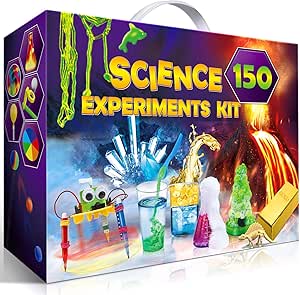 | Best for Experiment Variety | Experiments: 150 | Age range: 8 years and up | Listed science topics: Chemistry, physics, and earth sciences | VIEW LATEST PRICE | See Our Full Breakdown |
| educational science kits for kid | Age range |
|---|---|
| Vatos Science Circuit Kit for | 6 years and up |
| National Geographic Junior Che | 4 years and up |
| T&K SolarBots: Cosmic Explorer | 6–10 years |
| Playz Mega Kaboom! Explosive S | — |
| 1000X Handheld Digital Microsc | — |
| Science Experiment Kit for Kid | 6+ |
| 1000X Handheld Microscope for | — |
| Doctor Jupiter Ultimate Scienc | 8 years and above |
| National Geographic Science Ma | 8 years and up |
| National Geographic Amazing Ch | 8 years and up; title specifies ages 8–12 |
| Science Kit for Kids | 6+ years |
| Creativity for Kids Grow ‘N Gl | 6+ years |
| Steve Spangler Science Extreme | — |
| Uarzt 58-Piece Kids Microscope | 5–12 years |
| UNGlinga 150 Experiments Scien | 8 years and up |
More Details on Our Top Picks
Vatos Science Circuit Kit for Kids Ages 6-12, 68-Piece STEM Educational Electronics Building Set with 450+ Projects
The Vatos kit earns its place for children who want to build working circuits rather than focus on chemistry experiments. Its 68 pieces and 450+ project ideas offer more ways to revisit electronics concepts than the National Geographic Junior Chemistry Set, whose activities center on introductory lab work. Projects such as an electric fan and illuminated castle give abstract ideas like circuits and energy a visible result, while hand-operated power adds variety beyond battery-powered builds. The tradeoff is that this breadth may feel like a lot for a child who wants a short, guided activity, and some builds may need adult help. It also requires three AA batteries, sold separately, for battery-powered projects. I’d choose it for a curious young builder, not as an all-purpose chemistry kit.
Pros:- Offers more than 450 project ideas across electronics, optics, and energy concepts.
- Includes varied builds such as an electric fan, illuminated castle, and rotational imaging module.
- Combines battery power with a hand-operated generator.
- Organized components and assembly activities support hands-on learning.
Cons:- Requires three AA batteries that are not included.
- Some projects may need adult supervision or help.
- Its electronics focus offers less chemistry-lab variety than the National Geographic Junior Chemistry Set.
Best for: Children ages 6 and up who enjoy assembling gadgets and want many electronics projects to work through with an adult nearby.
Not ideal for: Families seeking chemistry activities, a minimal setup, or a kit that is ready for battery-powered use without supplying batteries.
- Number of pieces:68
- Project count:450+
- Age range:6 years and up
- Power modes:Battery-powered and hand-operated generator
- Example included builds:Flying saucer, illuminated castle, and electric fan
- Model number:D3002
Our verdict“Choose the Vatos kit for a child drawn to building and exploring circuits, but pick a chemistry set for hands-on lab activities instead.”
National Geographic Junior Chemistry Set with 50 Experiments for Kids
For a preschool-age child’s first structured science activities, this set is a more approachable fit than the Playz Mega Kaboom! kit, which is aimed at older kids and centers on more dramatic experiments. The 50 activities and more than 20 lab tools give young learners a reason to practice observing and following steps, while illustrated directions help them work through each activity with an adult. Household-item experiments can also make it easier to connect the activity to everyday materials. The limit is age range: older children may outgrow the basic format and want the broader build-and-test challenge of the Vatos circuit kit or more advanced chemistry. Some small parts call for close supervision around younger siblings, and adult involvement may be needed for setup.
Pros:- Provides 50 introductory experiments.
- Includes more than 20 lab tools, including test tubes and goggles.
- Illustrated instructions help young children follow each activity.
- Household-item experiments connect activities with familiar materials.
Cons:- The basic activities may not hold the interest of older children.
- Some experiments require adult supervision and household materials.
- Small parts may be a concern around younger children.
Best for: Families introducing children around ages 4–6 to guided science activities with child-friendly lab tools and adult participation.
Not ideal for: Older children looking for advanced chemistry or electronics builds, or households unable to supervise activities involving small parts.
- Experiment count:50
- Age range:4 years and up
- Lab tools:More than 20
- Included components:Chemistry kit with test tubes, goggles, and other lab tools
- Dimensions:11 x 4.22 x 9.64 inches
- Weight:0.72 kg
- Model number:NGJRCHEMT
Our verdict“Pick this set for a supervised first introduction to chemistry, but choose Playz Mega Kaboom! for older kids seeking more ambitious experiments.”
T&K SolarBots: Cosmic Explorers | Sustainable Energy Set
SolarBots has a narrower focus than the Vatos circuit kit, and that is its main advantage for a child curious about where power comes from. Building five solar-powered robot models makes renewable energy tangible: the child can switch between mechanisms and observe how the same light source powers different designs. Unlike Vatos, this set does not center on a wide range of electronics projects; it gives kids a clearer, repeated lesson about solar power without requiring batteries. That simplicity comes with a real limitation: the robots need direct sunlight or strong indoor light, so activity can be unreliable on dim days or in poorly lit rooms. Younger builders may also need help with assembly. I’d favor it over a broad experiment kit when the goal is a focused build about energy, not variety across science topics.
Pros:- Five robot models show how solar energy can drive different mechanisms.
- Solar panel and motor make the energy source part of the build.
- Does not require batteries.
- Full-color manual supports assembly and learning.
Cons:- Robots may not operate well without direct sunlight or strong indoor light.
- Younger children may need adult assistance with assembly.
- Its solar-energy focus is narrower than the Vatos kit’s range of electronics projects.
Best for: Children ages 6–10 who like assembling models and can use the kit in a sunny outdoor space or a brightly lit room.
Not ideal for: Families wanting reliable indoor play regardless of lighting, or children seeking experiments across chemistry and other science topics.
- Robot models:5
- Age range:6–10 years
- Power source:Solar panel
- Included components:Metal rods, plastic parts, solar panel, and motor
- Model number:665083
- Manufacturer:Thames & Kosmos
Our verdict“Choose SolarBots for a hands-on lesson in solar power if you have a bright place to build and test the models.”
Playz Mega Kaboom! Explosive Science Kit for Kids Age 8-12
The Playz kit is the most activity-packed chemistry choice in this group, with 150+ experiments built around visual reactions such as balloon rockets and color explosions. That makes it a better match for older children who enjoy dramatic demonstrations than the National Geographic Junior Chemistry Set, which targets early learners with simpler activities and lab tools. Step-by-step pictured instructions give the experiments structure, but the excitement does not remove the need for care: some activities call for adult assistance and careful supervision. The kit is also less suited to younger children than its broad “8–20 years” listed range might suggest; the product title and description focus on ages 8–12. Choose it for guided, energetic chemistry, not quiet independent play or electronics building like the Vatos kit.
Pros:- Includes more than 150 experiments.
- Activities such as balloon rockets and color explosions make reactions visible.
- Pictured, step-by-step instructions guide children through activities.
- Offers a more advanced chemistry option than the National Geographic Junior set.
Cons:- Some experiments require adult assistance and careful supervision.
- The dramatic activity style is not a fit for children who prefer building circuits or models.
- Its age guidance is inconsistent: the title says 8–12 while the spec lists 8–20.
Best for: Children around ages 8–12 who enjoy supervised, visual chemistry activities and can follow step-by-step instructions.
Not ideal for: Young children, unsupervised use, or families seeking a low-mess electronics or construction kit.
- Experiment count:150+
- Age guidance in title:8–12 years
- Recommended age in specs:8–20 years
- Dimensions:11.81 x 14.96 x 3.15 inches
- Material type:Kit of experiment
- Included components:Science kit with experiments
Our verdict“Choose Playz for older children who want a large selection of supervised chemistry demonstrations, not for independent or electronics-focused play.”
1000X Handheld Digital Microscope for Kids STEM Toys Gifts for Boys and Girls 3-12
This handheld microscope offers a different kind of science learning from the experiment kits: it lets a child inspect and document specimens rather than follow a sequence of prepared activities. Its portable 104 g design, adjustable LEDs, and photo and video capture make it a strong choice for outdoor observation, while the National Geographic Junior Chemistry Set is better for structured experiments with lab tools and illustrated steps. Manual focus gives children a chance to adjust the image themselves, though it may take practice to get a clear view. The listed 1000X magnification sounds impressive, but the supplied details do not explain viewing conditions or image quality at that level. Battery life is about two hours, and a TF card is not included, so extended recording may require extra storage.
Pros:- Lightweight handheld design supports outdoor exploration.
- Eight adjustable LEDs and four brightness modes help light different specimens.
- Photo and video capture can document observations.
- USB connection supports viewing and data transfer.
Cons:- Battery life is limited to about two hours per charge.
- TF card is not included for expanded storage.
- Manual focus and small-screen viewing may take practice; larger viewing requires a computer connection.
Best for: Curious children ages 3–12 who want to inspect objects indoors or outdoors and capture photos or videos of what they find.
Not ideal for: Families who want a complete, activity-led experiment kit or extended recording without supplying a TF card or recharging.
- Magnification:1000X
- Camera:2MP
- LED lighting:8 adjustable LEDs with 4 brightness modes
- Battery life:2 hours
- Built-in storage:32MB
- Supported storage:Up to 64GB TF card; card not included
- Weight:104 g
- Focus and connectivity:Manual focus; USB for viewing and data transfer
Our verdict“Choose this microscope for portable observation and recording, but select a chemistry set if your child needs guided experiments with included lab activities.”
Science Experiment Kit for Kids 6-12, STEM Chemistry Set with Volcano
For families who want a large menu of activities rather than one narrow science theme, this kit offers 130-plus experiments spanning chemical reactions and physical effects such as crystal growing, magic sand, and slime. That range gives kids several ways to explore cause and effect, though the item count alone does not tell you how long each activity takes or how much instruction it provides. Compared with the National Geographic Amazing Chemistry Set, this kit lists a wider experiment count, while that set has a clearer chemistry focus and a specified age range of 8 and up. This one is marked for ages 6+, but some activities need adult supervision, and the description notes that certain household materials are not included. I’d choose it for variety, not for a fully self-contained or strongly documented safety setup.
Pros:- More than 130 activities cover chemical and physical science themes.
- Includes varied materials such as crystal powder, magic sand, and glow-in-the-dark slime powder.
- The 6+ age guidance makes it a possible fit for younger elementary-age children with adult help.
- Compact box measures 11.8 x 3.54 x 8.66 inches.
Cons:- Some experiments need common household items that are not included.
- Adult supervision is needed for some activities, and the available description gives limited safety detail.
- The large experiment count does not specify the depth or duration of each activity.
Best for: Families with children 6 and older who want a wide mix of at-home science activities and can help gather household materials.
Not ideal for: Buyers seeking detailed safety information or a kit that supplies everything needed for every experiment.
- Number of experiments:Over 130
- Age range:6+
- Included materials:Snow powder, sodium acetate, magic sand, crystal powder, calcium chloride, slime powder, glow-in-the-dark slime powder, corn starch, and bouncy ball powder
- Model number:C-CHEMICAL
- Manufacturer:Carolart
- Dimensions:11.8 x 3.54 x 8.66 inches
Our verdict“Choose this kit for broad activity variety across several science themes, provided you can supervise experiments and supply extra household materials.”
1000X Handheld Microscope for Kids, 4K Digital Science Kit
This microscope is the most focused choice here: instead of offering a sequence of chemistry activities like the Doctor Jupiter Ultimate Science Experiments Kit, it gives kids a tool for repeatedly examining slides and small objects. Its 2.4-inch screen, adjustable LED lighting, and included prepared slides lower the setup barrier for a child who wants to see details right away. The handheld design weighs 0.38 pounds, so it is easier to carry around than a table-based kit, while the USB connection supports sharing observations on a computer. The tradeoff is that it offers less variety in activity type; exploration depends on finding samples and asking new questions. Also, video recording needs a microSD card sold separately, and battery life may limit longer sessions. I’d pick it for observation-led learning, not for a box of guided experiments.
Pros:- Handheld design weighs 0.38 pounds and is easy to move between rooms.
- Includes 12 prepared slides for getting started without sourcing samples first.
- Eight LED lights with four brightness levels help illuminate different specimens.
- USB connectivity allows images or observations to be shared with a PC.
Cons:- A microSD card is sold separately for video recording.
- Battery life may not suit extended observation sessions.
- Features may be difficult for very young children to manage independently.
Best for: Curious children who enjoy looking closely at prepared slides and everyday samples, especially families wanting a portable science tool.
Not ideal for: Families looking for many guided experiments in one box or expecting recording storage to be included.
- Magnification:200x–1000x
- Digital zoom:1x–4x
- Camera resolution:2MP
- Screen:2.4-inch color screen
- Lighting:8 LED lights with 4 brightness levels
- Battery:2000mAh rechargeable
- Included slides:12
- Weight and dimensions:0.38 lbs; 4.25 x 2.24 x 3.86 inches
Our verdict“Pick this microscope for a child who wants ongoing close-up observation rather than a varied set of one-off experiments.”
Doctor Jupiter Ultimate Science Experiments Kit for Kids Ages 8+
The Doctor Jupiter kit is a strong fit for families who want experiments supported by dedicated lab-style tools and illustrated directions. Its measuring cylinder, conical flask, test tube stand, and spatula give activities a more structured feel than the broad assortment in the Science Experiment Kit for Kids 6-12, which emphasizes a higher count of mixed experiments. Doctor Jupiter lists 135-plus activities and a bonus booklet, including experiments that use household items, so there is a path to continue after the supplied activities. The stated age range begins at 8, making this a better match for children ready to follow more involved steps than the younger-age kit. The tradeoff is that some activities can be messy or involve chemical handling, so adult oversight remains part of the plan. I’d favor it for guided sessions over independent play.
Pros:- Offers more than 135 experiments and a bonus experiment booklet.
- Includes lab-style equipment such as a measuring cylinder, conical flask, and test tube stand.
- Illustrated instructions can help children follow experiment steps.
- Bonus activities using household items can extend use beyond the supplied ingredients.
Cons:- The stated age range is 8 and above, limiting its fit for younger children.
- Some experiments involve mess or chemical handling and need adult supervision.
- Household-item activities still require families to gather extra materials.
Best for: Families with children aged 8 and up who want illustrated instructions and lab-style tools for supervised experiment sessions.
Not ideal for: Parents seeking a kit for preschool or early elementary children to use with little help, or a no-mess activity set.
- Age range:8 years and above
- Experiments:135+
- Tools:Measuring cylinder, conical flask, spatula, stirring sticks, test tube stand, cups, funnel, and tray
- Other included components:Glycerin flakes, soap moulds, food essence, food colours, ingredients, instruction manual, and bonus experiment booklet
- Model number:DJ
- Manufacturer:Metis Learning Solutions Pvt. Ltd.
Our verdict“Choose Doctor Jupiter for an 8+ child who benefits from structured, illustrated experiments and has an adult available to supervise.”
National Geographic Science Magic Kit with 100+ Experiments and Magic Tricks
For a child who likes showing results to an audience, this kit pairs science experiments with magic tricks, giving the learning a performance angle that the more lab-oriented National Geographic Amazing Chemistry Set does not foreground. That distinction can make demonstrations a natural way to share what happened and spark questions about the science behind an effect. It is aimed at ages 8 and up and lists more than 100 activities, but the product details offer less information about specific tools or experiment materials than the chemistry-focused National Geographic set. It also has no electronic components, so the appeal is hands-on demonstration rather than digital interaction. Some activities may be too complex for younger users in its age band, and supervision is needed for certain experiments. I’d choose this for a budding science-show host, not for someone primarily seeking a chemistry lab.
Pros:- Combines more than 100 experiments and magic tricks for demonstration-style learning.
- The performance theme gives children a reason to explain and share scientific effects.
- Age guidance of 8 years and up suits older elementary-age children.
- Compact package measures 8.86 x 3.15 x 12 inches.
Cons:- Some activities may challenge younger children in the stated age group.
- Adult supervision is needed for some experiments.
- The listed product details do not specify individual included tools or materials.
Best for: Children aged 8 and up who enjoy performing demonstrations for family or friends and want science activities with a magic theme.
Not ideal for: Buyers seeking a chemistry-focused kit with clearly listed lab tools, or a digital science device.
- Number of experiments:100+
- Age range:8 years and up
- Weight:1.5 pounds
- Dimensions:8.86 x 3.15 x 12 inches
- Material types:Metal and paper
Our verdict“Choose this kit for an 8+ child who enjoys performing science demonstrations more than following a chemistry-lab format.”
National Geographic Amazing Chemistry Set with 100+ Experiments for Ages 8-12
This set makes the clearest case for a chemistry-first buyer: its listed activities include crystal growing, color-changing solutions, and chemical reactions, rather than the science-and-performance mix of the National Geographic Science Magic Kit. With more than 100 experiments and a bonus guide containing 85 additional household-item activities, it balances supplied projects with ways to keep exploring using materials from home. The listed age guidance is 8 years and up, while the title narrows its target to ages 8–12; that makes it less suitable for younger children than the 6+ Science Experiment Kit for Kids 6-12. The kit is compact at 8.78 x 3.19 x 11.93 inches, but some experiments may need extra household supplies, and younger users need adult supervision. I’d choose it when chemistry is the priority, not maximum subject variety.
Pros:- More than 100 hands-on experiments focus on chemistry themes.
- Activities include crystal growing, color-changing solutions, and chemical reactions.
- The bonus guide adds 85 experiments using household items.
- Compact package measures 8.78 x 3.19 x 11.93 inches.
Cons:- Some activities may need household materials beyond the kit.
- Younger children require adult supervision.
- Its chemistry focus offers less subject variety than broader kits such as the Science Experiment Kit for Kids 6-12.
Best for: Families with children around 8–12 who want a chemistry-centered kit with crystal, color-change, and reaction activities.
Not ideal for: Buyers seeking a kit for children under 8, a broad mix of science fields, or guaranteed supplies for every activity.
- Age range:8 years and up; title specifies ages 8–12
- Experiments:100+
- Bonus activities:85 household-item experiments
- Educational objective:STEM
- Included components:Chemistry kit with 100+ science experiments
- Model number:NGMEGACHEMAR
- Manufacturer:JMW Sales, Inc.
- Dimensions and weight:8.78 x 3.19 x 11.93 inches; 1.8 pounds
Our verdict“Choose this set for an 8–12-year-old who wants chemistry-centered projects and can work with an adult to gather any extra materials.”
Science Kit for Kids – 80 Experiments and Scientist Role Play
Its 80 activities give children aged 6 and up a broad introduction to hands-on science, with tools such as test tubes, droppers, measuring cups, and petri dishes. Guidance cards provide a step-by-step way into each activity, while goggles and gloves support the feel of a small home lab. Compared with the UNGlinga 150 Experiments Science Kit, this set is aimed at a younger age group and offers fewer experiments, which may make it a more approachable starting point. Its tradeoff is that the description gives limited detail about chemical safety, and some experiments need household supplies or adult help. I’d choose it for variety and role play, not for a highly specified chemistry curriculum.
Pros:- Offers 80 experiments for varied hands-on activities.
- Includes goggles, gloves, test tubes, droppers, and measuring tools.
- Guidance cards help children follow activities step by step.
- Age range starts at 6 years.
Cons:- Some activities require adult supervision.
- Chemical safety precautions are not described in detail.
- Some experiments call for additional household items.
Best for: Families looking for a broad first science kit for children aged 6 and up, with basic lab tools and guided activities.
Not ideal for: Buyers seeking detailed chemical safety guidance or a kit that supplies every material for every experiment.
- Experiments:80
- Age range:6+ years
- Material:Plastic
- Included safety gear:Goggles and gloves
- Included tools:Petri dishes, measuring cups, test tubes, droppers, straws, and measuring spoons
- Other listed contents:Chemical materials, balloons, pigment, effervescent tablets, rubber bands, toothpicks, and more
- Item weight:0.75 kg
- Listed item dimensions:1 x 1 x 1 inches
Our verdict“Choose this kit for a wide set of guided activities for younger children, provided an adult can supervise and fill in missing household materials.”
Creativity for Kids Grow ‘N Glow Terrarium Kit – Educational Science and STEM Craft for Kids Ages 6+
Rather than cycling through many unrelated experiments, this terrarium kit gives children a small ecosystem to assemble, observe, and care for. It includes chia and wheatgrass seeds, growing medium, stones, sand, and glow-in-the-dark decorations; the listed growth time of 3–4 days per cycle offers a relatively quick payoff. Two plant cycles let kids repeat the process and notice what changes. Compared with the Science Kit for Kids – 80 Experiments and Scientist Role Play, this is much narrower in subject but better suited to sustained observation and responsibility. The tradeoff is that plant growth depends on care, watering requires supervision, and the kit is for indoor use. I’d pick it for a child drawn to gardening and creative display, not for broad coverage of physics or chemistry.
Pros:- Combines plant growth with creative terrarium decoration.
- Includes supplies for two plant cycles.
- Seeds are listed to grow in 3–4 days per cycle.
- Glow-in-the-dark decorations add a visual element to the finished project.
Cons:- Watering and assembly require supervision.
- Plants need appropriate care to grow successfully.
- Designed for indoor use rather than outdoor planting.
Best for: Children aged 6 and up who enjoy plants, crafts, and checking on a project over several days.
Not ideal for: Families wanting varied experiments across science topics or a project that needs no ongoing care.
- Age range:6+ years
- Plant cycles:2
- Growth time:3–4 days per cycle
- Terrarium container:Plastic jar
- Seeds:Chia and wheatgrass
- Growing medium:Potting mix
- Decorations and materials:Glow-in-the-dark figurines, stickers, decorative sand, and river stones
Our verdict“Pick this kit for a child who would rather grow and decorate a mini ecosystem than move quickly between different experiments.”
Steve Spangler Science Extreme Bubble Science Kit
This kit takes one familiar material—bubbles—and uses it to introduce surface tension, elasticity, and bubble formation. Its 11 activities and 28 components give the topic more structure than casual bubble play, while the colorful guide supports trying one experiment at a time at home or school. Compared with the UNGlinga 150 Experiments Science Kit, it covers far fewer areas of science, but that focus can help a child spend longer noticing how changes affect a bubble. The main limitation is the narrow subject: children who want chemistry, biology, or a broad experiment menu may lose interest sooner. Younger participants also need adult supervision. I’d choose it as a practical physics-focused activity, especially when outdoor play is a plus, rather than as a single kit for broad science coverage.
Pros:- Connects bubble play with surface tension and elasticity.
- Includes 11 activities rather than only open-ended play.
- Comes with 28 components and an instructional guide.
- Can be used at home or in school.
Cons:- Activities stay focused on bubble science.
- Younger children need adult supervision.
- The listed size is small to medium, which may not suit buyers expecting a large kit.
Best for: Children aged 6–17 who enjoy outdoor activities and want a hands-on introduction to bubble-related physics.
Not ideal for: Families seeking a broad science kit covering several subjects or children uninterested in bubble experiments.
- Activities:11 bubble activities
- Components:28 components and an instructional guide
- Recommended age:6–17 years
- Science topics:Surface tension, elasticity, and bubble formation
- Material:Plastic
- Size:Small to medium
- Model number:BUBBLESS
Our verdict“Choose this for focused, active physics exploration; pick a multi-topic set such as UNGlinga’s if variety matters more.”
Uarzt 58-Piece Kids Microscope Kit with Carrying Case, STEM Science Set for Ages 5-12
For children who want to inspect real objects rather than follow a sequence of chemistry activities, this 58-piece microscope kit offers a clear point of entry. Prepared slides provide starting samples, while blank slides and additional tools invite children to make their own observations of plants, insects, and everyday items. The carrying case makes it easier to keep the pieces together between sessions. Compared with the 1000X Handheld Digital Microscope for Kids in the wider roundup, this set is a more traditional introductory microscope kit, with slides and tools rather than a digital viewing focus. Its limits matter: the microscope is not professional equipment, the stated maximum magnification may not satisfy advanced users, and two AA batteries are not included. I’d choose it for guided first looks, not detailed microscopy.
Pros:- Includes 58 pieces for introductory microscope activities.
- Prepared and blank slides support both guided viewing and independent exploration.
- Carrying case helps organize and transport the set.
- Suitable for home or classroom use.
Cons:- The microscope is designed for beginners, not advanced use.
- Requires two AA batteries, which are not included.
- The listed maximum magnification of 1200x may not meet advanced users’ needs.
Best for: Families or classrooms introducing children aged 5–12 to slides, specimens, and basic microscope observation.
Not ideal for: Older or experienced young scientists seeking advanced optics, professional-level detail, or a battery-free setup.
- Pieces:58
- Age range:5–12 years
- Microscope dimensions:4.6 x 2.75 x 8.15 inches
- Power:2 AA batteries required
- Batteries included:No
- Slides:Prepared and blank slides
- Storage:Carrying case
- Listed maximum magnification:1200x
Our verdict“Choose this as a portable first microscope set for a child who wants to examine slides and everyday specimens, not as an advanced instrument.”
UNGlinga 150 Experiments Science Kits for Kids Chemistry Lab STEM Toys
150 experiments make this the broadest activity count in this five-product batch, with chemistry, physics, and earth science named among the topics. That range suits children who want to keep trying new activities rather than focus on a single growing project or a narrow subject like the Steve Spangler Science Extreme Bubble Science Kit. The recommended age of 8 and up also sets it apart from options aimed at younger beginners, such as the Science Kit for Kids – 80 Experiments and Scientist Role Play. Its illustrated instructions are described as easy to follow, but a large experiment count does not mean every activity is self-contained: some require household items, and adult supervision may be needed. I’d choose it for an older child ready for variety, while families wanting a focused, low-prep activity may prefer a smaller, more specialized kit.
Pros:- Offers 150 experiments across multiple science areas.
- Includes kid-oriented tools and materials for hands-on activities.
- Illustrated instructions are described as easy to follow.
- Suitable for home or classroom use.
Cons:- Some activities require additional household items.
- Adult supervision may be needed for some experiments.
- The recommended age starts at 8, so it is less suited to younger beginners.
Best for: Children aged 8 and up who want a wide selection of activities across several science subjects at home or school.
Not ideal for: Younger children, or families seeking a fully self-contained kit with no need for household supplies or adult supervision.
- Experiments:150
- Age range:8 years and up
- Listed science topics:Chemistry, physics, and earth sciences
- Material:Plastic
- Product dimensions:11.42 x 8.67 x 3.94 inches
- Instruction format:Illustrated instructions
- Use setting:Home or school
Our verdict“Choose UNGlinga for an older child who values a large, varied experiment menu, and skip it if younger age fit or minimal setup is the priority.”

How We Picked
I compared the kits by the kind of learning they support: chemistry demonstrations, circuit building, microscopy, engineering, or creative observation. I weighed age fit, clarity of the activity format, opportunities to repeat or extend a project, and likely setup and supervision needs. A high experiment count was not enough on its own; I gave more weight to a clear use case and activities that invite children to ask questions, make predictions, and notice results.
The order reflects how well each option serves its intended buyer, not a claim that every child needs the same kit. Broad, approachable kits rank ahead of narrower picks for general family use, while specialist sets rise when they offer a distinct learning experience. I also account for tradeoffs such as a kit’s dependence on household supplies, its topic range, and whether its format suits a child who prefers building, observing, or performing experiments. Product descriptions do not establish every detail of included materials or adult help, so buyers should check the current package information before purchasing.
Factors to Consider When Choosing Educational Science Kits For Kids
Before choosing, match the kit to how the child likes to learn, not just the subject printed on the box. These factors can help you avoid a set that looks exciting but ends up needing more help, space, or supplies than your household can provide.
Match the Kit to the Child’s Kind of Curiosity
Children who like building may get more from circuits or solar-powered models than from a long sequence of chemistry activities. A child who enjoys looking closely at small objects may return to a microscope more often than to a one-time demonstration set. Ask whether the child likes making, observing, mixing, or performing before focusing on the number of activities. A mixed-topic kit can work well when interests are still developing, but a focused kit may hold attention better once a favorite subject is clear. Avoid choosing by a broad STEM label alone; it can conceal very different play experiences.
Use Age Guidance as a Starting Point, Not a Guarantee
Age ranges help flag likely complexity, but children of the same age can differ in reading ability, patience, and comfort following instructions. Look for clues about whether children can complete activities independently or need an adult to handle setup, measurement, or cleanup. Younger beginners may benefit from short, visible results, while older children may want room to troubleshoot or repeat an experiment with a changed variable. Buying an advanced kit too early can turn a science activity into a parent-led project. For shared use between siblings, choose a kit whose activities can be adapted rather than assuming one age label fits everyone.
Check What Is Needed Beyond the Box
Some kits rely on household items or require extra materials, batteries, a device, or a suitable work surface. Those needs affect whether a child can begin promptly and whether activities are easy to repeat. Read the contents and preparation details before buying, especially if the kit uses liquids, small parts, or tools that call for adult handling. A box with many experiments may still provide fewer ready-to-go activities than expected if several depend on supplies you must source. For a gift, fewer hidden requirements usually make for a smoother first session.
Balance Experiment Count Against Learning Depth
A large activity count can offer variety, but it does not tell you how much explanation or follow-up each activity provides. A smaller set centered on circuits or microscopy may support repeated practice and deeper questions. Consider whether the child is likely to work through many short demonstrations or spend longer refining one build or observation. If the kit is meant for occasional family activities, variety can help keep it fresh. If the goal is sustained interest in a subject, prioritize repeatability and room to change the experiment over a headline count.
Plan for Supervision, Space, and Cleanup
Science kits vary in how much adult participation they need, even when they share a similar age range. Chemistry activities and messy demonstrations may call for a protected surface, cleanup time, and an adult nearby. Building kits can be tidier but may require patience when parts need sorting or a circuit does not work at first. Microscopes need a place to store the instrument and specimens, and digital models may involve device setup. Choose a kit that fits the household’s available time and space, not just the child’s interest.
Pay More for a Better Fit, Not a Bigger Number
A higher activity count or more elaborate presentation is not automatically a better educational choice. Added value comes from materials and instructions that support repeat use, a topic the child already enjoys, or a format that reduces friction for your family. A focused microscope or electronics set can make more sense than a broad kit if the child repeatedly asks about those subjects. Conversely, an all-around set may be a better first purchase when interests are uncertain. Compare what the kit lets the child do independently and revisit, rather than judging it by packaging claims alone.
Frequently Asked Questions
Should I choose a broad experiment kit or a subject-specific set?
A broad kit is a practical starting point when the child is curious about science but has not settled on a favorite topic. It offers variety, though some activities may receive only brief attention. A subject-specific set is a stronger match when the child already gravitates toward chemistry, circuits, or microscopy and may want to repeat related activities. Think about whether your goal is to sample different kinds of science or build a continuing interest in one area. The best fit is the one the child is likely to use more than once.
Are experiment-count claims a reliable way to compare kits?
Use the count as a rough sign of variety, not as a direct measure of learning value. Activities may differ in length, complexity, and how much explanation they provide, and some may depend on materials not included in the box. Look for a clear contents list and instructions that show what children actually do. Also ask whether an activity can be repeated with a new question or variation. A smaller, reusable set can be a better choice than a larger collection of one-off demonstrations.
How can I tell whether a child can use a kit without constant adult help?
Check the age guidance alongside the instructions, required setup, and any stated supervision notes. Reading demands, measuring steps, small components, and cleanup can all increase the amount of adult involvement. When product details are limited, plan to be nearby for the first activity rather than assuming the kit is fully independent. A child may manage the main task but still need help preparing materials or handling a device. For a gift, choose a format that suits the family’s willingness to participate.
When is a microscope a better choice than a chemistry set?
A microscope is a good match for a child who likes careful observation and may enjoy returning to the same object to notice new details. A chemistry set suits children drawn to mixing, visible reactions, or following a procedure to produce a result. These formats create different kinds of engagement, so the choice depends more on the child’s habits than on which topic sounds more advanced. Check whether the microscope needs a compatible device or other setup, and whether the chemistry kit calls for extra supplies. If interests are unclear, a broad experiment kit may offer a lower-commitment introduction.
What should I check before giving a science kit as a gift?
Confirm the recipient’s age, interests, and the kit’s listed contents before choosing. Check for batteries, household materials, device requirements, adult supervision, and any setup or cleanup that could surprise the family. A kit with a striking activity may still be a poor gift if the recipient lacks the needed equipment or the household cannot support the setup. For a younger beginner, approachable instructions and visible results can matter more than a large activity count. If you are unsure about the child’s interests, a varied kit is usually a safer starting point than a specialist set.
Conclusion
Best overall: I recommend the Doctor Jupiter Ultimate Science Experiments Kit for families seeking a broad starting point. Best value in learning range: the National Geographic Amazing Chemistry Set is a strong fit for children who want to focus on chemistry, while the Junior Chemistry Set better suits younger beginners. Best for beginners: choose a kit whose topic and age guidance match the child, with the Junior Chemistry Set a clear first chemistry option. Best for hands-on building: the Vatos Science Circuit Kit makes sense for kids who enjoy constructing and troubleshooting. Best for specific needs: pick a handheld microscope or the Uarzt microscope kit for observation-focused learners, and the T&K SolarBots for a child interested in solar energy. My final choice would depend less on the biggest activity count and more on which kind of science the child will want to explore again.
Fall Picks
fall essentials
As an affiliate, we earn on qualifying purchases.