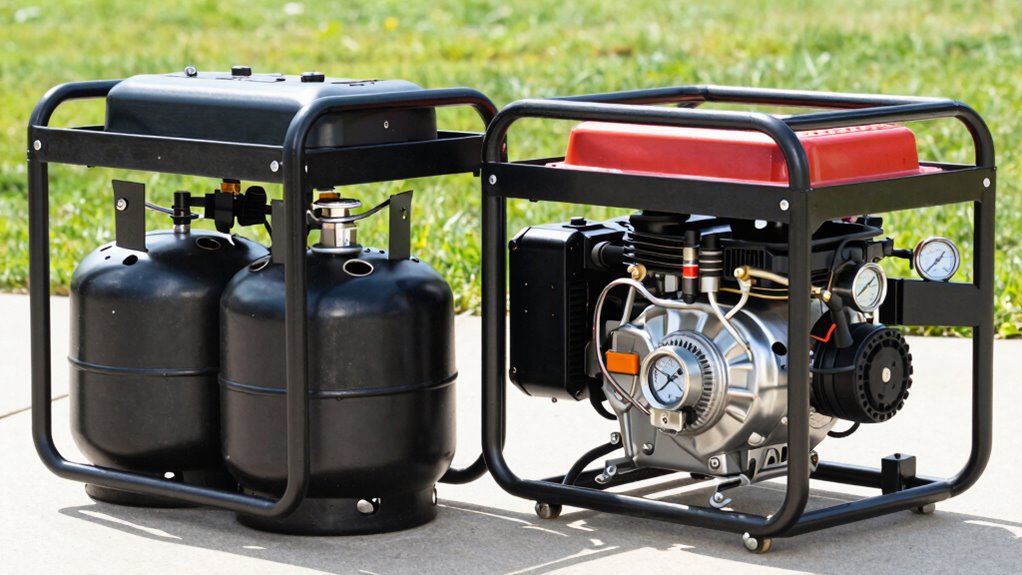

When choosing between propane and gasoline for a dual fuel generator, consider fuel efficiency, storage safety, and long-term costs. Gasoline offers quick refueling and longer run times per tank but requires careful storage and has a shorter shelf life. Propane burns cleaner, lasts longer in storage, and causes less engine wear, making it more reliable over time. For a deeper understanding of tradeoffs and maintenance tips, keep exploring the key factors that can influence your decision.
Key Takeaways
- Gasoline offers longer run times per tank but requires careful storage and has a shorter shelf life.
- Propane provides safer, long-term storage with stable prices and minimal degradation over time.
- Propane burns cleaner, reducing engine wear and extending generator lifespan compared to gasoline.
- Gasoline refueling is quick and convenient but demands proper handling and storage precautions.
- Propane’s steady supply and lower maintenance needs make it ideal for long-term backup power.
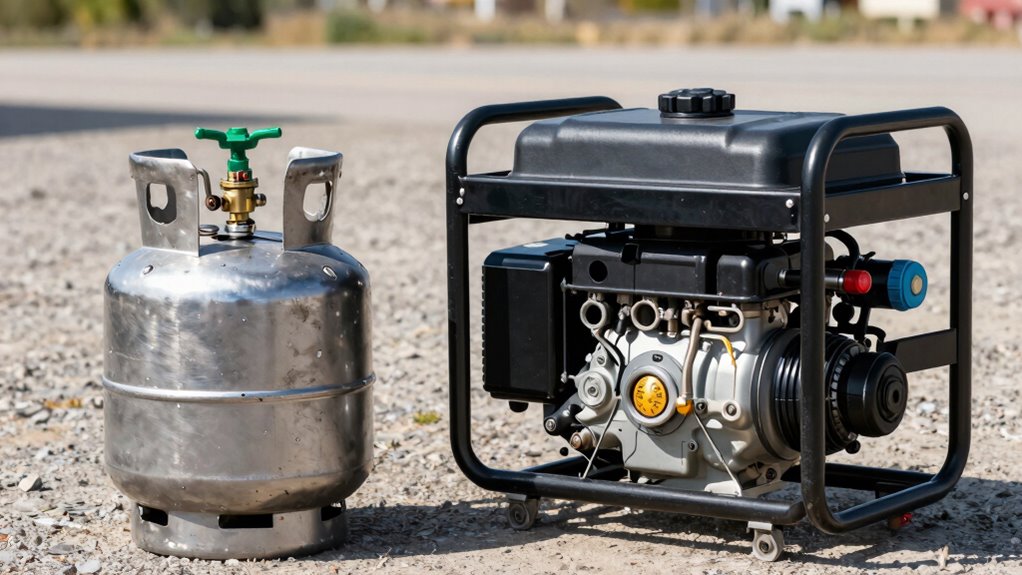
Dual fuel generators offer a versatile solution, allowing you to switch between propane and gasoline depending on your needs. One key factor to weigh is fuel efficiency, which directly impacts how long your generator can operate without refueling. Gasoline generally provides more energy per gallon, meaning it can run your generator longer on a single tank. However, propane tends to burn cleaner and more efficiently over time, especially with proper maintenance. Balancing these aspects helps you decide which fuel source best suits your power backup plan. Additionally, advancements in fuel technology continue to improve the performance and safety of dual fuel systems, offering more options for consumers. Storage considerations are also vital when choosing between propane and gasoline. Gasoline requires careful storage because it’s highly flammable and has a limited shelf life—usually around 6 to 12 months before it starts degrading. If you don’t use it frequently, you’ll need to consider fuel stabilizers and proper containers to prevent spoilage. Propane, on the other hand, is stored as a pressurized gas in tanks, making it safer and easier to store long-term. It doesn’t degrade over time, so you can keep a supply ready for months or even years without concern. This makes propane an attractive option if you want a reliable fuel source that’s easy to store and maintain. Switching between fuels also offers flexibility in managing fuel availability and costs. Gasoline is often more accessible at local stations, especially during emergencies, but its price can fluctuate considerably. Propane prices tend to be more stable, and purchasing tanks in bulk can save you money over time. Additionally, using propane can reduce your maintenance efforts since it burns cleaner, resulting in less engine wear and fewer carbon deposits. This not only extends the lifespan of your generator but also means fewer worries about engine breakdowns during critical moments. Another consideration is the convenience of fueling. Gasoline refills are quick and straightforward, but finding a safe storage spot and managing spills or leaks can be a challenge. Propane tanks require a bit more effort to connect and disconnect, but once set up, they provide a steady, reliable source of fuel with minimal fuss. Overall, your choice will depend on how you prioritize fuel efficiency, storage safety, and convenience. Both options have their tradeoffs, but understanding these factors helps you make an informed decision to keep your power on, no matter what.
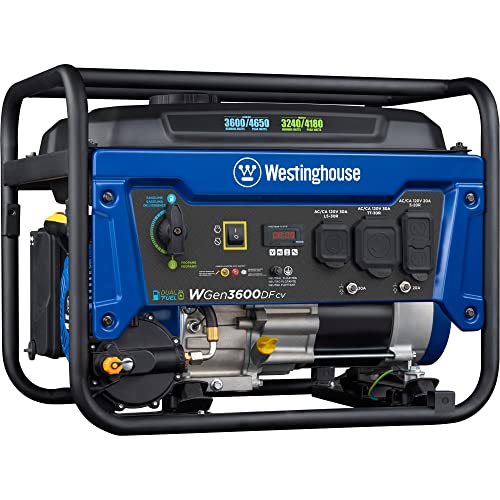
Westinghouse 4650 Peak Watt Dual Fuel Portable Generator, RV Ready 30A Outlet, Gas & Propane Powered, CO Sensor
- Peak Wattage: 4650 Peak Watts for Gas and Propane
- Rated Wattage: 3600 Watts (Gas), 3240 Watts (Propane)
- Fuel Capacity: 4-Gallon Tank with Fuel Gauge
As an affiliate, we earn on qualifying purchases.
As an affiliate, we earn on qualifying purchases.
Frequently Asked Questions
How Long Can a Dual Fuel Generator Run on Each Fuel Type?
You can typically run a dual fuel generator for 8 to 20 hours on a full tank of gasoline, depending on load and tank size, while propane can last even longer, often 12 to 24 hours. Fuel storage plays a key role—gasoline needs proper containment and careful handling, whereas propane offers longer storage and easier fuel conversion. Always monitor fuel levels and guarantee safe storage to maximize runtime efficiently.
Are Dual Fuel Generators More Expensive Than Single Fuel Models?
You might wonder if dual fuel generators cost more upfront. They often do, due to added features and fuel versatility, which means you get the flexibility to run on propane or gasoline. While the initial investment is higher, consider the benefits: longer run times and emergency preparedness. The extra cost can be worth it, especially if you value reliability and versatility during power outages or outdoor adventures.
Can I Switch Fuels While the Generator Is Running?
You shouldn’t switch fuels while the generator is running, as it can be unsafe and damage the unit. Always follow the manufacturer’s switching procedures, which typically involve turning off the generator, allowing it to cool, and then changing the fuel type. Check fuel compatibility carefully beforehand, and make certain you have the right tools and safety equipment. Proper switching ensures safe operation and longevity of your dual fuel generator.
What Are the Safety Concerns With Propane Versus Gasoline?
You might think propane’s safer, but don’t be fooled—storage safety and fire hazard still matter. Propane’s less likely to spill and cause immediate fires, but its pressurized tank can explode if damaged. Gasoline’s flammable liquid poses a bigger fire risk during spills or leaks. Always handle both fuels carefully, store them properly, and stay aware of potential dangers—because safety isn’t guaranteed just by choosing one over the other.
How Do Maintenance Needs Differ Between Propane and Gasoline?
You’ll find that propane generators require less maintenance since propane burns cleaner, producing fewer emissions and less engine wear. You won’t need to change spark plugs or oil as often, thanks to cleaner fuel combustion. Gasoline generators, however, need more frequent oil changes and spark plug replacements because gasoline produces more deposits and emissions. Plus, propane’s stable fuel storage makes it easier to keep on hand without risk of degradation.

DuroStar DS13000MX 13,000-Watt 500cc Dual Fuel Portable Generator – Gas and Propane, Remote Electric Start, Whole Home Power Backup, Transfer Switch Ready, RV & Emergency Ready
- Power Output: 13,000 Watts for backup power
- Fuel Options: Dual fuel: Gasoline or Propane
- Safety Feature: CO Alert for safety
As an affiliate, we earn on qualifying purchases.
As an affiliate, we earn on qualifying purchases.
Conclusion
Choosing between propane and gasoline for your dual fuel generator is like picking the right compass for your adventure—each offers unique directions. Propane burns cleaner, like a fresh mountain breeze, while gasoline provides quick, fiery power like a roaring campfire. By understanding these tradeoffs, you’re armed with a reliable tool that’s ready to light up your darkest nights or stormiest days. Whichever fuel you choose, your generator becomes the steady heartbeat of your home’s resilience.
DuroStar DS13000MX 13,000-Watt 500cc Dual Fuel Portable Generator – Gas and Propane, Remote Electric Start, Whole Home Power Backup, Transfer Switch Ready, RV & Emergency Ready
- Power Output: 13,000 Watts for backup power
- Fuel Options: Dual fuel: Gasoline or Propane
- Safety Feature: CO Alert for safety
As an affiliate, we earn on qualifying purchases.
As an affiliate, we earn on qualifying purchases.

Flame King 100LB (23 Gal) Multi-Valve Propane Tank with High Capacity Filler, Great for Mixed Heating Systems, Home fireplaces, Dryers and Grills
- Multi-Valve Design: Includes service, filler, relief, and POL valves
- On-Site Refill Capability: Refill without disconnecting appliances
- Durable Steel Construction: Welded, powder-coated rust-resistant exterior
As an affiliate, we earn on qualifying purchases.
As an affiliate, we earn on qualifying purchases.