
TL;DR
Listen free for 30 days with Audible
Thousands of audiobooks and originals — cancel anytime.
Start your free trialAs an affiliate, we earn on qualifying purchases.
Scientists have confirmed the existence of a thriving coral reef in West Africa, long presumed to be dead. The discovery offers new insights into reef resilience and conservation potential.
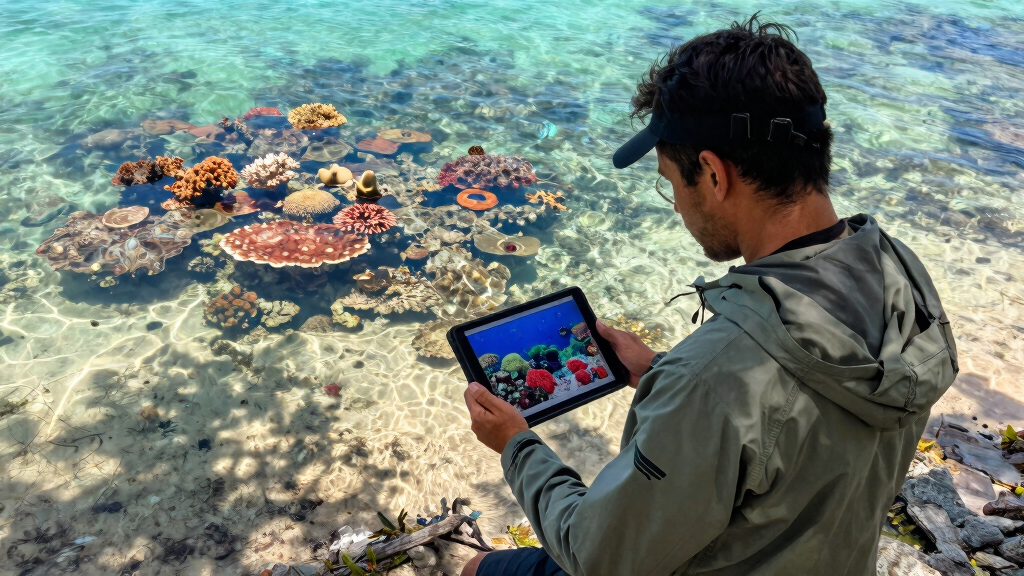
Scientists have confirmed the discovery of a vibrant coral reef in West Africa, which was long presumed to be dead or irreparably damaged. This finding challenges previous assumptions about the reef’s status and highlights the potential resilience of marine ecosystems in the region.
The reef was identified during a recent marine survey conducted by an international team of marine biologists. Previously, this reef was believed to have been destroyed due to climate change, overfishing, and pollution, with official records indicating its disappearance decades ago. The new survey, utilizing advanced underwater imaging and ecological assessment tools, revealed a thriving community of corals, fish, and other marine life, indicating a healthy ecosystem. The discovery was confirmed through direct underwater observations and genetic analysis of coral samples, which showed signs of recent growth and reproduction. Experts involved in the project emphasize that this finding contradicts longstanding scientific consensus and opens new avenues for reef conservation and management in West Africa.Implications for Reef Conservation and Regional Ecosystems
This discovery is significant because it demonstrates that coral reefs, even in areas heavily impacted by environmental stressors, can recover or persist in unexpected ways. It offers hope for reef conservation efforts and suggests that resilience mechanisms may be more widespread than previously thought. For local communities and policymakers, the finding underscores the importance of protecting remaining marine habitats and reassessing conservation strategies to include potential refuges of biodiversity. Globally, it contributes to the understanding of reef resilience amid climate change and could influence future marine protected area designations and restoration initiatives.
As an affiliate, we earn on qualifying purchases.
Historical Assumptions and Recent Marine Surveys in West Africa
Historically, the reef in question was documented in early marine records but was believed to have been destroyed due to escalating climate impacts, such as rising sea temperatures and acidification, as well as human activities like overfishing and pollution. Over the past few decades, scientific consensus held that the reef was effectively extinct, with no visible signs of coral life in satellite imagery or in-situ surveys. However, recent technological advancements in underwater exploration, including high-resolution imaging and genetic testing, have enabled researchers to revisit previously surveyed areas with greater precision. The recent survey, conducted by an international team led by the Marine Conservation Institute, was intended to assess regional coral health but unexpectedly uncovered this vibrant reef, prompting a reevaluation of regional marine resilience.
“This discovery challenges our understanding of coral resilience and suggests that some reefs may persist in hidden refuges, even under severe environmental stress.”
— Dr. Maria Lopez, Marine Biologist
As an affiliate, we earn on qualifying purchases.
Unanswered Questions About Reef Extent and Longevity
It is still unclear how widespread the reef is, how long it has persisted undetected, and whether similar refuges exist elsewhere in West Africa. Researchers are also uncertain about the specific environmental conditions that have allowed this reef to survive and whether it can recover fully from past disturbances. Further studies are needed to determine the reef’s age, resilience capacity, and potential for supporting larger marine populations.
diving wetsuit for coral reef exploration
As an affiliate, we earn on qualifying purchases.
As an affiliate, we earn on qualifying purchases.
Planned Follow-Up Studies and Conservation Actions
Researchers plan to conduct more detailed mapping and ecological assessments of the reef to understand its full extent and health. Conservation organizations are considering establishing protected areas around the site to prevent further damage. Additionally, scientists aim to investigate the environmental factors that enabled its survival, with the goal of applying this knowledge to other degraded reefs. Public awareness campaigns and regional policy discussions are also expected to follow to promote marine protection efforts based on these findings.
marine biology underwater imaging equipment
As an affiliate, we earn on qualifying purchases.
As an affiliate, we earn on qualifying purchases.
Key Questions
How was the reef previously believed to be dead?
Earlier assessments relied on satellite imagery, limited underwater surveys, and environmental models that indicated the reef had been destroyed due to climate change and human impacts.
What methods confirmed the reef’s existence?
Recent high-resolution underwater imaging, direct visual observations, and genetic analysis of coral samples confirmed the reef’s vibrant state.
Why is this discovery important for global reef conservation?
It suggests that some reefs may survive in hidden refuges, offering hope for resilience and recovery in the face of climate change, and may influence future conservation strategies worldwide.
Are similar reefs expected to be found elsewhere?
It remains unknown whether other undetected reefs exist in the region; further exploration is needed to identify additional resilient habitats.
What are the next steps for protecting this reef?
Scientists plan to map and assess the reef further, and policymakers are considering establishing marine protected areas to safeguard it from future threats.
Source: hn
Fall yard work Picks
leaf blowers
As an affiliate, we earn on qualifying purchases.