
TL;DR

Prime made for students and young adults
- Fast, free delivery for dorm and study essentials
- Prime Video and Amazon Music included
- Member-only deals
A September 2026 report comparing the total mass of individual species finds that cattle outweigh any other animal species, but boreal trees may be far heavier overall. Estimates put black spruce in Canada above 11 billion tonnes and Dahurian larch in Russia at least 8.4 billion tonnes, though the figures are not directly comparable and no definitive global species ranking is available.
A September 2026 report comparing the total mass of individual species identifies boreal trees as likely leaders in Earth’s species-level biomass, with estimates exceeding 11 billion tonnes for black spruce in Canada and at least 8.4 billion tonnes for Dahurian larch in Russia. The figures are assembled from separate forest inventories and calculations, however, and do not establish a definitive global ranking.
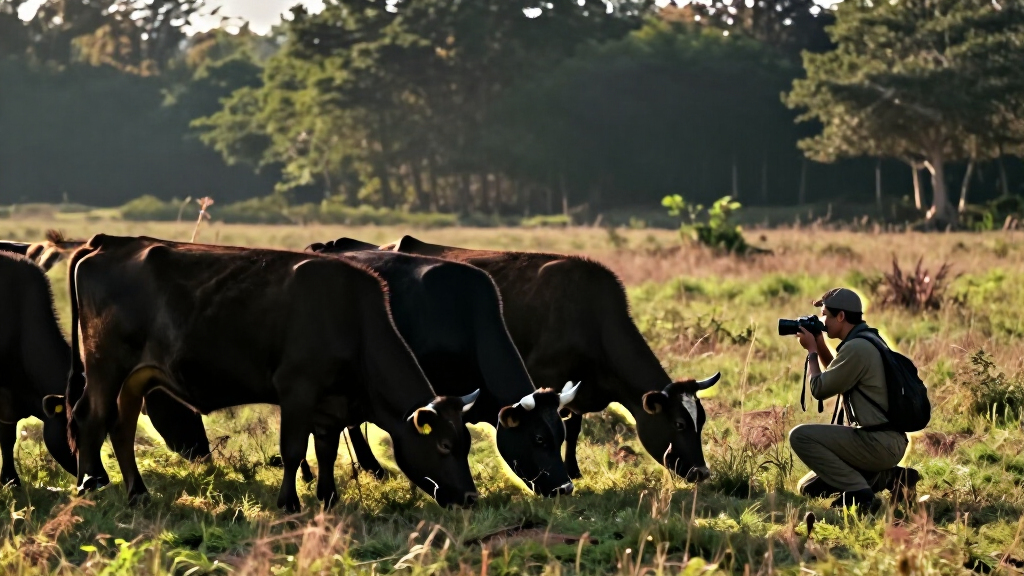
The report distinguishes total living mass, or biomass, from the amount of carbon contained in organisms. It estimates that cattle have about 650 million metric tonnes of biomass, making them the heaviest animal species in the comparison. Humans are estimated at about 350 million tonnes, while a 2009 estimate put Antarctic krill at 379 million tonnes. Those animal figures are not the same measurement as the carbon totals used to compare broader kingdoms of life.
For plants, the report first examines crops. Global sugar cane harvest exceeded 2 billion metric tonnes in 2023, according to the report’s cited production data. That is an annual harvest, not a direct estimate of all living sugar cane at a given moment. Because sugar cane is perennial and its root system persists between harvests, the report argues that its standing biomass may be greater than the harvest figure suggests, but does not provide a global species-level inventory.
The larger estimates concern wild boreal trees. The report cites Canada’s National Forest Inventory for more than 11 billion tonnes of black spruce growing in Canada, with additional trees in the United States. For Dahurian larch, it estimates at least 8.4 billion tonnes in Russia by allocating part of the country’s larch forest to that species. The larch estimate is an author calculation based on forest-area and wood-density figures, rather than a species-specific total published by Russia’s forest inventory.
Why Tree Biomass Changes the Ranking
The comparison highlights how the answer depends on what is counted. Cattle lead among animals, but plants hold far more carbon than animals as a kingdom in the 2018 global biomass study cited by the report. That study estimates about 450 billion tonnes of plant carbon, compared with about 2 billion tonnes for animals. These are carbon-mass estimates for entire kingdoms, not wet or total mass estimates for individual species.
Species-level estimates can help show how unevenly biomass is distributed, particularly in boreal forests where a small number of tree species account for a large share of forest mass. The report says three or four species can represent more than half the biomass in some boreal forests. That concentration makes forest composition relevant to measuring ecosystems and changes in them. But the available numbers do not support a precise worldwide contest between every species: they combine different locations, methods, years and definitions of mass.
boreal tree biomass measurement tools
As an affiliate, we earn on qualifying purchases.
As an affiliate, we earn on qualifying purchases.
How the Biomass Comparisons Differ
The report begins with a familiar claim that ants collectively weigh as much as humans, then notes that this comparison is misleading: ants include many species, while humans are one species. The same issue shapes its broader question. The article compares one species at a time, rather than all members of an animal group with all members of another group.
It also draws on a 2018 study by Bar-On and colleagues, which compares life’s kingdoms using carbon mass. Carbon makes up only part of an organism’s total weight, but the measure is useful for studying the biosphere and the movement of material through it. The report says plants, bacteria, fungi, archaea and protists all exceed animals in carbon mass in that study. It also notes that large amounts of bacteria live in aquifers and seafloor sediments, environments that are difficult to survey.
The animal estimates and crop harvest totals provide scale, but they should not be treated as a single standardized ranking. A harvest is a flow measured over a year; forest biomass is a stock estimated across standing trees; and the 2018 study reports carbon rather than total organism mass. The report’s headline question is therefore best answered provisionally: boreal tree species are strong candidates, not a confirmed worldwide winner.
As an affiliate, we earn on qualifying purchases.
Why No Species Is Confirmed as the Winner
The report does not identify a global survey that measures the total biomass of every species using one consistent method. Its black spruce figure is based on a Canadian inventory and excludes any contribution from trees elsewhere. Its Dahurian larch figure is less direct: the report says Russia’s inventory does not provide the same detailed species breakdown, so it estimates the species’ share from the total larch area and the assumed division between two main larch species.
It is also possible that an exceptionally abundant microbial species could rival or exceed the tree candidates, according to the report, because much microbial life occurs underground or beneath the seafloor and is difficult to measure. That possibility is not evidence that a particular bacterium leads the ranking. The estimates also need clarification on whether the reported tree masses refer to living whole-tree mass, wood volume converted using density, or another basis, before they can be compared directly with animal biomass.
As an affiliate, we earn on qualifying purchases.
Better Inventories Could Settle the Question
The report points to forest inventories and biomass research as the evidence currently available, but cites no scheduled study or official ranking that will resolve the comparison. A firmer answer would require species-level estimates across each species’ full range, using comparable methods and a clearly stated definition of mass. For trees, that would mean accounting consistently for living stems, roots and other biomass; for microbes, it would require better estimates from soils, aquifers and ocean sediments.
Until such data are available, the most supportable conclusion is limited: cattle are the leading animal in the report’s comparison, while black spruce and Dahurian larch are plausible candidates for the largest total biomass among individual species. The exact order—and whether an under-sampled microbial species belongs at the top—remains unresolved.
As an affiliate, we earn on qualifying purchases.
Key Questions
What species has the most biomass on Earth?
There is no confirmed global winner in the report. It identifies black spruce and Dahurian larch as plausible leaders based on estimates from Canada and Russia, while noting that the data are incomplete and not directly comparable.
Which animal species has the greatest total mass?
The report estimates that cattle have about 650 million metric tonnes of biomass, more than any other animal species it discusses. The figure is an estimate, and the article does not describe a uniform global census of cattle biomass.
How much biomass does black spruce have?
The report cites Canada’s National Forest Inventory for more than 11 billion tonnes of black spruce in Canada. It says black spruce also grows in the United States, but does not give a combined North American total.
Is sugar cane the heaviest plant species?
Not based on the figures in the report. Sugar cane had an annual harvest of more than 2 billion metric tonnes in 2023, but that is not the same as the mass of all living plants of the species. The report presents boreal trees as stronger candidates for the largest standing biomass.
Why do the estimates use different kinds of mass?
Some figures describe total organism mass, while the 2018 study compares kingdoms by carbon mass and crop figures describe annual harvests. Because these measurements have different definitions and time frames, they cannot be combined into a precise species ranking without further standardized data.
Source: hn
Halloween Picks
halloween
As an affiliate, we earn on qualifying purchases.