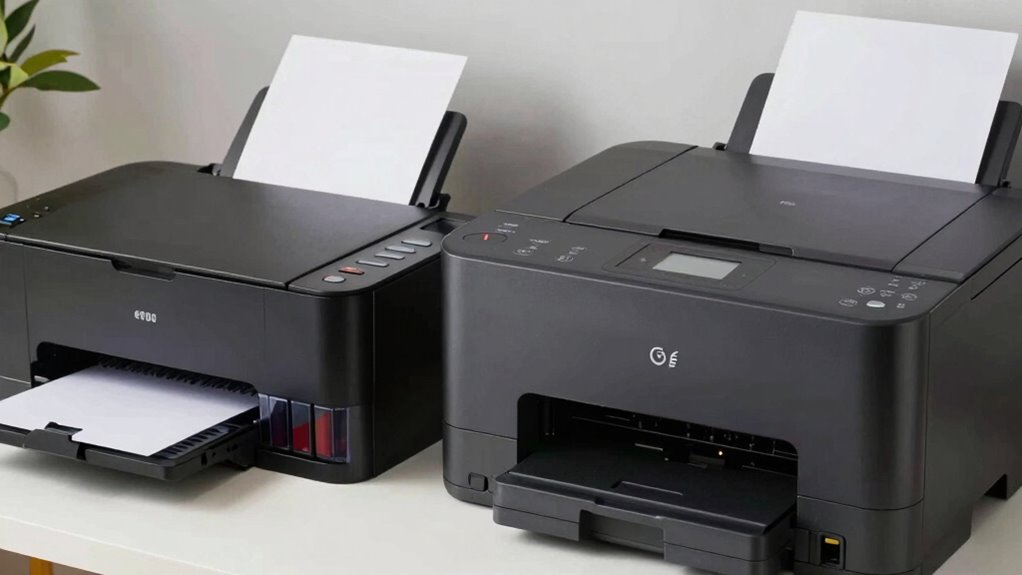
If you’re choosing between a laser and inkjet printer for your home office, consider your main needs. Laser printers are faster, handle high volumes well, and produce consistent, professional-looking documents, making them great for business use. Inkjet printers excel at photo and color-rich projects with vibrant images, but they’re slower and may smudge. Understanding these differences helps you pick the right device; keep going to discover more about each type’s features and best use cases.
Key Takeaways
- Laser printers offer faster printing speeds and are ideal for high-volume document printing at home.
- Inkjet printers excel at producing high-quality photos and detailed graphics, suitable for creative projects.
- Laser printers handle various paper types and heavier cardstock more reliably than inkjet models.
- Inkjet printers are generally more affordable upfront but may have higher long-term ink costs.
- Choose a laser printer for efficiency and bulk printing; opt for an inkjet for superior image quality.
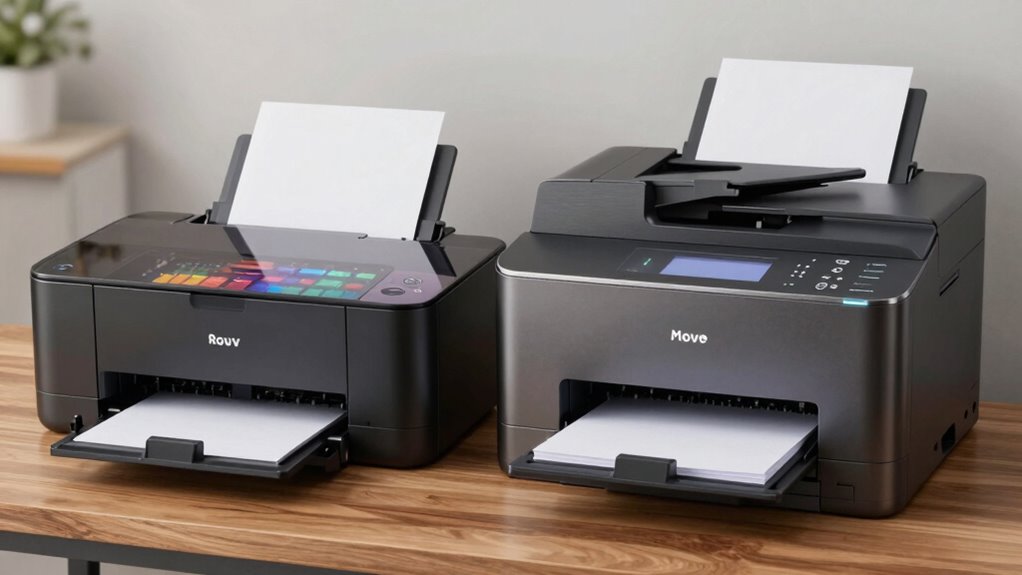
Have you ever wondered what types of printers are available to meet your needs? Choosing the right printer for your home office depends on understanding the differences between the main types: laser and inkjet. Each comes with its own advantages, especially when it comes to color accuracy and paper handling, which are essential factors for producing professional-looking documents and photos.
Laser printers are known for their speed and efficiency, making them ideal if you print large volumes regularly. They use toner, a powder-based ink, which allows for quick printing without sacrificing quality. When it comes to color accuracy, laser printers tend to produce consistent results, especially for business documents that require precise color matching, like charts or marketing materials. However, their strength isn’t as pronounced when printing photos, where inkjet printers generally excel. Regarding paper handling, laser printers handle a variety of paper types and sizes with ease, including heavier cardstock and specialty media, thanks to their robust paper trays and fusing technology. This means you can print on different surfaces without worrying about jams or misfeeds, which is a common concern with inkjet models.
Inkjet printers, on the other hand, are renowned for their ability to produce high-quality images and vibrant colors, making them the top choice if your home office includes photo printing or detailed graphics. They work by spraying tiny droplets of liquid ink directly onto paper, giving you excellent color accuracy and smooth gradients. If your work involves printing detailed photos or artwork, an inkjet is likely to deliver more impressive results. When it comes to paper handling, inkjet printers generally support a narrower range of paper types and sizes, and they tend to be slower than laser printers. They also require more careful handling, as they can smudge or bleed if not dried properly. This means you need to be mindful of the type of paper you use and how you store your prints, especially if you’re printing high-quality images or professional presentations.
Frequently Asked Questions
Which Printer Type Is More Eco-Friendly?
You’ll find inkjet printers are generally more eco-friendly because they use less energy and produce less waste. They often support eco-friendly practices like double-sided printing and using recycled ink cartridges. Laser printers tend to consume more energy, especially during warm-up, and generate more waste from toner cartridges. If reducing your environmental impact matters, choosing an inkjet with eco-conscious features helps you save energy and minimize waste.
Can Laser Printers Print in Color?
Yes, laser printers can print in color. While inkjet printers are often preferred for color printing due to their vibrant images, many laser printers now offer color capabilities, making them suitable for home offices needing high-quality color output. When comparing laser vs inkjet for color printing, laser printers typically produce sharper text and faster prints, but inkjets excel at detailed color images and photo printing.
How Much Do Ink Cartridges Typically Cost?
You’ll find ink cartridge pricing varies widely, typically ranging from $15 to $60 depending on the brand and printer model. You’ll also notice cartridge refill costs tend to be lower, often around $10 to $30, offering a more budget-friendly option. As you compare these costs, consider how often you print and the quality you desire—because upfront savings can lead to ongoing expenses.
Are Wireless Printers Compatible With All Devices?
Wireless printers are generally compatible with most devices thanks to their wireless connectivity features. They support various operating systems, including Windows, macOS, Android, and iOS. However, you should check the printer’s specifications to guarantee device compatibility. Some printers may require specific apps or software, so verifying these details beforehand helps avoid connection issues. Overall, most wireless printers offer broad device compatibility for your home office needs.
What Is the Average Lifespan of Each Printer Type?
Surprisingly, your laser printer often outlasts your inkjet, averaging around 5-10 years, thanks to its sturdy build and fast printing speed. Inkjets, delicate as they are, typically last 3-5 years, especially if you prioritize paper quality to prevent clogs. So, if longevity matters, your laser is the wise choice, but if you crave vibrant photos, be prepared for a shorter lifespan.
Conclusion
Think of choosing your printer like picking a trusty steed for your daily journey. If you need speed and sharpness for big battles (high-volume printing), a laser printer is your swift stallion. But if you prefer flexibility and vibrant colors for small quests, an inkjet is like a nimble pony. Whichever you choose, know that your printer will be your loyal companion, helping you conquer your home office tasks with confidence and ease.