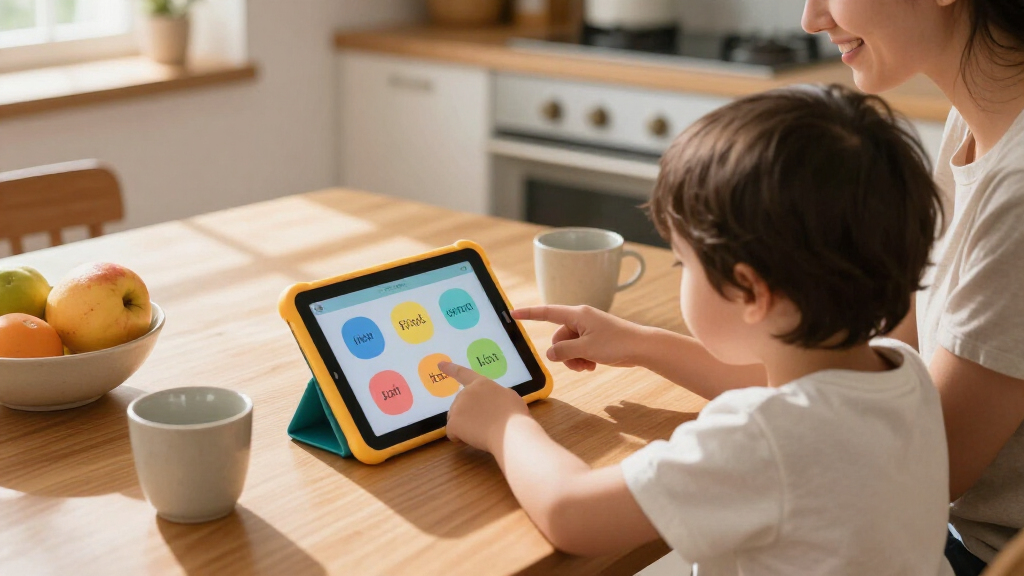
For a screen-based starting point, I name the Amazon Fire 7 Kids Tablet my best overall pick for its broader app flexibility and parent controls; the Qiaojoy Bilingual Learning Tablet stands out for simple early bilingual practice, while the JoyCat 156 Talking Flash Cards option favors hands-on listening and vocabulary. The main choice is between a connected tablet with more varied content and dedicated learning toys that keep practice simple and often screen-free. Age, language pair, and whether a child learns best by tapping, listening, or repeating words matter more than the word “tablet” on the box. Some products focus on one language pair, while others offer broader activities without the same structured language practice. Continue reading for the full breakdown and a guide to choosing a format that suits your child.

Prime made for students and young adults
- Fast, free delivery for dorm and study essentials
- Prime Video and Amazon Music included
- Member-only deals
Key Takeaways
- The Fire 7 Kids Tablet is the most flexible pick because it can support different learning apps, while dedicated toys offer a narrower, simpler experience.
- Qiaojoy and Boxiki focus on bilingual English practice, which may suit families who want a clear language pair rather than a general activity device.
- hahaland’s five-language format offers breadth across languages, but a wide selection does not automatically mean deeper practice in any one language.
- JoyCat’s talking flash-card models emphasize listening and vocabulary repetition; buyers should distinguish the general card set from the phonics-focused pages.
- LeapFrog’s eReader, LeapPad Academy, LeapTop Touch, and My First ABC Tablet span different formats, so age fit and interaction style separate them more than the shared brand name.
| Amazon Fire 7 Kids Tablet, 16 GB, Blue |  | Best Full-Tablet Starting Point | Display: 7-inch touchscreen, 1024 × 600, 171 ppi | Processor: Quad-core 2.0 GHz | Memory: 2 GB RAM | VIEW LATEST PRICE | See Our Full Breakdown |
| JoyCat Kids Learning Tablet with 156 Talking Flash Cards |  | Best for Screen-Free Early Literacy | Flash cards: 156 pages | Learning topics: Alphabet, short vowels, simple math, word building, songs, and learning games | Screen: Screen-free | VIEW LATEST PRICE | See Our Full Breakdown |
| LeapFrog Touch and Learn eReader, Teal |  | Best for Story-Led Phonics | Brand and model: LeapFrog Touch and Learn; model 80-621500 | Age range: 3 years and up | Stories: 10 total: 5 classic fairy tales and 5 phonics stories | VIEW LATEST PRICE | See Our Full Breakdown |
| Screen-Free Toddler Learning Tablet Toy |  | Best for Multilingual Toddler Exposure | Activities: 110+ | Modes: Music, Number, Color, and Cognition | Languages: English, Spanish, German, French, and Italian | VIEW LATEST PRICE | See Our Full Breakdown |
| LeapFrog LeapPad Academy Kids’ Learning Tablet, Green |  | Best for Guided Learning Activities | Brand and model: LeapFrog LeapPad Academy; model 80-602210 | Model year: 2019 | Operating system: Android 10 | VIEW LATEST PRICE | See Our Full Breakdown |
| LeapFrog 2-in-1 LeapTop Touch |  | Best for Pretend-Play Beginners | Age range: 2–5 years | Learning modes: ABCs, numbers, games, music, and messages | Keyboard: Letters A–Z and numbers 1–10 | VIEW LATEST PRICE | See Our Full Breakdown |
| Qiaojoy Bilingual Learning Tablet for Kids Ages 2–5 |  | Best for Screen-Free English-Spanish Practice | Age range: 2–5 years | Languages: English and Spanish | Learning modes: 5 | VIEW LATEST PRICE | See Our Full Breakdown |
| hahaland 5-Language Learning Tablet Toy for Toddlers Ages 1–3 |  | Best for Early Multilingual Exploration | Age range: 12–36 months | Languages listed: English, French, Spanish, German, and Italian; description also refers to three languages | Activities: 90+ modules | VIEW LATEST PRICE | See Our Full Breakdown |
| Peacurh Trilingual Learning Tablet Toy with Music and Sounds |  | Best for Compact Three-Language Play | Brand: Peacurh | Model: 35847M | Recommended age: 12 months–3 years | VIEW LATEST PRICE | See Our Full Breakdown |
| Boxiki Kids Spanish-English Bilingual Learning Tablet with LED Screen |  | Best for Visual Word Practice | Recommended age: 36 months–7 years | Languages: Spanish and English | Display: LCD screen for letters, words, and graphics | VIEW LATEST PRICE | See Our Full Breakdown |
| JoyCat Bilingual English-Spanish Kids Learning Tablet with Talking Flash Cards |  | Best for English-Spanish Practice | Brand: JoyCat | Model: LT-KLP-04 | Languages: English and Spanish | VIEW LATEST PRICE | See Our Full Breakdown |
| JoyCat Kids Learning Tablet with 156 Talking Phonics Flash Card Pages |  | Best for Early Phonics | Card pages: 156 | Card material: FSC-certified paper | Learning topics: Letters, phonics, short vowels, word building, math, numbers, and songs | VIEW LATEST PRICE | See Our Full Breakdown |
| LeapFrog My First ABC Tablet Toddler Learning Toy |  | Best for First Words | Brand: LeapFrog | Model number: 80-622900 | Age range: 12 months–3 years | VIEW LATEST PRICE | See Our Full Breakdown |
| Topelotek 7-Inch Kids Tablet with Offline Learning Apps |  | Best for App-Based Variety | Screen size: 7 inches | RAM: 2GB | Storage: 32GB, expandable to 128GB | VIEW LATEST PRICE | See Our Full Breakdown |
| Kids Preschool ABC Educational Learning Tablet |  | Best for Simple Travel Practice | Learning activities: 7 | Educational topics: Letters, words, numbers, spelling, music, and basic math | Controls: Repeat function and volume adjustment | VIEW LATEST PRICE | See Our Full Breakdown |
More Details on Our Top Picks
Amazon Fire 7 Kids Tablet, 16 GB, Blue
For families who want language practice alongside books, games, and other child-friendly apps, the Fire 7 Kids offers more room to grow than the single-purpose JoyCat talking-card tablet. Its 7-inch touchscreen and Amazon Kids+ subscription give parents a broad place to find age-filtered content, while time limits and educational goals help shape screen use. The included case and two-year worry-free guarantee also suit households expecting frequent drops. The tradeoff is that this is a general-purpose tablet, so parents will need to choose language activities rather than rely on a dedicated bilingual curriculum. Its 1024 × 600 display is modest, and the 16 GB capacity may call for a microSD card if you save lots of content. The included subscription renews after one year unless canceled.
Pros:- Amazon Kids+ subscription included for one year
- Parental controls include age filters, educational goals, and time limits
- Kid-proof case and two-year worry-free guarantee
- microSD expansion supported up to 1 TB
Cons:- Language learning depends on parents finding suitable apps and content
- 1024 × 600 resolution is relatively low
- Amazon Kids+ renews after the first year unless canceled
Best for: Parents of children ages 3–7 who want language apps and broader child-friendly content with adjustable screen-time controls.
Not ideal for: Families seeking a dedicated, screen-free language toy or a ready-made bilingual program without ongoing content selection.
- Display:7-inch touchscreen, 1024 × 600, 171 ppi
- Processor:Quad-core 2.0 GHz
- Memory:2 GB RAM
- Storage:16 GB internal; 9.5 GB available; microSD support up to 1 TB
- Battery life:Up to 10 hours
- Weight:15.1 oz (429 g)
- Connectivity and ports:Dual-band Wi-Fi, Bluetooth, USB-C, microSD slot, 3.5 mm stereo jack
- Included:Kid-proof case and one-year Amazon Kids+ subscription
- Guarantee:Two-year worry-free guarantee
Our verdict“Choose the Fire 7 Kids if you want a protected, flexible tablet for language apps and other child-friendly activities.”
JoyCat Kids Learning Tablet with 156 Talking Flash Cards
The JoyCat 156-card set is the most focused pick here for young children who are beginning to connect spoken words with letters and simple concepts. Instead of the open-ended app library on the Amazon Fire 7 Kids, it uses an insert-and-tap routine: a child chooses a card and hears spoken prompts or sound effects. Its 156 pages cover alphabet learning, short vowels, word building, simple math, songs, and games, giving practice a clear structure without a screen. That simplicity can help independent play, though it gives parents less flexibility to add new topics or tailor a language path. The supplied details do not identify which languages the cards teach, so buyers specifically seeking bilingual practice should check that before choosing it. Its early-learning focus may also lose appeal as children advance.
Pros:- Screen-free interaction with spoken prompts
- 156 card pages span early literacy, math, songs, and games
- Insert-and-tap design supports child-led practice
- Combines word-building activities with sound effects
Cons:- Provided product details do not specify the teaching languages
- Early-learning topics may have limited appeal as children grow
- Fixed card set offers less content flexibility than an app-based tablet
Best for: Caregivers of preschoolers who want hands-on letter, vowel, and early word practice without a screen.
Not ideal for: Families looking for a clearly specified bilingual curriculum, advanced lessons, or content that can expand through apps.
- Flash cards:156 pages
- Learning topics:Alphabet, short vowels, simple math, word building, songs, and learning games
- Screen:Screen-free
- Interaction:Insert-and-tap design with spoken prompts and sound effects
Our verdict“Pick JoyCat for structured, screen-free early literacy practice, after confirming its language content fits your child.”
LeapFrog Touch and Learn eReader, Teal
Children who learn well through stories may get more out of the LeapFrog Touch and Learn eReader than from the JoyCat 156-card tablet, which centers practice on individual flash cards. This LeapFrog model pairs five classic fairy tales with five phonics stories, then uses quizzes, games, and reading songs to bring vowels and word building into the activity. That mix offers a gentle route from listening to early reading for ages 3 and up. It is still a narrow, self-contained learning toy, though: the listing gives no language choices, so it is a less certain fit for families explicitly seeking bilingual lessons than the five-language toddler toy in this roundup. The three AA batteries are another ongoing consideration, and the supplied batteries are for demonstration only.
Pros:- Combines five classic fairy tales with five phonics stories
- Vowel and word-building activities support early reading
- Adds quizzes, games, and reading songs to story listening
- Designed for children ages 3 and up
Cons:- Requires three AA batteries, and demonstration batteries are not intended for ongoing use
- Provided details do not specify multilingual instruction
- Fixed set of ten stories offers less breadth than a general tablet
Best for: Families with children ages 3 and up who want English story listening paired with introductory phonics games.
Not ideal for: Parents seeking verified multilingual instruction, rechargeable power, or a broad library of expandable lessons.
- Brand and model:LeapFrog Touch and Learn; model 80-621500
- Age range:3 years and up
- Stories:10 total: 5 classic fairy tales and 5 phonics stories
- Display:LCD; native resolution 800 × 600
- Connectivity:USB
- Memory storage capacity:32 GB
- Power:3 AA batteries
- Dimensions and weight:8.8 × 6.3 × 1.2 inches; 14.4 ounces
- Color:Teal
Our verdict“Choose the eReader for a preschooler who benefits from stories and phonics in one focused toy.”
Screen-Free Toddler Learning Tablet Toy
For toddlers who benefit from hearing several languages during everyday play, this screen-free tablet toy has a clearer language angle than the LeapFrog Touch and Learn eReader: it supports English, Spanish, German, French, and Italian. Its 110-plus activities use music, numbers, colors, cognition prompts, animal sounds, songs, quizzes, and role-play effects, making it a broad first-exposure toy for ages 1–3 rather than a phonics reader. The compact form and rounded edges also suit travel and small hands. The tradeoff is depth: five-language support does not, by itself, establish a structured vocabulary or literacy curriculum, and the supplied details do not say how much content appears in each language. Parents also need to provide three AA batteries, which are not included.
Pros:- Supports five languages: English, Spanish, German, French, and Italian
- More than 110 activities across four modes
- Screen-free play with songs, animal sounds, quizzes, and role-play effects
- Compact design with rounded edges for travel
Cons:- Three AA batteries are required and not included
- Product details do not describe a structured language curriculum
- Recommended age range limits its fit for older children
Best for: Caregivers of children ages 1–3 who want playful exposure to several spoken languages without a screen.
Not ideal for: Families seeking detailed language lessons, reading progression, or rechargeable operation.
- Activities:110+
- Modes:Music, Number, Color, and Cognition
- Languages:English, Spanish, German, French, and Italian
- Recommended age:1–3 years
- Screen:Screen-free
- Power:3 AA batteries, not included
Our verdict“Choose this toy for casual multilingual sound and word exposure during toddler play.”
LeapFrog LeapPad Academy Kids’ Learning Tablet, Green
The LeapPad Academy suits families who want a more curated learning environment than the Amazon Fire 7 Kids, with more than 20 educator-approved apps spanning reading, writing, math, coding, problem-solving, and creativity. For language learning, its reading and writing activities offer a broader school-readiness focus than the story-and-phonics-only LeapFrog eReader. A stylus, kickstand bumper, and parental controls add practical support for guided sessions, while the shatter-safe screen is designed for young users. The limitation is language specificity: the supplied details do not identify bilingual courses or the languages taught, so I would not treat it as a guaranteed foreign-language tutor. It is also an older model running Android 10, and some additional games, videos, music, and eBooks cost separately; parts of LeapFrog Academy require a subscription after its three-month trial.
Pros:- More than 20 educator-approved apps include reading and writing
- Three-month LeapFrog Academy trial included
- Protective bumper includes a kickstand and stylus
- Parental controls include time limits and app management
Cons:- Provided details do not specify bilingual courses or language choices
- Some extra games, videos, music, and eBooks are sold separately
- Some LeapFrog Academy content requires a subscription after the trial
Best for: Parents of children ages 3–8 who want a guided, app-based learning tablet with reading and writing activities.
Not ideal for: Families whose main goal is a defined bilingual curriculum or who want all additional content included without subscriptions.
- Brand and model:LeapFrog LeapPad Academy; model 80-602210
- Model year:2019
- Operating system:Android 10
- Screen:7-inch shatter-safe screen
- Age range:3–8 years
- Included apps:More than 20 educator-approved apps
- Included components:Removable silicone bumper with kickstand, stylus, USB Type-C cable, wall adapter, quick start guide, and instruction manual
- Battery:Rechargeable lithium-ion
- Warranty:2-year limited warranty
Our verdict“Pick the LeapPad Academy for guided early learning across reading and other subjects, provided a specific bilingual course is not your main requirement.”
LeapFrog 2-in-1 LeapTop Touch
The LeapTop Touch makes early letter practice feel like using a grown-up computer. Its keyboard and flip-over touch surface give preschoolers two ways to explore, while activities cover letters, numbers, music, games, and messages. Name customization adds a personal spelling exercise, a useful starting point for children learning to recognize their own name. Compared with the Qiaojoy Bilingual Learning Tablet, this is more focused on English-language preschool play than bilingual lessons or broad topic cards. It also uses physical buttons and pretend-work routines rather than the screen-free audio-card format of Qiaojoy. The tradeoff is a narrower language-learning focus: the supplied details list no second language, and regular play may call for fresh AA batteries because the included ones are for demonstration. It suits first steps, not families seeking structured bilingual practice.
Pros:- Flips between laptop and touch-tablet play
- Keyboard includes letters A–Z and numbers 1–10
- Five modes mix letters, numbers, games, music, and messages
- Activities can use the child’s name for personalized spelling practice
Cons:- Product details do not list bilingual lessons
- Three AA batteries are needed, and the included demo batteries may need replacing
Best for: Preschoolers who enjoy pretend computer play and are beginning to recognize letters, numbers, or their own name
Not ideal for: Families seeking English-Spanish instruction or lessons across many topics; the listed activities focus on foundational preschool concepts
- Age range:2–5 years
- Learning modes:ABCs, numbers, games, music, and messages
- Keyboard:Letters A–Z and numbers 1–10
- Play formats:Laptop and touch-tablet modes
- Personalization:Activities can use the child’s name
- Power:3 AA batteries
- Battery note:Batteries included for demo purposes; new batteries recommended for regular use
Our verdict“Choose the LeapTop Touch for a preschooler drawn to keyboard pretend play and early English letter practice, rather than bilingual lessons.”
Qiaojoy Bilingual Learning Tablet for Kids Ages 2–5
Qiaojoy is the clearest fit here for families who want young children to hear both English and Spanish. Its screen-free pad works with 20 cards containing 40 lesson pages, with audio, questions, quizzes, and facts on topics from letters and numbers to animals and vehicles. That card structure offers more varied subject matter than the LeapFrog 2-in-1 LeapTop Touch, whose listed activities center on foundational concepts and pretend computer play. Compared with the hahaland 5-Language Learning Tablet Toy, Qiaojoy has fewer listed languages but gives a concrete card-and-page count to help parents understand what the lessons cover. The main compromise is simple audio control: there are only two volume levels, which may not suit every room or child. It is a focused bilingual learning aid, though the supplied details do not describe a screen display or adjustable lesson difficulty.
Pros:- Teaches in English and Spanish
- Screen-free format supports audio-led play without a display
- 20 cards provide 40 lesson pages across varied early topics
- Interactive questions, quizzes, sounds, and facts add variety
Cons:- Volume control has only two levels
- The supplied product details do not specify adjustable lesson difficulty
Best for: Parents of children ages 2–5 who want screen-free English-Spanish audio lessons organized around varied early-learning topics
Not ideal for: Families wanting more than two volume settings or a visual display to support lessons
- Age range:2–5 years
- Languages:English and Spanish
- Learning modes:5
- Learning cards:20 PVC cards
- Lesson pages:40
- Volume control:2 levels
- Screen:Screen-free
Our verdict“Pick Qiaojoy for structured, screen-free English-Spanish exploration across multiple early-learning topics.”
hahaland 5-Language Learning Tablet Toy for Toddlers Ages 1–3
hahaland is aimed at toddlers who benefit from short, varied sound-led play across several languages. It lists more than 90 activities, 39 interactive icons, and four modes spanning learning, quizzes, music, and pretend play. The listed languages—English, French, Spanish, German, and Italian—give it broader language exposure than the Peacurh Trilingual Learning Tablet Toy, which names three. Its 12–36 month age range also starts earlier than the Qiaojoy Bilingual Learning Tablet, making it a better match for families introducing sounds and simple concepts before preschool. That breadth comes with a detail gap: the description later refers to only three languages, so the five-language claim is inconsistent. It also omits battery or power information. I would choose it for variety and early exposure, while checking the language and power details before relying on those features.
Pros:- Lists five languages, offering broader stated language exposure than Peacurh
- More than 90 activities span early concepts, sounds, and play
- Four modes include learning, quiz, music, and pretend play
- Screen-free and made from non-toxic, BPA-free ABS plastic
Cons:- Product description gives inconsistent language counts
- Battery or power requirements are not provided
Best for: Families with toddlers ages 1–3 who want screen-free exposure to several spoken languages alongside music and pretend play
Not ideal for: Buyers who need clearly confirmed language coverage or battery requirements before choosing a toy
- Age range:12–36 months
- Languages listed:English, French, Spanish, German, and Italian; description also refers to three languages
- Activities:90+ modules
- Interactive icons:39
- Modes:Learning, quiz, music, and pretend play
- Material:Non-toxic, BPA-free ABS plastic
- Screen:No screen
- Power:Not specified
Our verdict“Consider hahaland for broad, screen-free toddler play if you can confirm the language list and power details.”
Peacurh Trilingual Learning Tablet Toy with Music and Sounds
Peacurh pairs three named languages with familiar toddler topics and sound effects. Its learning and quiz modes cover letters, numbers, colors, shapes, animals, vehicles, instruments, fruits, and dates, while music and pretend-play modes give children other ways to use the 39 icons. Against the hahaland 5-Language Learning Tablet Toy, Peacurh lists fewer languages, but its English, Spanish, and French set is explicit and its description specifies a pink tablet with rounded edges. Compared with Qiaojoy’s card-based lessons, this is a self-contained toy organized around touch icons rather than a separate set of learning cards. Its age range is toddler-focused, and the tradeoff is limited practical detail: the supplied information does not state battery requirements or whether batteries are included. Choose it for straightforward multilingual topic play, not for a clearly documented lesson sequence.
Pros:- Names English, Spanish, and French as its three languages
- 39 icons cover a wide set of early-learning topics
- Four modes include learning, quiz, music, and pretend play
- BPA-free plastic and rounded edges are specified
Cons:- Battery requirements and whether batteries are included are unspecified
- Product details do not give a count of lessons or learning pages
Best for: Caregivers seeking a lightweight, screen-free style of English, Spanish, and French sound play for children ages 1–3
Not ideal for: Families who need specified battery details or a card-based, clearly counted lesson curriculum
- Brand:Peacurh
- Model:35847M
- Recommended age:12 months–3 years
- Languages:English, Spanish, and French
- Play modes:Learning, quiz, music, and pretend play
- Number of icons:39
- Material:BPA-free plastic
- Color:Pink
Our verdict“Choose Peacurh for simple three-language topic and music play when a defined card curriculum is not a priority.”
Boxiki Kids Spanish-English Bilingual Learning Tablet with LED Screen
Boxiki Kids adds a small visual display to English-Spanish practice for children ages 3 and up. The LCD screen can show letters, words, and graphics while activities cover spelling, numbers, quizzes, songs, and melodies. That visual cue makes this a different fit from the screen-free Qiaojoy Bilingual Learning Tablet, which uses audio and learning cards instead. Boxiki also extends its recommended age to seven, while the LeapFrog 2-in-1 LeapTop Touch is aimed at younger preschoolers and centers on pretend computer play. The display has a practical limit: the supplied description calls it small, which may not hold every child’s attention. It also requires three AAA batteries that are not included. This is the pick for children who benefit from seeing words while hearing them, provided a compact screen suits them.
Pros:- Supports Spanish and English learning
- LCD screen displays letters, words, and graphics
- Activities include spelling, numbers, quizzes, songs, and melodies
- Auto shut-off and volume control are included
Cons:- Small screen may limit engagement for some children
- Requires three AAA batteries, which are not included
Best for: Families with children ages 3–7 who want Spanish-English word and spelling activities paired with visual prompts
Not ideal for: Parents seeking a screen-free toy or a larger display for visual lessons
- Recommended age:36 months–7 years
- Languages:Spanish and English
- Display:LCD screen for letters, words, and graphics
- Activities:Letters, words, spelling, numbers, quizzes, songs, and melodies
- Power:3 AAA batteries
- Batteries:Not included
- Controls:Volume control and auto shut-off
Our verdict“Choose Boxiki for bilingual word practice with visual prompts if a small LCD screen fits your child’s learning style.”
JoyCat Bilingual English-Spanish Kids Learning Tablet with Talking Flash Cards
Two-language listening practice gives this screen-free JoyCat a clear place in a language-learning roundup. Its talking cards cover everyday themes such as animals, food, and emotions, while pronunciation, music, and games give children several ways to hear and repeat words. Compared with the JoyCat 156-page phonics tablet, this model is the more direct fit for families who want English and Spanish exposure; the other JoyCat focuses on early literacy in English. The age range also stretches from toddlers to early elementary learners, which may suit siblings sharing one device. There is a listing inconsistency: it describes both 106 pages and 53 talking cards, so the exact card count is unclear. Two volume levels offer limited flexibility, and the activities depend on the included cards rather than a growing app library.
Pros:- Pairs English and Spanish audio with hands-on cards
- Covers practical themes including letters, food, animals, and emotions
- Adds music, sounds, and 20 interactive games
- Portable format suits car rides and travel
Cons:- Listing conflicts between 106 pages and 53 talking cards
- Two volume levels may not suit every room or child
- Fixed card content offers less flexibility than an app-based tablet
Best for: Families introducing English and Spanish vocabulary through guided, screen-free play at home or on trips
Not ideal for: Buyers who need a confirmed card count, deeper grammar instruction, or adjustable volume beyond two settings
- Brand:JoyCat
- Model:LT-KLP-04
- Languages:English and Spanish
- Flash-card content:Listing states 106 pages and 53 talking flash cards
- Themes:40+
- Interactive games:20
- Age range:24 months to 7 years
- Volume levels:2
Our verdict“Choose this JoyCat for portable English-Spanish vocabulary practice, provided the unclear card count is not a deciding factor.”
JoyCat Kids Learning Tablet with 156 Talking Phonics Flash Card Pages
Early reading practice is the focus here: children insert a card and tap its red circle to hear American English pronunciations, then work through letters, short vowels, word building, and simple number activities. That hands-on sequence may help keep preschoolers engaged while they connect printed material with spoken sounds. Compared with the bilingual JoyCat English-Spanish tablet, this one gives up a second language in favor of more explicit phonics and early math topics. Its 156 pages provide a defined set of material, though the card-insertion routine means an adult may need to help younger children handle each step. The screen-free design avoids app distractions, but also limits the device to its supplied content; no battery or power information is listed, which makes planning for regular use harder.
Pros:- 156 pages cover letters, phonics, short vowels, and word building
- Audio uses Standard American English pronunciation
- Adds numbers, math, songs, games, and quizzes
- Card handling and tapping provide hands-on practice
Cons:- Children must insert cards and tap them for activities
- No battery or power details are provided
- English-only lessons do not serve families seeking Spanish practice
Best for: Caregivers of children ages 2–5 who want guided English phonics and vocabulary practice without a screen
Not ideal for: Families seeking bilingual lessons, app flexibility, or clear information about battery and power needs
- Card pages:156
- Card material:FSC-certified paper
- Learning topics:Letters, phonics, short vowels, word building, math, numbers, and songs
- Audio accent:Standard American English
- Recommended age:2–5 years
- Screen:Screen-free
Our verdict“Pick this model for structured, screen-free English phonics practice if the card-based routine suits your child.”
LeapFrog My First ABC Tablet Toddler Learning Toy
First letters and listening skills take center stage on this LeapFrog toy, which introduces toddlers to words, colors, early phonics, music, and character stories through bright backlit buttons. Its 12-month starting age makes it a younger-child option than the JoyCat 156-page phonics tablet, which is aimed at ages 2–5 and asks children to manage separate cards. Scout and Violet provide familiar voices and story activities, giving caregivers a simple way to encourage listening and button pressing. For language learning, though, the scope is introductory rather than a path into sustained reading or another language. The plastic device is portable at under a pound, but its activities are built in, and regular use calls for three AAA batteries; the included demo batteries are not intended for long-term play.
Pros:- Introduces letters, words, colors, and early phonics
- Backlit buttons make activities easy for toddlers to find
- Includes stories, character activities, music, and the ABC song
- Compact size and 11.84-ounce weight suit small hands
Cons:- Requires three AAA batteries, and demo batteries are intended for short-term use
- Built-in activities offer less content flexibility than app-based tablets
- Focuses on introductory English rather than bilingual learning
Best for: Caregivers of toddlers ages 1–3 seeking a simple introduction to letters, spoken words, and listening
Not ideal for: Families looking for bilingual instruction, expandable lessons, or a screen-free card-based phonics curriculum
- Brand:LeapFrog
- Model number:80-622900
- Age range:12 months–3 years
- Educational objectives:Early phonics, language development, letter recognition, listening comprehension, motor skills, and pre-reading
- Power:3 AAA batteries
- Dimensions:8.3 × 6.3 × 1.1 inches
- Weight:11.84 ounces
- Material:Plastic
Our verdict“Choose this LeapFrog for a toddler’s first letter and listening activities, not for an expanding language curriculum.”
Topelotek 7-Inch Kids Tablet with Offline Learning Apps
App-based learning variety sets the Topelotek apart from the roundup’s screen-free toys. Its preloaded offline lessons include early education, brain exercises, mini games, and STEM, while parental controls let caregivers filter content and set learning targets and screen-time limits. That format can offer more kinds of activities than the Kids Preschool ABC Educational Learning Tablet, whose built-in lessons focus on basic topics and cannot be expanded in the same way. The tradeoff is that this is a general-purpose 7-inch screen, not a dedicated language tutor: the supplied details do not identify specific language courses or bilingual instruction. The 2GB of RAM may also limit performance with demanding apps, and the 3500mAh battery capacity alone does not indicate how long it runs between charges.
Pros:- Preloaded offline lessons include early education, games, and STEM
- Parental controls include time limits, learning targets, and content filters
- Storage expands from 32GB to 128GB
- Drop-resistant construction and a rotatable stand support everyday use
Cons:- Product details do not specify a language-learning course or bilingual lessons
- 2GB RAM may constrain more demanding apps
- Screen-based activities require caregiver limits for balanced use
Best for: Caregivers of children ages 3–12 who want offline educational apps and controls over screen use
Not ideal for: Families seeking a clearly specified English-Spanish curriculum or wanting language practice without a screen
- Screen size:7 inches
- RAM:2GB
- Storage:32GB, expandable to 128GB
- Battery capacity:3500mAh
- Learning content:Offline Montessori lessons, early education, brain exercises, mini games, and STEM
- Parental controls:Screen-time limits, learning targets, privacy locks, and content filters
- Additional features:Adjustable brightness, drop-resistant construction, and rotatable stand
- Recommended age:3–12 years
Our verdict“Choose the Topelotek for controlled access to varied offline learning apps, but check the installed language content before buying for language study.”
Kids Preschool ABC Educational Learning Tablet
Simple, offline practice makes this preschool toy a straightforward travel companion for letters, words, numbers, spelling, music, and basic math. It needs no internet and has repeat and volume controls, so children can revisit spoken material without a caregiver reopening an app. Compared with the Topelotek 7-inch kids tablet, it offers fewer kinds of content and parental controls, but its fixed activities avoid the setup and screen management of a general-purpose tablet. The language-learning scope remains basic: the supplied information does not describe bilingual lessons or a structured pronunciation curriculum. A one-minute inactivity shutoff can save battery, yet may interrupt a child who pauses between activities. The screen is a fixed sticker, so it cannot change to show new lessons or adapt as the child progresses.
Pros:- Covers letters, words, numbers, spelling, music, and basic math
- Requires no internet connection
- Repeat function supports replaying activities
- Volume adjustment lets caregivers manage audio level
Cons:- Fixed sticker screen cannot display changing lessons
- Automatic shutoff after one minute may interrupt pauses
- Product details do not specify bilingual content or a structured language course
Best for: Families wanting a basic, internet-free toy for short letter, word, and number activities on trips
Not ideal for: Caregivers seeking bilingual instruction, a changing display, or lessons that adapt to a child’s progress
- Learning activities:7
- Educational topics:Letters, words, numbers, spelling, music, and basic math
- Controls:Repeat function and volume adjustment
- Power-saving feature:Automatic shutoff after 1 minute of inactivity
- Internet required:No
- Display:Fixed sticker screen
Our verdict“Pick this toy for simple offline practice during short trips, but choose another option for bilingual or progressive lessons.”
How We Picked
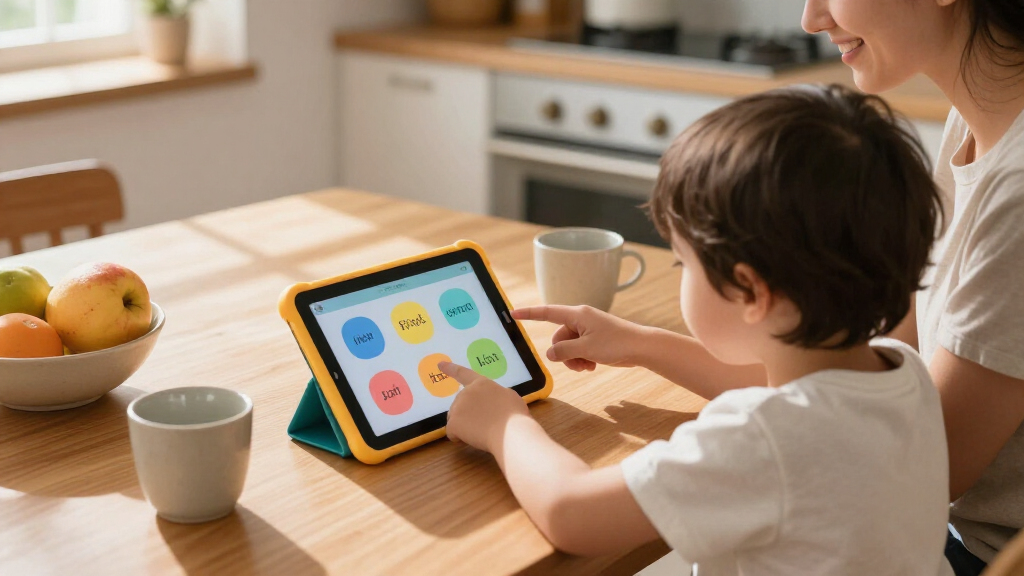
I compared the 15 products by how directly they support language practice for children: the languages or language pairs described, whether activities involve listening, speaking, phonics, or vocabulary, and how much structure the product appears to offer. I also weighed age fit, ease of use, portability, screen exposure, and whether the device is a dedicated toy or a general tablet that can support a wider range of apps. A language-focused product ranks ahead when its stated format gives families a clear path to repeated practice; broader devices gain ground for flexibility and parental management.
The ordering reflects different buyer needs rather than a single measure of learning quality. I placed flexible and clearly bilingual options near the top, followed by specialized flash-card and early literacy formats, then general preschool learning toys and app-based alternatives whose language depth depends more on the content selected. Product names and listed features do not establish teaching quality, spoken-language recognition, or curriculum depth, so I treat those as points for buyers to confirm before choosing.
Factors to Consider When Choosing Language Learning Tablets For Kids
Before choosing a device, I would match its learning format to the way your child will actually practice. A language label can describe anything from repeated audio vocabulary to a broad tablet that runs third-party apps, and those formats ask for different levels of attention and adult help.
Choose One Clear Language Goal
Start with the outcome you want: first words in a second language, alphabet sounds, pronunciation exposure, or a wider set of preschool activities. These goals are related, but a vocabulary card set does not necessarily teach reading, and phonics practice does not guarantee conversation skills. A product that covers many languages may be useful for exploration, while a bilingual device can give a child more repetition in a chosen pair. Avoid treating the number of languages listed as a measure of depth. Check whether the activities repeat useful words in context or mainly cycle through isolated labels. For a child just beginning, one language pair and a small set of recurring words may be easier to sustain than a long menu.
Match the Interaction to Your Child’s Age
Age guidance is a starting point, but attention span, dexterity, and tolerance for audio prompts vary widely. Younger toddlers often benefit from large, simple controls and short sound-led activities, while older preschoolers may be ready for letters, spelling, or more independent choices. Too many buttons can turn practice into random pressing; too little variety can lose a child who already knows the basics. Consider whether an adult needs to set up cards, explain prompts, or help switch languages. A toy that works well in a short shared session may be a poor fit for independent use. Choose for the child’s current abilities and allow room to grow without assuming a device will replace adult conversation.
Decide How Much Screen Time You Want
“Tablet” can mean a conventional screen device or a screen-free toy shaped like one, and that difference changes how children use it. A screen-based tablet can offer visual prompts and a wider variety of content, but it may also bring distractions or require more parental setup. Screen-free models keep interaction focused on buttons, cards, and audio, though their lessons are usually less adaptable. Decide whether the device will be used for brief language sessions, travel, or broader entertainment. For a general-purpose tablet, review parental controls and the process for managing apps before handing it to a child. For a dedicated toy, check how clearly it signals the selected activity and whether it can hold the child’s attention without a display.
Check the Language Pair and Audio Details
Confirm that the device teaches the languages your household needs, including the direction of translation when it is bilingual. Product descriptions may say “bilingual” without making clear which vocabulary is included or whether both languages appear in every activity. Audio quality and accent can matter for repeated listening, so seek out sample recordings or detailed demonstrations where available. Also check whether the device asks children to repeat words or simply plays them; passive listening and spoken practice serve different goals. If your family uses a particular regional variety, look for that information instead of assuming all versions sound alike. A clear match between the product’s language content and your child’s learning goal is more useful than a long feature list.
Think About Progression and Adult Involvement
Some learning toys are strongest as an introduction, while app-based tablets can potentially support changing interests through additional content. That flexibility depends on what is available, how it is selected, and whether the child can use it without drifting into unrelated activities. Ask whether a child can move from hearing a word to recognizing it, saying it, or using it in a simple prompt. A product that repeats familiar material can build confidence, but may become limiting once a child has mastered it. Adult participation can fill gaps: naming objects together and using new words in daily routines extends practice beyond the device. Choose a setup that fits the amount of guidance you can realistically provide.
Weigh Durability, Portability, and Upkeep
A language device is useful only if it survives the places your child will use it and stays ready for short practice sessions. Check how it is powered, whether cards or accessories can be misplaced, and how easy it is to wipe clean. A compact dedicated toy may travel more simply than a larger screen device, while a general tablet may need a protective case and charging routine. Consider whether the content works offline if you plan to use it away from home. For products with physical cards, look at storage and replacement options before relying on them as a daily activity. These small ownership details can matter more over time than an extra mode listed on the package.
Frequently Asked Questions
Should I choose a bilingual toy or a general tablet for language learning?
I would choose a bilingual toy when you want a focused routine with predictable audio and simple controls. A general tablet makes more sense when you want to select from multiple learning apps or use the device for other supervised activities. Its flexibility also means more setup and a need to manage what the child can access. Compare the actual language content available, rather than assuming a general tablet includes structured language lessons by default. If you are unsure, consider how much time you want to spend choosing and supervising content.
Is a five-language learning toy better than an English-Spanish one?
Not automatically. A five-language toy may be appealing for exposure or family curiosity, but it may spread its activities across more languages. A bilingual model can be a better fit when a child needs regular practice in a specific pair. Look for examples of the words and activities in each language, and check whether the toy supports switching between them clearly. Choose based on the language your child will hear and use, rather than the largest language count.
Are talking flash cards useful if my child is not reading yet?
They can be, provided the interaction does not depend on independent reading. Audio prompts and pictures can introduce spoken vocabulary, and an adult can help connect a card’s word to an object or action. Check whether cards are easy to handle and whether the prompts suit your child’s attention span. Flash cards generally provide a more focused activity than a full tablet, but they may offer less variety. They work best as a prompt for repeating and using words, not as a substitute for conversation.
Can one of these devices teach a child to speak a second language?
A device can provide repeated exposure to words and sounds, but its usefulness depends on whether the child gets chances to respond and use what they hear. Many toys play audio without checking a child’s pronunciation or understanding, so buyers should not assume speaking feedback is included. Shared practice can bridge that gap: repeat a word together, then use it during play or a routine. For a child learning through family members, choose content that matches the language they hear at home. Treat the device as one practice aid among books, conversation, and everyday activities.
What should I check before buying a screen-based kids’ tablet for language apps?
Check which apps or learning content are available, whether they work offline, and how adults control downloads and access. Confirm that the device supports the child’s age and that its controls are manageable for a caregiver. A general tablet’s language value comes partly from the content you select, so verify that suitable lessons exist before relying on broad claims about learning use. Consider whether the screen will also be used for entertainment and how you plan to keep sessions focused. If you prefer a ready-made activity without app setup, a dedicated learning toy may be simpler.
Conclusion
I would choose the Amazon Fire 7 Kids Tablet as the best overall for families who want one flexible, parent-managed device and are prepared to select its learning content. For best value in focused practice, the JoyCat 156 Talking Flash Cards model is a straightforward choice for audio-led vocabulary; families wanting a clear bilingual format should look at Qiaojoy or Boxiki. The LeapFrog LeapPad Academy is my premium-style pick for buyers drawn to a dedicated learning tablet ecosystem, while hahaland suits families exploring several languages. For beginners, I would favor a simple, age-appropriate screen-free toy such as the LeapFrog My First ABC Tablet or Screen-Free Toddler Learning Tablet Toy. Match the final choice to the language pair, format, and amount of adult guidance you can support.
Evergreen bestsellers Picks
bestsellers
As an affiliate, we earn on qualifying purchases.