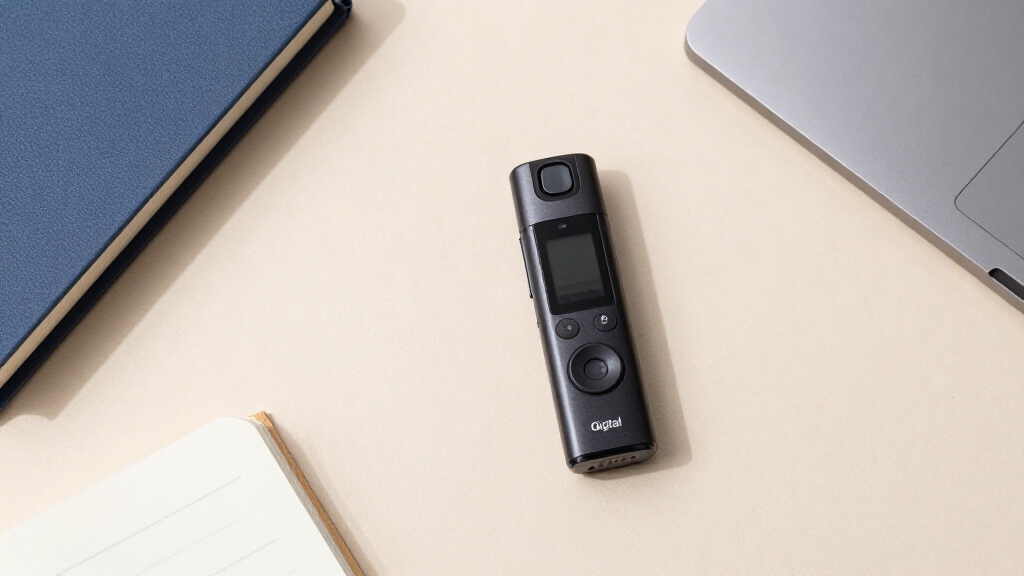
Recording lectures is one of the most demanding everyday uses for a voice recorder: you’re often sitting 20 to 40 feet from the speaker, in a room full of coughing, rustling notebooks, and chatter. The PLAUD Note Pro earns my best overall pick because it pairs strong long-range capture with AI transcription and summarization, which turns a 90-minute lecture into a study-ready outline. If your budget is tighter, the EVISTR L359 delivers AI transcription and 128GB of storage at a fraction of the complexity, while the aiworth E36 is the standout no-frills workhorse with password protection and variable playback speed. The main tradeoff in this category is between smart features and simplicity: AI models cost more and usually require an app or subscription, while basic dictaphones are cheaper, easier to use, but leave you to transcribe notes yourself. Read on for the full breakdown of all 15 recorders and which one fits your study workflow.

Prime made for students and young adults
- Fast, free delivery for dorm and study essentials
- Prime Video and Amazon Music included
- Member-only deals
Key Takeaways
- AI transcription and summarization is the biggest differentiator in this lineup: the PLAUD Note Pro, EVISTR L359, and Innioasis PR1 turn lectures into searchable notes, while the other 12 models record audio you must review manually.
- Massive storage numbers (136GB–160GB) are marketing muscle, not a real need for lectures — a single semester of recordings fits comfortably in 16GB, so paying extra for capacity alone is rarely worth it.
- Voice activation is a mixed blessing for lectures: it saves battery and skips dead air, but a slow trigger threshold can clip the first words of a professor’s sentences, which is exactly the part you needed.
- Variable speed playback (found on the aiworth E36 and a few others) is one of the most underrated features for students — reviewing a lecture at 1.5x speed cuts study time without hurting comprehension.
- Budget recorders under $30 record fine in quiet rooms but struggle in large lecture halls; if your classes seat more than 50 people, a directional or high-sensitivity mic matters more than any other spec.
| PLAUD Note Pro AI Voice Recorder with Transcription & Summarization |  | Best Premium AI Pick | Thickness: 0.12 inches | Weight: 1.06 oz | Microphones: 4 MEMS + 1 VPU | VIEW LATEST PRICE | See Our Full Breakdown |
| EVISTR L359 Digital Voice Recorder 128GB with AI Transcription & Summarization |  | Best Value AI Recorder | Storage: 128 GB | Recording Capacity: Up to 9,216 hours at 32kbps | Audio Quality: Up to 3072Kbps HD | VIEW LATEST PRICE | See Our Full Breakdown |
| Tonfarb 64GB Digital Voice Recorder with Playback |  | Best Battery Life Under Budget | Storage: 64GB built-in TF card | Recording Capacity: Up to 4,600 hours | Battery Life: Up to 48 hours (MP3 at 32kbps) | VIEW LATEST PRICE | See Our Full Breakdown |
| Digital Voice Recorder 8GB – Voice Activated Audio Recorder for Lectures, Meetings, Interviews with MP3 Player |  | Best Minimalist Starter Pick | Storage: 8 GB | Recording Time: Up to 560 hours (32kbps); 128 hours (192kbps) | File Formats: MP3, WAV | VIEW LATEST PRICE | See Our Full Breakdown |
| 160GB Digital Voice Recorder with Built-in Speaker |  | Best for Instant Playback and Group Review | Storage: 160GB total (32GB internal + 128GB microSD included) | Audio Format: WAV | Screen: Large LCD display | VIEW LATEST PRICE | See Our Full Breakdown |
| aiworth E36 136GB Digital Voice Recorder |  | Best Storage Capacity | Storage: 136GB (8GB built-in + 128GB card) | Recording Quality: 1536Kbps dual-mic PCM | Battery Life: 45 hours continuous recording | VIEW LATEST PRICE | See Our Full Breakdown |
| Digital Voice Recorder 16GB with Playback – USB Rechargeable Dictaphone |  | Best Budget Pick | Storage: 16GB | Recording Format: WAV at 1536kbps | Recording Time: 30 hours | VIEW LATEST PRICE | See Our Full Breakdown |
| Cappsu Digital Voice Recorder with Playback, 32GB Built-in Memory |  | Best Bundle for Beginners | Storage: 32GB built-in | Recording Quality: 1536Kbps | Battery Life: 20 hours continuous / 50 hours voice-activated | VIEW LATEST PRICE | See Our Full Breakdown |
| Innioasis PR1 AI Voice Recorder with Transcription & Translation |  | Best AI Transcription | Storage: 64GB | Screen: 3.99-inch touchscreen | Microphones: 4 array mics + 1 high-SNR mic | VIEW LATEST PRICE | See Our Full Breakdown |
| Voice Activated Digital Voice Recorder 16GB – USB Rechargeable (WAV/MP3) |  | Best File Management Features | Storage: 16GB | Recording Formats: MP3, WAV | Continuous Recording Time: 20 hours | VIEW LATEST PRICE | See Our Full Breakdown |
| Vandlion Voice Recorder with Playback – HD Digital Recording Device |  | Best Battery Life | Audio Quality: 1536Kbps PCM HD | Microphones: Dual high-sensitivity with AI noise reduction | Memory: 16GB built-in, expandable to 256GB | VIEW LATEST PRICE | See Our Full Breakdown |
| Tonfarb 136GB Digital Voice Recorder with Playback, 9775 Hours Audio Recording |  | Best for Full-Semester Storage | Storage: 136GB (8GB built-in + included 128GB TF card) | Recording Capacity: Up to 9,775 hours | Audio Quality: 1536kbps PCM, dual noise-reduction microphones | VIEW LATEST PRICE | See Our Full Breakdown |
| EVISTR L357 64GB Digital Voice Recorder with Playback |  | Best for Beginners | Storage: 64GB | Recording Capacity: Up to 4,660 hours at 32Kbps | Audio Quality: 1536kbps PCM stereo with intelligent noise reduction | VIEW LATEST PRICE | See Our Full Breakdown |
| EVIDA V618 128GB Digital Voice Recorder for Lectures and Meetings |  | Best Multitasker | Storage: 128GB internal | Recording Capacity: Up to 9,296 hours | Battery Life: 54 hours continuous recording | VIEW LATEST PRICE | See Our Full Breakdown |
| 160GB Digital Voice Recorder with Playback, 11500 Hours Recording Capacity |  | Best Maximum Capacity | Storage: 160GB (32GB RAM + 128GB memory card) | Recording Capacity: Up to 11,500 hours | Audio Quality: 1536kbps stereo, dual microphones with noise reduction | VIEW LATEST PRICE | See Our Full Breakdown |
| digital voice recorders for lecture | Storage | Battery | Recording Capacity | Screen |
|---|---|---|---|---|
| PLAUD Note Pro AI Voice Record | — | — | — | — |
| EVISTR L359 Digital Voice Reco | 128 GB | — | Up to 9,216 hours at 32kbps | — |
| Tonfarb 64GB Digital Voice Rec | 64GB built-in TF card | 600mAh rechargeable | Up to 4,600 hours | 1.44-inch display |
| Digital Voice Recorder 8GB | 8 GB | Rechargeable 3.6V 300mAh lithium-ion | — | 1.1 inches |
| 160GB Digital Voice Recorder w | 160GB total (32GB internal + 128GB microSD included) | — | — | Large LCD display |
| aiworth E36 136GB Digital Voic | 136GB (8GB built-in + 128GB card) | 800mAh rechargeable lithium polymer | — | 2 inches |
| Digital Voice Recorder 16GB wi | 16GB | USB rechargeable lithium polymer | — | 1 inch |
| Cappsu Digital Voice Recorder | 32GB built-in | — | — | — |
| Innioasis PR1 AI Voice Recorde | 64GB | 2800mAh, 30 days standby | — | 3.99-inch touchscreen |
| Voice Activated Digital Voice | 16GB | — | Up to 1120 hours at 32kbps | — |
| Vandlion Voice Recorder with P | — | 1050mAh, 100 hours continuous recording | Up to 1200 hours | — |
| Tonfarb 136GB Digital Voice Re | 136GB (8GB built-in + included 128GB TF card) | 1100mAh, 68 hours continuous recording | Up to 9,775 hours | 1.44-inch LCD |
| EVISTR L357 64GB Digital Voice | 64GB | 500mAh, 32 hours recording / 35 hours playback | Up to 4,660 hours at 32Kbps | — |
| EVIDA V618 128GB Digital Voice | 128GB internal | — | Up to 9,296 hours | 1.5 inches |
| 160GB Digital Voice Recorder w | 160GB (32GB RAM + 128GB memory card) | 1100mAh rechargeable, 68+ hours continuous use | Up to 11,500 hours | — |
More Details on Our Top Picks
PLAUD Note Pro AI Voice Recorder with Transcription & Summarization
This option stands out as the most polished AI recorder in the lineup — a credit card-sized aluminum device with an AMOLED display, five microphones, and up to 50 hours of battery in Endurance Mode. Compared with the EVISTR L359, which needs a wired OTG connection for its AI features, the PLAUD works through its own app ecosystem with an ‘Ask PLAUD’ chat that turns a 90-minute lecture into summaries, action items, and drafted follow-ups. The 16.4-foot Enhance Mode range matters in lecture halls where you won’t always sit front row. The real tradeoff is the subscription model: the free Starter Plan covers only 300 transcription minutes per month, roughly three to four lectures, so heavy users will pay recurring fees the simpler Tonfarb or 8GB recorders avoid entirely.
Pros:- Slim premium build with AMOLED status display and Apple Find My support
- Up to 50-hour battery life and multi-mic directional audio with noise reduction
- AI transcription, summarization, and interactive chat to extract lecture insights
- Strong privacy certifications including ISO 27001, SOC 2, and GDPR compliance
Cons:- Free plan caps transcription at 300 minutes per month; heavy lecture use requires a paid plan
- Team collaboration features sit behind an optional additional subscription
Best for: Students and professionals who want lectures auto-transcribed, summarized, and searchable without manual note-taking
Not ideal for: Buyers on a strict budget — ongoing subscription costs for meaningful transcription minutes add up quickly
- Thickness:0.12 inches
- Weight:1.06 oz
- Microphones:4 MEMS + 1 VPU
- Battery Life:Up to 50 hours (Endurance) / 30 hours (Enhance)
- Recording Range:Up to 16.4 ft (5 m) in Enhance Mode
- Display:AMOLED (InstantView)
- Starter Plan:300 transcription minutes per month
- Compatibility:Apple Find My, PLAUD desktop/web/mobile apps
Our verdict“If turning recorded lectures into organized, searchable notes is the goal and a subscription fits your budget, this is the most capable option here.”
EVISTR L359 Digital Voice Recorder 128GB with AI Transcription & Summarization
This model makes the most sense for buyers who want AI transcription without a subscription-first device. The L359 pairs 128GB of storage (up to 9,216 hours at low bitrates) with transcription in 113 languages, speaker identification, and auto-generated mind maps — capabilities that overlap with the PLAUD Note Pro at a friendlier price point. Unlike the PLAUD’s wireless app workflow, though, the L359 requires a wired OTG connection to a phone for AI processing, which feels clunky between classes. Compared with the plain Tonfarb 64GB, you give up nothing on raw recording capacity and gain genuine post-lecture productivity tools. The mono microphone is another compromise: it captures a lecturer clearly but won’t match stereo separation for panel discussions or noisy seminars.
Pros:- 128GB storage holds up to 9,216 hours of recordings
- AI transcription in 113 languages with summaries, mind maps, and speaker ID
- 33-hour battery life in a lightweight 2.24 oz pocketable body
- One-touch operation with password protection and HOLD switch
Cons:- AI features require a wired OTG connection — no Bluetooth or Wi-Fi option
- Mono microphone limits clarity in multi-speaker or noisy rooms
Best for: Budget-conscious students who want AI transcripts and summaries of every lecture without monthly fees eating into their budget
Not ideal for: Anyone wanting a wireless workflow — the wired OTG requirement for AI features makes quick check-ins between classes inconvenient
- Storage:128 GB
- Recording Capacity:Up to 9,216 hours at 32kbps
- Audio Quality:Up to 3072Kbps HD
- Battery Life:Up to 33 hours continuous recording
- Weight:2.24 oz (65g)
- Audio Formats:MP3, WAV
- Transcription Languages:113
- Interface:USB Type-C
Our verdict“A smart middle ground between dumb recorders and subscription-based AI devices, best for students who don’t mind plugging in to process recordings.”
Tonfarb 64GB Digital Voice Recorder with Playback
This pick is better suited to buyers who want a straightforward recorder that simply lasts. Its 600mAh battery delivers up to 48 hours of continuous recording — outlasting both the PLAUD Note Pro’s 30-hour Enhance Mode and the EVISTR L359’s 33 hours, which matters if you’re away from an outlet during a packed exam week. The one-click side switch starts recording even when the device is powered off, so a lecture beginning early never goes uncaptured. Recording quality reaches 1536kbps PCM in WAV, respectable for the price, though it trails the L359’s 3072Kbps maximum. There’s no AI anything here: what you record is what you get, and reviewing a two-hour lecture means scrubbing manually. For note-takers who type their own summaries, that tradeoff is fine.
Pros:- Up to 48 hours of continuous recording on a 600mAh battery
- Side switch starts and saves recordings instantly, even from power-off
- 64GB of storage holds up to 4,600 hours with PCM WAV capture up to 1536kbps
- Voice-activated recording, password protection, and a readable 1.44-inch screen
Cons:- No transcription or AI features — reviewing long lectures is fully manual
- Physical switch design means accidental activation in a bag is possible despite the HOLD guard
Best for: Students who record every lecture themselves and need long battery life plus instant, fumble-free recording
Not ideal for: Anyone hoping for transcription or summaries — this is a pure recorder with no AI assistance at all
- Storage:64GB built-in TF card
- Recording Capacity:Up to 4,600 hours
- Battery Life:Up to 48 hours (MP3 at 32kbps)
- Battery:600mAh rechargeable
- Audio Quality:PCM WAV up to 1536kbps with noise reduction
- Screen:1.44-inch display
- Extra Features:Voice activation, A-B loop, scheduled recording, bookmarks, MP3 playback
Our verdict“A dependable, long-running workhorse for students who just need every lecture captured clearly and cheaply.”
Digital Voice Recorder 8GB – Voice Activated Audio Recorder for Lectures, Meetings, Interviews with MP3 Player
Compared with everything else in this roundup, this 8GB model is the simplest entry point — a compact three-button device with a high-sensitivity stereo mic, voice-activated recording, and A-B repeat with variable playback speed, which is genuinely useful when you’re transcribing a fast-talking professor by hand. It still holds up to 560 hours at low bitrate, enough for a full semester of lectures at moderate quality. The compromises are real: a 20-hour battery trails the Tonfarb’s 48 hours and the EVISTR L359’s 33, the file system caps out at 199 recordings before you must offload, and the aging Micro USB port makes transfers slower than the USB-C on the L359. For a first recorder or a backup device, those limits are livable; for a heavy daily user, they’ll chafe.
Pros:- Voice-activated recording skips silent gaps and stretches storage
- A-B repeat and variable playback speed make manual transcription easier
- Simple three-button operation with time-stamped, password-protected files
- Doubles as an MP3 player with straightforward USB file transfer
Cons:- 20-hour battery requires recharging between multi-day recording stretches
- Micro USB interface is dated and slower than the USB-C standard elsewhere in this lineup
Best for: First-time buyers and casual users who want a cheap, simple recorder for occasional lectures and interviews
Not ideal for: Heavy note-takers recording daily — the 199-file cap, 20-hour battery, and outdated Micro USB port add friction fast
- Storage:8 GB
- Recording Time:Up to 560 hours (32kbps); 128 hours (192kbps)
- File Formats:MP3, WAV
- Battery Life:20 hours recording; 8 hours playback with earphones
- Battery:Rechargeable 3.6V 300mAh lithium-ion
- Screen:1.1 inches
- Interface:USB 2.0 Type B (Micro USB)
Our verdict“A no-frills starter recorder that covers lecture basics well, as long as you transfer files regularly and keep a charger handy.”
160GB Digital Voice Recorder with Built-in Speaker
This recorder’s defining feature is the built-in speaker, which none of the other picks here offer in a practical way — you can play a lecture back for a study group without hunting for earbuds or a laptop. With 160GB of total storage (32GB internal plus an included 128GB card), it beats even the EVISTR L359’s capacity and removes any anxiety about a semester’s worth of WAV files. The A/B repeat function is a genuine asset for language learners drilling pronunciation. Where it falls short is transparency: unlike the Tonfarb or the 8GB starter model, the listing gives no firm battery or recording-time figures, so buyers are trusting the manufacturer. It also lacks AI features entirely, so if transcription matters, the L359 or PLAUD Note Pro serve you better.
Pros:- 160GB total storage with the 128GB card included in the box
- Built-in speaker enables immediate playback without headphones or a computer
- A/B repeat supports language learning and close review of difficult passages
- Password protection plus easy USB file transfer for archiving lectures
Cons:- No official battery life or recording-time figures published
- Storage may not accept microSD cards beyond the included 128GB capacity
Best for: Study groups and language learners who review recordings out loud together and need massive storage for a full term
Not ideal for: Anyone who needs verified battery specs or AI transcription — this device offers neither published runtime figures nor smart features
- Storage:160GB total (32GB internal + 128GB microSD included)
- Audio Format:WAV
- Screen:Large LCD display
- Playback:Built-in speaker and headphone support
- Features:A/B repeat, password protection, USB file transfer
Our verdict“Choose this when shared playback and enormous storage outweigh AI features and spec transparency.”
aiworth E36 136GB Digital Voice Recorder
Massive storage is the E36’s whole pitch: 136GB total via the included 128GB card, which dwarfs the 16GB or 32GB found on the Cappsu and the generic 16GB models in this lineup. For a semester of lectures recorded at the full 1536Kbps dual-mic PCM quality, this is one of the few budget options that simply never forces you to offload files mid-term. The smartphone-like interface and 16-level variable playback with A-B repeat make reviewing long lectures faster than on simpler one-button recorders. Compared with the Innioasis PR1, you lose transcription entirely — but you gain 45 hours of battery and recordings locked behind a 3-digit password. The tradeoff is fiddly small buttons and a harsh three-attempt lockout that punishes forgetful users.
Pros:- 136GB total storage with included 128GB card
- 1536Kbps dual-microphone PCM recording quality
- 45-hour continuous recording battery life
- Password protection with 16-level variable playback
Cons:- Only 3 password attempts before auto shutdown
- Small buttons can be fiddly to operate
Best for: Students recording entire semesters of lectures at high quality who don’t want to manage storage
Not ideal for: Anyone wanting transcription or translation — this captures audio only, unlike the Innioasis PR1
- Storage:136GB (8GB built-in + 128GB card)
- Recording Quality:1536Kbps dual-mic PCM
- Battery Life:45 hours continuous recording
- Battery:800mAh rechargeable lithium polymer
- Screen:2 inches
- Playback Speed:16 adjustable levels
- Audio Format:MP3
- Weight:2.4 ounces
Our verdict“This pick makes the most sense for students who record everything and never want to think about storage limits again.”
Digital Voice Recorder 16GB with Playback – USB Rechargeable Dictaphone
This is the no-frills, one-button option for students who just need to hit record and go. At 16GB it stores far less than the aiworth E36, and its mono microphone can’t match the E36’s dual-mic PCM capture in large lecture halls — but for a small classroom where you sit near the front, the difference barely matters. DSP noise reduction helps clean up HVAC hum and chair shuffling, and voice-activated recording stretches both battery and storage. Compared with the Cappsu, you lose the external mic and 2-year warranty but keep the core lecture workflow at a lower tier. The tiny 1-inch screen and 7-hour playback battery are the real compromises.
Pros:- Simple one-button operation with A-B repeat
- Voice-activated recording saves battery and storage
- DSP noise reduction for clearer playback
- Doubles as a music player and USB flash drive
Cons:- Mono microphone limits clarity at distance
- Only 7 hours of playback time per charge
Best for: Budget-conscious students recording short lectures in small rooms
Not ideal for: Large lecture halls or distance seating — the mono mic will struggle to isolate a faraway speaker
- Storage:16GB
- Recording Format:WAV at 1536kbps
- Recording Time:30 hours
- Playback Time:7 hours
- Battery:USB rechargeable lithium polymer
- Screen:1 inch
- Weight:35 g
- Interface:USB, 3.5mm headphone jack
Our verdict“This model is better suited to front-row students who want the cheapest reliable way to capture a lecture.”
Cappsu Digital Voice Recorder with Playback, 32GB Built-in Memory
The Cappsu stands out for what comes in the box: an external lavalier microphone, earphones, and a USB-C cable — accessories the bare-bones 16GB dictaphone above doesn’t include. That external mic solves the biggest beginner problem: instead of pointing the whole recorder at the podium, you clip the mic near your notes and get cleaner capture. 32GB of built-in memory means no fumbling with TF cards, and one-click recording with clear indicator feedback removes the learning curve entirely. Against the aiworth E36, you trade away dual mics and huge storage for simplicity and a 2-year warranty. Note that best quality still demands close placement to the speaker, so back-row sitters will be disappointed.
Pros:- 32GB built-in memory, no memory card needed
- External microphone and earphones included
- Voice-activated mode extends battery to 50 hours
- 2-year warranty with lifetime technical support
Cons:- Best recording quality requires proximity to the speaker
- Non-standard battery type complicates replacement
Best for: First-time recorder owners who want everything included and a simple setup out of the box
Not ideal for: Students stuck in the back rows of big halls — capture quality drops sharply with distance
- Storage:32GB built-in
- Recording Quality:1536Kbps
- Battery Life:20 hours continuous / 50 hours voice-activated
- Weight:1.6 ounces
- Interface:USB Type-C, 3.5mm headphone jack
- Microphone:Built-in plus external mic included
- Warranty:2 years
Our verdict“This option stands out for beginners who want a complete, plug-and-play kit rather than a bare recorder.”
Innioasis PR1 AI Voice Recorder with Transcription & Translation
This is the only option in this batch that turns a lecture into searchable, summarized notes — offline, on-device, and with no subscription. That last part separates it from the PLAUD Note Pro elsewhere in this roundup, which typically leans on cloud services and recurring fees. The PR1’s 4+1 beamforming mic array and 3.99-inch touchscreen make it feel like a small tablet, and 70+ language transcription at up to 95% accuracy is transformative for study workflows: record a 90-minute lecture, get a summary, skip the re-listening. Compared with the aiworth E36, battery drops to 17 hours in AI mode and the price climbs steeply. Offline translation covers 40+ languages; anything beyond that needs WiFi.
Pros:- Offline on-device AI transcription with no subscription fees
- Voice data never leaves the device for strong privacy
- 4+1 beamforming mic array for directional capture
- 58 hours audio-only recording plus e-reader and office apps
Cons:- Translation beyond 40 languages requires an internet connection
- High-accuracy mode drains battery faster
Best for: Students and professionals who need written transcripts and summaries, not just audio files
Not ideal for: Buyers who only need raw audio — the AI features add cost and reduce battery life in high-accuracy mode
- Storage:64GB
- Screen:3.99-inch touchscreen
- Microphones:4 array mics + 1 high-SNR mic
- AI Recording Time:17 hours
- Audio-Only Recording Time:58 hours
- Transcription:70+ languages, on-device
- Translation:150+ online / 40+ offline languages
- Connectivity:Bluetooth 5, WiFi, USB-C, 3.5mm audio
- Battery:2800mAh, 30 days standby
Our verdict“This pick makes the most sense for anyone who wants lectures converted into notes automatically without paying monthly fees.”
Voice Activated Digital Voice Recorder 16GB – USB Rechargeable (WAV/MP3)
What separates this recorder from the other 16GB budget units is file management: timestamped file naming, password protection, A-B repeat, and variable playback speed make an hour-long lecture far easier to navigate on a small screen. The flexible bitrate options let you stretch 16GB into up to 1120 hours at 32kbps — or record crisp stereo at higher bitrates and fill the card fast, which is the honest tradeoff. Unlike the Innioasis PR1, there’s no transcription, but unlike most budget rivals here it records in both WAV and MP3. The aging Micro USB port and a hard cap of 199 files are the frustrations you live with at this tier.
Pros:- Timestamped file naming for easy organization
- Voice-activated recording skips silence to save storage
- A-B repeat and variable playback speed for review
- Records in both MP3 and WAV formats
Cons:- Micro USB instead of USB-C
- Hard limit of 199 recording files
Best for: Students who juggle many recordings and need timestamped, password-protected files on a budget
Not ideal for: Anyone with modern USB-C-only gear — the Micro USB port means carrying an extra cable
- Storage:16GB
- Recording Formats:MP3, WAV
- Continuous Recording Time:20 hours
- Playback Time:8 hours with earphones
- Recording Capacity:Up to 1120 hours at 32kbps
- Max Files:199
- Connectivity:Micro USB
Our verdict“This model is better suited to organized note-takers who value file navigation tools over raw audio quality.”
Vandlion Voice Recorder with Playback – HD Digital Recording Device
Most recorders in this roundup fade after a day or two of heavy use, but the Vandlion keeps going for 100 hours on a single charge — the longest runtime here by a wide margin. That makes it the safest pick for students attending back-to-back lectures across a full week without access to a charger. Compared with the Tonfarb 136GB, which manages 68 hours, the Vandlion trades raw storage headroom (16GB built-in versus 136GB) for endurance, though its 256GB expansion slot closes that gap if you add a card. The zinc alloy shell feels more durable than typical plastic bodies, and one-touch slide-to-save recording with automatic timestamps means you’ll never fumble at the start of a lecture. Just know the voice activation ships disabled and needs manual setup, and there’s no cloud upload — transfers are USB-C only.
Pros:- Exceptional 100-hour battery life from a 3-hour charge
- 16GB built-in storage expandable to 256GB
- Durable zinc alloy build that survives a packed backpack
- One-touch recording with automatic file timestamps
Cons:- Voice activation is disabled by default and requires manual setup
- No cloud upload option — all transfers need a USB-C cable
Best for: Students at multi-day intensive courses or conferences who can’t recharge between lectures
Not ideal for: Anyone wanting instant voice-activated recording out of the box or wireless/cloud file transfer
- Audio Quality:1536Kbps PCM HD
- Microphones:Dual high-sensitivity with AI noise reduction
- Memory:16GB built-in, expandable to 256GB
- Battery:1050mAh, 100 hours continuous recording
- Recording Capacity:Up to 1200 hours
- Build:Zinc alloy, 65g
- Transfer:USB-C
Our verdict“Buy this if battery anxiety is your main concern; skip it if you want plug-and-play voice activation or wireless transfers.”
Tonfarb 136GB Digital Voice Recorder with Playback, 9775 Hours Audio Recording
If your goal is recording an entire semester and never offloading files, the Tonfarb’s 136GB total capacity (9,775 hours) is hard to beat — though the Vandlion can match it once you add a microSD card. What sets this model apart is convenience: the 128GB TF card is included in the box, so there’s nothing extra to buy. The dual noise-reduction microphones and 1536kbps PCM capture put it in the same audio-quality tier as the EVIDA V618, but the Tonfarb adds a 3.5mm headphone jack for private review, which the EVIDA lacks. The tradeoff is that only 8GB is internal, so losing or damaging that card means losing nearly everything, and the 1.44-inch screen is on the small side for navigating long file lists. At 100g, it’s also slightly heavier than slimmer rivals.
Pros:- Massive 136GB total storage rated for 9,775 hours
- 128GB TF card included — no extra purchase needed
- 68-hour battery life covers a full week of lectures
- 3.5mm headphone jack for private playback
Cons:- Only 8GB is internal; the bulk of capacity lives on a removable card
- Small 1.44-inch screen makes file navigation tedious
Best for: Lecture recorders who want to archive a full semester of classes without touching a computer
Not ideal for: Anyone who prefers not to depend on a removable memory card for the bulk of their storage
- Storage:136GB (8GB built-in + included 128GB TF card)
- Recording Capacity:Up to 9,775 hours
- Audio Quality:1536kbps PCM, dual noise-reduction microphones
- Formats:MP3, WAV
- Battery:1100mAh, 68 hours continuous recording
- Screen:1.44-inch LCD
- Transfer:USB-C with 3.5mm headphone jack
Our verdict“This pick makes the most sense for students who record constantly and want everything stored on-device for months at a time.”
EVISTR L357 64GB Digital Voice Recorder with Playback
Where most recorders here bury features in layered menus, the EVISTR L357 strips operation down to two buttons: record and save. That simplicity is why it earns the beginner slot — a first-time lecture recorder can start capturing audio within minutes of opening the box. Its 7-level adjustable gain is a genuinely useful differentiator against the EVIDA V618’s 6 voice-activation levels, letting you tune sensitivity for a large lecture hall versus a small seminar room. File management is also friendlier than most: recordings are named by date and time (YYYY-MM-DD-HH-MM-SS), so finding Tuesday’s chemistry lecture takes seconds. The compromises are real, though — 32 hours of battery is half of what the Tonfarb or Vandlion offer, 64GB holds far less, and the 500mAh cell demands more frequent charging. It’s a trade of capacity for ease of use.
Pros:- Two-button operation with almost no learning curve
- 7-level adjustable recording gain for different room sizes
- Timestamp-based file naming makes recordings easy to find
- Works with both Windows and Mac via Type-C
Cons:- 32-hour battery is roughly half the runtime of premium picks here
- 64GB storage fills quickly for a full semester of daily lectures
Best for: First-time recorder owners who value dead-simple operation over maximum specs
Not ideal for: Heavy users recording daily — the 32-hour battery and 64GB capacity will need frequent attention
- Storage:64GB
- Recording Capacity:Up to 4,660 hours at 32Kbps
- Audio Quality:1536kbps PCM stereo with intelligent noise reduction
- Battery:500mAh, 32 hours recording / 35 hours playback
- Formats:WAV, MP3
- Features:Voice activation, A-B repeat, variable-speed playback, scheduled recording
- Compatibility:Windows and Mac via Type-C
Our verdict“Choose this if simplicity matters more than raw specs; heavy daily recorders should spend up for longer battery life.”
EVIDA V618 128GB Digital Voice Recorder for Lectures and Meetings
The EVIDA V618 is the only recorder in this batch that doubles as a USB flash drive and MP3 player, making it a practical three-in-one for students who want fewer gadgets in their bag. With 128GB of genuinely internal storage (unlike the Tonfarb, which leans on a removable card), it holds 9,296 hours of recordings, and the 4-folder file management system is handy for splitting files by subject or semester. Voice activation offers 6 adjustable decibel levels, cutting silent stretches so playback review moves faster. The obvious gap: there’s no headphone jack, so private listening means transferring files to a computer or relying on external speakers — a real annoyance compared with the Tonfarb’s direct 3.5mm option. The mono microphone also trails the dual-mic setups on the Vandlion and 160GB model for stereo capture in big halls.
Pros:- 128GB of internal storage with no removable cards to lose
- Doubles as a USB flash drive and MP3 player
- 4-folder file organization by subject or class
- 6-level voice activation trims dead air from lectures
Cons:- No headphone jack for direct private playback
- Mono microphone is weaker than dual-mic rivals in large lecture halls
Best for: Students who want one pocket device for lecture recording, file storage, and music playback
Not ideal for: Anyone who listens back through headphones on the go — there’s no jack for direct private playback
- Storage:128GB internal
- Recording Capacity:Up to 9,296 hours
- Battery Life:54 hours continuous recording
- Audio Quality:1536Kbps PCM (WAV), mono noise-cancelling microphone
- Formats:MP3 128kbps, MP3 192kbps, WAV 1536kbps
- Screen:1.5 inches
- Features:Voice activation (6 levels), password protection, bookmarks, A-B repeat
Our verdict“This model suits buyers who want one device to carry instead of three; pure audio purists should look at dual-mic alternatives.”
160GB Digital Voice Recorder with Playback, 11500 Hours Recording Capacity
For sheer storage, nothing in this lineup matches 160GB and 11,500 hours of recording capacity. Compared with the Tonfarb’s 136GB, this model gives you a more sensible split — 32GB internal plus the 128GB card — so even if the card fails, you keep a meaningful buffer of recordings. Stereo dual microphones with noise reduction put it above the EVIDA V618’s mono setup for capturing a lecturer moving around a stage, and the 68+ hour battery matches the Tonfarb rather than trailing it. The catches are subtler than on cheaper models: you may need to manually switch recording modes between a quiet seminar and a booming lecture hall for best results, and the small body makes on-device navigation fiddly if you’re scrolling through thousands of files. If you’d rather never think about storage again, though, this is the ceiling.
Pros:- Largest capacity in the roundup at 160GB / 11,500 hours
- Sensible storage split: 32GB internal plus 128GB card
- Stereo dual microphones outperform mono rivals in large halls
- 68+ hour battery for week-long use
Cons:- Requires manual mode adjustment between different recording environments
- Small design makes navigating thousands of files fiddly
Best for: Doctoral students, journalists, or professionals recording daily who never want to manage storage limits
Not ideal for: Users who want fully automatic recording — manual mode adjustments are sometimes needed in varied rooms
- Storage:160GB (32GB RAM + 128GB memory card)
- Recording Capacity:Up to 11,500 hours
- Audio Quality:1536kbps stereo, dual microphones with noise reduction
- Formats:WAV, MP3
- Battery:1100mAh rechargeable, 68+ hours continuous use
- Build:Zinc alloy and acrylic
- Features:Password protection, voice control, scheduled recording, A-B repeat, bookmarks, variable-speed playback
Our verdict“Pick this if maximum capacity and stereo capture outweigh the convenience of fully automatic recording.”

How We Picked
I evaluated every recorder against the specific demands of lecture capture rather than general recording tasks. The criteria that carried the most weight were microphone sensitivity at distance (能否 a unit pick up a lecturer from the back of a hall), battery endurance across a full class day, playback and file management ergonomics (bookmarking, variable speed, easy USB transfer), and smart features like transcription and summarization for students who want notes, not just audio. I also factored in build quality, menu complexity, and how forgiving each device is for a first-time user fumbling with buttons mid-lecture.
The ranking logic is straightforward: models that solve the whole lecture workflow — capture, review, and note extraction — sit at the top, led by the PLAUD Note Pro. Mid-tier picks like the EVISTR L359 and aiworth E36 balance price against reliability and earned their spots for different audiences: one for AI-assisted studying on a budget, the other for bulletproof simplicity. The bottom third of the list isn’t bad — it’s made up of capable basic recorders that simply offer fewer reasons to choose them over stronger competitors at similar prices.
Factors to Consider When Choosing Digital Voice Recorders For Lectures
Before you settle on a specific model, it helps to understand what actually separates a recorder that captures clean lecture audio from one that produces a muddy, unusable file. These are the factors I weighed most heavily, plus the mistakes students tend to make when choosing.Microphone Quality Matters More Than Storage
The single most common mistake buyers make is fixating on storage capacity — 128GB, 160GB, 9775 hours — while ignoring microphone quality. In practice, even a heavy course load generates only a few gigabytes of audio per semester, so capacity is almost never the bottleneck. What is the bottleneck is how well the mics pull a professor’s voice out of a large room. Look for high-sensitivity microphones with noise reduction, and read carefully whether a model offers automatic gain control, which adjusts levels as the speaker moves around. A cheap 160GB recorder with weak mics will produce a huge library of audio you can’t actually decipher, while a well-tuned 16GB unit will serve you far better.
AI Transcription: Worth It or a Gimmick?
AI transcription and summarization is the fastest-growing feature in this category, and it genuinely changes how you study — but it comes with real tradeoffs. Many AI recorders route audio through a companion app, and some lock advanced features behind subscription plans that add to the lifetime cost. Transcription accuracy also varies with accented speech, technical vocabulary, and lecture-hall acoustics, so expect to proofread output rather than trust it blindly. My advice: choose an AI model like the PLAUD Note Pro or Innioasis PR1 if you actually review notes weekly and will use the summaries; skip it if you’re the type who records lectures and never replays them. Paying for intelligence you won’t use is the most expensive mistake in this category.
Battery Life and Charging Habits
A lecture recorder lives or dies by its battery, and the failure mode is always the same: you forgot to charge it, and your 10 a.m. class starts in five minutes. Models with USB rechargeable batteries are the baseline here, but pay attention to quoted recording time — anything under 20 hours of continuous recording means you’ll be charging multiple times a week. Voice-activated recording can stretch battery life considerably by pausing during silence, though it introduces the risk of clipped sentence beginnings. If your schedule includes back-to-back classes or full-day seminars, prioritize recorders rated for 30+ hours or models that can record while plugged into a power bank.
Playback Features That Affect Study Time
How you review a lecture matters as much as how you record it, and playback features are where budget recorders cut corners. Variable speed playback lets you blast through a 90-minute lecture in 60 minutes, which compounds into hours of saved study time over a semester. Bookmarking or index marks let you flag moments in real time — say, when the professor says “this will be on the exam” — so you can jump straight back to them. A built-in speaker is convenient for quick checks, but headphones will always reveal more detail. These features rarely show up in product titles, so dig into the spec sheet before buying.
Ease of Use When It Counts
The best recorder in the world is useless if you can’t start it in three seconds while a lecture begins. Simple one-switch or slide-to-record designs beat deep menu navigation for classroom use, especially under pressure. Consider who’s using it, too: a tech-comfortable student will appreciate the flexibility of an app-connected AI recorder, while someone who just wants dependable audio should stick to a physical-button dictaphone with a clear display. Password protection, offered on models like the aiworth E36, matters if you’ll be recording sensitive meetings or shared study sessions. Test the side-button layout mentally: can you pause and resume without looking at the device?
Hidden Costs and File Compatibility
Two costs hide outside the sticker price. First, audio format: MP3 and WAV files open on virtually any device, but some recorders use proprietary formats that require their software to convert — a genuine annoyance when you’re trying to review on a library computer. Second, subscription requirements for AI features, which can quietly double a recorder’s cost over two or three years of study. Also check whether files transfer by plugging the device directly into USB or require a separate cable, since the former makes it far easier to offload recordings between classes. A cheap recorder with clunky file handling costs you time every single week of the semester.
Frequently Asked Questions
Can a voice recorder pick up a lecturer from the back of a large lecture hall?
It depends heavily on the microphone design, and this is where cheap recorders fail. Models marketed as having high-sensitivity or PCM microphones with noise reduction can capture intelligible speech from 30–40 feet away, while basic units start producing muffled audio past 15–20 feet. If you regularly sit in a large hall, either choose a recorder known for distance capture — the PLAUD Note Pro and aiworth E36 handle this well — or change your habits: sitting in the front third of the room improves any recorder’s output dramatically. Recording a short test file in your actual classroom during the first week of term is the cheapest insurance policy available.
Is AI transcription accurate enough to rely on for study notes?
Modern AI transcription handles clear, single-speaker English at high accuracy, but lectures introduce real challenges: fast speech, technical jargon, accents, and audience questions from off-mic. Expect the transcription to be a strong first draft rather than a perfect document, and budget time to correct terminology in technical courses. The bigger question is whether transcription changes your study habits — if you’ll actually use searchable text and AI summaries to review, models like the PLAUD Note Pro or Innioaxis PR1 justify their cost. If you typically re-listen to audio anyway, save your money and buy a quality basic recorder with variable speed playback instead.
Do I need 128GB or 160GB of storage for lectures?
Almost certainly not. At typical MP3 bitrates, one hour of lecture audio occupies roughly 30–60MB, which means even 20 hours of class per week generates about 1GB monthly — a 16GB recorder holds well over a full semester. The enormous capacity figures on some listings are a marketing hook, not a reflection of student needs. Where capacity does help is if you record in uncompressed WAV format, play music on the device, or want to archive years of lectures without ever offloading files. Treat storage as a tiebreaker, not a primary buying factor; microphone quality and battery life should drive your decision.
Is voice-activated recording a good idea for lectures?
It’s a genuine tradeoff rather than a free win. Voice activation pauses recording during silence, which saves battery and skips dead air during playback — useful for classes with long breaks or group work. The risk is the trigger threshold: if it’s set too high or reacts too slowly, the recorder clips the first syllable of each sentence, and professors rarely repeat the opening of a key explanation. My suggestion is to enable voice activation only after testing it in your actual classroom, and to use continuous recording for fast-talking lecturers or exam-review sessions where you can’t afford to lose a word. Many models let you adjust sensitivity, which resolves most clipping problems.
Can I just use my phone instead of buying a dedicated recorder?
A phone can work, but dedicated recorders solve three real problems. First, battery: recording for hours drains a phone you need for the rest of the day, while a dedicated recorder keeps your phone free. Second, mic quality: purpose-built recorders use stereo, high-sensitivity microphones tuned for distant speech, outperforming most phone mics in large rooms. Third, storage and file management — dedicated devices record straight to organized files you can transfer by USB, and some models offer password protection for private material. If you already own a recent flagship phone and sit near the front, it may suffice; for back-of-hall seats or all-day schedules, a dedicated recorder earns its place quickly.
Conclusion
The right recorder depends on how you study, not on which spec sheet is longest. For the best overall choice, the PLAUD Note Pro handles the entire lecture workflow — capture, transcription, and summarization — better than anything else in this lineup. The EVISTR L359 is my best value pick for students who want AI transcription without the premium price, while the Innioasis PR1 stands out as the best premium choice for multilingual learners thanks to offline translation on its built-in screen.
For beginners and anyone who wants zero fuss, the aiworth E36 is the easiest recommendation: simple buttons, password protection, variable speed playback, and storage you’ll never fill. If your needs are specific — recording while charging for all-day seminars, or a bare-minimum backup recorder — the Tonfarb and 64GB EVISTR models cover those niches well. Whatever you choose, prioritize microphone quality over storage numbers, and match the smart features to how you actually review material. The best recorder for lectures is the one whose recordings you’ll genuinely use.
Fall Picks
fall essentials
As an affiliate, we earn on qualifying purchases.