
The best educational science kit for most kids is the National Geographic Amazing Chemistry Set, which pairs 100+ genuinely varied experiments with clear instructions and real scientific explanations at a mid-range price. If you’re shopping for a younger child, the Doctor Jupiter My First Science Kit is the standout for ages 4 and up thanks to its oversized, safe components and picture-based guidance. For kids who want breadth rather than depth, the National Geographic Earth Science Kit spreads 100+ activities across geology, weather, and chemistry instead of one discipline. The main tradeoff in this category is experiment count versus experiment quality — some kits inflate their numbers with near-identical variations — plus the reality that most chemistry sets consume their supplies quickly. Read on for the full ranking, including who each kit is for and which ones to skip.

Prime made for students and young adults
- Fast, free delivery for dorm and study essentials
- Prime Video and Amazon Music included
- Member-only deals
Key Takeaways
- National Geographic dominates the middle and top of this ranking because its experiment guides explain the science behind each activity, not just the steps — a gap most budget kits never close.
- Advertised experiment counts are misleading: the UNGILINGA 150-experiment kit and the 80-experiment role-play kit pad totals with variations of the same activity, while the 40+ experiment UNGlinga set delivers more distinct experiences per dollar.
- The 58-Piece Microscope Kit is the only pick here built around repeatable use — every chemistry and earth science kit is at least partially consumable — making it the better long-haul purchase despite a narrower focus.
- Role-play kits with lab coats (the 56-experiment and 80-experiment sets) engage younger kids emotionally but teach less actual science; they work best as motivation layers, not curriculum.
- Age labels matter more in this category than in most toys: the Doctor Jupiter kit genuinely suits ages 4+, while the National Geographic chemistry sets assume reading fluency and fine motor control that kids under 8 usually lack.
| UNGlinga 40+ Experiments Science Kit for Kids Chemistry Set STEM Toy |  | Best Value Variety Pack | Brand: UNGlinga | Age Range: 8 years and up | Number of Experiments: 40+ | VIEW LATEST PRICE | See Our Full Breakdown |
| Creativity for Kids Grow ‘N Glow Terrarium Kit |  | Best for Young Nature Lovers | Brand: Creativity for Kids | Age Range: 6 years and up | Activity Type: Botany and craft terrarium | VIEW LATEST PRICE | See Our Full Breakdown |
| National Geographic Ultimate Volcano Science Kit for Kids Ages 8-12 |  | Best Single-Topic Deep Dive | Brand: National Geographic (Blue Marble) | Age Range: 8 years and up | Educational Focus: Geology and earth science (STEM) | VIEW LATEST PRICE | See Our Full Breakdown |
| National Geographic Magic Chemistry Set with 10 Tricks for Kids Ages 8-12 |  | Best for Performance-Minded Kids | Brand: National Geographic | Age Range: 8-12 years | Number of Tricks: 10 | VIEW LATEST PRICE | See Our Full Breakdown |
| Doctor Jupiter My First Science Experiments Kit for Kids Ages 4+ |  | Best for Preschool Scientists | Brand: Doctor Jupiter | Age Range: 4 years and up | Number of Experiments: 100+ | VIEW LATEST PRICE | See Our Full Breakdown |
| National Geographic Science Magic Kit with 100+ Experiments for Kids 8-12 |  | Best for Reluctant Scientists | Brand: Blue Marble (National Geographic) | Age Range: 8 years and up | Experiments: 20 included, 85+ bonus in booklet (100+ total) | VIEW LATEST PRICE | See Our Full Breakdown |
| National Geographic Amazing Chemistry Set with 100+ Experiments for Ages 8-12 |  | Best Overall | Brand: Blue Marble (National Geographic) | Age Range: 8 years and up | Educational Objective: STEM / Chemistry | VIEW LATEST PRICE | See Our Full Breakdown |
| Educational Science Kit for Kids – 56 Experiments with Lab Coat and Accessories, STEM Projects for Ages 6-12 |  | Best for Younger Kids and Role Play | Age Range: 6-12 years | Experiments: 56 | Activity Types: Volcanoes, slime, crystals, and general STEM projects | VIEW LATEST PRICE | See Our Full Breakdown |
| UNGILINGA 150 Experiments Science Kits for Kids Chemistry Lab STEM Toys | 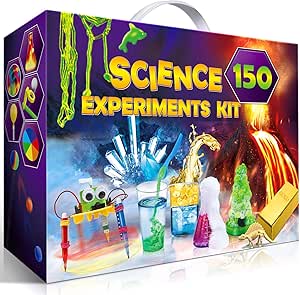 | Best Experiment Count | Brand: UNGILINGA | Age Range: 8 years and up | Experiments: 150 | VIEW LATEST PRICE | See Our Full Breakdown |
| National Geographic Earth Science Kit with 100+ Activities for Kids 8-12 | 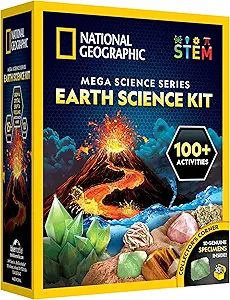 | Best Themed Depth | Brand: Blue Marble (National Geographic) | Age Range: 8 years and up | Educational Objective: STEM / Earth Science | VIEW LATEST PRICE | See Our Full Breakdown |
| 58-Piece Kids Microscope Kit – 100X-1200X Magnification, Metal Body, LED Light, Carrying Box |  | Best for Young Biologists | Magnification: 100X-1200X | Number of Pieces: 58 | Body Material: Metal | VIEW LATEST PRICE | See Our Full Breakdown |
| Science Kit for Kids, 80 Science Lab Experiments, Scientist Role Play |  | Best Value for Experiment Count | Number of Experiments: 80 | Age Range: 6+ years | Brand: Kuovei | VIEW LATEST PRICE | See Our Full Breakdown |
| National Geographic Junior Chemistry Set with 50 Experiments for Kids |  | Best for Preschool Scientists | Brand: Blue Marble (National Geographic) | Age Range: 4 years and up | Number of Experiments: 50 | VIEW LATEST PRICE | See Our Full Breakdown |
| educational science kits for kid | Age Range | Brand |
|---|---|---|
| UNGlinga 40+ Experiments Scien | 8 years and up | UNGlinga |
| Creativity for Kids Grow ‘N Gl | 6 years and up | Creativity for Kids |
| National Geographic Ultimate V | 8 years and up | National Geographic (Blue Marble) |
| National Geographic Magic Chem | 8-12 years | National Geographic |
| Doctor Jupiter My First Scienc | 4 years and up | Doctor Jupiter |
| National Geographic Science Ma | 8 years and up | Blue Marble (National Geographic) |
| National Geographic Amazing Ch | 8 years and up | Blue Marble (National Geographic) |
| Educational Science Kit for Ki | 6-12 years | — |
| UNGILINGA 150 Experiments Scie | 8 years and up | UNGILINGA |
| National Geographic Earth Scie | 8 years and up | Blue Marble (National Geographic) |
| 58-Piece Kids Microscope Kit | — | — |
| Science Kit for Kids | 6+ years | Kuovei |
| National Geographic Junior Che | 4 years and up | Blue Marble (National Geographic) |
More Details on Our Top Picks
UNGlinga 40+ Experiments Science Kit for Kids Chemistry Set STEM Toy
What makes the UNGlinga 40+ Experiments kit appealing is the sheer range of activities per dollar spent — from bouncy balls to homemade lava lamps — without the steeper commitment of larger chemistry sets like the UNGilinga 150 Experiments version. For a first chemistry set, this breadth matters more than depth: kids sample many concepts quickly, which keeps curiosity alive on rainy weekends. The illustrated step-by-step instructions mean parents aren’t improvising explanations, and most materials are boxed and ready. Compared with the National Geographic Magic Chemistry Set, which offers only ten experiments, this kit stretches across weeks of use. The tradeoff is that some activities require supplemental household items, so a quick pantry check before experiment day saves disappointment.
Pros:- Over 40 distinct experiments provide weeks of varied activities
- Clear illustrated instructions kids can follow with minimal help
- Most materials included right out of the box
- Covers multiple science concepts, from chemistry to observation skills
Cons:- Some experiments require household items not included
- Age floor of 8 excludes younger siblings who want to join in
Best for: Budget-conscious parents of kids 8+ who want maximum experiment variety without buying a giant chemistry set
Not ideal for: Households wanting a fully self-contained kit — some experiments need vinegar, baking soda, or other kitchen supplies added
- Brand:UNGlinga
- Age Range:8 years and up
- Number of Experiments:40+
- Objective:Creative skills, imagination development, observation skills
- Instructions:Illustrated step-by-step guide
- Materials:Most experiment materials included
- Manufacturer Part Number:HZDZKH52
Our verdict“The smart pick for families who want broad, low-cost experiment variety for an 8-year-old rather than deep dives into one scientific field.”
Creativity for Kids Grow ‘N Glow Terrarium Kit
Instead of one-off chemical reactions, the Grow ‘N Glow Terrarium offers something rarer in kids’ science kits: a multi-day living project. Children plant chia and wheatgrass seeds, watch them sprout within 3-4 days, and decorate the jar with glow-in-the-dark figurines — blending botany with craft. Where the UNGlinga 40+ kit delivers quick hits of excitement, this teaches patience and ongoing care, which is a different (and arguably deeper) lesson. The age 6+ rating also makes it one of the youngest-accessible options here aside from the Doctor Jupiter kit. The honest tradeoff: germination isn’t guaranteed on schedule, and once both plantings are done, refill supplies are needed to keep going. It’s a starter ecosystem, not an experiment library.
Pros:- Teaches plant biology and ecosystem care over multiple days, not just minutes
- Combines science with a decorative craft kids can display afterward
- Accessible to younger kids at age 6+
- Includes supplies for two full plantings
Cons:- Seed sprouting can be slow or uneven, frustrating eager kids
- Requires regular watering and indoor space near light
- Limited replay value once both plantings are used
Best for: Parents of kids 6-8 who want a gentle intro to biology and plant care paired with a craft activity
Not ideal for: Impatient kids or families wanting lots of repeatable experiments — this is one sustained project with only two plantings included
- Brand:Creativity for Kids
- Age Range:6 years and up
- Activity Type:Botany and craft terrarium
- Includes:Plastic terrarium jar, potting mix, chia and wheatgrass seeds, glow-in-the-dark figurines, stickers, sand
- Growth Time:3-4 days for sprouting
- Plantings:Supplies for two full plantings
- Use Case:Indoor use
Our verdict“A great first biology project for crafty 6-to-8-year-olds, provided parents frame it as a slow-burn garden rather than instant gratification.”
National Geographic Ultimate Volcano Science Kit for Kids Ages 8-12
While most kits here chase breadth, the Ultimate Volcano Kit goes deep on one dramatic subject — and that focus pays off. Kids build the volcano from plaster, paint it themselves, then erupt it repeatedly with extra eruption powder and pop crystals. The inclusion of real volcanic rocks and a full-color learning guide gives it genuine geology content that generalist sets like the National Geographic Earth Science Kit can only touch briefly. Compared with the Grow ‘N Glow Terrarium, it front-loads assembly effort but delivers repeatable, high-drama payoffs. The tradeoffs are real: the plaster build demands patience and adult help, and the science is narrowly earth-science focused. This makes the most sense for a kid already fascinated by volcanoes rather than one sampling everything.
Pros:- Reusable mold allows repeated eruptions long after first use
- Real volcanic rocks and learning guide add genuine educational depth
- Building and painting the volcano adds a creative hands-on stage
- Extra eruption powder and pop crystals make eruptions more dramatic
Cons:- Plaster assembly is messy and challenging for younger children
- Requires adult supervision for safe handling of eruption materials
- Narrow subject matter limits long-term variety
Best for: Kids 8-12 already fascinated by geology, volcanoes, or earth science who will enjoy building and rebuilding one project
Not ideal for: Families wanting many different experiments — this is one thorough project, not a variety box
- Brand:National Geographic (Blue Marble)
- Age Range:8 years and up
- Educational Focus:Geology and earth science (STEM)
- Model Number:NGVOLCANOULT
- Includes:Volcano plaster, reusable volcano mold, paints and paintbrush, eruption powder, pop crystals, real volcanic rocks, full-color learning guide
- Reusability:Reusable mold supports repeated eruptions
- Warranty:Supported by manufacturer warranty
Our verdict“The right choice for a volcano-obsessed 8-to-12-year-old who’d rather master one project deeply than dabble in forty shallow ones.”
National Geographic Magic Chemistry Set with 10 Tricks for Kids Ages 8-12
This set takes a different motivational angle than everything else in this lineup: science disguised as magic tricks to perform for an audience. A floating coin, color-changing water, and a magic wand with white gloves turn chemistry into a show, which suits kids who love attention as much as learning. Compared with the UNGlinga 40+ kit, you trade experiment count for polish — just ten tricks, but each is rehearsed, explained with real scientific insight, and repeatable for family performances. The larger National Geographic Science Magic Kit with 100+ experiments offers more volume, yet this compact version is easier to master fully and travel with. The drawback is simple math: ten tricks can be exhausted in a weekend by an enthusiastic kid, so replay value depends on performing them repeatedly rather than novelty.
Pros:- Magic-performance framing strongly motivates reluctant science learners
- Each trick includes the real scientific explanation behind it
- Wand, gloves, and all tools included for immediate use
- Toy of the Year Award recognition signals strong design quality
Cons:- Only ten experiments total, limiting long-term replay value
- Several tricks require adult supervision to execute safely
Best for: Outgoing kids 8-12 who enjoy performing for family and friends and learn best through showmanship
Not ideal for: Kids who burn through experiments quickly — ten tricks is a small catalog compared with 40-100+ experiment kits
- Brand:National Geographic
- Age Range:8-12 years
- Number of Tricks:10
- Includes:Magic wand, white gloves, and tools for all experiments
- Instructions:Kid-friendly with scientific insights
- Recognition:Toy of the Year Award
- Supervision:Adult supervision needed for some tricks
Our verdict“Perfect for a theatrical 8-to-12-year-old who wants to learn science by performing it — just don’t expect weeks of new content.”
Doctor Jupiter My First Science Experiments Kit for Kids Ages 4+
The Doctor Jupiter My First Science kit stands out for dropping the entry age to 4 years old — younger than nearly everything else in this roundup. It achieves this with food-safe additives, kid-sized real lab equipment like beakers, a conical flask, and safety goggles, plus instructions written for parent-child teamwork. Compared with the Grow ‘N Glow Terrarium (also rated 6+), this offers over 100 experiments instead of one planting project, giving preschool parents far more rainy-day options. The ASTM-certified materials give cautious parents peace of mind that generic kits don’t. The tradeoff: because activities are calibrated for ages 4-7, an older sibling will find them too simple, and many experiments still need an adult actively participating rather than supervising from the kitchen.
Pros:- Lowest age entry point at 4+, opening science to preschoolers
- Real lab equipment including beakers, flask, and safety goggles
- Over 100 experiments with clear illustrated instructions
- Materials meet ASTM safety standards and use food-grade ingredients
Cons:- Requires active adult participation for most experiments
- Content too basic for children past early elementary age
Best for: Parents of 4-to-7-year-olds wanting safe, food-grade chemistry experiments they can do together
Not ideal for: Kids 8 and up — the experiments are deliberately simplified and will feel babyish compared with the National Geographic chemistry sets
- Brand:Doctor Jupiter
- Age Range:4 years and up
- Number of Experiments:100+
- Includes:2 beakers, conical flask, spatula, 2 stirring sticks, 2 spray bottles, 2 cups, funnel, safety goggles, tray, food essences, food additives, dried leaves, food colours, instruction manual, bonus experiment booklet
- Safety Certification:Meets ASTM safety standards
- Model Number:DJ Junior Science
- Manufacturer:Metis Learning Solutions Pvt. Ltd.
- Supervision:Adult participation recommended
Our verdict“The clear winner for introducing science to a 4-to-6-year-old safely — just plan on being a lab assistant, not a spectator.”
National Geographic Science Magic Kit with 100+ Experiments for Kids 8-12
Not every child runs toward a lab coat, and this option stands out for framing science as magic tricks — a smart hook for kids who resist traditional educational toys. Where the National Geographic Amazing Chemistry Set leads with test tubes and reactions, this kit leads with performance: the 20 included magic experiments are designed to be shown off, which changes the dynamic from homework to showtime. The bonus booklet with 85+ additional experiments stretches the value well past the box contents. The tradeoff is depth. Compared with chemistry-focused alternatives, the science explanations here are lighter, and a curious eight-year-old who wants real lab tools will outgrow the magic angle faster. Some tricks also need an adult’s sleight-of-hand help, so this pick makes the most sense for a parent willing to co-pilot the performances.
Pros:- Magic-trick format motivates kids who normally avoid science activities
- 20 fully supplied experiments plus a bonus booklet with 85+ more
- Strong brand pedigree shared with the more technical National Geographic sets
- Performances build confidence and presentation skills alongside science knowledge
Cons:- Science explanations are shallower than dedicated chemistry kits
- Several tricks require adult supervision and practice to pull off convincingly
Best for: Parents of kids aged 8-10 who show more interest in magic tricks than science and need an entertaining entry point into STEM
Not ideal for: Kids already serious about hands-on chemistry — the emphasis on performance over lab work will feel thin compared with a dedicated chemistry set
- Brand:Blue Marble (National Geographic)
- Age Range:8 years and up
- Experiments:20 included, 85+ bonus in booklet (100+ total)
- Format:Magic tricks combined with STEM activities
- Model Number:NGMEGAMAGIC
- Category:Toys & Games
Our verdict“This is the kit for turning a magic-obsessed kid into a science fan, not for deepening an existing chemistry passion.”
National Geographic Amazing Chemistry Set with 100+ Experiments for Ages 8-12
This is the most complete package in the roundup because it combines real lab equipment — test tubes and beakers kids can reuse — with genuine chemical variety, including crystal growing and color-changing reactions. Compared with the Science Magic Kit from the same brand, the emphasis here is on authentic chemistry rather than performance, which gives it a longer shelf life as a child’s interest matures. Against the UNGILINGA 150 Experiments kit, it trades sheer experiment count for quality materials and the credibility of a well-established educational brand. The tradeoffs are real, though: some experiments expect household items not in the box, and younger users will need supervision for the more reactive projects. Still, for a first serious chemistry set that won’t be abandoned after a weekend, this pick makes the most sense for most families.
Pros:- Includes genuine scientific tools like test tubes and beakers that survive repeated use
- 100+ experiments spanning crystals, reactions, and color-changing chemistry
- Bonus experiments extend the kit beyond the initial box contents
- Reputable educational brand with strong instruction quality
Cons:- Several experiments need household items that aren’t included
- Reactive experiments require adult supervision for younger children
Best for: Families with kids aged 8-12 who want a long-lasting, authentic first chemistry set with reusable lab tools
Not ideal for: Households wanting a fully self-contained kit — some experiments require adding pantry staples like vinegar or baking soda
- Brand:Blue Marble (National Geographic)
- Age Range:8 years and up
- Educational Objective:STEM / Chemistry
- Experiments:100+ including crystal growing and reactions
- Included Tools:Test tubes, beakers, and lab materials
- Model Number:NGMEGACHEMAR
- Manufacturer:JMW Sales, Inc.
Our verdict“The best all-around choice: real equipment, real chemistry, and enough variety to keep an 8-to-12-year-old engaged for months.”
Educational Science Kit for Kids – 56 Experiments with Lab Coat and Accessories, STEM Projects for Ages 6-12
What separates this kit is the widest age range in the lineup — it starts at age 6, a full two years before the National Geographic sets and the UNGILINGA option allow. The included lab coat and safety accessories do double duty: they make the classic volcano, slime, and crystal projects feel like real scientist role play, which matters enormously at ages six and seven. Compared with the National Geographic Amazing Chemistry Set, the experiment count is roughly half and the materials are more basic, but that simplicity is the point — younger kids aren’t ready for reactive chemistry anyway. The tradeoffs: you’ll need to supply common household items like dish soap, and the included equipment is more toy-like than lab-grade, so an older sibling may find it babyish by age 11 or 12.
Pros:- Age range starts at 6, two years earlier than most kits in this roundup
- Lab coat and protective gear make experiments feel immersive and safe
- Covers kid-favorite projects: volcanoes, slime, and crystals
- Comes with a storage box to keep pieces organized between sessions
Cons:- Requires separately sourced household items like dish soap and water
- Fewer experiments (56) than similarly priced 100+ experiment kits
Best for: Parents of 6-8 year olds who want an age-appropriate first science kit with dress-up role play built in
Not ideal for: Kids aged 10 and up — the lighter equipment and role-play focus will feel beneath them next to a true chemistry set
- Age Range:6-12 years
- Experiments:56
- Activity Types:Volcanoes, slime, crystals, and general STEM projects
- Included Components:Laboratory equipment, experimental materials, lab coat, accessories
- Safety Features:Protective gear included
- Storage:Storage box included
Our verdict“The right first science kit for a six- or seven-year-old who wants to dress the part, as long as you accept fewer experiments in exchange for the lower age floor.”
UNGILINGA 150 Experiments Science Kits for Kids Chemistry Lab STEM Toys
If sheer variety is the priority, this kit wins on volume: 150 experiments spanning chemistry, physics, and earth science — half again as many as the 100+ offerings from National Geographic. That breadth is the whole pitch. Compared with the National Geographic Earth Science Kit, the UNGILINGA trades a focused theme for a sampler across scientific disciplines, which suits a kid whose interests haven’t settled yet. Instructions are written to be accessible for independent play at the older end of the range. The compromises are predictable: with 150 experiments at this price point, individual activities are shorter and shallower than the standout projects in the National Geographic Amazing Chemistry Set, and some require gathering household items before starting. Quality control from a lesser-known brand is also more of an open question than with Blue Marble’s established line.
Pros:- Highest experiment count in this batch at 150 activities
- Spans multiple disciplines: chemistry, physics, earth science, surface tension
- Kid-friendly instructions support more independent use
- Well suited as a gift thanks to broad topic coverage
Cons:- Individual experiments are shallower than those in premium single-theme kits
- Lesser-known brand with a shorter track record than National Geographic
- Some experiments need household items not in the box
Best for: Parents who want maximum experiment variety to keep an easily bored 8-10 year old entertained across multiple science topics
Not ideal for: Buyers who prioritize brand track record and deep, repeatable experiments — a focused kit from an established brand will satisfy better
- Brand:UNGILINGA
- Age Range:8 years and up
- Experiments:150
- Topics Covered:Earth science, surface tension, chemistry, physics
- Includes:Science experiment tools and materials
- Recommended Use:Home education, STEM activity, gift
Our verdict“Choose this when quantity and topic variety matter more than depth — ideal for keeping a restless young scientist busy all summer.”
National Geographic Earth Science Kit with 100+ Activities for Kids 8-12
Where the UNGILINGA 150 Experiments kit scatters across disciplines, this option goes deep on one: Earth science. That focus pays off in the quality of its marquee projects — volcanoes, crystal growing, and geologic digs — each substantial enough to anchor an afternoon. A detailed guide explains the geology behind each activity, so the learning sticks rather than evaporating once the fizzing stops. The dig projects in particular are a differentiator; nothing else in this batch lets kids excavate real specimens. The tradeoff is logistics: several activities are messy and space-hungry, and a volcano plus a crystal garden plus a dig site demands table room and drying time. Like the Amazing Chemistry Set, some activities expect household items, and younger kids in the age range will need a parent alongside them for the multi-step builds.
Pros:- Focused Earth-science theme gives projects more depth than generalist kits
- Includes unique geologic dig activities not found elsewhere in this lineup
- Detailed guidebook explains the science behind each activity
- Award-winning kit from a reputable educational brand
Cons:- Messy, space-consuming activities like volcanoes and digs require setup and cleanup
- Some experiments need additional household items
- Multi-step projects can overwhelm younger children working alone
Best for: Kids fascinated by rocks, volcanoes, and geology who prefer fewer-but-richer projects over a wide sampler
Not ideal for: Small apartments or neat-freak households — the dig and volcano activities are messy and need dedicated space and drying time
- Brand:Blue Marble (National Geographic)
- Age Range:8 years and up
- Educational Objective:STEM / Earth Science
- Experiments:100+ science experiments and activities
- Activity Types:Volcanoes, crystal growing, geologic digs
- Model Number:NGMEGAEARTH
- Manufacturer:JMW Sales, Inc.
Our verdict“The clear choice for a geology-obsessed kid who wants substantial, thematic projects rather than a broad sampler of quick experiments.”
58-Piece Kids Microscope Kit – 100X-1200X Magnification, Metal Body, LED Light, Carrying Box
Most kits in this roundup lean on chemistry-style reactions, but this option goes a different direction: it puts real microscopy at the center of play. The 58-piece setup arrives with prepared specimens and slides, so a curious kid can start exploring plant and insect structures on day one instead of waiting for a parent to gather materials. Compared with the Science Kit for Kids with 80 Science Lab Experiments, this feels like a longer-term tool rather than a consumable activity box — specimens run out, but the microscope itself keeps working. The tradeoff is scope: the 100X-1200X magnification range suits beginners, yet kids who develop a serious interest will eventually outgrow it. Batteries aren’t included, so have two AAs ready before gifting.
Pros:- Reusable metal-body microscope that outlasts consumable experiment kits
- 58 pieces include prepared specimens, slides, and lab tools for immediate exploration
- Compact carrying box makes it easy to store and transport
- Encourages long-term interest in biology and hands-on STEM discovery
Cons:- Magnification range is limited for advanced or older students
- Requires 2 AA batteries that are not included
- Once prepared specimens are used up, kids need help sourcing new samples
Best for: Parents who want a durable, reusable STEM tool that sparks an interest in biology rather than one-off experiments
Not ideal for: Families seeking lots of varied activities — this kit focuses on microscopy only, with a limited number of prepared specimens
- Magnification:100X-1200X
- Number of Pieces:58
- Body Material:Metal
- Light Source:LED
- Size:4.6″L x 2.75″W x 8.15″H
- Requires Batteries:2 AA (not included)
- Includes:Prepared specimens, slides, lab tools, carrying box
Our verdict“This pick makes the most sense for families who want a lasting scientific instrument that grows with a child’s curiosity rather than a kit that gets used up in a weekend.”
Science Kit for Kids, 80 Science Lab Experiments, Scientist Role Play
If your priority is sheer activity volume per dollar, this Kuovei kit is hard to beat: 80 experiments ranging from rainbow rain to erupting volcanoes, plus a full spread of lab gear including goggles, gloves, test tubes, and measuring cups. The role-play element — dressing and acting like a real scientist — is what separates it from the National Geographic Junior Chemistry Set, which offers 50 experiments but frames them purely as activities. That said, volume comes with friction. Several experiments call for adult supervision, and the bottled chemical materials demand careful handling and storage. Compared with the UNGlinga 40+ Experiments kit, you get double the projects here, but be prepared to be an active lab partner rather than a bystander.
Pros:- 80 experiments offer exceptional variety and repeat play value
- Includes real safety gear like goggles and gloves
- Guidance cards make experiments approachable for young readers
- Role-play framing builds enthusiasm for scientific identity
Cons:- Many experiments require consistent adult supervision
- Chemical materials in bottles need careful handling and secure storage
- Age-restricted to 6+, so younger siblings can’t safely join in
Best for: Budget-conscious parents of kids 6 and up who want maximum experiments and don’t mind supervising closely
Not ideal for: Households where parents want a self-directed activity — many experiments need an adult present and chemicals need careful storage
- Number of Experiments:80
- Age Range:6+ years
- Brand:Kuovei
- Safety Gear Included:Goggles and gloves
- Key Components:Test tubes, petri dishes, measuring cups, droppers, guidance cards
- Experiment Materials:Chemical materials, pigments, effervescent tablets, rainbow candy, color changing flower
- Format:Scientist role-play lab kit
Our verdict“A strong pick for families who judge kits by how many rainy afternoons they fill, provided a parent is willing to co-pilot the lab sessions.”
National Geographic Junior Chemistry Set with 50 Experiments for Kids
This set earns its spot by solving a specific problem: most kits in this roundup, like the Science Kit with 80 Experiments, start at age 6, leaving younger kids on the sidelines. With an age range of 4 and up, this National Geographic set brings genuine chemistry to preschoolers using household-safe materials and over 20 kid-sized lab tools. The illustrated instructions are a real advantage at this age — pre-readers can follow along visually with minimal frustration. The tradeoff is ceiling: experiments rely on basic household items, so an 8- or 9-year-old, who would be better matched to the National Geographic Amazing Chemistry Set with 100+ experiments, will likely find these activities too simple. Adult supervision is still expected, but the safety margin is wider than with bottled chemical kits.
Pros:- One of the few real chemistry kits rated for ages 4 and up
- Over 20 kid-safe lab tools sized for small hands
- Illustrated instructions work for pre-readers
- Household-item experiments reduce safety worries for parents
Cons:- Limited to basic household items, which caps experiment complexity
- Older children will outgrow it quickly
- Still requires adult supervision despite the kid-safe design
Best for: Parents of 4-to-6-year-olds who want a safe, confidence-building first chemistry experience
Not ideal for: Kids 8 and older — the household-item experiments will feel basic compared with more advanced chemistry sets
- Brand:Blue Marble (National Geographic)
- Age Range:4 years and up
- Number of Experiments:50
- Lab Tools Included:20+ tools including test tubes and goggles
- Experiment Materials:Common household items
- Educational Objective:STEM / introductory chemistry
- Model Number:NGJRCHEMT
Our verdict“The clear choice for introducing chemistry to the preschool crowd, as long as you accept that older siblings will want a more advanced set of their own.”

How We Picked
I evaluated each kit against four criteria that actually predict whether a child keeps using it past day one: instruction quality (do the guides explain why a reaction happens, and can a kid follow them without constant adult help), experiment distinctiveness (I discounted kits that count minor variations as separate experiments), replay value (how many runs the included supplies actually support before you’re shopping for refills), and age-appropriate independence (whether the materials, tools, and safety demands match the stated age range). I also weighed accessory quality — a flimsy magnifier or a microscope with plastic optics undermines an otherwise good kit.
The ranking logic follows a simple hierarchy: kits that combine genuine educational depth with broad age appeal sit at the top, kits with a single clear strength (like the terrarium’s biology focus or the volcano kit’s wow factor) fill the middle, and kits whose headline numbers overpromise relative to their content sit lower. Where two kits tie on substance, the one with better guidance and safety design wins the higher slot, because that’s what separates a one-afternoon toy from a months-long hobby.
Factors to Consider When Choosing Educational Science Kits For Kids
Before choosing a kit, it helps to understand what actually separates a great educational science kit from an expensive afternoon of disappointment. These are the factors I weighed most heavily — and the mistakes buyers make most often.Match the Kit to Reading Level, Not Just Age
Age ranges on science kits are optimistic at best. A kit labeled “8+” usually assumes a child can read multi-step instructions independently and handle small measuring tasks with reasonable precision — skills that arrive unevenly between ages 7 and 10. If your child is a reluctant reader, look for kits with picture-heavy guides or color-coded steps, like the Doctor Jupiter set, even if they’re nominally for younger kids. Buying above your child’s reading level doesn’t stretch them; it turns you into a full-time narrator and halves what they absorb. The most common mistake I see is parents buying a big chemistry set for a 6-year-old because the child is “advanced” — the experiments land, but the independent learning doesn’t. When in doubt, choose the kit your child can run alone over the one with the bigger number on the box.
Understand What ‘100+ Experiments’ Really Means
Experiment count is the most manipulated metric in this category. Some manufacturers count a color change and its reverse reaction as two experiments, or list every baking-soda variation separately. A kit with 40 genuinely distinct experiments will outlast one with 150 near-duplicates, because variety is what keeps kids coming back. Read the activity descriptions if they’re visible on the packaging: if five experiments share the same first three steps, you’re looking at padding. Also check how many experiments require household supplies not included — vinegar, food coloring, and dish soap are cheap, but a kit that leans on them heavily is delivering a recipe book, not materials. The kits from National Geographic tend to be more honest here, which is part of why they rank highly across this lineup.
Consumable vs. Durable: The Hidden Cost Question
Nearly every chemistry kit is a consumable product disguised as a toy. Powders run out, test strips get used, and within weeks the box is half empty. The 58-piece microscope kit is the notable exception — its slides, tools, and body are reusable indefinitely, and prepared slides mean there’s content even before your child learns to make their own. Before buying any consumable kit, check whether refills exist and what they cost relative to buying a fresh kit. A related trap: kits that include only one or two grams of each reagent may support a single run of each experiment, so a “repeat your favorite” afternoon is impossible. If longevity matters to you, lean toward durable-instrument kits (microscopes, terrariums that regrow) or plan on supplementing consumables with grocery-store supplies.
Supervision Requirements and Safety Realities
Even kits marketed as safe for young children involve some combination of powders, dyes, and heat, and the supervision burden varies widely. Volcano kits using eruption mechanisms that require baking soda and vinegar are forgiving; chemistry sets with pH indicators and chemical reactions need an adult nearby for setup and cleanup at minimum. Check whether the kit includes safety glasses and whether the guide builds in safety teaching or treats goggles as decoration. One honest pattern from this comparison: kits for ages 4–6 are mostly physics-and-reaction spectacle with safe volumes, while 8+ chemistry sets introduce genuinely interesting chemistry that deserves adult engagement. If you’re not willing to be in the room, choose accordingly — the kit that fits your actual supervision capacity will get used more than the one that exceeds it.
Spectacle vs. Systematic Learning
There are two philosophies in this category, and knowing which one you’re buying matters. Spectacle kits — volcanoes, magic-trick chemistry, glow-in-the-dark terrariums — hook kids emotionally and create memorable moments, but the science content can be thin if the guide doesn’t explain the reactions. Systematic kits build skills across sessions: the microscope kit teaches observation technique, the larger National Geographic sets build toward more complex experiments. The best kits do both, pairing a dramatic result with a clear explanation of why it happened. The common mistake is treating these as interchangeable gifts; a spectacle kit given to a child who wants to feel like a real scientist falls flat, and a systematic kit given to a kid who wanted explosions collects dust. Match the kit to what currently excites your child about science, not to what you want them to be excited about.
The Role-Play Factor: When a Lab Coat Earns Its Place
Several kits in this lineup include lab coats, name badges, and role-play accessories, and buyers tend to dismiss these as gimmicks. Sometimes they are — a cheap costume attached to a weak experiment set adds nothing. But for children roughly ages 5–8, role-play scaffolding genuinely increases engagement: kids who see themselves as “a scientist” will repeat experiments they’d otherwise abandon. The tradeoff is that these kits usually spend budget on the costume instead of materials quality, so expect simpler chemistry and fewer distinct activities. If your child already gravitates toward pretend play, a role-play kit can be the bridge into real scientific interest. If they’re the type to rip past the costume and dump the powder, skip it and put that money toward a larger experiment set.
Frequently Asked Questions
What’s the best science kit for a child younger than 7?
Are the big National Geographic kits worth it over cheaper chemistry sets?
How long do these kits actually last before supplies run out?
Should I buy a microscope kit or a chemistry kit first?
Do I need to buy extra materials to complete the experiments?
Conclusion
After comparing all 13 kits, the right choice depends less on which kit is “best” and more on which kit fits your child. For best overall, the National Geographic Amazing Chemistry Set delivers the strongest combination of experiment variety, instructional depth, and age range, with the Earth Science Kit close behind if your child prefers variety over chemistry focus. The best value pick is the UNGlinga 40+ Experiments Kit, which offers more genuinely distinct experiments per dollar than kits with bigger, padded numbers. For beginners and younger kids, the Doctor Jupiter My First Science Kit stands alone in its age-appropriate design, while the Grow ‘N Glow Terrarium is the gentlest possible introduction for the youngest scientists.
On the premium end, the 58-Piece Microscope Kit earns its spot as the best long-term investment — it’s the only durable, repeatable instrument in the lineup and will outlast every consumable kit here. For specific needs: choose the Ultimate Volcano Kit for a showpiece activity, the Magic Chemistry or Science Magic kits for a performer who wants to impress an audience, and the role-play kits with lab coats for the 5–8-year-old whose engagement comes from feeling like a real scientist. Whatever you pick, the kits that get used are the ones matched to your child’s age, reading level, and attention style — not the biggest number on the box.
Fall Picks
fall essentials
As an affiliate, we earn on qualifying purchases.