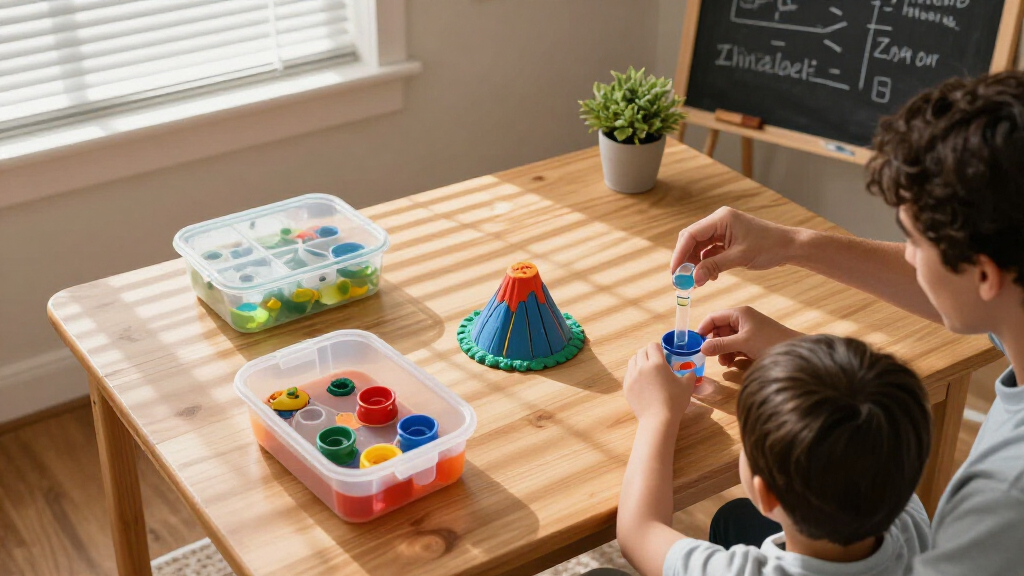
Among educational science kits for students, the National Geographic Amazing Chemistry Set is my best overall pick because its 100-plus experiments balance variety, clear subject focus, and an approachable age range. The EUDAX Basic Electricity and Magnetism Kit is better for older students who need focused physics work, while the 58-Piece Microscope Kit gives biology-minded learners a reusable instrument rather than a series of one-time activities. The biggest choice is between broad experiment collections and subject-specific kits that build deeper skills. Buyers must also weigh reusable hardware against consumable supplies, realistic age fit, storage, and the amount of adult guidance required. Continue reading for the full breakdown and recommendations by learner type.

Prime made for students and young adults
- Fast, free delivery for dorm and study essentials
- Prime Video and Amazon Music included
- Member-only deals
Key Takeaways
- National Geographic’s chemistry set ranks first because it offers the strongest balance of experiment variety, subject coherence, and accessibility for ages 8-12.
- The largest project count is not automatically the best choice: the 540-plus circuit activities may include variations on the same core concepts, while narrower kits can teach one subject more clearly.
- EUDAX’s two kits serve very different learners: the electricity and magnetism set suits structured physics study, while the fruit battery kit offers a simpler entry point.
- Microscopy requires two separate buying decisions: the 58-piece microscope kit supplies the viewing hardware, while the 50 prepared slides make more sense as an expansion for someone who already owns a microscope.
- Reusable circuit and microscope hardware offers longer-term value, but chemistry sets provide more immediate variety and usually require more supply management.
| EUDAX School Physics Labs Basic Electricity and Magnetism Experiment Kit for High School Students |  | Best for High School Physics | Recommended Grades: 9–11 | Electricity Items: 56 | Magnetism Items: 21 | VIEW LATEST PRICE | See Our Full Breakdown |
| 58-Piece Kids Microscope Kit – 100X-1200X Magnification, Metal Body, LED Light, Carrying Box |  | Best for Young Biology Beginners | Magnification: 100X–1200X | Number of Pieces: 58 | Age Range: 5–12 years | VIEW LATEST PRICE | See Our Full Breakdown |
| Science Kits for Kids, 53 Circuits STEM Toys, 540+ Projects Experiments |  | Best for Circuit Project Variety | Number of Projects: 540+ | Number of Components: 53 | Age Range: 5–12 years | VIEW LATEST PRICE | See Our Full Breakdown |
| EUDAX Fruit Battery Science Experiment Kit for DIY School and Home Education |  | Best for Classroom Demonstrations | Copper Sheets: 4 | Zinc Sheets: 4 | Electronic Clock: 1 | VIEW LATEST PRICE | See Our Full Breakdown |
| National Geographic Amazing Chemistry Set with 100+ Experiments for Ages 8-12 |  | Best Overall | Brand: Blue Marble | Set Name: Amazing Chemistry Set | Age Range: 8 years and up | VIEW LATEST PRICE | See Our Full Breakdown |
| Sntieecr STEM Electric Circuit Motor Kit |  | Best for Open-Ended Circuit Building | Recommended age: 8+ years | Recommended voltage: 1.5V-3V | Crocodile clip leads: 5 | VIEW LATEST PRICE | See Our Full Breakdown |
| Science Kit with 220+ Experiments for Kids |  | Best for Mixed-Age Families | Number of experiments: 220+ | Pieces included: 47 | Recommended age: 3-12 years | VIEW LATEST PRICE | See Our Full Breakdown |
| UNGILINGA 272 Experiments Science Kit for Kids |  | Best for Maximum Experiment Variety | Number of experiments: 272 | Kit category: Children’s chemistry set | Featured activities: Volcano eruptions, crystal growing, holographic projections, and chemical reactions | VIEW LATEST PRICE | See Our Full Breakdown |
| STEM Electric Circuit Kit for Kids Ages 8-15 |  | Best Guided Electricity Kit | Recommended age: 8-15 years | Number of experiments: 7 | Learning areas: Circuit building, conductivity testing, and energy conversion | VIEW LATEST PRICE | See Our Full Breakdown |
| 50 PCS Prepared Microscope Slides with Specimens Biology STEM Kit |  | Best for Advanced Biology Study | Number of slides: 50 | Recommended age: 14 years and older | Slide dimensions: 1 x 3 inches (25 x 75 mm) | VIEW LATEST PRICE | See Our Full Breakdown |
More Details on Our Top Picks
EUDAX School Physics Labs Basic Electricity and Magnetism Experiment Kit for High School Students
I rank the EUDAX School Physics Labs Kit as the strongest subject-focused choice for grades 9–11 because it connects circuit building with electromagnets and generators. Its 77 electricity and magnetism items support more formal physics lessons than the younger-skewing 53 Circuits STEM Toys kit, making it better suited to lab reports, demonstrations, and concept reinforcement. The included manual and repair tools also give teachers more structure than the narrowly focused EUDAX Fruit Battery Kit. That academic emphasis creates the main tradeoff: assembly demands patience, and students seeking quick, colorful activities may prefer the National Geographic Amazing Chemistry Set. I would place this above general electronics toys for older learners, but below broader kits for families wanting several science disciplines in one box.
Pros:- Combines electricity and magnetism in one subject-focused kit
- Supports hands-on work with circuits, electromagnets, and generators
- Includes manuals, repair tools, and a storage bag
- Better aligned with high school physics than toy-like circuit sets
Cons:- Requires three AA batteries that are not supplied
- Project assembly may be difficult for students without guidance
- Offers little variety outside electricity and magnetism
Best for: High school students, homeschool families, and physics teachers seeking structured electricity and magnetism experiments for grades 9–11
Not ideal for: Younger children or students wanting chemistry and biology activities, since the projects require assembly and stay focused on physics
- Recommended Grades:9–11
- Electricity Items:56
- Magnetism Items:21
- Repair Tools:2
- Learning Topics:Circuits, electromagnets, and generators
- Included Guides:Experiment manual
- Storage:Storage bag included
- Power:3 AA batteries required; not included
Our verdict“This is my preferred pick for older students who need a serious, reusable introduction to electricity and magnetism.”
58-Piece Kids Microscope Kit – 100X-1200X Magnification, Metal Body, LED Light, Carrying Box
The 58-Piece Kids Microscope Kit earns my beginner biology role because it gives children ages 5–12 specimens, slides, and lab tools in one portable case. Unlike the 50 PCS Prepared Microscope Slides set, this package includes the microscope itself, so a new learner can begin observing plants, insects, and household materials without sourcing core equipment separately. Its metal body and LED illumination make it more practical for repeated home or classroom sessions than a bare slide collection. Yet the advertised 100X–1200X range should not be mistaken for research-grade imaging; fine focus and optical clarity may disappoint older students. Compared with the National Geographic Amazing Chemistry Set, it also provides a narrower but repeatable activity: observation can continue after included samples lose their novelty, provided students collect new specimens.
Pros:- Includes a microscope, prepared specimens, slides, and lab tools
- Metal body offers more durability than many toy microscopes
- LED light supports viewing in varied room conditions
- Carrying box keeps the 58 pieces together between lessons
Cons:- Optical performance may not satisfy advanced students
- Two AA batteries must be purchased separately
- Younger children may need help preparing and focusing slides
Best for: Families and elementary educators introducing children ages 5–12 to specimen observation with a complete starter microscope package
Not ideal for: Advanced biology students who need precise focusing, higher optical quality, or dependable laboratory-grade imaging
- Magnification:100X–1200X
- Number of Pieces:58
- Age Range:5–12 years
- Body Material:Metal
- Illumination:LED light
- Dimensions:4.6 in L × 2.75 in W × 8.15 in H
- Storage:Carrying box included
- Power:2 AA batteries required; not included
Our verdict“I recommend this kit for younger students who want a complete first microscope rather than a separate set of prepared slides.”
Science Kits for Kids, 53 Circuits STEM Toys, 540+ Projects Experiments
I give the 53 Circuits STEM Toys kit the project-variety slot because 53 snap-together components can produce more than 540 builds without soldering. That modular design lets students change one connection and see a different result, which supports experimentation better than the EUDAX Fruit Battery Kit’s small set of closely related activities. It is also more approachable than the EUDAX School Physics Labs Kit: illustrated instructions and tool-free assembly reduce the setup burden for children ages 5–12. Breadth does not equal subject breadth, though. Every project remains tied to electronics, and younger builders may copy diagrams without understanding the underlying science unless an adult asks questions. I rank it highly for repeat play and problem-solving, while the National Geographic Amazing Chemistry Set remains stronger for students wanting more varied scientific phenomena.
Pros:- Supports more than 540 circuit projects with 53 reusable components
- Snap-on construction removes the need for soldering or tools
- Illustrated instructions lower the entry barrier for new builders
- Reusable format offers more repeat activity than consumable experiment kits
Cons:- Activities are confined to electronic circuits
- AA batteries are required but not included
- Children at the lower end of the age range need adult guidance to understand the concepts
Best for: Elementary and middle-grade students who enjoy rebuilding electronic models and need tool-free, repeatable circuit activities
Not ideal for: Students seeking chemistry, biology, or formal high school physics work, since all 540-plus builds use the same electronics platform
- Number of Projects:540+
- Number of Components:53
- Age Range:5–12 years
- Assembly System:Snap-on components
- Soldering Required:No
- Tools Required:No
- Instructions:Manual and illustrated instruction cards
- Power:AA batteries required; not included
Our verdict“This is my pick for children who value building variety and repeated circuit play more than coverage across multiple science subjects.”
EUDAX Fruit Battery Science Experiment Kit for DIY School and Home Education
The EUDAX Fruit Battery Kit is my classroom-demonstration pick because it turns familiar food into a visible lesson about electrodes, polarity, and electrical energy. Students can compare lemons, potatoes, cola, or salt solutions, giving teachers a clear route from prediction to recorded results. Compared with the 53 Circuits STEM Toys kit, this set offers far fewer builds, but its cause-and-effect experiment is easier to explain in a short lesson. The included clock usually provides a clearer outcome than the LEDs, which can appear faint in bright rooms. Buyers must also supply fresh produce, rinse and dry the metal sheets, and supervise clip placement. I rank it below larger kits for long-term variety, yet its compact, focused format makes more sense for science fairs and group demonstrations than a sprawling electronics system.
Pros:- Makes voltage and polarity visible through familiar household materials
- Supports comparisons across fruits, vegetables, drinks, and salt solutions
- Includes enough copper and zinc sheets for multi-cell setups
- Electronic clock and multiple LEDs provide different output options
Cons:- Requires user-supplied fruit, vegetables, or solutions
- LED output may be hard to see in bright environments
- Metal sheets require rinsing, drying, and sealed storage after use
Best for: Middle school teachers, homeschool instructors, and science-fair students running focused lessons on chemical energy and simple circuits
Not ideal for: Buyers wanting many self-contained experiments, since produce must be supplied and the activities center on fruit-powered electricity
- Copper Sheets:4
- Zinc Sheets:4
- Electronic Clock:1
- RGB LEDs:2
- Red LEDs:2
- Wires:4 standard wires and 2 clip wires
- Compatible Materials:Fruit, vegetables, cola, and salt solutions
- Maintenance:Rinse, dry, and store sealed after use
Our verdict“I favor this kit for a memorable single-topic demonstration, not for buyers seeking months of varied science projects.”
National Geographic Amazing Chemistry Set with 100+ Experiments for Ages 8-12
I rank the National Geographic Amazing Chemistry Set first because it balances structured activities, recognizable lab tools, and enough subject variety to hold attention beyond one lesson. Students can grow crystals, create color-changing solutions, and observe reactions, while the bonus guide adds 85 experiments using household supplies. That range makes it a stronger all-purpose choice than the EUDAX Fruit Battery Kit and less repetitive than the electronics-only 53 Circuits STEM Toys kit. Test tubes and beakers also make the process feel closer to classroom chemistry. The tradeoffs are recurring costs and supervision: included materials will run out, household ingredients may be needed, and some reactions require an adult. It will not replace an advanced chemistry course, but for ages eight and up, the broadest learning mix earns it my top position.
Pros:- Covers crystal growth, color changes, and chemical reactions
- Offers more than 100 experiments across included and household materials
- Includes recognizable lab tools such as test tubes and beakers
- Bonus guide extends learning with 85 additional activities
Cons:- Consumable materials need replacement after repeated sessions
- Some experiments require household ingredients beyond the box
- Adult supervision is needed for some reactions
Best for: Families, homeschoolers, and elementary or middle-grade educators wanting one chemistry set with guided activities and room for follow-up experiments
Not ideal for: Advanced students or households wanting a fully reusable kit, since the activities are introductory and experiment materials are consumed
- Brand:Blue Marble
- Set Name:Amazing Chemistry Set
- Age Range:8 years and up
- Experiment Count:100+
- Bonus Guide:85 additional experiments using household items
- Educational Objective:STEM
- Activity Types:Crystal growing, color-changing solutions, and chemical reactions
- Model Number:NGMEGACHEMAR
- UPC:816448026607
Our verdict“This is my best overall choice for ages eight and up because it offers the strongest balance of variety, guidance, and hands-on chemistry.”
Sntieecr STEM Electric Circuit Motor Kit
I rank the Sntieecr STEM Electric Circuit Motor Kit as the strongest choice here for students who learn by assembling their own designs. Its loose bulbs, motors, switches, propellers, and leads support open-ended circuit experiments rather than a fixed sequence of demonstrations. Compared with the STEM Electric Circuit Kit for Kids Ages 8-15, this set offers more freedom to rearrange individual parts, but it provides less structured guidance for independent beginners. It also has a narrower focus than the Science Kit with 220+ Experiments, trading broad subject coverage for deeper practice with basic electricity. The 1.5V-3V range keeps projects approachable, though incorrect connections can cause short circuits. I would choose it for supervised classrooms or project tables, not for children who need polished, step-by-step activities.
Pros:- Loose components support many student-designed circuit layouts
- Includes motors, bulbs, switches, a buzzer, and propellers for varied outputs
- Low-voltage operation suits introductory electricity lessons
- Crocodile clip leads make circuits easy to rearrange
Cons:- Less structured than experiment kits with detailed guided activities
- Incorrect wiring can create short circuits
- Small parts and exposed electrical components call for adult supervision
Best for: Teachers, homeschoolers, and students ages 8 and older who want reusable parts for building original low-voltage circuits
Not ideal for: Unsupervised beginners who need guided experiments, since loose components can be connected incorrectly and create short circuits
- Recommended age:8+ years
- Recommended voltage:1.5V-3V
- Crocodile clip leads:5
- Bulbs:5
- Motors:2
- Switch type:Rocker switches
- Output accessories:Propellers and buzzer
- Included holders:Motor, bulb, and battery holders
Our verdict“This is my pick for students who want circuit-building freedom and have an adult available to guide safe wiring.”
Science Kit with 220+ Experiments for Kids
I give the Science Kit with 220+ Experiments the mixed-age role because its stated 3-12 range and broad activity count make it easier to share among siblings. The 47 pieces include goggles and familiar lab vessels, giving younger learners a tangible introduction to basic laboratory routines. Compared with the UNGILINGA 272 Experiments Science Kit, it lists fewer activities and less eye-catching projects, but its wider stated age range makes it the more flexible family purchase. It is also broader than the Sntieecr STEM Electric Circuit Motor Kit, which concentrates on electricity. The catch is that 220-plus experiments do not mean every material is supplied: oil, water, and adult help may still be needed. I see this as a variety-first starter set, not a source of advanced equipment or fully self-contained lessons.
Pros:- Wide stated age range makes the kit easier to share among siblings
- More than 220 activities provide broad exposure to science topics
- Includes goggles and several recognizable laboratory vessels
- Easy instructions support guided home learning
Cons:- Oil, water, and possibly other household materials must be supplied separately
- Younger children will need adult help despite the stated age range
- The included tools are suited to basic rather than advanced investigations
Best for: Families with children at different elementary-school ages who want one kit covering many short, approachable activities
Not ideal for: Buyers seeking advanced lab equipment or a fully self-contained kit with every household ingredient supplied
- Number of experiments:220+
- Pieces included:47
- Recommended age:3-12 years
- Safety gear:Goggles
- Beakers:Included
- Test tubes:Included
- Other lab tools:Flasks and funnels
- Materials not included:Oil and water
Our verdict“I recommend this kit to mixed-age households that value activity variety more than specialized or advanced experiments.”
UNGILINGA 272 Experiments Science Kit for Kids
The UNGILINGA 272 Experiments Science Kit earns this role by pairing the largest activity count in this batch with projects spanning reactions, crystals, volcanoes, and holographic effects. That range lets students sample several ideas before deciding which branch of science holds their attention. Against the Science Kit with 220+ Experiments, UNGILINGA supplies 52 more listed activities and a more distinctive project mix, though its instructions may be harder for very young learners to follow. It also offers more breadth than the National Geographic Amazing Chemistry Set, while the latter may suit buyers who want a tighter chemistry focus. I would pick UNGILINGA for long-term activity mileage, provided an adult can interpret directions and manage cleanup. Plastic tools are practical for children, but they lack the feel and durability of higher-grade laboratory equipment.
Pros:- Offers the highest listed experiment count among these five products
- Activity mix covers reactions, crystal growing, volcanoes, and holographic projection
- Included measuring and mixing tools support repeated projects
- Broad selection can sustain interest across many sessions
Cons:- Directions may be difficult for very young children to interpret
- Several activities can create substantial mess and need adult oversight
- Plastic apparatus is less durable and realistic than laboratory glassware
Best for: Curious grade-school students who want a large menu of chemistry, crystal, volcano, and visual-science activities
Not ideal for: Very young independent learners or families that want low-mess projects with laboratory-grade glassware
- Number of experiments:272
- Kit category:Children’s chemistry set
- Featured activities:Volcano eruptions, crystal growing, holographic projections, and chemical reactions
- Test tube:Included
- Measuring spoon:Included
- Beaker:Included
- Conical flask:Included
- Tool material:Plastic
Our verdict“This is my choice for students who prize sheer activity range and have adult help for instructions and cleanup.”
STEM Electric Circuit Kit for Kids Ages 8-15
I place the STEM Electric Circuit Kit for Kids Ages 8-15 ahead of looser component sets for students who need a defined route through electricity. Its seven experiments cover circuit building, conductivity, and energy conversion, while the step-by-step manual supports more independent study. Compared with the Sntieecr STEM Electric Circuit Motor Kit, this option sacrifices open-ended component variety in exchange for clearer activity structure and a storage box. The Science Kits for Kids 53 Circuits set promises far more projects, so prolific builders may outgrow these seven lessons quickly. Still, reusable parts make it useful for repeating demonstrations at home or in class. Two AA batteries must be purchased separately, and some activities may still call for adult help. I favor it as a focused first physics kit, rather than a broad science collection.
Pros:- Step-by-step manual gives beginners a clear learning sequence
- Covers three useful electricity themes across seven experiments
- Reusable components work for repeated home or classroom demonstrations
- Storage box keeps the experiment parts organized
Cons:- Seven experiments offer much less variety than larger circuit sets
- Two AA batteries require a separate purchase
- Some activities may still need adult supervision
Best for: Students ages 8-15 who want guided, repeatable lessons in circuits, conductivity, and energy conversion
Not ideal for: Frequent builders who want dozens of projects or a large supply of loose components for original designs
- Recommended age:8-15 years
- Number of experiments:7
- Learning areas:Circuit building, conductivity testing, and energy conversion
- Instruction format:Detailed step-by-step manual
- Storage:Storage box included
- Battery requirement:2 AA batteries
- Batteries included:No
- Component use:Durable and reusable
Our verdict“I would choose this kit for a student who values clear instructions more than a high project count or open-ended building.”
50 PCS Prepared Microscope Slides with Specimens Biology STEM Kit
I chose the 50 PCS Prepared Microscope Slides Biology STEM Kit for older students who already have microscope access and want specimens ready for serious observation. Its 50 glass slides span plants, animals, microorganisms, cells, bacteria, fungi, and histology, creating broader biological coverage than a small beginner sample pack. Compared with the 58-Piece Kids Microscope Kit, this set provides a richer prepared-slide library but no microscope, so it cannot function independently. It is also less activity-driven than the UNGILINGA 272 Experiments Science Kit; the learning comes from observation, comparison, and labeling rather than reactions or construction. Standard 1-by-3-inch slides should fit most microscopes, and guides help students identify what they see. Yet the age-14 recommendation and glass construction make this a specialized secondary-school resource, not a young child’s first science toy.
Pros:- Fifty prepared slides provide substantial material for repeated biology lessons
- Specimens cover plants, animals, microbes, cells, bacteria, fungi, and histology
- Standard slide dimensions support compatibility with most microscopes
- Instructional guides and cleaning cloths support organized study
Cons:- A microscope must be purchased or supplied separately
- Glass slides demand more careful handling than plastic beginner slides
- The recommended age of 14 and older excludes many younger students
Best for: Secondary-school biology students and hobbyists ages 14 and older who already own a compatible microscope
Not ideal for: Younger children or first-time buyers without a microscope, since the glass slides are not a stand-alone activity kit
- Number of slides:50
- Recommended age:14 years and older
- Slide dimensions:1 x 3 inches (25 x 75 mm)
- Slide material:High-transparency glass
- Specimen categories:Plants, animals, microorganisms, cells, bacteria, fungi, and histology sections
- Microscope compatibility:Compatible with most microscope types
- Learning support:Instructional guides included
- Care accessories:Cleaning cloths included
Our verdict“I recommend this set for older students who already own a microscope and want a varied, ready-made specimen library.”
How We Picked
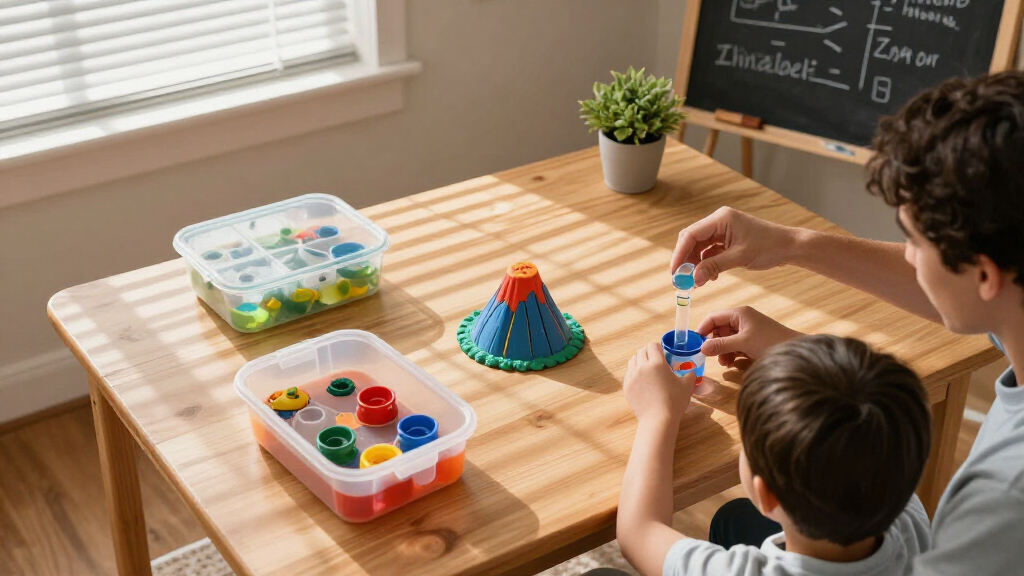
I compared these kits using learning depth, usability, age fit, and repeat value rather than treating the advertised experiment count as the main measure. I gave more weight to kits with a clear link between activities and scientific concepts, since a long activity list has limited value when projects repeat the same lesson. I also examined whether the included parts could support continued exploration, how much outside material students may need, and whether the format suits independent work or adult-led sessions. Build quality and storage mattered most for microscopes and circuit components, while instructions and supply demands carried more weight for chemistry kits.
The ranking favors products that can engage a defined student group without creating unnecessary setup barriers. The National Geographic set leads because it combines breadth with a coherent chemistry focus, while the EUDAX physics kit ranks highly for older learners who benefit from a narrower academic purpose. Broad experiment collections earned credit for variety but lost ground when their age ranges or project totals appeared too broad to guide a buyer clearly. Focused options such as the fruit battery kit, motor kit, and prepared slides rank by specific-use value rather than raw activity volume. This approach separates versatile primary kits from useful supplements and short-format introductions.
Factors to Consider When Choosing Educational Science Kits For Students
I would choose a science kit by matching it to the student’s current learning goal, not by buying the box with the largest number. The right choice depends on whether the student needs guided discovery, repeatable equipment, or subject practice. Age labels help narrow the field, but reading ability, patience, and access to adult help often matter more.
Match the Kit to a Scientific Discipline
A broad kit is useful when a student is still discovering what holds their attention, while a focused kit works better when it supports a school topic. Chemistry sets emphasize reactions and observation, circuit kits build cause-and-effect reasoning, and microscopes develop specimen-handling skills. A common mistake is buying a mixed experiment box for a student who already has a strong subject preference. That student may finish the relevant activities quickly and ignore the rest. For curriculum support, I would favor clear subject alignment over a larger activity count. For casual weekend learning, variety can be more valuable than depth.
Judge Age Fit Beyond the Number on the Box
Two students of the same age may need very different levels of direction. Directions with dense text, multi-step assembly, or abstract explanations can turn an appealing kit into an adult-led project. Younger students benefit from visible results, short sessions, and parts that are easy to identify. Older learners gain more from measurement, troubleshooting, and activities that allow several possible outcomes. Very wide age claims, such as ages 3-12, should prompt a close review of small components and reading demands. I would buy for the student’s present skill level rather than choosing a harder kit solely for future use.
Separate Reusable Equipment From Consumable Activities
Microscopes, motors, wires, and circuit components can support repeated sessions if the parts remain organized. Chemistry ingredients and fruit battery materials are more likely to need replacement, which changes the long-term cost. Reusable hardware rewards sustained interest, but it often has a steeper setup curve and requires careful storage. Consumable experiments can deliver faster results and may feel less intimidating to a beginner. Before buying, I would check which household supplies each activity needs and whether replacement materials are easy to obtain. A lower purchase price can become less attractive when frequent refills are part of the routine.
Treat Experiment Counts as a Measure of Breadth, Not Quality
A claim of 540-plus projects sounds much larger than 100 experiments, but those totals may count small variations as separate activities. Changing one connection, ingredient, or measurement can create another listed project without teaching a new principle. I place more value on distinct scientific lessons than on the number printed on the package. Clear explanations also matter because an activity without context can become a trick rather than a lesson. Buyers should look for progression from simple demonstrations to projects that require predictions or troubleshooting. Instruction quality and conceptual range usually reveal more than the headline count.
Plan for Workspace, Storage, and Group Use
A kit that works well for one student may become frustrating in a classroom or sibling group. Circuit sets need enough components for shared building, while microscope sessions may create a bottleneck because only one person can view a specimen at a time. Sorted storage reduces lost parts and makes repeated use far more likely. Chemistry activities also need a washable work surface and a reliable place for open supplies. For group learning, I would favor projects that can be divided into roles such as assembly, measurement, recording, and cleanup. Workspace compatibility can matter more than adding another hundred experiments.
Frequently Asked Questions
Should I buy a chemistry kit, circuit kit, or microscope kit?
Choose based on the type of activity the student naturally returns to. Chemistry kits suit learners who like visible reactions and varied short projects, while circuit kits reward builders who enjoy assembly and troubleshooting. A microscope is a stronger match for students drawn to biology, specimens, and careful observation. Chemistry supplies may run out, but circuits and microscopes can support repeated work when cared for properly. If the student’s interests are still unclear, I would start with a broad, guided chemistry set before investing in more specialized equipment.
Is a kit with 540-plus projects better than one with 100 experiments?
Not necessarily, because manufacturers may count component variations as separate projects. A smaller set can provide better learning progression when its activities introduce genuinely different ideas and explain the results. Large totals are useful for students who enjoy repeating circuit layouts or changing one variable at a time. They are less persuasive when the directions provide little scientific context. I would compare lesson variety, instruction depth, and required supplies before using project count as a deciding factor.
Which type of science kit is best for a high school student?
High school students usually benefit from kits tied to a defined subject rather than products built mainly around spectacle. The EUDAX Electricity and Magnetism Kit is the strongest match here because it focuses on physics concepts that connect more directly with formal coursework. Prepared microscope slides can also support biology study, but they require access to suitable viewing equipment. Broad children’s chemistry collections may still be entertaining, yet some activities could feel too basic for an older learner. I would prioritize measurement, troubleshooting, and curriculum alignment for this age group.
Do the prepared microscope slides replace the need for a microscope kit?
No, because the slides are specimens rather than viewing equipment. The 50 prepared slides are best treated as an expansion for a student who already owns a compatible microscope. The 58-piece microscope package makes more sense for a new user because it includes the main instrument and supporting accessories. Prepared specimens save setup time and give students consistent subjects to examine, but they offer less specimen-preparation practice. For a complete beginner, I would buy the microscope first and extra slides later.
How much adult supervision do these kits require?
The level varies with the activity, the student’s reading ability, and the use of small parts, liquids, batteries, or tools. Fruit battery experiments and basic snap-style circuits may need help mainly during setup, while chemistry activities often call for closer oversight and cleanup support. Microscopes can be used more independently once a student learns focusing and slide handling. Wide age ranges on packaging should not replace an adult review of the directions and included materials. I would plan for hands-on guidance during the first session, then reduce help as the student shows safe, confident habits.
Conclusion
For most families, my best overall choice is the National Geographic Amazing Chemistry Set because it balances variety, approachable instructions, and a clear chemistry focus. The UNGILINGA 272 Experiments Science Kit is my value pick for buyers who want broad activity coverage, while the 58-piece metal-body microscope is the premium choice for students who will benefit from reusable biology equipment. Beginners are better served by the EUDAX Fruit Battery Kit, which offers a focused idea without the setup burden of a very large collection. For older students studying physics, I would choose the EUDAX Electricity and Magnetism Kit; for circuit enthusiasts seeking the widest project menu, the 53 Circuits kit with 540-plus projects is the stronger fit. The Sntieecr motor kit and the other STEM circuit set make sense for students with a specific interest in motors or electrical assembly, while the 50 prepared slides belong with learners who already have a microscope. Families buying for mixed ages can favor the 220-plus experiment set, but a subject-specific option remains the better purchase when the student’s interests are already clear.
Fall Picks
fall essentials
As an affiliate, we earn on qualifying purchases.