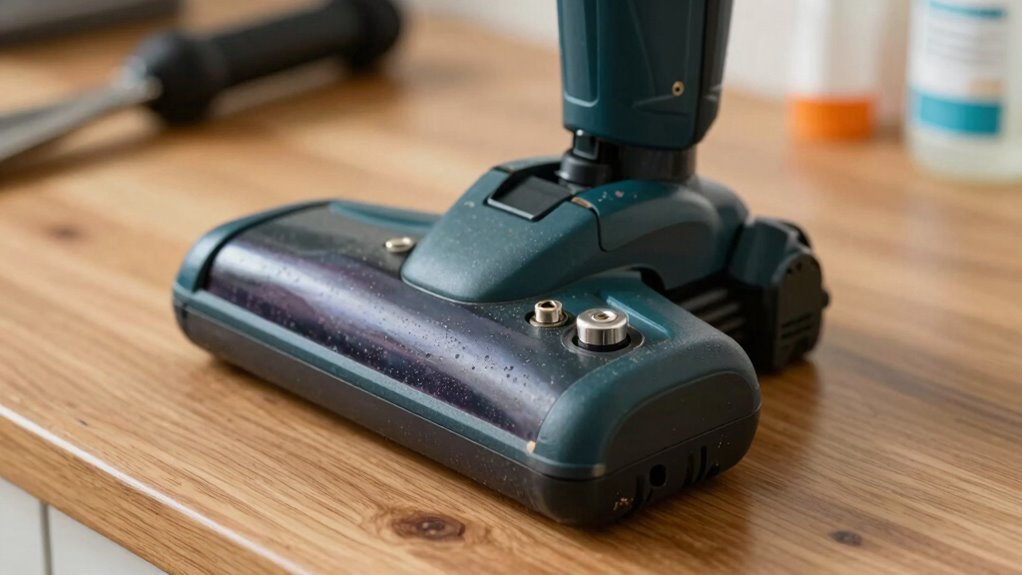

Cordless vacuum batteries fade over time because of natural wear, overheating, overcharging, and improper storage. To extend their life, avoid constant trickle charging, unplug once fully charged, and store batteries in cool, dry places at about 50% charge during long breaks. Regular maintenance and using the recommended chargers help, too. If you want to learn more about keeping your battery healthy and when to replace it, keep exploring further.

Prime made for students and young adults
- Fast, free delivery for dorm and study essentials
- Prime Video and Amazon Music included
- Member-only deals
Key Takeaways
- Battery capacity diminishes over time due to natural aging, repeated charging cycles, and environmental factors.
- Overcharging, overheating, or deep discharges accelerate battery degradation and shorten lifespan.
- Proper charging practices, like unplugging after full charge and avoiding trickle charging, help extend battery life.
- Storing batteries in cool, dry environments at partial charge prevents unnecessary wear and prolongs usability.
- Recycling old batteries responsibly ensures environmental safety and recovers valuable materials for sustainable use.

Cordless vacuum batteries are the power source that keeps your cordless vacuum running efficiently, giving you the freedom to clean without being tethered to a wall outlet. Over time, however, these batteries tend to lose their capacity, causing your vacuum to perform less effectively. Understanding why batteries fade and how to extend their life can save you money and frustration. One key aspect is proper battery recycling. When your battery no longer holds a charge and can’t be revived with simple tricks, it’s important to dispose of it responsibly. Many manufacturers and local recycling programs accept old batteries, preventing environmental harm and allowing valuable materials to be recovered. By recycling your batteries correctly, you contribute to a more sustainable cycle of manufacturing and disposal, reducing the need for new raw materials.
In addition to recycling, maintaining good charging habits plays an essential role. Always use the charging station recommended by your vacuum’s manufacturer. Charging stations are designed to optimize battery health by providing the correct voltage and current, preventing overcharging or overheating that can accelerate battery degradation. Avoid leaving your vacuum on the charger indefinitely after it’s fully charged, as constant trickle charging can strain the battery over time. Instead, unplug it once it reaches full capacity. When storing your vacuum for extended periods, keep the battery partially charged—around 50%—and store it in a cool, dry place. This practice helps preserve battery health, ensuring it remains functional when you need it most. Additionally, understanding the importance of battery management can further extend the lifespan of your cordless vacuum batteries.
If you notice your vacuum isn’t holding a charge like it used to, consider whether you’re following best practices. Frequent deep discharges or letting the battery completely drain can harm its longevity. Instead, try to keep the battery charged regularly, avoiding complete depletion. Also, keep an eye on how your vacuum performs on a full charge. If it’s markedly weaker or if the runtime is noticeably shorter, it might be time to replace the battery or explore whether your charging station needs an update. Some newer models include smart charging stations that monitor battery health and alert you when maintenance or replacement is necessary.
cordless vacuum battery replacement
As an affiliate, we earn on qualifying purchases.
As an affiliate, we earn on qualifying purchases.
Frequently Asked Questions
Can I Replace My Cordless Vacuum Battery Myself?
Yes, you can replace your cordless vacuum battery yourself. Just make sure you buy the correct replacement battery for your model and follow the manufacturer’s instructions for DIY installation. Turn off your vacuum and disconnect it from the charger first. Carefully remove the old battery, then install the new one securely. Doing your own battery replacement saves money and extends your vacuum’s lifespan, making maintenance easier and more convenient.
Do Lithium-Ion Batteries Last Longer Than Nickel-Cadmium Ones?
Yes, lithium-ion batteries typically last longer than nickel-cadmium ones because they have higher battery capacity and can handle more charging cycles without significant capacity loss. Lithium-ion batteries maintain their charge better over time, so your cordless vacuum will stay powerful longer. Plus, they don’t suffer from the memory effect that nickel-cadmium batteries do. With proper care, lithium-ion batteries can extend the overall lifespan of your device.
How Often Should I Fully Discharge My Vacuum Battery?
You should avoid fully discharging your vacuum battery regularly. Good battery maintenance involves keeping your charging habits consistent—charge before it drops below 20%, and don’t leave it completely drained for long periods. Fully discharging can strain the battery and shorten its lifespan. Instead, aim for partial discharges and regular top-ups. This approach helps prolong your battery’s life and guarantees your vacuum performs at its best when you need it.
Are Third-Party Batteries Safe for My Vacuum?
Third-party batteries can be safe if you check for proper battery compatibility and verify they match your vacuum’s specifications. However, you should confirm the brand authenticity to avoid subpar quality that might damage your device or reduce battery life. Always buy from reputable suppliers, and compare compatibility details carefully. Choosing genuine or certified third-party options helps maintain your vacuum’s performance and longevity, keeping you safe from potential hazards.
What’s the Best Way to Store a Spare Vacuum Battery?
You should store your spare vacuum battery in a cool, dry place away from direct sunlight. Follow proper battery maintenance by keeping it at around 50% charge if you’re not using it for a while. Use storage tips like placing it in a sealed container to prevent moisture. Regularly check the battery’s condition, and avoid extreme temperatures to extend its lifespan and guarantee it’s ready when you need it.
As an affiliate, we earn on qualifying purchases.
Conclusion
Think of your cordless vacuum battery as a delicate garden that needs regular care. Over time, it wilts from neglect, losing its vibrant energy. But with proper attention—like charging wisely and avoiding extremes—you can nurture its importance back to life. By tending to it patiently, you’re not just extending its lifespan; you’re ensuring your cleaning tool remains a strong, dependable partner in your daily routine. Keep it cared for, and it’ll serve you well for years to come.
As an affiliate, we earn on qualifying purchases.
As an affiliate, we earn on qualifying purchases.
Evergreen bestsellers Picks
bestsellers
As an affiliate, we earn on qualifying purchases.