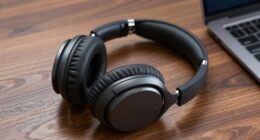
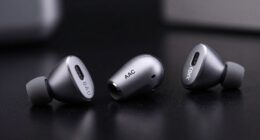
Active noise-canceling headphones use electronic systems and microphones to detect and cancel out background sounds, making them more effective in noisy environments like airplanes or busy streets. Passive isolation relies on physical design, such as thick ear cushions, to block sound naturally. While ANC can sometimes introduce slight distortion, it generally cancels noise better. If you want to understand why certain headphones “cancel” more effectively, keep exploring how these technologies work.
Key Takeaways
- Active Noise Cancellation (ANC) uses electronic signals to actively reduce ambient sounds, often providing superior noise reduction in noisy environments.
- Passive isolation relies on physical design features like ear cup material and fit to block sound, which can be less effective in extremely loud settings.
- ANC headphones can cancel a broader range of frequencies and is more effective against consistent background noise, such as engine hums or chatter.
- The effectiveness of noise cancellation depends on the quality of ANC technology and the headphone’s design, making some cancel better than others.
- Passive isolation offers consistent sound blocking without power needs, but may not match the noise reduction level of high-quality ANC headphones.

Have you ever wondered how different noise-canceling methods compare? When it comes to headphones, you’ll notice two main types: Active Noise Cancellation (ANC) and passive isolation. Both aim to block out unwanted sounds, but they do so differently, affecting sound quality and comfort level in unique ways. Understanding these differences can help you pick the right headphones for your needs.
With ANC headphones, tiny microphones inside and outside the ear cups pick up ambient sounds. The headphones then produce anti-noise signals to cancel out these sounds before they reach your ears. This process allows you to enjoy a quieter environment without needing to crank up the volume. However, this technology can sometimes influence sound quality. Because ANC works by generating sound waves that oppose background noise, it can introduce a slight distortion or a “hiss” that some users find distracting. If you’re an audiophile or someone who values pristine sound, this minor compromise might matter. On the other hand, ANC headphones tend to be bulkier and heavier than passive ones, which can impact your comfort level during extended use. The added electronic components and padding requirements can lead to a less natural fit, especially if the headphones aren’t well-designed.
Passive isolation, on the other hand, relies purely on the physical design of the headphones. Thick ear cups, snug ear pads, and quality materials trap and block sound waves from reaching your ears. It’s a straightforward approach that doesn’t involve electronics, so it generally preserves the sound quality better—no electronic interference or distortion. Plus, because they’re often lighter and simpler, passive headphones tend to be more comfortable over long periods. They don’t require batteries or power sources, which is another advantage if you’re looking for something more reliable and less cumbersome. That said, passive isolation does have its limitations; it might not block out as much noise as ANC in very noisy environments, such as on loud airplanes or busy streets.
Additionally, the effectiveness of passive isolation can be influenced by the material choice and design of the headphones, which can make a significant difference in sound blocking capabilities. Ultimately, your choice depends on what matters most to you. If you prioritize maximum noise reduction and don’t mind a slight impact on sound quality or comfort, ANC headphones could be the better pick. But if you want a more natural sound experience and greater comfort, passive isolation might suit you better. Both methods have their strengths, but understanding how they affect sound quality and comfort level helps you make an informed decision that fits your lifestyle.
Frequently Asked Questions
How Does Headphone Fit Affect Noise Cancellation Effectiveness?
Your headphone fit directly impacts noise cancellation effectiveness. When the ear seal is snug and secure, it blocks out more external noise, enhancing passive isolation and allowing ANC to work better. A stable fit prevents gaps that let sound in, ensuring consistent noise reduction. If your headphones don’t fit well or lose stability, you’ll notice decreased noise cancellation because sound leaks and the ear seal isn’t ideal.
Can ANC Headphones Cause Ear Discomfort Over Long Periods?
You might notice ear discomfort after long use of ANC headphones, as about 30% of users report some ear pressure or soreness. This happens because active noise cancelling creates a slight pressure sensation, which can affect long-term comfort. To prevent discomfort, take breaks regularly and make sure a proper fit, since a snug but not tight seal helps balance effective noise cancellation with ear comfort over extended periods.
Do ANC Headphones Drain Battery Faster Than Passive Ones?
Yes, ANC headphones tend to drain battery faster than passive ones because their active noise-canceling technology increases power consumption. When you turn on ANC, the headphones work harder to generate anti-noise signals, which leads to higher battery drain. If you’re concerned about battery life, using passive isolation mode can help conserve power, as it relies solely on physical barriers without needing additional power for noise cancellation.
Is There a Difference in Sound Quality Between ANC and Passive Headphones?
You’ll notice a difference in sound fidelity between ANC and passive headphones. ANC headphones often provide clearer, more immersive sound because they actively reduce ambient noise, allowing you to hear details better. However, some models might cause slight noise leakage due to the electronic components, which can affect privacy. Passive headphones usually have better noise isolation without leakage, offering a purer sound experience, but they don’t cancel noise as effectively.
Are There Environments Where Passive Isolation Is Better Than ANC?
In some outdoor environments, passive isolation outshines ANC like a superhero saving the day. When ambient noise is loud or unpredictable, passive headphones block out distractions more reliably because they physically seal your ears. Unlike ANC, which can struggle with sudden or complex sounds, passive isolation offers consistent silence, making it perfect for noisy streets, busy parks, or any outdoor adventure where you need to shut out the chaos instantly.
Conclusion
In the end, choosing between ANC and passive isolation is like picking between a magic wand and a sturdy wall—both have their strengths. ANC can sweep away noise like a skilled magician, while passive isolation provides a solid shield. Think about your listening habits and environment, and you’ll find the perfect match. After all, the right headphones turn your world into a peaceful oasis, no matter how noisy the outside gets.