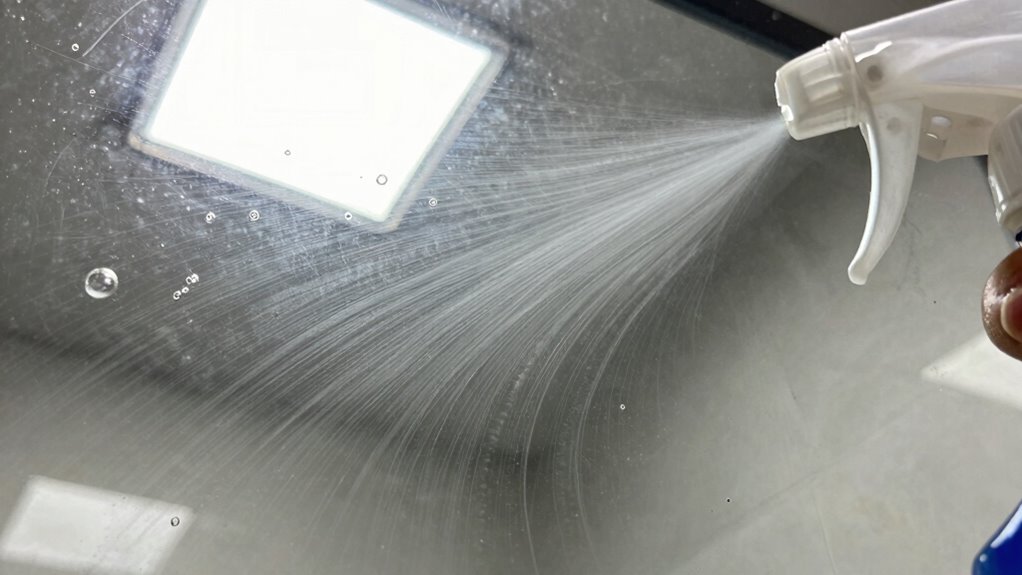

Cleaning products sometimes fail because surface contaminants like grease and grime form chemical bonds or create layers that are tough to remove with just surfactants. These chemicals need specific reactions, like alkali neutralizing fats or acids dissolving mineral deposits, to break them down effectively. Factors like pH, temperature, and contact time are essential for these reactions to work. If you want to understand why some cleaners don’t work as expected, keep exploring the chemistry behind it.

Prime made for students and young adults
- Fast, free delivery for dorm and study essentials
- Prime Video and Amazon Music included
- Member-only deals
Key Takeaways
- Surface contaminants form chemical bonds or layers resistant to simple removal, requiring targeted reactions for effective cleaning.
- Surfactants lower surface tension and encapsulate dirt, but may be insufficient for stubborn or oil-based residues.
- Proper chemical reactions, like saponification or acid dissolution, depend on matching cleaners to specific contaminants.
- Environmental factors such as pH, temperature, and contact time significantly influence reaction efficiency and cleaning success.
- Inadequate reaction conditions or buildup can slow or prevent chemical breakdown, causing cleaning products to fail.
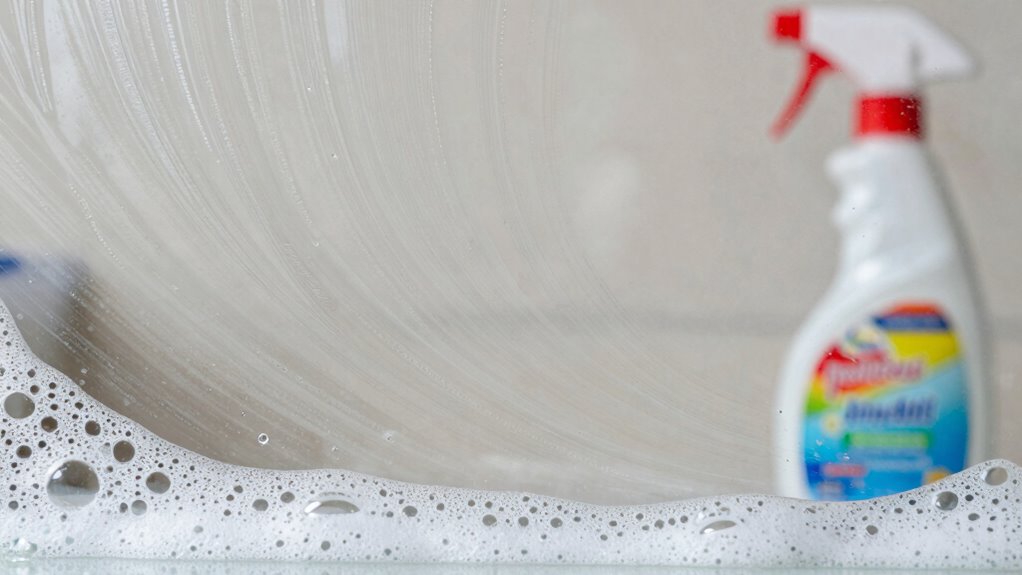
Cleaning products often seem to fail just when you need them most, but the truth lies in their chemistry. When you spray a cleaner onto a surface, what’s really happening involves a complex interplay of molecules and surface contaminants. Surface contaminants—like dirt, grease, and grime—are often stubborn because they cling tightly due to their chemical makeup. These contaminants can form bonds or layers that are resistant to simple washing or wiping, making it seem as though your cleaning product isn’t working at all. The effectiveness of a cleaner hinges on its ability to break down these surface contaminants through specific chemical reactions.
Cleaning success depends on chemistry; effective products break down stubborn dirt and grime through targeted reactions.
Many cleaning products rely on surfactants—molecules that lower surface tension and help lift dirt away. Surfactants surround dirt particles and grease, encapsulating them in tiny bubbles or micelles, which are then rinsed away. However, if the contaminants have a particular chemical composition, such as being oil-based or stubbornly adhered, the surfactants might not be enough. Instead, the cleaner must undergo a chemical reaction to neutralize or loosen the contaminant. For example, alkaline cleaners react with organic fats and oils, saponifying them into soap and glycerol, which can be rinsed away more easily. If your cleaner isn’t formulated for the specific type of surface contaminant present, those stubborn residues remain, giving the impression that the cleaner has failed.
Another factor impacting cleaning success is the nature of the chemical reactions involved. Sometimes, the chemicals in a cleaning product need to reach a certain pH level or react with specific molecules to be effective. If the surface is heavily contaminated or has built-up layers of grime, the desired chemical reaction may be hindered. For instance, mineral deposits like limescale require acids to react and dissolve calcium carbonate. If your cleaner isn’t acidic enough or isn’t left on the surface long enough, the reaction won’t occur efficiently, and the deposits won’t be removed. Additionally, environmental factors such as temperature and pH can significantly influence the rate and success of these chemical reactions. Proper environmental conditions can enhance or inhibit these reactions, affecting overall cleaning results. Understanding reaction conditions can help you optimize your cleaning process and improve outcomes.
Temperature also plays a pivotal role. Higher temperatures can accelerate chemical reactions, making cleaning more effective. Conversely, cold or stagnant environments slow down these processes, reducing the product’s ability to break down stubborn surface contaminants. Sometimes, the failure of a cleaning product isn’t due to poor formulation but simply because the conditions aren’t ideal for the necessary chemical reactions to happen. Recognizing the importance of reaction kinetics allows for better planning of cleaning processes to ensure optimal results. Being aware of these reaction factors can help you troubleshoot cleaning issues more effectively and choose the right approach for each situation.
As an affiliate, we earn on qualifying purchases.
Frequently Asked Questions
Can Cleaning Products Cause Allergic Reactions?
Yes, cleaning products can cause allergic reactions if you’re sensitive to certain ingredients. When you use these products, allergic sensitivities might trigger symptoms like sneezing, skin rashes, or respiratory issues. Chemical reactions between cleaning agents and your skin or mucous membranes can lead to discomfort or allergic responses. Always check labels for potential allergens, and consider testing a small area first to avoid adverse reactions.
How Do Hard Water Minerals Affect Cleaning Effectiveness?
Imagine water as a silent artist, leaving behind stubborn strokes—minerals from water hardness and mineral buildup cling to surfaces. These minerals act like tiny shields, blocking cleaning agents from doing their job effectively. Hard water minerals interfere with soap’s ability to lather, reducing cleaning power. Over time, mineral buildup accumulates, making surfaces dull and grimy, so your cleaning efforts become less effective, requiring extra scrubbing or special treatments to restore shine.
Are Natural Cleaning Products Less Likely to Fail?
Natural cleaning products are generally less likely to fail because they often contain eco-friendly ingredients that work gently yet effectively. Their market availability has increased, making it easier for you to choose products suited for different surfaces and needs. Since they typically avoid harsh chemicals, you’re less likely to encounter issues like residue buildup or damage caused by chemical reactions, leading to more consistent cleaning results.
What Role Does pH Play in Cleaning Success?
You might think pH isn’t a big deal, but it actually plays a vital role in cleaning success. The pH balance, whether acidic or alkaline, determines how well a product breaks down dirt and grime. Acidic cleaners handle mineral deposits, while alkaline ones cut grease and oils. Selecting the right pH balance guarantees your cleaning effort is effective, making stains easier to remove and surfaces spotless.
How Do Storage Conditions Impact Cleaning Product Efficacy?
Storage conditions directly impact cleaning product efficacy by affecting storage stability. If you store cleaning products in improper conditions, they can degrade or separate, reducing their effectiveness. Always keep them in containers made of compatible materials, like plastic or glass, to prevent chemical reactions that compromise quality. Avoid extreme temperatures and direct sunlight, as these factors can accelerate breakdown, ensuring your cleaning products remain potent and effective when needed.
acid-based mineral deposit cleaner
As an affiliate, we earn on qualifying purchases.
As an affiliate, we earn on qualifying purchases.
Conclusion
In the end, understanding the chemistry behind cleaning products helps you choose the right solutions and avoid wasted effort. Did you know that over 60% of cleaning failures are due to improper product use or incompatible surfaces? By grasping how ingredients interact with dirt and bacteria, you can improve results and extend the lifespan of your cleaning supplies. Remember, a little knowledge about chemistry can make your cleaning routine much more effective and efficient.
As an affiliate, we earn on qualifying purchases.
As an affiliate, we earn on qualifying purchases.
Evergreen bestsellers Picks
bestsellers
As an affiliate, we earn on qualifying purchases.