
When you unpack new products, they smell “chemical” because they release volatile organic compounds (VOCs) through off-gassing. These VOCs come from manufacturing materials, adhesives, and solvents that haven’t fully dissipated yet. Factors like material choices, curing methods, and storage impact emission levels. Higher emissions mean stronger odors and potential health effects. Want to understand how these emissions affect your indoor air and how to minimize them? Keep exploring to find out more.
Key Takeaways
- New products release VOCs during manufacturing and packaging, causing initial chemical odors.
- Residual solvents and adhesives gradually off-gas VOCs, diminishing the smell over time.
- VOC emission factors quantify these releases, helping assess and manage indoor air quality.
- Poor ventilation traps VOCs indoors, prolonging odors and increasing health risks.
- Using low-VOC materials and proper ventilation reduces chemical smells in new products.
What Are VOC Emission Factors and Why Do They Matter?

Understanding VOC emission factors is essential because they quantify the amount of volatile organic compounds released into the air from various sources. These factors help you assess how much VOCs are emitted during manufacturing, use, and disposal of products. Accurate measurement methods are crucial for ensuring reliable emission data that can inform policy and industry practices. Knowing emission levels is vital for maintaining good air quality and protecting public health. High VOC levels can degrade air quality and pose risks to chemical safety, especially indoors where ventilation might be limited. By measuring emission factors, regulatory agencies and manufacturers can identify hazardous sources and develop strategies to reduce emissions. This process relies on standardized testing techniques that ensure consistency and accuracy across different environments and products. Implementing uniform testing standards further enhances the reliability of emission assessments. Additionally, advancements in measurement technology are making it easier to monitor VOC emissions more precisely. These improvements help in establishing safe emission thresholds that minimize health and environmental impacts. This information supports informed decisions about product safety, environmental impact, and air pollution control. Ultimately, understanding these factors helps you contribute to safer environments and healthier communities.
Why Do New Products Smell Chemical When You First Unpack Them?
When you first unpack a new product, the strong chemical smell often surprises or concerns you. This scent comes from VOCs released during manufacturing, which haven’t fully dissipated yet. Manufacturers sometimes use fragrance masking or odor neutralization to reduce obvious chemical odors, but these techniques can only do so much before the product is opened. The initial smell is a combination of residual solvents, adhesives, and packaging materials off-gassing. Over time, these VOCs gradually evaporate, and the scent diminishes. Your nose detects these chemicals because they’re volatile and readily vaporize at room temperature. Understanding VOCs can help you make informed decisions about product safety and care. While the smell might be unpleasant, it’s usually harmless and temporary. Proper ventilation can help speed up the off-gassing process and reduce the chemical odor you notice upon unpacking.
How Do VOCs Off-Gas and Enter Indoor Air?
VOCs off-gas from materials and products as they release chemicals into the surrounding environment. These gases escape through small pores and surface coatings, gradually entering the air. Small adjustments in your workspace can significantly reduce VOC exposure and improve indoor air quality. As VOCs vaporize, they spread throughout your indoor space, influenced by air exchange rates. Higher air exchange helps dilute and remove these chemicals more quickly, reducing their concentration indoors. Without proper ventilation, VOCs can linger, causing odors and potential health concerns. To improve odor mitigation, you should increase ventilation or use air purifiers designed to target VOCs. Understanding how off-gassing occurs helps you manage indoor air quality effectively. Controlling air exchange can minimize VOC buildup and maintain a healthier, more comfortable environment. Additionally, choosing products with lower emission factors, such as certain electric bikes or eco-friendly materials, can further reduce indoor VOC levels. Implementing proper ventilation strategies is essential for maintaining safe indoor air quality and minimizing exposure.
What Factors Influence VOC Emissions From New Items?
The materials used in new items play a big role in how much VOCs they emit, especially if they contain volatile or synthetic compounds. Manufacturing processes can also influence emissions, with some techniques releasing more VOCs than others. Additionally, how you store and handle new products affects their VOC release, as improper conditions can increase off-gassing. Furthermore, the presence of outdoor water parks and aquatic environments can contribute to overall VOC levels in certain settings. It’s also important to consider VOC emission factors associated with different product types, as these can vary widely based on the specific materials and manufacturing methods used. Proper ventilation and storage conditions can significantly reduce VOC emissions, minimizing their impact on indoor air quality.
Material Composition Effects
Material composition plays a crucial role in determining VOC emissions from new items. The specific materials used can influence the chemical scent you notice when items are fresh.
For example, products made with synthetic plastics or adhesives tend to emit higher levels of VOCs because these substances contain volatile compounds that easily vaporize. Natural materials, like wood or fabrics, often release fewer VOCs, but they may still contribute to the overall chemical scent.
Additionally, the presence of certain chemicals in the formulation can accelerate emissions, making some items smell more “chemical” initially.
Understanding how material composition affects VOC emissions helps you anticipate which products might have stronger smells and potentially higher VOC levels when new. This knowledge allows you to better manage indoor air quality from the start.
Manufacturing Processes Impact
Manufacturing processes considerably influence the level of VOC emissions in new products. During manufacturing, various chemicals are used or released, creating chemical odors and contributing to the manufacturing aroma. The temperature, curing methods, and drying times affect how much VOCs are emitted initially. Faster curing or high-temperature treatments can trap or release more VOCs, intensifying the chemical odors. Additionally, the choice of adhesives, paints, and coatings in the process impacts VOC levels, since some emit more fumes than others. Processes that involve solvent-based materials tend to produce higher VOC emissions, leading to a stronger manufacturing aroma. Manufacturing techniques also play a crucial role in controlling VOC emissions and minimizing odors.
Storage and Handling Conditions
After manufacturing, how you store and handle new items considerably impacts their VOC emissions. Poor storage conditions can trap chemical odors, causing the scents to become more intense or lingering. Proper ventilation helps disperse VOCs, reducing their concentration and minimizing strong chemical odors. Additionally, incorporating natural filtration systems can further improve air quality by reducing chemical build-up around stored items.
How Long Do VOCs Last in Your Home?
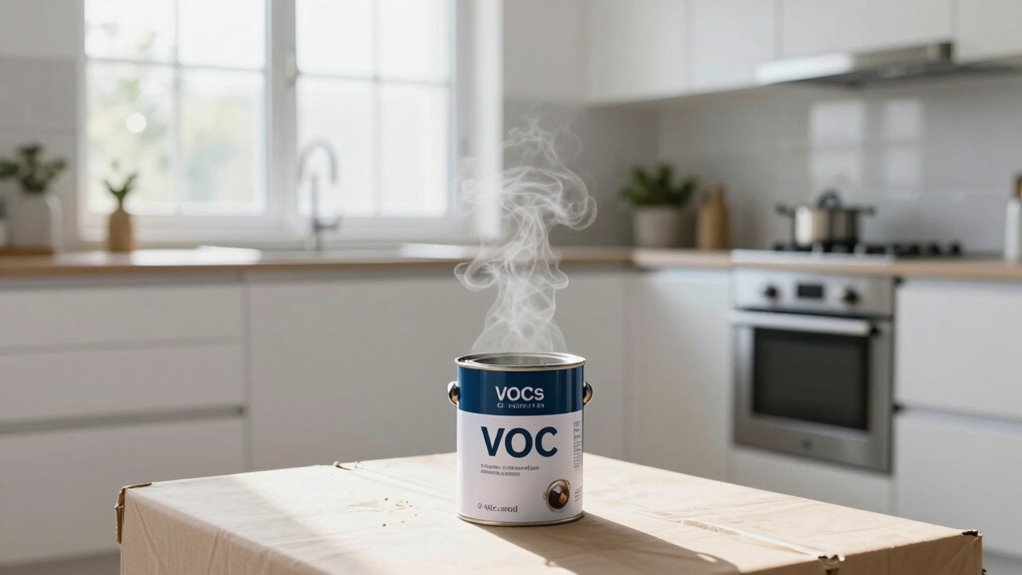
VOCs can linger in your home for varying lengths of time depending on factors like ventilation, temperature, and the types of sources present. If your home has good air exchange, VOCs tend to dissipate faster, reducing odor persistence. Warmer temperatures can increase VOC emissions and slow their removal, prolonging their presence. Poor ventilation traps VOCs inside, making odors stick around longer. Additionally, indoor air quality can be affected by how well your home manages these factors, influencing the overall comfort and safety of your environment. Regularly monitoring air quality levels can help identify lingering VOCs and improve your home’s safety. Understanding the VOC emission factors can help you control and minimize new odors caused by chemical emissions, especially since air purification plays a crucial role in maintaining a healthy indoor environment. For example, employing air filtration systems can significantly reduce VOC concentrations and improve air freshness.
Which Materials Emit the Most VOCs?

Certain building materials and household products release higher levels of VOCs than others, making them significant sources of indoor air pollution. Synthetic fabrics, like new carpets or upholstery, often emit VOCs due to their chemical treatments and manufacturing processes. These fabrics can off-gas for weeks or months, contributing to indoor air quality issues. Additionally, VOC emissions from finishes can vary depending on the chemical composition and application methods used. Similarly, plastic finishes on furniture, cabinets, and wall panels are known for their high VOC emissions. These finishes contain volatile compounds that evaporate over time, especially when new. You should be aware that the most VOC-emitting materials are often those with synthetic components or chemical coatings. Research indicates that synthetic materials tend to emit more VOCs compared to natural alternatives, which can help you make healthier choices for indoor environments. Moreover, natural materials generally produce lower VOC levels, making them a preferable option when reducing indoor air pollution. Choosing products with low-VOC certifications can further minimize indoor chemical exposure and improve air quality. Additionally, selecting products with eco-friendly labels can provide assurance of lower chemical emissions and promote healthier indoor spaces.
How Do VOCs Affect Indoor Air Quality and Health?
Indoor air quality can be substantially compromised when VOCs are present because these chemicals readily evaporate into the air you breathe. When VOCs accumulate indoors, they can lower air quality and expose you to health risks. Short-term effects may include eye, nose, and throat irritation, headaches, or dizziness. Prolonged exposure can lead to more serious issues like respiratory problems, allergic reactions, or even damage to your nervous system. Sensitive populations, such as children or individuals with asthma, are especially vulnerable. Because VOCs can linger in the air and build up over time, your indoor environment might feel fresh but still contain hidden health hazards. Understanding VOC emission factors helps in choosing low-emission products and improving indoor air safety. Additionally, awareness of indoor chemical sources can aid in identifying and mitigating potential VOC contributors within your environment. Monitoring and reducing VOC levels is essential to protect your health and maintain good indoor air quality. Recognizing emission sources can further help in implementing effective ventilation strategies to minimize VOC buildup.
What Are Manufacturers and Regulators Doing to Reduce VOCs?

Manufacturers and regulators are taking steps to lower VOC emissions by setting stricter standards.
They’re also developing safer formulations that release fewer harmful compounds. These efforts aim to protect both the environment and public health.
Implementing Stricter Standards
To effectively reduce VOC emissions, regulators and manufacturers are implementing stricter standards that tighten allowable limits and require advanced control technologies. These measures encourage innovation and improve air quality. Here are key actions being taken:
- They set lower VOC emission limits, pushing industries to adopt cleaner production methods.
- They mandate the use of odor neutralization techniques to minimize unpleasant smells that often accompany VOCs.
- They promote alternative solutions like scent masking, reducing the need for chemical-based fragrances that contribute to VOC emissions.
These standards not only curtail harmful emissions but also help manufacturers develop products with fewer strong odors, making environments more pleasant and healthier.
Stricter regulations drive industry-wide improvements, ensuring safer and more sustainable practices.
Developing Safer Formulations
How are regulators and manufacturers working together to create safer formulations that reduce VOC emissions? They’re reformulating products by replacing harmful fragrance additives with low-VOC alternatives, which helps minimize airborne pollutants.
Manufacturers are also redesigning packaging materials to limit VOC release during storage and use. These efforts involve rigorous testing to guarantee safety and performance without sacrificing quality.
Regulators set guidelines that encourage innovation, pushing companies to develop formulations with fewer volatile compounds. By collaborating, they promote transparency and accountability, leading to products that emit fewer VOCs.
This approach benefits both public health and the environment. Ultimately, these initiatives aim to create safer, more sustainable products that meet regulatory standards while satisfying consumer demand for less “chemical” smells.
How Can You Reduce Chemical Smells and VOC Exposure at Home?

Reducing chemical smells and VOC exposure at home starts with proper ventilation. Open windows regularly to let fresh air in and help disperse indoor pollutants.
You can also use air purification systems equipped with activated carbon filters to trap VOCs effectively. Natural remedies, like placing bowls of baking soda or activated charcoal in rooms, absorb odors without introducing more chemicals.
Additionally, choose low-VOC or VOC-free products whenever possible, especially for paints and cleaning supplies. Keep your space well-ventilated during and after using new products.
Regularly cleaning surfaces minimizes VOC buildup. By combining good airflow, air purification, and natural remedies, you markedly cut down chemical smells and protect your indoor air quality.
Frequently Asked Questions
Are VOC Emission Factors Different for Various Types of Products?
Yes, VOC emission factors differ for various products because of product-specific variations and emission source differences.
You’ll find that paints, adhesives, and cleaning supplies each emit different VOC levels based on their chemical makeup and application methods. These factors help you estimate emissions accurately, considering how each product’s unique properties influence VOC release.
Understanding these differences guarantees better control measures and compliance with environmental standards.
Can VOC Levels Vary With Environmental Conditions Like Temperature and Humidity?
Imagine VOC levels as a sailing boat, drifting with the wind. You’ll find that temperature and humidity cause VOC fluctuation, making emissions rise or fall like tides.
Warm, humid days often boost VOC release, while cooler, dry conditions slow it down.
Environmental impact plays a role, as external factors influence how much VOCs escape into the air. So, weather changes can markedly affect VOC levels in your surroundings.
What Are the Long-Term Health Effects of Low-Level VOC Exposure?
Long-term low-level VOC exposure can lead to chronic health issues, including respiratory problems and neurological effects like headaches or dizziness.
You mightn’t notice immediate symptoms, but over time, these exposures could impact your nervous system and overall well-being.
It’s important to guarantee good ventilation and limit exposure where possible, especially in indoor environments, to reduce potential health risks associated with persistent, low-level VOCs.
How Effective Are Air Purifiers in Reducing VOC Concentrations Indoors?
Think of an air purifier like a filter catching dust in your home; it can substantially improve indoor air quality. While effectiveness varies, many models reduce VOC concentrations, especially high-quality ones with activated carbon filters.
They’re not perfect, but they help clear out chemical smells and pollutants. With consistent use, an air purifier can make your indoor environment healthier, reducing exposure and making the air you breathe cleaner and safer.
Are There Regulations Limiting VOC Emissions From Consumer Products?
Yes, there are regulations limiting VOC emissions from consumer products, but regulatory gaps still exist, allowing some products to emit higher VOC levels.
You can improve your safety by staying aware of product labels and choosing low-VOC options.
Consumer awareness plays a key role in encouraging manufacturers to reduce VOC emissions.
While regulations aim to protect you, staying informed helps you make healthier choices and reduce indoor air pollution.
Conclusion
So, next time you unbox something new and notice that familiar chemical smell, remember it’s likely just VOCs off-gassing. It’s a coincidence that these emissions often fade over time, leaving your space fresher. By understanding what influences VOC levels and taking simple steps, you can breathe easier. After all, it’s no surprise that awareness helps you protect your indoor air—sometimes, the smallest changes make the biggest difference.