
Your food’s shelf life depends on factors like moisture, pH, and how it’s stored. Foods with high water content or neutral pH spoil faster because bacteria and mold grow quickly. Proper packaging reduces oxygen and moisture exposure, slowing spoilage. Preservation methods like added salt, acids, or low moisture also help foods last longer. If you want to understand why some foods turn faster than others, there’s more to uncover about how environment and composition play a role.
Key Takeaways
- High moisture content promotes microbial growth, accelerating spoilage in foods with more water activity.
- Neutral or high pH foods are more susceptible to microbial activity, causing faster deterioration.
- Exposure to oxygen and improper packaging increase oxidation and microbial access, shortening shelf life.
- Elevated temperatures and humidity levels boost enzymatic and microbial activities, hastening food “turning.”
- Preservatives and low moisture levels inhibit microbial growth, enhancing storage stability and slowing spoilage.
Why Does Food Spoil Faster Than You Think?
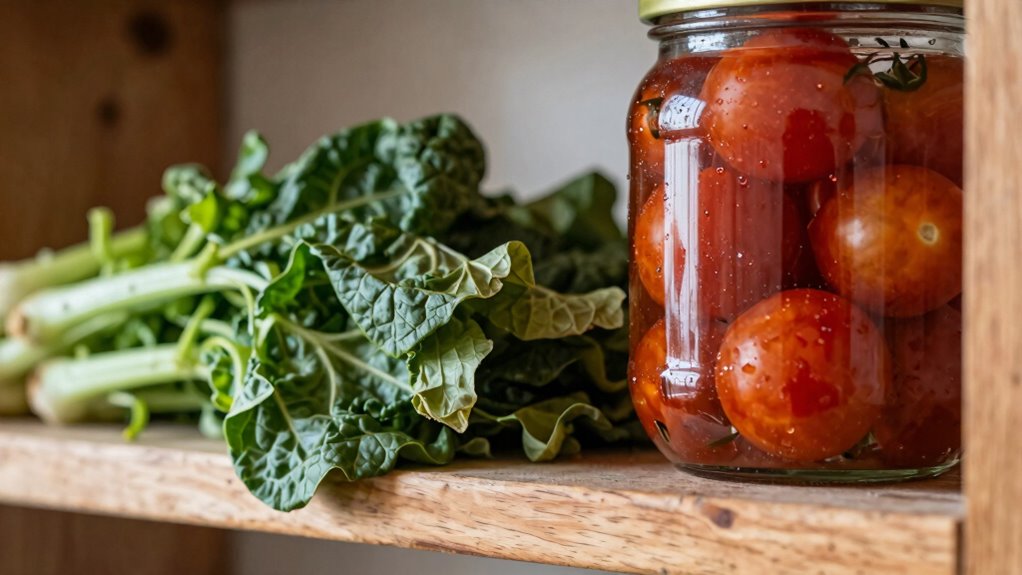
Food often spoils faster than you expect because bacteria, mold, and yeast can grow quickly at room temperature. One key factor is food packaging, which can sometimes allow these microorganisms to access nutrients and oxygen, accelerating spoilage. Floating on water environments, like poorly stored or exposed foods, can also promote microbial growth, further speeding up decay. Additionally, enzymatic activity plays a significant role; enzymes naturally present in food or produced by microbes break down complex molecules, leading to decay and off-flavors. When food isn’t stored properly, these enzymes become more active, speeding up the deterioration process. Proper food preservation methods, such as refrigeration and sealing, can slow down enzymatic activity and microbial growth, helping to extend freshness. Even with tight packaging, if the environment isn’t kept cold or sealed, spoilage can occur swiftly. Understanding how food packaging and enzymatic activity interact helps you grasp why some foods turn faster and highlights the importance of proper storage to extend freshness. Recognizing the impact of environmental conditions, like temperature and humidity, is crucial in controlling spoilage rates and maintaining food quality. Factors like solar radiation can also influence microbial activity and spoilage rates, especially in foods left in sunlight.
What Factors Cause Food to Spoil Faster?
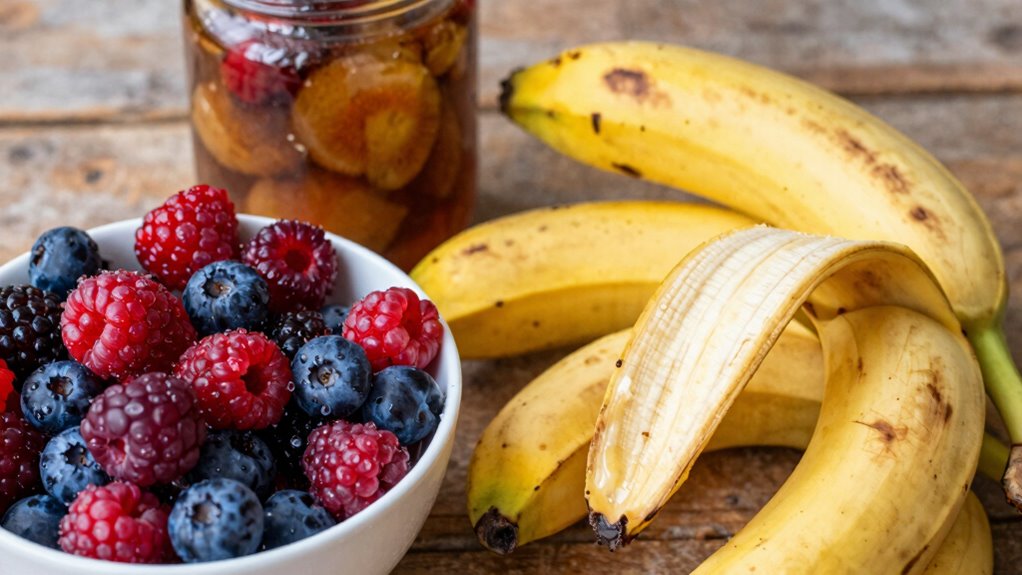
Your food can spoil faster depending on its moisture content and acidity levels. High moisture promotes microbial growth, speeding up spoilage. Additionally, certain preservation technologies, like controlled temperature regulation, can extend shelf life by slowing microbial activity. While low acidity can make foods more vulnerable to bacteria, adjusting the pH level can help inhibit microbial growth and prolong freshness. Implementing proper storage conditions is essential for maintaining food quality and safety over time. To further enhance shelf stability, understanding the impact of preservatives can be beneficial in controlling microbial proliferation and extending food lifespan.
Moisture Content and Spoilage
Have you ever wondered why some foods spoil faster than others? Moisture plays a key role. Higher moisture content increases water activity, creating an ideal environment for microbes and molds. This accelerates spoilage. Understanding the importance of storage conditions is crucial for maintaining food quality. Moreover, controlling free floating moisture levels helps prevent microbial proliferation. To control this, humidity control in storage is essential. Here’s what affects spoilage:
- Elevated water activity provides microbes with the moisture they need.
- Insufficient humidity control allows moisture to accumulate.
- Foods with high moisture levels become breeding grounds for bacteria and fungi.
- Keeping moisture low slows microbial growth, extending shelf life.
- Utilizing desiccants in storage containers can further reduce moisture and help preserve food longer.
- Proper storage techniques, including temperature regulation, also play a significant role in preventing spoilage.
Acidity and Microbial Growth
Acidity levels substantially influence how quickly food spoils, as they affect the growth of microbes. Higher acidity inhibits bacteria, slowing spoilage, while lower acidity allows microbes to thrive. Fermentation processes rely on acidity regulation to preserve foods like sauerkraut and yogurt, but if acidity drops, spoilage accelerates. The table below illustrates different foods’ acidity and their spoilage rates:
| Food Item | pH Level | Spoilage Rate |
|---|---|---|
| Fresh Meat | 5.5-6.0 | Spoils quickly |
| Pickles | 3.0-4.0 | Longer shelf life |
| Fresh Fruits | 3.0-4.5 | Spoils rapidly |
| Yogurt | 4.0-4.5 | Extended freshness |
| Sauerkraut | 3.2-3.5 | Preserves well |
Maintaining proper acidity regulation is key to preventing rapid spoilage and ensuring food safety. Additionally, energetic alignment can influence the preservation process by affecting microbial activity and overall food stability.
How Does Food Composition Impact Its Shelf Life?
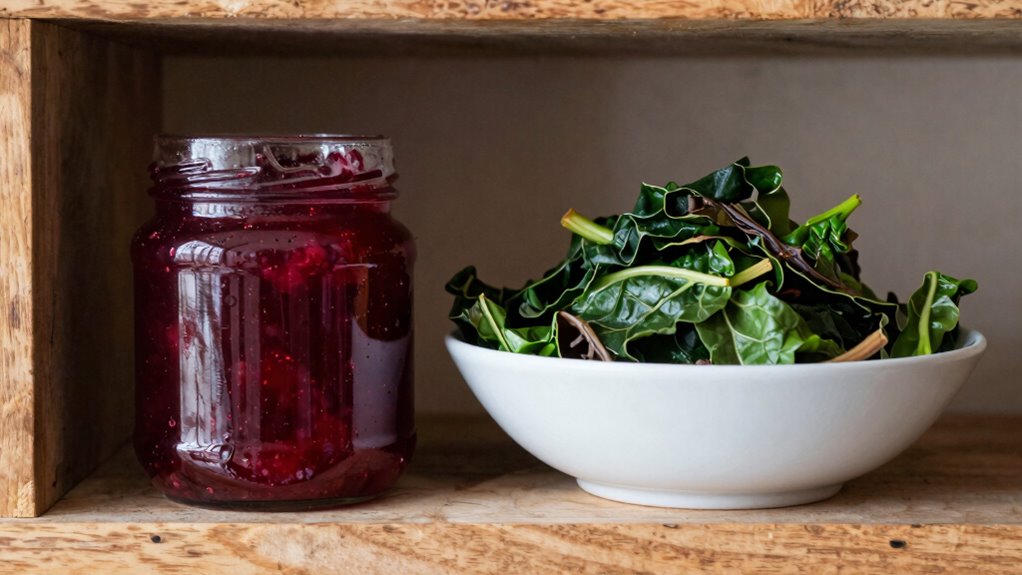
Ever wonder why some foods last longer than others? It all comes down to food composition and how it affects nutrient stability. Your food’s matrix—the way nutrients and other components are organized—plays a vital role in shelf life. Here’s how:
- The food matrix can protect nutrients from spoilage factors, slowing down deterioration. Food structure influences how nutrients are exposed to environmental elements that cause spoilage.
- High moisture foods typically have shorter shelf lives due to faster microbial activity.
- Fat content influences oxidation rates, impacting how quickly food turns rancid.
- Protein and carbohydrate structures can either stabilize or destabilize nutrients over time. Food stability factors also determine how resistant a product is to environmental changes, affecting its overall shelf life.
- Understanding the food matrix can help in developing better preservation techniques to extend shelf life. Additionally, processing methods that alter the food matrix can either enhance or reduce shelf life depending on how they modify nutrient interactions.
How Moisture, pH, and Preservatives Help Keep Food Fresh
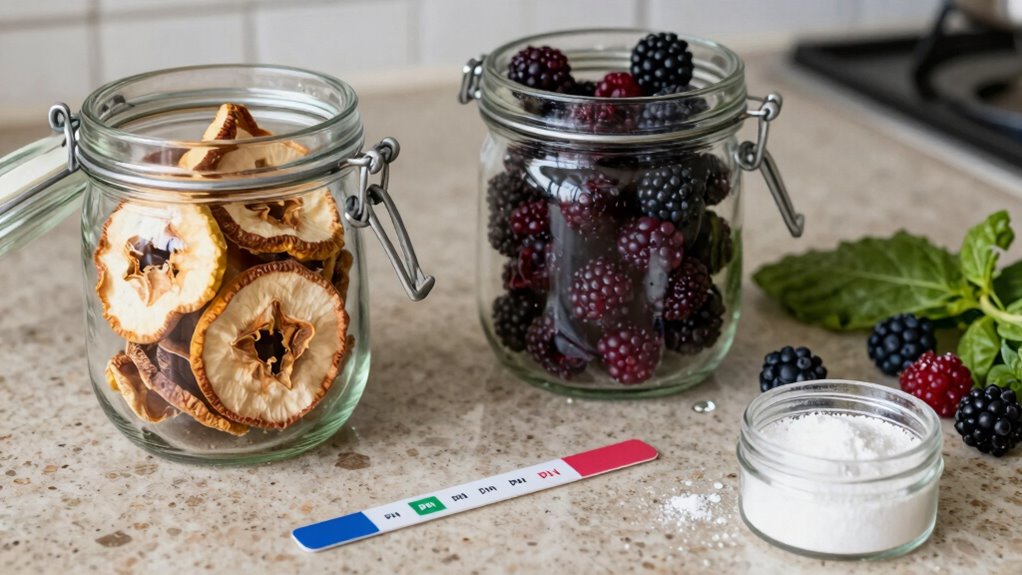
Moisture content, pH levels, and preservatives work together to extend food freshness by inhibiting microbial growth and slowing chemical reactions. By controlling moisture, you prevent bacteria and mold from thriving, which helps preserve flavor and texture. Proper water management is crucial in maintaining food quality over time. Adjusting pH levels creates an environment that’s less hospitable to spoilage organisms, maintaining food’s quality longer. Preservatives act as chemical barriers, further protecting against microbial activity and oxidation. These factors also support flavor enhancement, ensuring your food tastes fresh and appealing over time. Additionally, they help preserve texture, preventing foods from becoming soggy, slimy, or dried out. Understanding the interplay of these factors allows for more effective food preservation strategies. When properly balanced, moisture, pH, and preservatives work synergistically to keep food safe, tasty, and visually appealing for extended periods, reducing waste and ensuring freshness with minimal compromise. Recognizing the chemical interactions involved can help optimize preservation methods for various foods. Incorporating proper storage techniques can further enhance the effectiveness of these preservation methods. Maintaining consistent storage conditions, such as temperature and humidity, also plays a vital role in food stability.
Which Food Types Last Longer and Why?
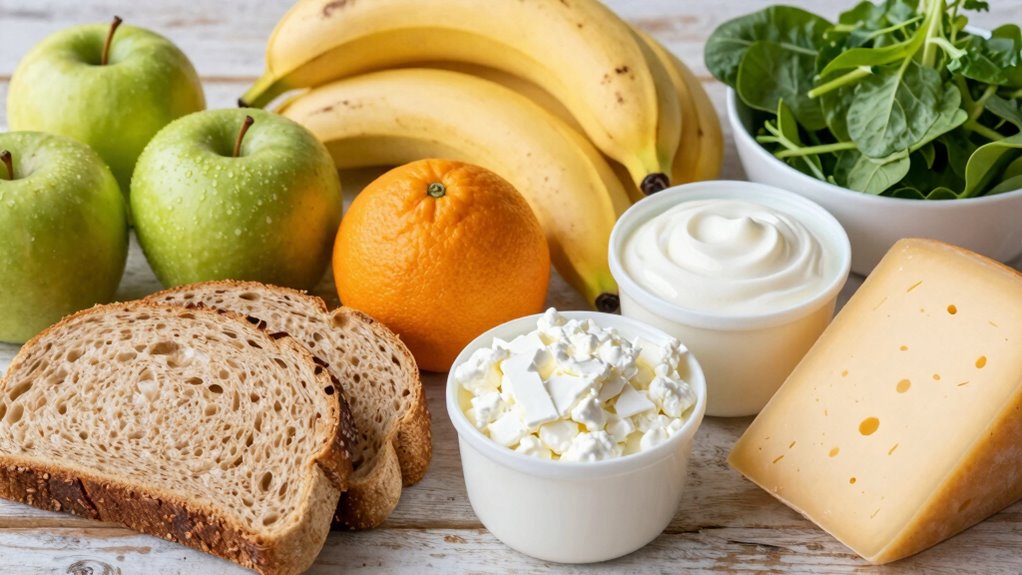
Foods with higher preservative content tend to last longer because they resist microbial growth better.
Low moisture and balanced pH levels also help extend shelf life by inhibiting spoilage. Understanding these factors can help you choose foods that stay fresh longer.
Preservative Content Impact
Preservative content plays a crucial role in determining how long different food types last, as it directly inhibits the growth of spoilage microorganisms and prevents chemical changes. The preservative effects depend heavily on the types and amounts of additives used. Foods with added preservatives like nitrates or sulfites tend to last longer because they suppress microbial activity. Second, the additive influence can slow oxidation, reducing rancidity in fats and oils. Third, natural preservatives such as salt or sugar create inhospitable environments for bacteria and molds. Fourth, the quality and stability of preservatives impact overall shelf life; high-quality preservatives offer more effective protection. Additionally, the storage conditions such as temperature and humidity significantly influence preservative effectiveness and food shelf life. Maintaining optimal storage environments is essential for maximizing preservative benefits and extending food freshness. The effectiveness of preservatives can also be affected by the type of food, as some foods are more prone to spoilage despite additive use. Your choice of preservative content directly affects food longevity, making it a key factor in storage stability and overall quality. Proper preservative formulation can also enhance the sensory qualities of foods, ensuring they remain appealing for longer periods.
Moisture and pH Levels
The effectiveness of preservatives is closely linked to moisture and pH levels, which influence how long different food types stay safe and edible. Low moisture content inhibits microbial growth, while pH affects enzyme activity and fermentation processes. Foods with low pH, like pickles, resist spoilage longer, whereas high-moisture foods like fresh meats spoil faster due to increased enzymatic activity. Consider the following:
| Food Type | Key Moisture and pH Characteristics |
|---|---|
| Dried fruits | Low moisture, acidic pH, slow enzymatic activity |
| Fresh meats | High moisture, neutral pH, rapid enzymatic activity |
| Fermented foods | Controlled pH, moderate moisture, fermentation stabilizes |
| Canned vegetables | Low moisture, preserved pH, minimal enzymatic activity |
Understanding food preservation methods can help extend shelf life and maintain quality.
How Storage Conditions and Packaging Affect Food Longevity
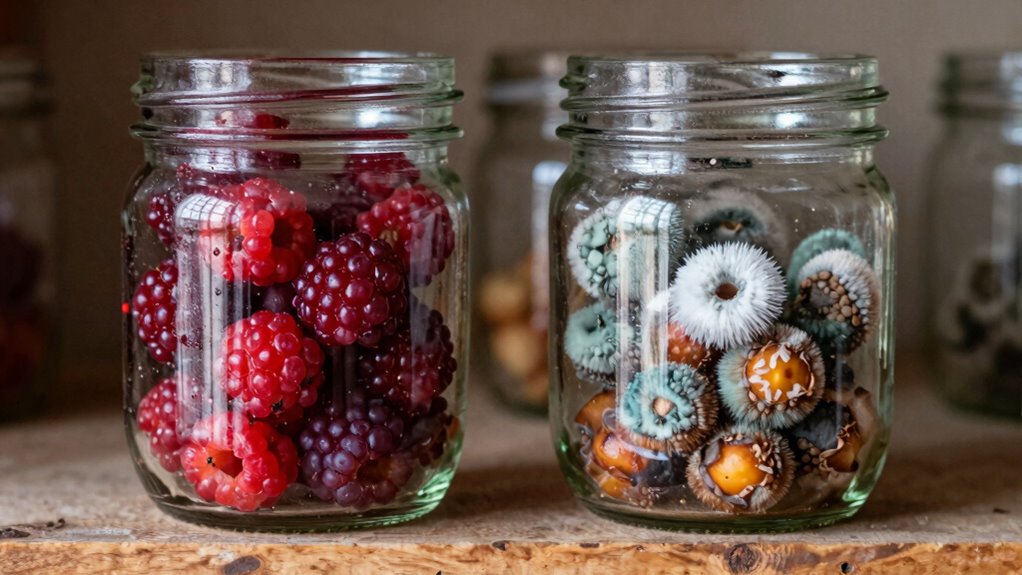
Proper storage conditions and packaging play a critical role in extending the shelf life of your food. First, choose packaging innovation that minimizes oxygen exposure, slowing spoilage. Second, maintain the correct storage temperature; cooler temperatures often preserve freshness longer. Third, ensure containers are airtight to prevent moisture and contaminants from entering. Fourth, store foods in a consistent environment, avoiding temperature fluctuations that accelerate deterioration.
Frequently Asked Questions
How Do Microbes Influence the Spoilage Process?
Microbes influence spoilage through microbial growth, which causes food to deteriorate. As bacteria and fungi multiply, they break down food components, producing off-odors, flavors, and textures.
Fermentation processes, while sometimes controlled for preservation, can also lead to spoilage if unchecked, producing undesirable by-products.
You should store foods properly to slow microbial growth, preventing spoilage and prolonging freshness.
Can Freezing Food Extend Its Shelf Life Indefinitely?
Freezing food doesn’t extend its shelf life indefinitely because freezing limitations exist, and microbial activity can still occur at very low temperatures. While freezing slows down microbial growth and enzyme activity, it doesn’t kill all bacteria or molds.
Over time, these microbes can become active again once thawed, leading to spoilage. So, even frozen, foods have a practical shelf life, and proper storage duration is key to maintaining quality.
What Role Do Natural Enzymes Play in Food Deterioration?
Like a hidden orchestra, natural enzymes catalyze food’s deterioration by speeding up biochemical reactions. They activate when conditions favor, breaking down cellular components and causing spoilage.
Your body’s own enzymes do this too, but in food, unchecked enzyme activity accelerates spoilage. Warmer temperatures and exposure to air boost enzyme catalysis, making foods turn faster.
Proper storage slows enzyme activation, helping maintain freshness longer.
How Does Oxygen Exposure Accelerate Food Spoilage?
Oxygen exposure speeds up food spoilage through oxidation reactions, which break down fats, proteins, and other nutrients, causing rancidity, discoloration, and off-flavors.
When you don’t use proper packaging barriers, oxygen can easily reach your food, accelerating these reactions.
To slow spoilage, keep foods in airtight containers or vacuum-sealed packages, which limit oxygen contact and help maintain freshness longer.
Are There Foods That Can Be Stored Without Refrigeration?
Yes, you can store certain foods without refrigeration. Non-perishables like canned goods, dried beans, rice, pasta, and powdered milk are ideal for dry storage.
Keep them in a cool, dark, and dry place to extend their shelf life. These foods are designed for long-term storage, making them perfect for emergencies or situations where refrigeration isn’t available.
Proper dry storage helps prevent spoilage and maintains their quality over time.
Conclusion
To keep your food fresh longer, understand what causes spoilage, control moisture and pH, choose the right packaging, and store at proper conditions. By knowing which foods last longer and how storage impacts their shelf life, you can reduce waste, save money, and enjoy healthier meals. Remember: monitor, preserve, and store—these steps help you extend freshness, prevent spoilage, and enjoy your food at its best. Take control and keep your food fresher, longer.