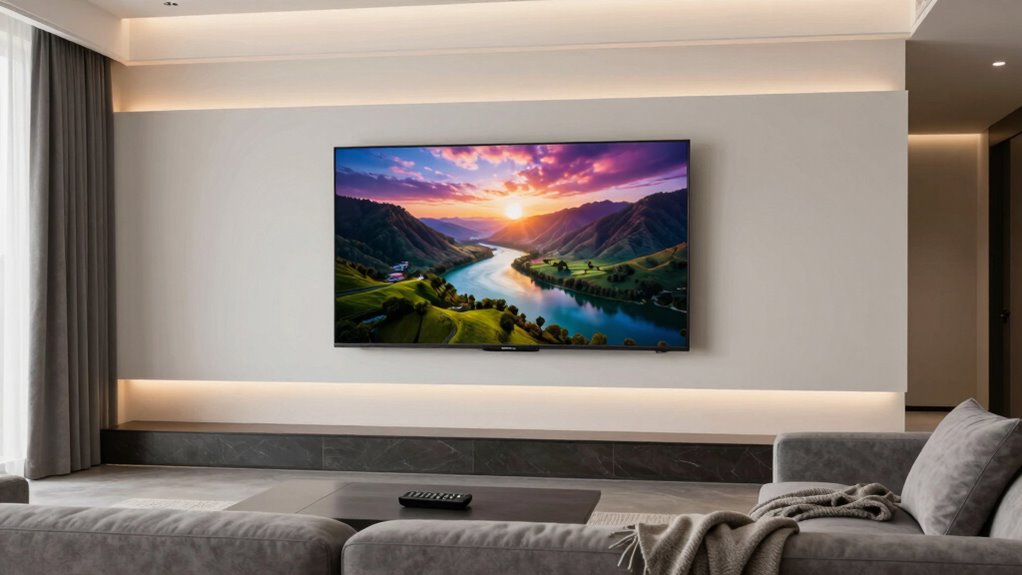

The easiest way to think about screen size versus viewing distance is to imagine sitting about 1.5 to 2.5 times the screen’s diagonal size away from the display. For example, if you sit 6 feet back, a screen around 55 to 85 inches works best. This balance guarantees clear details without eye strain or discomfort. Keep in mind how resolution also matters—if you want to find the perfect setup, you’ll want to explore these ideas further.

Get school and study supplies delivered free — and shop member deals
- Fast, free delivery on millions of items
- Access to Prime Big Deal Days deals on October 6–7
- Prime Video, Amazon Music and more included
Key Takeaways
- Use the guideline: viewing distance should be 1.5 to 2.5 times the screen’s diagonal size.
- For a comfortable view, sitting 6 feet away suggests a screen size between 55-85 inches.
- Higher resolution screens (4K, 8K) allow larger sizes without losing sharpness.
- Position the screen so the top is at or below eye level to prevent neck strain.
- Balance screen size, resolution, and distance for optimal clarity and ergonomic comfort.
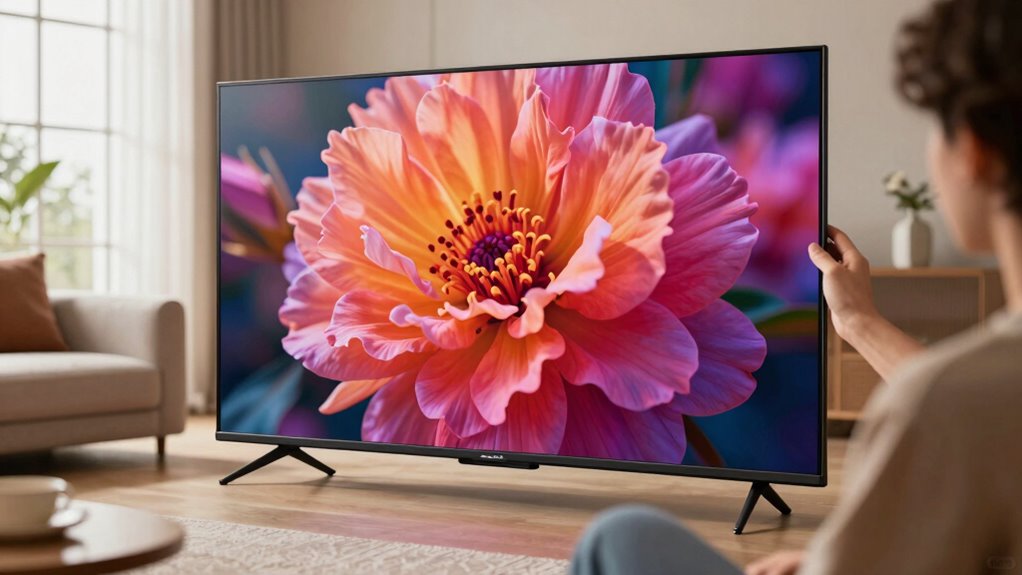
Have you ever wondered how to choose the perfect screen size for your viewing space? It all comes down to balancing resolution clarity and creating an ergonomic setup that keeps you comfortable. When you pick a screen that’s too small, details can become fuzzy, and you might strain your eyes trying to see everything clearly. On the flip side, going for a screen that’s too large for your space can overwhelm your viewing area and lead to discomfort over time. Finding the right size isn’t just about measurement—it’s about understanding how your viewing distance influences what you see on the screen.
Choosing the right screen size depends on your viewing distance and resolution for comfort and clarity.
A straightforward way to think about this is to contemplate how far you sit from your screen. The general rule is that your viewing distance should be roughly 1.5 to 2.5 times the diagonal size of your screen. So, if you’re sitting about 6 feet away, a screen between 55 and 85 inches might work well. This range helps guarantee that you get the best resolution clarity, meaning all the fine details are visible without needing to squint or lean forward. When your screen size and distance are balanced, your eyes won’t have to work overtime to focus, which promotes a more ergonomic setup and reduces fatigue. Additionally, considering the technology specifications of your display can help ensure you select a device with the appropriate resolution for your viewing needs. Understanding visual acuity can also help you determine the optimal balance between size and clarity for your individual eyesight.
Another key aspect is resolution quality. Higher resolutions, like 4K or 8K, allow you to enjoy larger screens without losing sharpness. This means you can select a bigger display within your space without sacrificing image clarity. When your resolution is high, you don’t need to be unnaturally close to see fine details, which makes it easier to position your screen at a comfortable distance. This balance between size, resolution, and distance ensures you’re not just watching comfortably but also preserving your eye health over long periods.
It’s also important to think about how your setup affects your posture. A screen that’s too large or placed too close can cause neck or eye strain. An ergonomic setup means positioning the screen so that the top of the display is at or just below eye level, with a slight tilt if needed. When you keep your screen size proportional to your distance, you avoid awkward angles and maintain a natural, relaxed posture. This improves your overall viewing experience and minimizes discomfort.
In essence, the easiest way to think about screen size versus viewing distance is to start with your seating position and resolution quality. Pick a size that fits your space, allows for the best resolution clarity, and supports an ergonomic setup. When these elements work together, watching becomes more enjoyable, less tiring, and perfectly tailored to your environment.
As an affiliate, we earn on qualifying purchases.
Frequently Asked Questions
How Does Screen Resolution Affect Viewing Comfort at Different Distances?
Higher screen resolution improves your viewing comfort at different distances by increasing pixel density, making images sharper and reducing eye strain. When you’re closer, a higher resolution prevents pixelation, while at farther distances, it offers clear detail. A higher refresh rate also enhances comfort by providing smoother motion. Together, these factors guarantee your eyes stay comfortable, whether you’re near or far from the screen, reducing fatigue and enhancing your viewing experience.
What Is the Ideal Viewing Distance for Ultra-Wide Monitors?
For ultra-wide monitors, you should sit about 1.5 to 2 times the monitor’s width away, ensuring ergonomic positioning and ideal visual ergonomics. This distance reduces eye strain and provides a comfortable field of view, allowing you to see the entire screen without excessive head movement. Adjust your chair and monitor setup to maintain good posture, and remember that individual comfort may vary slightly for best results.
How Do Lighting Conditions Influence Screen Size Choices?
Lighting conditions greatly influence your screen size choices. In bright ambient lighting, opt for larger screens to combat glare and improve visibility, ensuring your display isn’t overwhelmed by reflections. For darker rooms, smaller screens work well without causing eye strain. Use glare reduction techniques like matte screens or adjustable brightness settings, and choose a size that balances visibility and comfort based on your ambient lighting to enhance your viewing experience.
Can Screen Size Impact Eye Strain Over Long Viewing Periods?
Sure, larger screens might make your eyes feel like they’re on a roller coaster, but it’s really about ergonomic positioning and color calibration. When you sit too close or ignore proper setup, eye strain’s your reward. Keep your monitor at eye level, adjust brightness, and choose a screen size that doesn’t overwhelm your vision. That way, your eyes stay happy, and you can binge without the tears—or headaches.
What Role Does Content Type Play in Selecting Screen Size and Distance?
Content type considerably influences your choice of screen size and viewing distance. For content compatibility, like reading detailed documents or browsing websites, smaller screens closer to you work well. For visual hierarchy and immersive experiences, such as gaming or watching movies, larger screens at a greater distance enhance clarity and engagement. Adjust based on the visual demands, ensuring comfort without straining your eyes or sacrificing content quality.
large screen home theater projector
As an affiliate, we earn on qualifying purchases.
As an affiliate, we earn on qualifying purchases.
Conclusion
Think of your screen and viewing distance as a dance partner and the dance floor. When you’re close, a small screen can feel just right, like a tight twirl. Step back, and you’ll need a bigger screen to avoid squinting, like a grand ballroom perfect for a wide, sweeping dance. Finding that balance means your viewing experience flows smoothly, no matter the size—think of it as choreographing your perfect visual performance.
As an affiliate, we earn on qualifying purchases.
As an affiliate, we earn on qualifying purchases.
Fall Picks
fall essentials
As an affiliate, we earn on qualifying purchases.