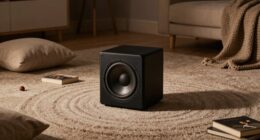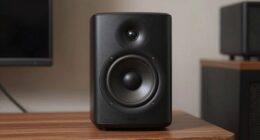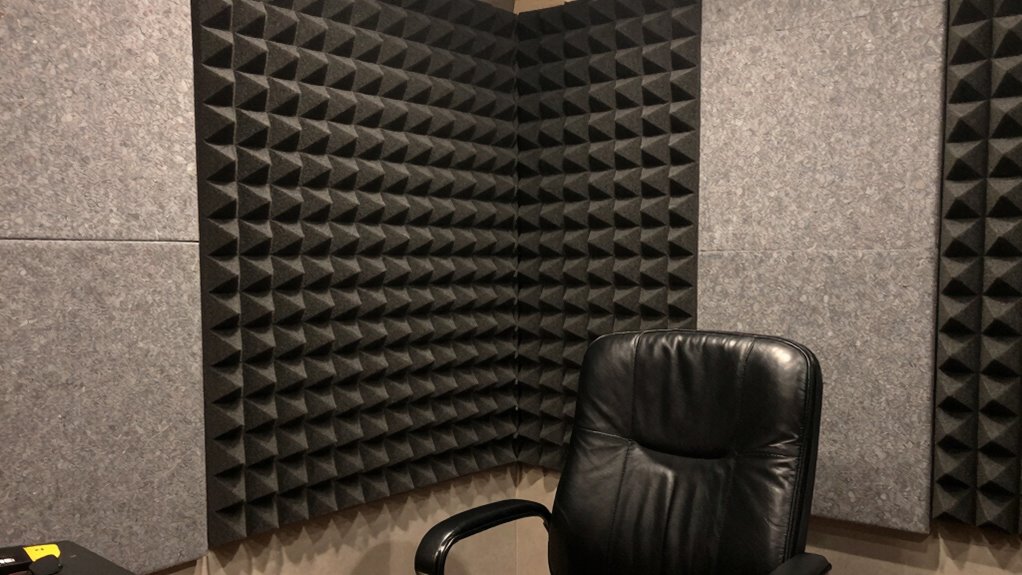
Your sound varies by seat because room reflections create resonances called room modes that cause peaks and dips in certain frequencies. These resonances are reinforced in spots where low frequencies build up, especially in corners and along parallel walls. Installing bass traps in these areas absorbs excess low-end energy, helping to even out the sound. Keep exploring to understand how proper acoustic treatment can make your listening experience much more consistent.
Key Takeaways
- Room modes cause resonances that create uneven sound frequencies, affecting how sound varies by seat.
- Bass traps absorb low-frequency energy, reducing resonances that cause sound to change across seats.
- Sound reflections between parallel walls reinforce room modes, leading to seat-dependent sound differences.
- Proper placement of bass traps in corners and walls minimizes resonances, ensuring more consistent sound for all seats.
- Understanding room acoustics helps achieve a uniform listening environment with less seat-to-seat sound variation.
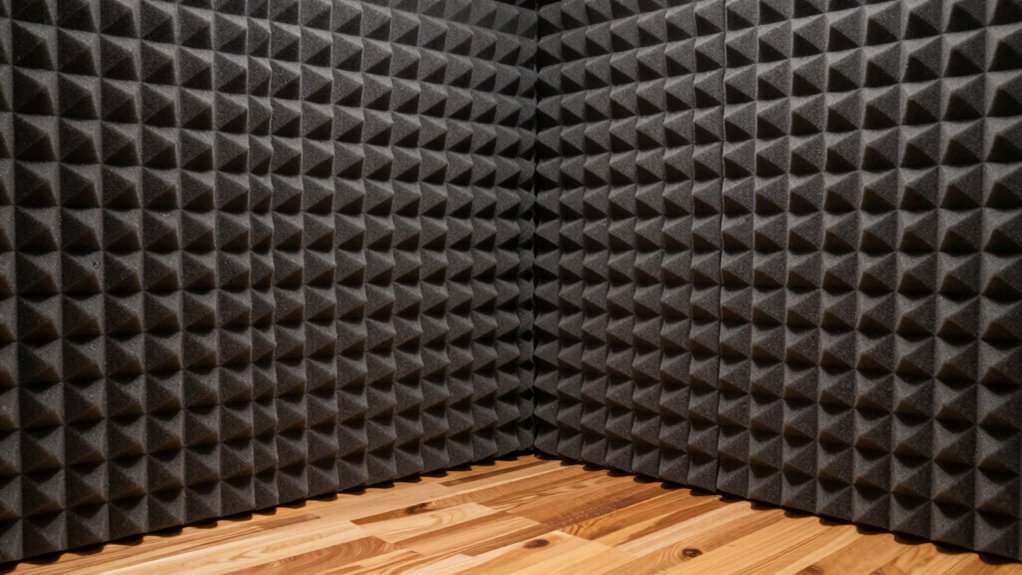
If you want your music or recordings to sound their best, understanding room acoustics is essential. One of the biggest challenges you’ll face is dealing with room modes, which are resonances caused by sound waves reflecting within your space. These modes create peaks and dips in certain frequencies, making some sounds overly boomy or thin depending on where you sit. To combat this, acoustic treatment becomes your best tool. Properly placed bass traps and panels can substantially reduce the impact of these problematic resonances, ensuring a more balanced sound throughout your room.
Room modes are particularly problematic in small or irregularly shaped rooms. When sound waves bounce between parallel walls, they reinforce specific frequencies, causing those resonances to become exaggerated. This results in uneven frequency response, which varies based on your position in the room. You might notice that sitting in one spot yields clear, tight bass, while moving just a few inches causes the bass to become boomy or disappear altogether. These inconsistencies are a direct consequence of room modes, and understanding them helps you identify where to place acoustic treatment.
Room modes cause uneven sound in small or irregular rooms, making bass vary with position.
Acoustic treatment, especially bass traps, addresses these issues by absorbing low-frequency energy that would otherwise bounce around and build up in certain areas. Bass traps are designed to sit in corners or along walls where low frequencies tend to concentrate. By absorbing these problematic frequencies, bass traps help smooth out the response, reducing peaks and valleys that cause sound to change by seat. This not only improves your overall listening experience but also provides a more accurate environment for mixing or recording.
The key to effective acoustic treatment is strategic placement. You’ll want to identify the spots where room modes are most prominent—often corners and along parallel walls—and install bass traps accordingly. This targeted approach minimizes the resonance buildup, giving you a more consistent sound regardless of where you sit. Keep in mind that treating just one area isn’t enough; you need a combination of bass traps and other acoustic panels to handle mid and high frequencies as well, but bass traps are vital for controlling the low end.
In the end, understanding room modes and applying the right acoustic treatment helps you achieve a more uniform sound. It minimizes the seat-to-seat variation, ensuring that your recordings or listening experience are accurate and enjoyable. Recognizing the importance of room acoustic treatment and implementing it effectively can significantly improve your sound environment, making your room a true reflection of your music’s potential.
Frequently Asked Questions
Can Room Size Affect Bass Trap Effectiveness?
Yes, room size substantially impacts bass trap effectiveness. Larger rooms with bigger dimensions tend to have more complex bass response, making traps less efficient if not properly designed. Smaller rooms often have more pronounced bass issues, requiring strategically placed traps to control resonances. Adjusting trap placement based on room dimensions helps optimize sound quality, ensuring you get balanced bass response regardless of room size.
How Do Furniture Arrangements Influence Sound Quality?
Ironically, your furniture arrangement has more impact on sound quality than you’d think. By carefully planning furniture placement and seating orientation, you can reduce unwanted echoes and dead spots. Properly positioned furniture absorbs or redirects sound waves, creating a more balanced acoustic environment. So, don’t just focus on equipment — the way you arrange your furniture shapes your listening experience, making every seat sound just a little better.
Are There Differences Between DIY and Professional Bass Traps?
Yes, there are differences between DIY and professional bass traps. DIY solutions let you customize and save money, but may lack the precision and materials used in professional manufacturing. Professional bass traps are typically built with high-quality materials and exact specifications, ensuring better performance and consistency. If you’re skilled and patient, DIY can work well; otherwise, investing in professionally made traps provides more reliable and effective sound absorption.
Do Wall Materials Impact Acoustic Treatment Results?
Surprisingly, wall material isn’t just for looks; it actually impacts your acoustic treatment. You’d think walls are just there to hold up your room, but they play a vital role in acoustic absorption. Different materials—drywall, brick, or foam—absorb sound differently, affecting how well your room manages bass and echo. So, yes, wall material directly influences your acoustic treatment results, making your listening experience either crystal clear or painfully muddled.
How Often Should Room Acoustics Be Re-Evaluated?
You should re-evaluate your room acoustics every 6 to 12 months, especially if you notice changes in sound quality. During these checks, guarantee room symmetry is maintained and perform acoustic calibration to optimize sound clarity. Regular assessments help identify issues caused by shifting furniture or ambient changes, allowing you to adjust your bass traps and treatments accordingly, ensuring consistent, high-quality sound experience across different seating positions.
Conclusion
Think of your room as a musical garden, where bass traps are the guiding trellises shaping the growth of sound. As you move seats, it’s like wandering through different paths, each revealing new blooms and shadows. Your listening experience is a delicate dance between these elements, reminding you that every seat offers a unique perspective—like a different sunrise illuminating the same garden. Embrace these variations, and let your space become a harmonious sanctuary for sound.