Choosing a portable AC with too many BTUs can actually make things worse for you. Oversized units cool the air too quickly, leading to short cycling, which wastes energy, increases noise, and reduces the AC’s lifespan. On the other hand, a unit that’s too small won’t cool effectively and will run constantly, driving up your energy bills. Knowing how the right size makes a difference helps you stay comfortable and save money—discover why size matters.
Key Takeaways
- Oversized portable AC units cool air too quickly, causing short cycling and inefficient operation.
- Bigger BTUs can lead to higher noise levels and increased energy consumption.
- An appropriately sized unit balances cooling power and humidity control for optimal comfort.
- Under-sized units run constantly, wasting energy and reducing lifespan, while larger ones do the same due to short cycling.
- Proper BTU sizing ensures efficient, quiet operation and prevents unnecessary wear and higher utility bills.
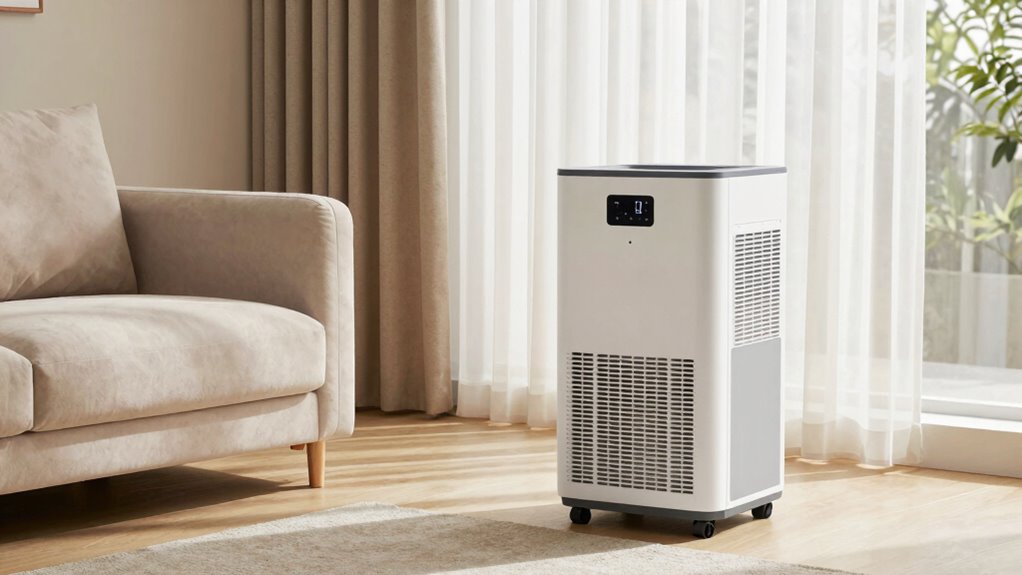
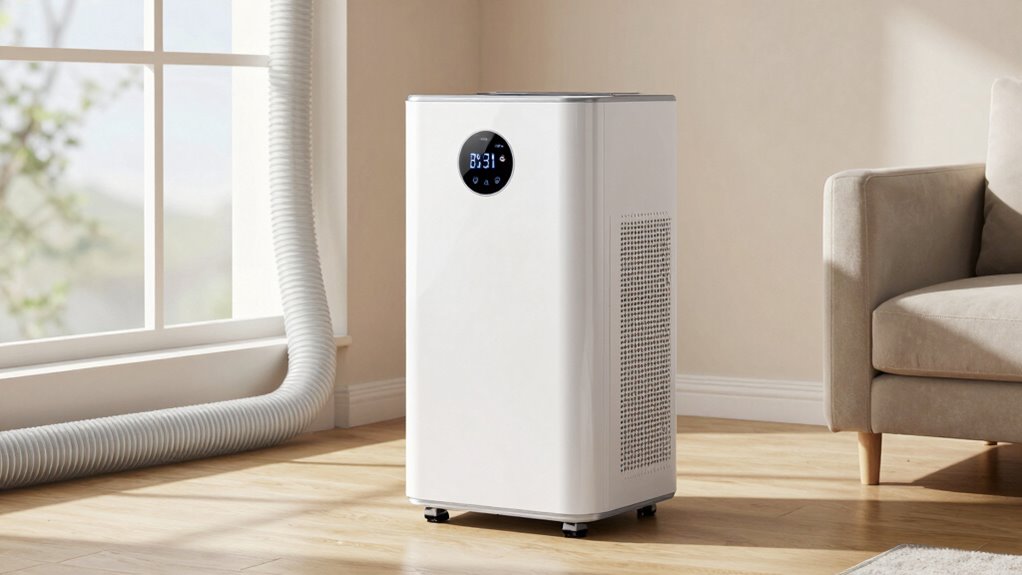
When choosing a portable air conditioner, understanding BTUs is essential to guarantee it cools your space effectively. BTUs, or British Thermal Units, measure the cooling capacity of the unit. Picking one with too many BTUs might seem like a good idea, but it can actually cause more problems than it solves. An oversized AC doesn’t just waste energy; it can also lead to higher noise levels and reduced efficiency. Conversely, a unit with too few BTUs won’t cool your room adequately, leaving you uncomfortable and frustrated. That’s why selecting the right BTU rating is vital for maximum performance and comfort.
A common misconception is that bigger is always better when it comes to BTUs. While a higher BTU rating can seem appealing, it doesn’t guarantee better cooling. A portable AC with excessive BTUs will cool the air quickly, but it won’t run long enough to dehumidify the space properly. This short cycling causes the unit to turn on and off more frequently, which wastes energy and increases wear and tear. As a result, your energy efficiency drops, and your electricity bills climb higher. Over-sized units also tend to produce more noise because they operate at higher power levels to meet their cooling demands briefly before shutting off. This constant cycling contributes to louder noise levels, disrupting your comfort and making it harder to relax or work.
On the other hand, an undersized portable AC struggles to keep up with the room’s cooling needs. It runs continuously, trying to reach the desired temperature, which leads to increased energy consumption and higher utility bills. It also causes excessive wear on the compressor, shortening the lifespan of the unit. To avoid these issues, you need to match the BTU rating to your room’s size and insulation. For example, a small bedroom might only need a 5,000 to 8,000 BTU unit, while a larger living area might require 10,000 to 14,000 BTUs or more. Proper sizing ensures the AC runs efficiently, uses less energy, and operates with quieter noise levels, making your cooling experience more comfortable and cost-effective. Additionally, understanding the importance of projector technology helps in selecting the right equipment for your home entertainment setup.
Frequently Asked Questions
How Do I Determine the Right BTU Size for My Room?
To determine the right BTU size for your room, start with the room size in square feet. Use a btu calculation based on this measurement, typically around 20 BTUs per square foot. For example, a 200 sq ft room needs about 4,000 BTUs. Be sure to take into account factors like ceiling height, insulation, and sun exposure, which can affect cooling needs and help you choose the perfect portable AC.
Can Oversized Portable ACS Cause Higher Energy Bills?
A stitch in time saves nine, and oversized portable ACs can definitely hike your energy bills. They tend to cycle on and off more frequently, reducing energy efficiency and increasing noise levels. This constant switching wastes power and causes frustration. So, choosing the right size helps you stay cool without wasting energy or dealing with excessive noise, ensuring your AC works efficiently and keeps your bills in check.
What Are the Signs of an Underpowered Portable AC?
If your portable AC struggles to cool your space, you’ll notice higher energy bills and increased noise levels, indicating it’s underpowered. It works harder, wasting energy and making more noise. You might also see uneven cooling or frequent cycling on and off. These signs show the unit isn’t energy efficient enough for your room size, so upgrading to a properly sized model improves comfort and cuts energy costs.
How Does Room Insulation Affect BTU Requirements?
Room insulation greatly impacts your BTU needs because poor insulation reduces thermal efficiency, making it harder for your portable AC to cool effectively. If your room has gaps, single-pane windows, or thin walls, you’ll need a higher BTU unit to compensate for heat gain. Good insulation minimizes this impact, allowing your AC to work efficiently at lower BTUs. Proper insulation ensures better cooling performance and energy savings.
Are There Portable AC Options With Adjustable BTU Settings?
Yes, there are portable cooling options with adjustable settings. These units allow you to customize the BTU output, giving you more control over cooling your space efficiently. With adjustable settings, you can increase or decrease the cooling power based on your needs, helping save energy and preventing overcooling. Look for models that specify adjustable BTU levels or multi-speed fans, so you can tailor the cooling performance to your room’s insulation and size.
Conclusion
Understanding BTUs helps you pick the perfect portable AC for your space. Remember, bigger isn’t always better—oversized units can be just as inefficient as tiny ones. You don’t want your AC to turn your room into a sweatbox or a freezer, so choose wisely. Think of it like Goldilocks—find the one that’s just right, and you’ll keep your cool without turning your home into an Arctic tundra or a sauna.