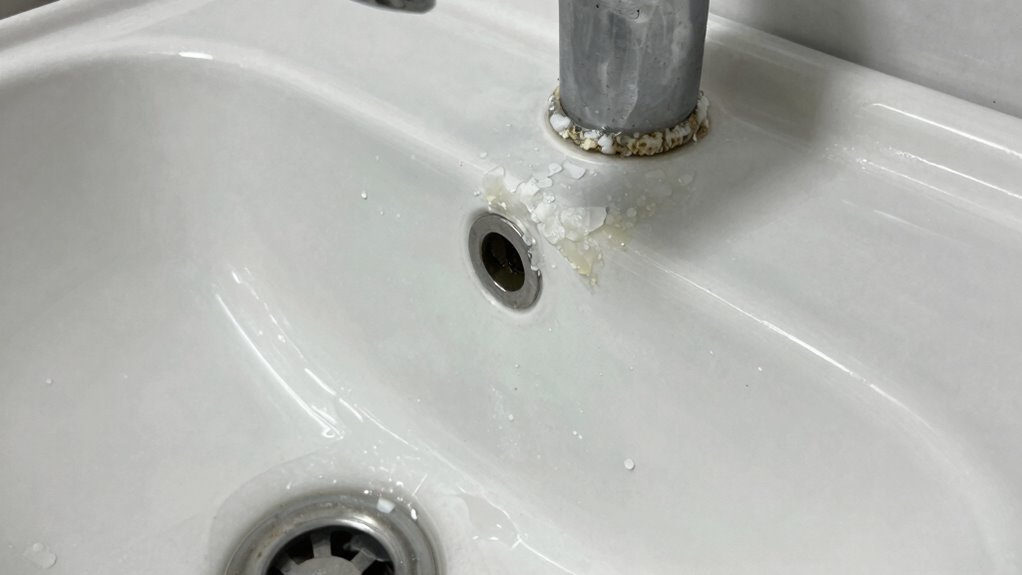

Limescale forms when minerals like calcium and magnesium in hard water settle on surfaces, especially as water heats or evaporates. When water passes through underground rock formations, it absorbs these minerals, which then come out of solution and cling to appliances, pipes, or fixtures over time. As deposits build up, they create a chalky, resilient layer that can reduce efficiency and cause damage. Keep exploring to discover how this buildup can be managed and prevented effectively.
Key Takeaways
- Limescale forms from mineral deposits like calcium and magnesium dissolved in hard water.
- Heating water causes minerals to precipitate and stick to surfaces, creating buildup.
- Over time, limescale accumulates on appliances, reducing efficiency and increasing energy costs.
- Hard water accelerates limescale formation, especially in appliances that frequently heat water.
- Regular cleaning and water softening help prevent and remove limescale buildup.
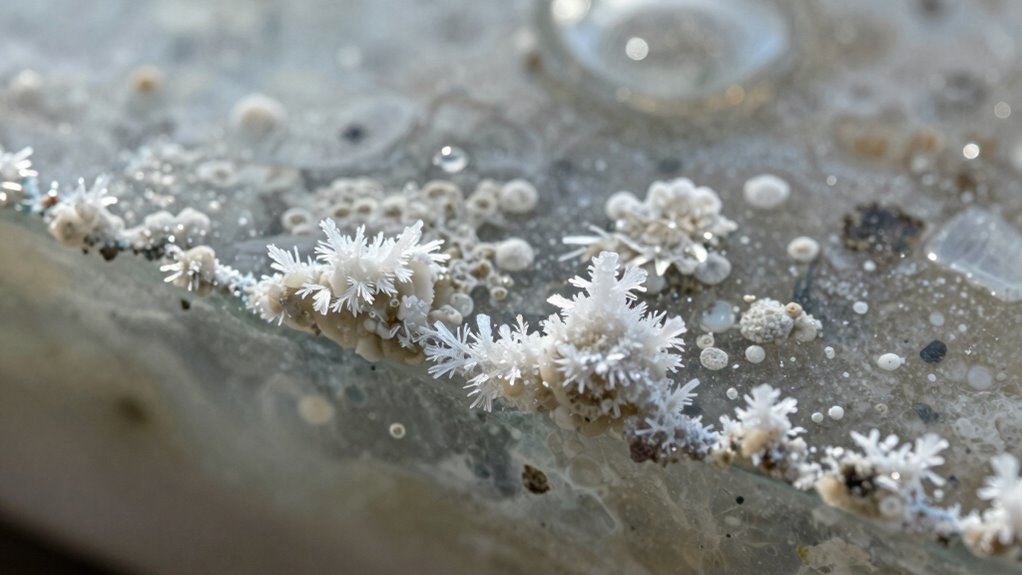
Have you ever wondered what causes that stubborn, chalky buildup in your kettle or on your bathroom fixtures? The answer lies in water hardness, which refers to the amount of dissolved minerals in your water. When water passes through underground rock formations, it picks up mineral deposits like calcium and magnesium. These minerals dissolve into the water, making it “hard.” As you use water for daily tasks—boiling it in your kettle, washing your hands, or rinsing your fixtures—these minerals don’t just disappear. Instead, they settle out and cling to surfaces, creating the white or grayish crust known as limescale.
The process begins when mineral deposits in the water encounter heat. Heating water accelerates the precipitation process, causing calcium and magnesium to come out of solution and form solid deposits. These mineral deposits are what build up over time, especially in appliances that regularly heat water, like coffee makers, dishwashers, and water heaters. Over days, weeks, or months, these deposits accumulate, forming a thick layer of limescale that diminishes efficiency, increases energy costs, and eventually damages appliances. Additionally, the presence of other minerals can influence the rate of buildup and the effectiveness of descaling methods.
Water hardness is a key factor in how quickly limescale develops. Hard water contains high concentrations of calcium and magnesium, making mineral deposits more likely and more rapid. Conversely, soft water has fewer dissolved minerals, so it causes less buildup. If you notice more frequent limescale in your home, it’s probably because your water is hard.
The mineral deposits that create limescale aren’t just unsightly; they also interfere with the proper functioning of your appliances. They act as an insulator, reducing heat transfer in kettles and boilers, which means your appliances work harder to heat water, consuming more energy. In plumbing fixtures, these deposits can narrow pipes and block flow, leading to reduced water pressure. Over time, the buildup can cause appliances to break down prematurely, requiring costly repairs or replacements.
Understanding water hardness helps you recognize why limescale is such a persistent problem. It’s fundamentally mineral deposits coming out of solution and solidifying on surfaces due to heat and time. You can minimize this buildup by using water softeners, descaling agents, or installing filtration systems that reduce mineral content. Regular cleaning with vinegar or commercial descalers can also help break down existing deposits. Controlling water hardness is your best strategy to prevent the relentless formation of limescale and keep your appliances running smoothly.
Top picks for "limescale explain build"
Open Amazon search results for this keyword.
As an affiliate, we earn on qualifying purchases.
Frequently Asked Questions
How Can I Prevent Limescale Buildup in My Appliances?
To prevent limescale buildup in your appliances, you should use water softening methods like installing a water softener or using descaling products regularly. Additionally, keep up with appliance maintenance by cleaning and flushing them frequently to remove any mineral deposits. Reducing the water hardness and maintaining a routine will help extend the life of your appliances and keep them running efficiently.
Are There Safe Home Remedies to Remove Limescale?
Think of limescale as stubborn graffiti on your appliances’ walls. You can erase it with natural acids like vinegar or lemon juice, which act as gentle cleaners. Mix DIY solutions such as equal parts water and vinegar, then apply to affected areas. Let it sit, scrub gently, and rinse. These safe, homemade remedies effectively dissolve limescale, restoring your appliances without harsh chemicals.
Does Limescale Affect Water Quality or Health?
Limescale doesn’t directly affect water safety or pose significant health risks, but it can impact your plumbing and appliances. Over time, it may cause clogs or reduce efficiency, leading to potential issues that could indirectly affect your water quality. To protect your health, regularly descale your fixtures and guarantee your water source is properly maintained. This keeps your water safe and appliances running smoothly, minimizing any health concerns related to limescale buildup.
Can Limescale Damage Plumbing Over Time?
Sure, limescale might seem harmless, but it can damage your plumbing over time. As it accumulates, it creates a corrosion risk, slowly eating away at pipe walls. You might imagine pipes turning into fragile, flaky straws, risking leaks or bursts. Over the years, this pipe deterioration can lead to costly repairs. So, don’t underestimate limescale’s sneaky damage—your plumbing’s health depends on your vigilance.
What Are the Environmental Impacts of Limescale Removal Products?
Removing limescale with chemical products can harm the environment by contaminating water sources and affecting aquatic life. You can choose eco-friendly alternatives like vinegar or baking soda, which have minimal chemical impact. These options effectively break down limescale without releasing harmful substances into the ecosystem. By opting for eco-friendly solutions, you’re reducing your environmental footprint and promoting healthier waterways.
Conclusion
Now that you understand what limescale is, how it forms, and why it matters, you’re better equipped to fight it. You can clean it, prevent it, and protect your appliances. You can take control, save money, and extend their lifespan. You can stay vigilant, stay proactive, and stay confident. Because knowledge is power, and knowing about limescale means you’re ready to keep your home’s water systems smooth, clean, and trouble-free.