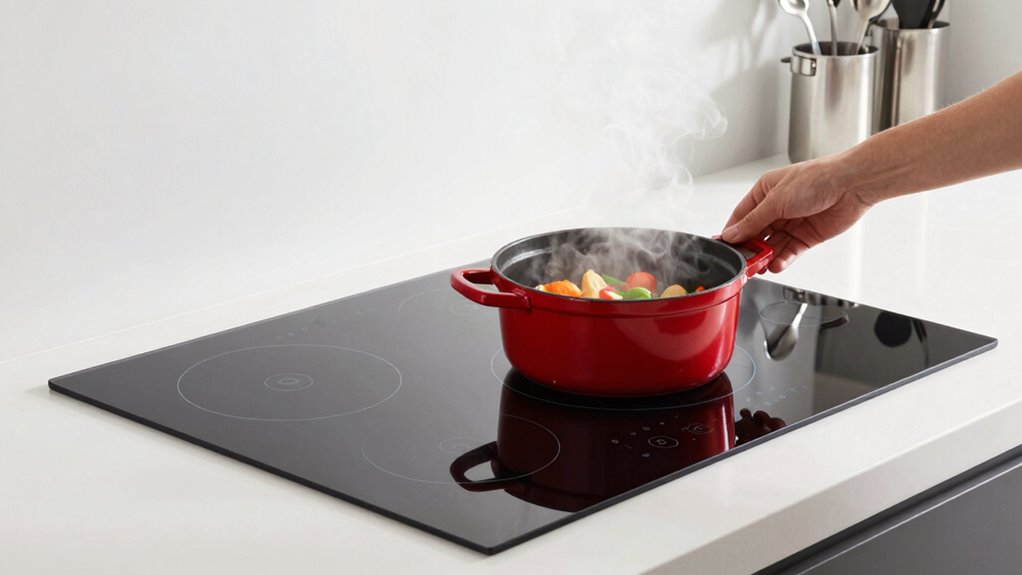

Think of induction cooking like a magnetic dance with your cookware. When you turn it on, a coil beneath the surface creates a magnetic field that interacts only with ferromagnetic pots and pans, causing electric currents called eddy currents. These currents heat the cookware directly, not the air or cooktop. This means faster, safer, more efficient cooking. If you want to uncover how this magnetic dance works in detail, there’s plenty more to explore.

Prime made for students and young adults
- Fast, free delivery for dorm and study essentials
- Prime Video and Amazon Music included
- Member-only deals
Key Takeaways
- Induction cooktops generate a magnetic field that directly heats ferromagnetic cookware, not the stove surface.
- Cookware must contain magnetic material to respond to the magnetic field and produce heat.
- Eddy currents induced in the cookware create heat, enabling fast and efficient cooking.
- Non-magnetic pots won’t heat, as they don’t interact with the magnetic field.
- The system is safe and precise because heat is only produced where the cookware contacts the surface.
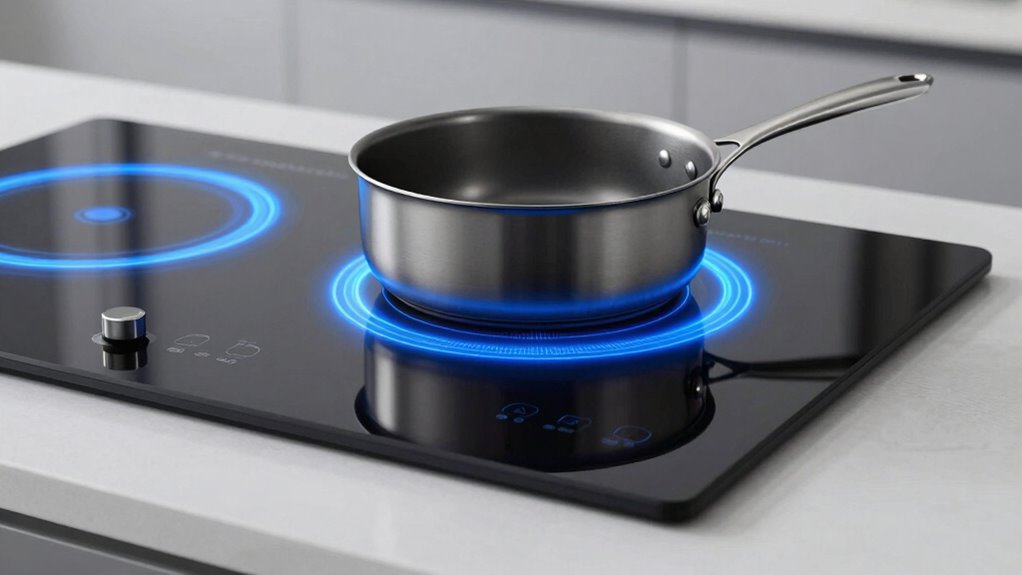
Have you ever wondered how induction cooking works so quickly and efficiently? It all comes down to the magic of a magnetic field. When you turn on an induction stove, an electric current flows through a coil beneath the cooktop’s surface, creating a rapidly oscillating magnetic field. This magnetic field then interacts with the cookware placed on top of the stove. Unlike traditional cooking methods that heat the surface or the air around the food, induction cooking directly heats the cookware itself. This process makes it remarkably fast because energy is transferred straight into the pot or pan, rather than wasting heat on the surrounding air or the cooktop surface.
Induction cooking uses magnetic fields to directly heat cookware, making it faster and more efficient than traditional methods.
Now, for this to work effectively, cookware compatibility is vital. Not all pots and pans respond to induction cooking because they need to be made of ferromagnetic material—meaning they must contain iron or a similar magnetic substance. When your cookware is compatible, the magnetic field induces electric currents called eddy currents within the metal. These currents generate heat directly in the cookware, which then cooks your food. If your pots or pans aren’t magnetic, the magnetic field won’t induce currents, and the stove simply won’t heat them. That’s why many induction cooktops have a built-in sensor to detect whether the cookware is compatible before heating begins.
Think of this process as a dance between the magnetic field and your cookware. When they match, energy flows efficiently, heating your food rapidly and precisely. If they don’t match, the magnetic field essentially passes through harmlessly, and no heat is produced. This is why selecting the right cookware—such as cast iron, enameled steel, or magnetic stainless steel—is vital for induction cooking to work seamlessly. It’s also why induction stoves are considered safer and more energy-efficient: they only generate heat where there’s compatible cookware on the surface, reducing wasted energy and minimizing the risk of burns or accidents. Recognizing the magnetic properties of cookware is crucial for optimal performance, as they directly influence the efficiency of the induction process.
Additionally, understanding how the electromagnetic field interacts with ferromagnetic materials can help you select the best cookware for your kitchen needs. Knowing that the magnetic field is responsible for inducing currents in the cookware highlights the importance of material properties in the induction process.
Understanding this simple model of a magnetic field interacting with compatible cookware can help you grasp why induction cooking is so fast and efficient. It’s a direct transfer of energy, unlike traditional methods that rely on conduction through the cooktop or convection in the oven. When you choose the right pots and pans, and understand how the magnetic field works, you get a powerful, precise cooking experience that cuts down on cooking time and energy use. It’s all about that invisible magnetic dance happening beneath the surface—making induction cooking not just convenient, but a smarter way to prepare your meals.
As an affiliate, we earn on qualifying purchases.
Frequently Asked Questions
How Does Induction Cooking Compare to Gas and Electric Stovetops?
Compared to gas and electric stovetops, induction cooking offers precise heat control and quick response times. You need compatible cookware, usually magnetic, for it to work efficiently. Unlike gas, which produces open flames, induction heats your cookware directly, making it safer and more energy-efficient. Electric stoves heat more slowly and lack the instant adjustments of induction, but they work with a wider range of cookware.
Is Induction Cooking Safe for All Cookware Types?
You might think induction cooking is safe for all cookware types, but ironically, it’s only compatible with cookware that has strong magnetic properties. If your pots and pans lack magnetic properties, they won’t work, no matter how safe induction seems. So, before you get excited, check your cookware’s compatibility—look for a magnetic base. Otherwise, you’ll be left with an expensive skillet and no heat.
Can Induction Stoves Work During a Power Outage?
During a power outage, your induction stove won’t work because it relies on electricity. To cook without power, you’ll need alternative solutions like a gas stove, charcoal grill, or portable camping stove. Keep these options handy for emergencies. Planning ahead guarantees you can still prepare meals safely and efficiently when the power’s out. Always have backup cooking methods available, especially if you rely heavily on induction cooking for daily meals.
What Are the Energy Efficiency Benefits of Induction Cooking?
Induction cooking offers significant energy efficiency benefits because it maximizes energy transfer directly to the cookware, reducing waste. You’ll notice better heat conservation since the cooktop itself stays cool and heats only the pan, not the surrounding air. This targeted heating means you use less energy overall, saving you money and reducing your environmental impact. Plus, faster heating times make induction a smart choice for efficient, eco-friendly cooking.
How Do I Troubleshoot Common Induction Cooktop Issues?
A stitch in time saves nine, so start troubleshooting your induction cooktop early. First, check cookware compatibility; it must be ferrous for the cooktop to detect it. Next, inspect the power supply issues—ensure the outlet provides consistent voltage and the cord isn’t damaged. If problems persist, reset the unit or consult the manual. Regular maintenance and proper cookware help prevent common issues and keep your cooktop running smoothly.
As an affiliate, we earn on qualifying purchases.
Conclusion
In conclusion, induction cooking is a modern, efficient way to prepare meals by directly heating your cookware with magnetic fields. Did you know that induction stoves can be up to 90% energy-efficient? That means less wasted energy and quicker cooking times. Once you understand the simple mental model behind it, you’ll appreciate how this technology transforms your kitchen experience—faster, safer, and more precise. Give it a try, and see the difference for yourself!
As an affiliate, we earn on qualifying purchases.
cast iron cookware for induction
As an affiliate, we earn on qualifying purchases.
As an affiliate, we earn on qualifying purchases.
Halloween Picks
halloween
As an affiliate, we earn on qualifying purchases.