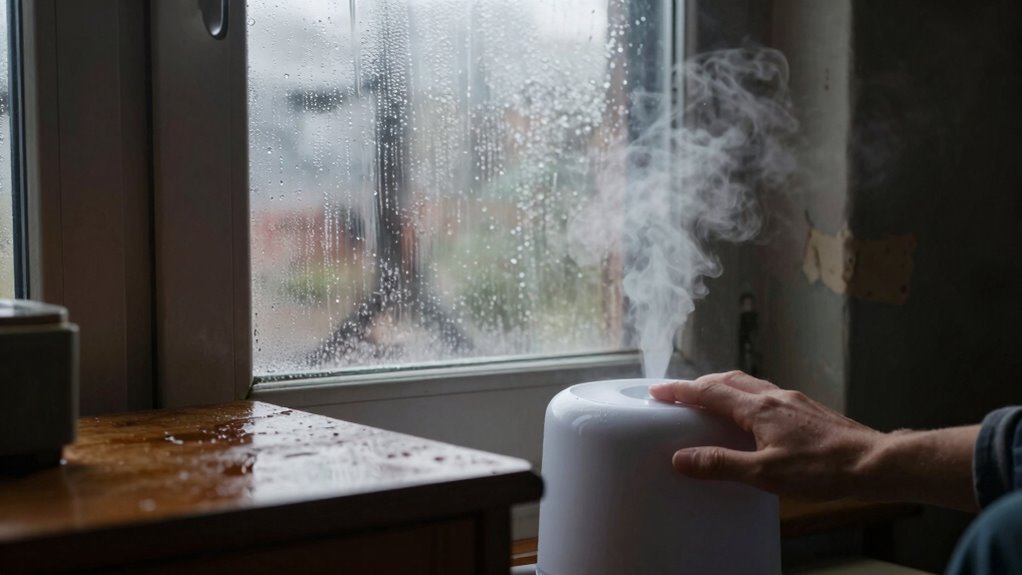

Maintaining proper humidity levels keeps your home healthy and comfortable. Too much moisture promotes mold growth, damaging walls and furniture while adding allergens to the air. On the flip side, low humidity causes dry skin, sore throats, and static electricity, weakening your natural defenses. By controlling humidity between 30-50%, you prevent damage and support your well-being. Keep exploring to discover simple ways to balance your indoor environment and protect your health.

Prime made for students and young adults
- Fast, free delivery for dorm and study essentials
- Prime Video and Amazon Music included
- Member-only deals
Key Takeaways
- Excess humidity promotes mold growth, damaging walls, ceilings, furniture, and worsening indoor air quality.
- Low humidity causes dry skin, sore throat, and increases susceptibility to colds by impairing natural defenses.
- Maintaining optimal humidity (30-50%) prevents mold, reduces dust, and supports healthier indoor environments.
- High humidity can trigger allergies and respiratory issues, while low humidity can cause discomfort and static electricity buildup.
- Proper ventilation and humidity control protect both your home’s structural integrity and your overall health.
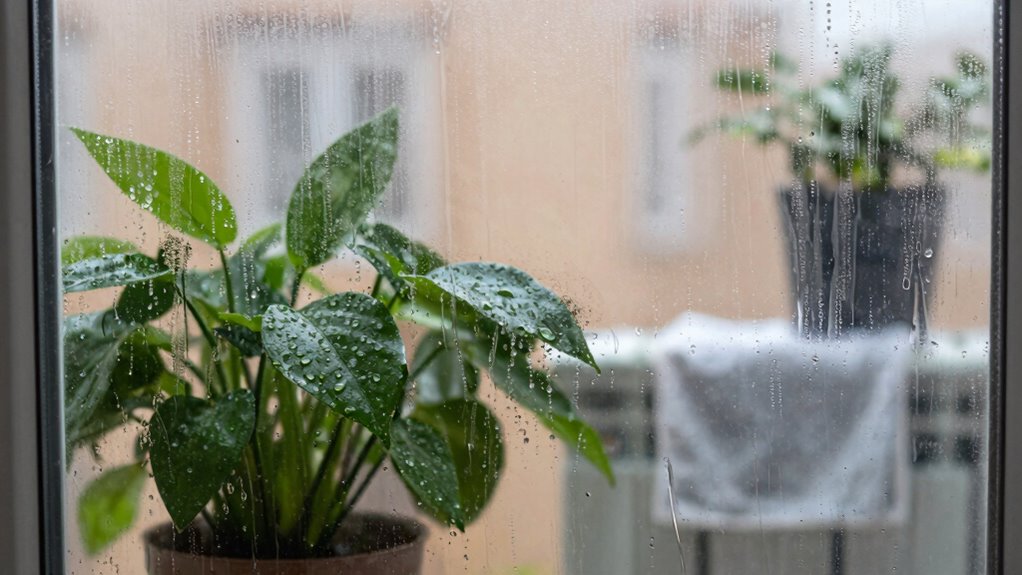
Humidity levels considerably impact both your home environment and your health. When the air is too humid, it can lead to poor air quality, making your indoor space uncomfortable and potentially harmful. Excess moisture creates an ideal environment for mold growth, which not only damages your home but can also trigger allergies and respiratory issues. On the other hand, if the air is too dry, your skin, throat, and nasal passages might suffer, leading to irritation and discomfort. Maintaining an ideal humidity level helps guarantee your home stays healthy and comfortable.
Proper humidity levels ensure a healthy, comfortable home free from mold and dryness issues.
Increased humidity raises the moisture content in the air, which can compromise your air quality. Mold spores thrive in damp conditions, and once they settle, they release allergens and irritants into the air. Breathing in mold spores can cause allergic reactions, asthma flare-ups, and other respiratory problems. This is especially true if you have existing allergies or asthma. Mold growth isn’t just a concern for health; it can also damage your home’s structure, including walls, ceilings, and furniture. The longer mold is allowed to grow unchecked, the more extensive and costly the damage becomes. Proper ventilation and controlling indoor humidity levels are vital to prevent mold from taking hold. Additionally, air quality is a crucial factor influenced by humidity levels, which can impact overall health and comfort. Recognizing the importance of indoor air quality can motivate you to take proactive measures for a healthier environment. Regularly checking and adjusting humidity levels can also help prevent mold growth, preserving both your health and your home’s integrity. Maintaining optimal humidity can also help reduce dust accumulation, which can further improve indoor air quality.
Conversely, low humidity can dry out your skin, sinuses, and respiratory tract. When the air is too dry, you may experience itchy skin, cracked lips, and a sore throat. Dry air can also impair your body’s natural defenses, making you more vulnerable to colds and infections. In winter, especially, indoor heating often strips moisture from the air, exacerbating these issues. Using a humidifier can help restore balance, keeping the air at a comfortable level and reducing the risk of dryness-related problems. Properly managing humidity also helps prevent static electricity buildup, which can be both annoying and damaging to electronic devices.
The key to managing humidity effectively lies in understanding your environment and adjusting accordingly. You want to aim for a relative humidity level between 30% and 50%. This range minimizes mold growth and improves air quality while preventing the discomfort associated with dry air. Using a hygrometer allows you to monitor these levels accurately. Regularly ventilating your home and using dehumidifiers or humidifiers as needed can make a significant difference. By controlling humidity, you promote a healthier indoor environment, protect your home from structural damage, and support your body’s natural defenses. Ultimately, maintaining proper humidity is a simple yet powerful step toward a healthier, more comfortable home and better overall well-being.
As an affiliate, we earn on qualifying purchases.
Frequently Asked Questions
How Does Humidity Affect Indoor Plants’ Health?
Humidity levels directly impact your indoor plants’ health. When the air is too dry, soil moisture drops, making plants thirsty and stressed. Conversely, high humidity can promote plant disease by creating a damp environment that fosters mold and pests. You should monitor humidity to maintain ideal soil moisture, ensuring your plants stay healthy, vibrant, and free from disease. Adjust humidity levels as needed for the best growth conditions.
Can Low Humidity Cause Static Electricity Problems?
Low humidity can definitely cause static electricity problems. Imagine you’re walking across a carpeted floor on a dry winter day, then touch a metal doorknob—you’re likely to get a static shock. This electrostatic buildup occurs because dry air prevents the dissipation of static charges, leading to frequent static shock occurrences. Maintaining proper humidity levels helps reduce static electricity, making your home more comfortable and safer.
What’s the Ideal Humidity Level for a Home?
The ideal humidity level for your home is between 30-50%. This range improves air quality and reduces the chances of mold growth, which thrives in damp environments. Maintaining proper humidity helps you breathe easier, prevents static electricity issues, and protects your belongings. Use a hygrometer to monitor levels and adjust with humidifiers or dehumidifiers as needed, ensuring a comfortable, healthy environment for you and your family.
Does Humidity Impact Allergy Symptoms?
Imagine humidity as a gatekeeper—when it’s too high, allergy triggers like dust mites and mold thrive behind the bars, worsening your symptoms. Conversely, low humidity can dry out your nasal passages, making you more sensitive. Maintaining ideal humidity levels keeps this gate balanced, preventing mold growth and limiting allergy triggers. Proper humidity helps your body breathe easier and keeps your home healthier.
How Does Humidity Influence Energy Bills?
Humidity levels directly impact your energy bills by affecting energy efficiency and moisture control. When humidity is too high, your AC works harder to cool and dehumidify, increasing energy use. Conversely, low humidity can make your home feel cooler, prompting you to heat more. Maintaining ideal humidity balances moisture control, reducing strain on your HVAC system, and helping you save on energy costs while keeping your home comfortable.
As an affiliate, we earn on qualifying purchases.
Conclusion
Managing humidity isn’t just about comfort; it’s about health and home integrity. For example, in a humid climate, mold can develop quickly, leading to respiratory issues. Imagine a family who notices persistent allergies and must replace furniture and paint sooner than expected—that’s the impact of unchecked humidity. By keeping humidity levels balanced, you protect your home’s structure and your well-being. Staying mindful of humidity means a healthier, more comfortable living environment for you and your loved ones.
As an affiliate, we earn on qualifying purchases.
air purifier with humidity control
As an affiliate, we earn on qualifying purchases.
As an affiliate, we earn on qualifying purchases.
Halloween Picks
halloween
As an affiliate, we earn on qualifying purchases.



![GPT-5.6 Sol Ultra produces proof of the Cycle Double Cover Conjecture [pdf]](https://rottenpanda.com/wp-content/uploads/2026/07/gpt-5-6-sol-ultra-produces-proof-of-the-cycle-double-cover-conjecture-pdf-featured-560x300.jpg)