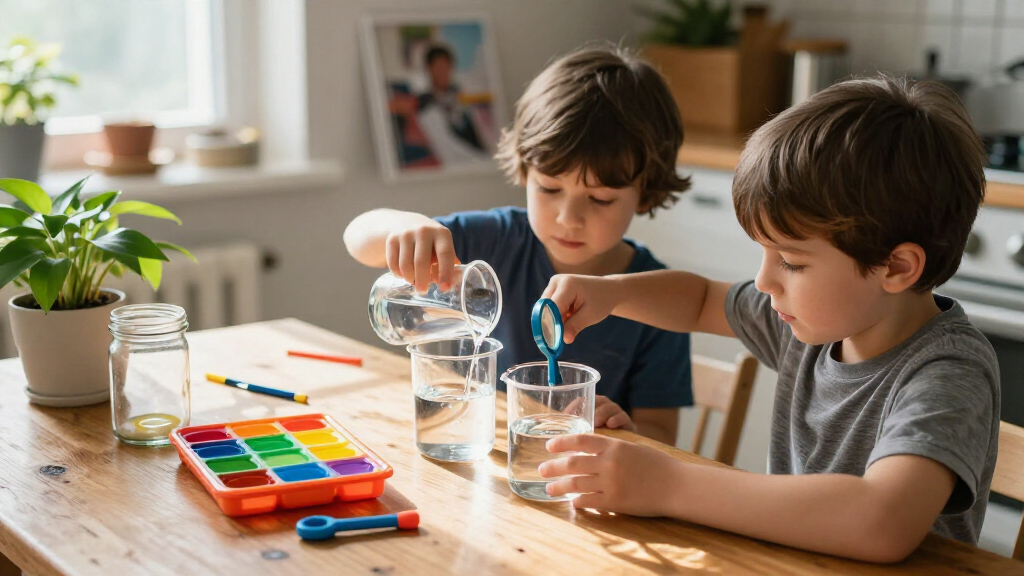
Use this guide to choose an educational science kit for a child, prepare the activity, and complete an experiment together. It is for parents, caregivers, and educators who want a hands-on activity matched to a child’s age and abilities, including adults who have not led science activities before. Allow about 30-90 minutes for one experiment; some growing or observation kits need follow-up over several days. The adult manages safety and setup while the child does as much of the measuring, building, observing, and recording as they can.

Get school and study supplies delivered free — and shop member deals
- Fast, free delivery on millions of items
- Access to Prime Big Deal Days deals on October 6–7
- Prime Video, Amazon Music and more included
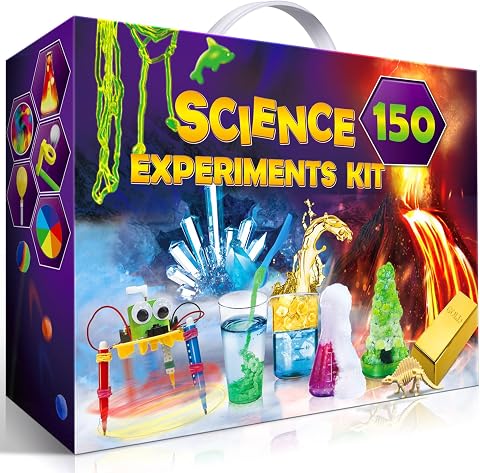
UNGLINGA 150-Experiment Science Kit for Kids
- ✔ Brand: UNGLINGA
- ✔ Experiments: 150
- ✔ Recommended age: 8 years and up

National Geographic Science Magic Kit for Kids, 100+ Experiments
- ✔ Brand: Blue Marble
- ✔ Recommended age: 8 years and up
- ✔ Experiments with included materials: 20

Kids’ Handheld Digital Microscope, 200x–1000x Magnification
- ✔ Recommended age: 5–13 years
- ✔ Optical magnification: 200x–1000x
- ✔ Digital zoom: 1x–4x
Difficulty: Beginner | Time: 30-90 minutes, depending on the kit and experiment
What You’ll Need
Tools & Materials:
- The kit and its instruction booklet
- A clean, stable work surface with good lighting
- Any household materials named in the kit instructions
- Protective equipment specified by the manufacturer, such as safety glasses or gloves
- Paper or a notebook and a pencil for observations
- A phone or clock to track timed steps, if needed
Knowledge:
- Basic ability to read and follow the kit’s instructions
- Willingness to supervise the child throughout the activity
- No previous science experience required
Check the package age range and safety warnings before buying or opening the kit. Follow the manufacturer’s instructions over general advice in this guide. Set aside enough uninterrupted time for the experiment, and check whether it includes small parts, chemicals, heat, sharp tools, batteries, or steps that require adult handling. Keep food and drinks away from the work area.
UNGLINGA 150-Experiment Science Kit for Kids
For families who want one kit to support several kinds of science play, UNGLINGA has the most balanced format in this group. Its 150 hands-on experiments span chemistry, physics, earth science, and surface tension, so children can move between different questions instead of repeating one style of activity. The illustrated step-by-step manual is an important part of that appeal: it gives kids a route through the experiments and can help make the activities more approachable for a parent-child session.Compared with the National Geographic kit, UNGLINGA puts less emphasis on performance and more on a broad range of science topics. Compared with the microscope, it offers more structured activities, while the microscope is better for children who would rather inspect real specimens than follow a project sequence. The tradeoff is that the listed experiment count does not mean every needed ingredient is supplied; some activities call for common household items. Buyers should also check that the child is ready for the recommended age of eight and up and for adult help where an activity requires it.This is our top pick because its combination of range and instructions makes it the most adaptable starting point for families seeking an activity-led kit. It is not the best match for someone who wants a compact electronic tool or a ready-to-perform set of science tricks. Its value is in variety with a manual to follow, not in a single standout device or theme.
Pros:
- 150 hands-on activities across multiple areas of science
- Illustrated step-by-step manual supports guided exploration
- Includes tools and child-friendly experiment materials
- Some activities incorporate common household items
Cons:
- Some experiments require household items beyond the included materials
- Recommended age is eight and up, limiting suitability for younger children
- The broad experiment count may require families to plan and select activities
Best for: Families with children ages eight and up who want a broad set of guided activities spanning several science topics.
Not ideal for: Buyers seeking an all-in-one kit with no household supplies needed, or a compact digital device for specimen viewing.
Bottom line: We recommend UNGLINGA for families who want the broadest guided activity mix, provided they are comfortable supplying some household materials.
“We recommend UNGLINGA for families who want the broadest guided activity mix, provided they are comfortable supplying some household materials.”
National Geographic Science Magic Kit for Kids, 100+ Experiments
This kit makes the most sense for children who enjoy revealing how a trick works as much as performing it. It supplies materials for 20 experiments and adds a booklet with more than 85 additional magic experiments, giving the set a memorable hook without making the experience depend only on reading about science. For a child who finds a conventional experiment manual uninviting, the magic framing can make it easier to draw them into hands-on exploration.Against UNGLINGA’s wider spread of science topics, National Geographic is more specialized: it centers the experience on magic-style activities rather than presenting an explicitly broad mix of chemistry, physics, and earth science. That narrower theme can be an advantage when the child loves tricks, but it may feel repetitive to someone looking for many distinct project types. The microscope, by comparison, encourages observation through a screen and is better for a child intrigued by specimens; this kit is the more active choice for trying and demonstrating activities.There is a useful distinction between the 20 experiments with supplied materials and the additional booklet ideas. The large idea count should not be mistaken for materials for every activity. Some experiments may also need adult supervision, so younger or less independent children may need a grown-up nearby. We place it second because the theme is engaging and the booklet extends the activity menu, but it is less broadly structured than our overall pick.
Pros:
- Includes materials for 20 magic experiments
- Bonus booklet adds more than 85 experiment ideas
- Combines hands-on activities with a playful magic theme
- Designed for children ages eight and up
Cons:
- Some activities may require adult supervision
- The science-magic focus is narrower than UNGLINGA’s cross-topic range
- Materials are specified for 20 experiments, not the full booklet
Best for: Children ages eight and up who enjoy magic tricks and want hands-on activities that can be shared or demonstrated.
Not ideal for: Families prioritizing a wide range of clearly distinct science topics, or children who prefer quiet specimen observation.
Bottom line: We’d choose this kit for a budding performer who needs a playful entry into science, rather than for the widest curriculum-style variety.
“We’d choose this kit for a budding performer who needs a playful entry into science, rather than for the widest curriculum-style variety.”
Kids’ Handheld Digital Microscope, 200x–1000x Magnification
Unlike the other two picks, this is not a large menu of experiments; it is a portable viewing tool for children who want to examine specimens and see them on a built-in screen. Its stated 200x–1000x optical magnification, manual focus, adjustable LED lighting, and 2.4-inch color display make the activity more immediate than looking through a traditional eyepiece. Twelve prepared slides give beginners something to view straight away, while the camera can capture photos and video.That focused experience can make the microscope a strong choice for younger children in the stated five-to-thirteen age range, especially those who learn by looking closely. It differs from UNGLINGA’s step-by-step experiments and National Geographic’s science tricks: the child supplies curiosity and specimens, while the device supports observation. We rank it third overall because it offers less activity structure than either kit and its media features have practical limits. Video recording requires a separately sold microSD card, and the product notes that device photos cannot be downloaded.Families should also plan around the up-to-two-hour battery life. That may be enough for a focused session, but it is less convenient for extended use than a non-electronic experiment kit. We would pick this over the other two when repeat specimen viewing is the priority, not when the goal is a wide sequence of guided projects. Its screen, lighting, and portability are useful differentiators; the narrower learning format and storage constraints are the counterweight.
Pros:
- Adjustable 200x–1000x optical magnification with manual focus
- Built-in color screen and adjustable LED lighting
- Includes 12 prepared slides for immediate observation
- Portable rechargeable design can capture photos and video
Cons:
- Video recording requires a separately sold microSD card
- Battery life is stated as up to two hours
- Product notes that device photos cannot be downloaded
Best for: Curious children ages five to thirteen who are especially interested in inspecting specimens and viewing them on a screen.
Not ideal for: Families seeking a broad set of guided experiments, or children who need easy photo transfer and extended battery runtime.
Bottom line: We recommend this specialist pick for screen-based specimen exploration, but choose one of the experiment kits for more structured activity variety.
“We recommend this specialist pick for screen-based specimen exploration, but choose one of the experiment kits for more structured activity variety.”
As an Amazon Associate we earn from qualifying purchases.
Before You Start
Choose a kit for the child’s actual reading, coordination, and attention level, not only their age. A younger child may enjoy watching an adult handle a complex step, but an activity with many fine-motor tasks can become frustrating if most of the work is beyond the child’s ability. For kits involving chemicals, electricity, heat, sharp tools, or small parts, an adult must stay present and follow the product’s stated safety rules.
Open the kit before the activity and compare its contents with the parts list. Do not use a kit with leaking, damaged, or unlabeled materials. Read the full procedure before beginning, since some activities require waiting, advance preparation, or a specific order. If a part or instruction is missing, contact the manufacturer rather than guessing or substituting materials.
Step-by-Step Instructions
Step 1: Choose a kit that fits the child
Choose a subject the child is curious about, such as plants, rocks, simple machines, weather, or the human body. Check the recommended age, activity length, reading demands, supervision notes, and number of experiments. Select a kit that lets the child make a prediction, perform an action, and observe a result. Read the product description and safety information; do not rely on pictures alone to judge what is included.
Tip: For a first activity, favor a kit with one clear experiment and familiar materials. Avoid buying based only on how many experiments the box advertises.
Check: The kit’s stated age range, safety requirements, and activity demands fit the child and the adult supervision available.
Step 2: Check the contents and instructions
Place the unopened kit on the work surface and read its complete instruction booklet. Compare each listed component with the contents. Identify any household supplies you must provide and any steps marked for adult help. Note the activity’s expected duration and whether it needs advance setup or follow-up observations. Set aside damaged or leaking items and stop if the instructions or safety labels are missing.
Tip: Do this before inviting the child to start; discovering a missing piece midway can interrupt the experiment.
Check: You have all required parts and supplies, understand the sequence, and can explain which steps the child may do and which steps need adult handling.
Step 3: Prepare a safe work area
Clear a stable, well-lit surface and cover it if the kit may spill or stain. Gather only the materials needed for the activity. Put away food, drinks, and unrelated objects. Have the child wash their hands, and put on any protective gear specified by the instructions. Keep pets and younger children away from small parts or materials that should not be touched or swallowed.
Tip: Do not use kitchen tools, containers, or surfaces for food again unless the manufacturer says they are food-safe and gives cleaning directions.
Check: The work area is uncluttered, required protective equipment is ready, and restricted materials are out of reach of anyone not participating.
Step 4: Introduce the question and make a prediction
Read the experiment’s question or objective with the child. Ask what they think will happen and invite them to say or draw a prediction before starting. Keep the conversation open: a prediction is a testable guess, not a promise that the child must get right. If the activity compares objects or conditions, help the child identify what will change and what they will observe.
Tip: Write the prediction down before the experiment. It gives the child something concrete to compare with the result without treating an unexpected outcome as failure.
Check: The child can state or show what they expect to observe, and you both know what the experiment is testing.
Step 5: Follow the experiment in order
Complete one instruction at a time and use the kit’s stated amounts, timing, and setup. Assign the child safe tasks, such as sorting, counting, measuring, assembling, or recording, while you perform any adult-only steps. Pause to check measurements before adding materials or starting equipment. Do not mix extra substances, skip steps, or repeat a step unless the booklet allows it.
Tip: If the instructions use an unfamiliar term, explain it in plain language before continuing. Never taste, smell closely, or touch a material to identify it.
Check: The experiment follows the printed procedure, the child participates in age-appropriate tasks, and there are no spills, unexpected reactions, or safety concerns.
Step 6: Observe and record what happens
Ask the child to describe what they see, hear, or measure using details rather than a judgment such as “good” or “bad.” Record observations, measurements, or changes in the kit booklet or a notebook. Follow any specified waiting period, and write down when the observation was made. For an activity that changes over time, take observations at the intervals the instructions request.
Tip: Do not alter the setup just to produce a more dramatic result. A small or unexpected change is still useful information.
Check: The observations describe what actually happened and include measurements or timing when the experiment calls for them.
Step 7: Compare the result with the prediction
Review the child’s original prediction beside the recorded result. Ask which parts matched and which differed. Use the kit’s explanation to discuss why the result may have occurred, but avoid presenting a mismatch as a mistake by the child. If something went wrong, identify the step or condition that may have affected the outcome rather than changing several things at once.
Tip: A result that differs from the prediction can still show that the child followed the process and gathered evidence.
Check: The child can describe at least one observation and compare it with the prediction, even if they cannot yet explain the scientific cause.
Step 8: Clean up and store the kit
Follow the booklet’s disposal and cleaning directions. Do not pour liquids, chemicals, or biological materials down a drain unless the instructions permit it. Put reusable parts away only after they are clean and dry, and store chemicals or small pieces in their original labeled containers, away from children and pets. Wash hands and wipe the work surface as directed.
Tip: Keep the instructions and observation notes with the kit so you can repeat the activity or continue tracking a growing or changing sample.
Check: The work area is clean, waste has been handled as directed, and reusable parts and remaining materials are stored safely.
Common Mistakes to Avoid
- Choosing a kit because it looks exciting without checking the age range or safety details. — Read the age guidance, supervision notes, and warnings before purchase. Match the activity’s reading and coordination demands to the child.
- Opening the activity before checking that all parts and household supplies are available. — Compare the contents with the parts list and gather required supplies before beginning.
- Changing quantities, combining materials, or skipping a waiting period. — Follow the kit’s stated amounts, sequence, and timing. Ask the manufacturer if an instruction is unclear instead of improvising.
- Calling the experiment a failure because the result did not match the child’s prediction. — Record the actual observation and compare it with the prediction. Unexpected results can still help the child learn how experiments provide evidence.
Troubleshooting
Problem: A listed part or required household supply is missing.
Solution: Pause before starting that step. Check the packaging and booklet once more, then contact the kit maker for a replacement or instructions. Do not substitute a chemical, tool, or component unless the manufacturer approves it.
Problem: The experiment shows little or no visible change.
Solution: Check whether the instructions specify a waiting period, temperature range, light level, or measurement threshold. Confirm that the amounts and sequence were followed. Record what happened; do not add extra materials to force a result.
Problem: The child is frustrated by reading or assembly tasks.
Solution: Read one instruction aloud at a time and let the child take a safe role, such as counting, observing, or drawing. If the activity remains beyond their ability, stop and choose a simpler experiment rather than rushing through it.
Problem: A material spills, leaks, or causes an unexpected reaction.
Solution: Stop the activity, keep the child away from the material, and follow the kit’s safety and spill directions. Avoid touching or cleaning an unknown substance without the specified protection. Contact the manufacturer or the relevant local safety service if the label gives no suitable guidance.
What Success Looks Like
The activity is complete when the child has taken part in safe, age-appropriate steps; the experiment was performed according to its instructions; observations were recorded; and the result was compared with the original prediction. The result does not need to match the prediction for the activity to count as successful. The work area should be clean, materials handled as directed, and reusable kit parts stored safely.
Next Steps
Save the child’s notes with the kit and, if the instructions allow it, repeat the experiment while changing only one condition. Ask the child what they would test next and help them choose a related kit or a safe household observation activity. For kits that involve growth or changes over time, follow the stated observation schedule and disposal directions. Replace missing or expired supplies only with manufacturer-approved items. Stop using the kit and contact its maker if labels, safety instructions, or part identities are unclear.
Frequently Asked Questions
How do I choose a science kit for a child who has never used one?
Choose a kit within the child’s age range with a short, clearly described first experiment and manageable reading and assembly demands. Check the supervision requirements and safety warnings, then preview the instructions before the activity.
Should I help the child get the expected result?
Help the child follow the procedure accurately, but do not alter the experiment to produce a preferred outcome. Record what actually happens and use the kit’s explanation to discuss possible reasons for the result.
What should I do if a kit material is missing or damaged?
Do not begin a step that depends on it, and do not guess at a substitute. Check the parts list and contact the manufacturer for replacement parts or approved alternatives. Do not use a leaking or unlabeled material.
Can children complete science kits without adult supervision?
Follow the kit’s age and supervision guidance. An adult should remain present whenever the instructions call for supervision or involve chemicals, heat, electricity, sharp tools, small parts, or other hazards. Even a simple activity needs an adult who can manage setup and cleanup safely.
Evergreen bestsellers Picks
bestsellers
As an affiliate, we earn on qualifying purchases.