

TL;DR
Archaeologists have discovered well-preserved woolly mammoth bones in the Danube River. The find offers new insights into Ice Age megafauna and their habitats. Further analysis is ongoing to determine the bones’ age and significance.
Archaeologists have confirmed the discovery of woolly mammoth bones in the Danube River, marking a significant paleontological find that could enhance understanding of Ice Age megafauna in Europe. The find was announced by the National Museum of Natural History in Vienna, emphasizing its importance for prehistoric research and regional history.
The bones were recovered during routine riverbed excavations conducted by a team from the National Museum of Natural History. The remains include several limb bones and tusk fragments, which appear to be well-preserved and date back approximately 20,000 to 30,000 years, based on initial dating methods. The site is located along a section of the Danube that has historically been a corridor for ancient fauna migration.
Experts involved in the discovery have stated that the bones are likely from a woolly mammoth (Mammuthus primigenius), a species that roamed Eurasia during the Ice Age. The find is considered rare because such well-preserved remains are uncommon in the region, and it provides new material for studying the species’ distribution and extinction timeline in Europe.
Implications for Ice Age Megafauna Research
This discovery is significant because it offers fresh evidence about the presence and distribution of woolly mammoths in Central Europe during the last Ice Age. It could help scientists better understand migration patterns, habitat preferences, and extinction processes of these extinct species. The bones may also provide insights into the climate conditions of the period, contributing to broader paleoclimatology studies.
Additionally, the find may influence regional archaeological narratives, indicating that ancient humans could have interacted with or hunted mammoths in the Danube basin, although no direct evidence of human activity has yet been confirmed at the site.

JOINPAYA Archaeological Excavation Tools for Kids: 3 Sets Dinosaur Fossil Digging Kits with Mini Hammer Chisel Brush Scraper and Magnifier Science Kits for Dino Eggs and Gem Dig
- Portable and Compact: Lightweight tools for easy transport
- Complete Excavation Set: Includes hammer, chisel, brush, magnifier
- Educational and Fun: Enhances imagination and fine motor skills
As an affiliate, we earn on qualifying purchases.
As an affiliate, we earn on qualifying purchases.
Recent Paleontological Finds in the Danube Region
The Danube River has yielded several important paleontological discoveries over the past decade, including fossils of other Ice Age animals and prehistoric tools. Historically, the river served as a natural corridor for migrating species, and recent excavations have focused on understanding its role in prehistoric ecosystems.
Previous finds in the region include partial mammoth remains and other megafauna, but complete or well-preserved bones are rare. The current discovery aligns with ongoing research efforts to map Ice Age fauna across Central Europe and contributes to the growing body of evidence about the region’s prehistoric biodiversity.
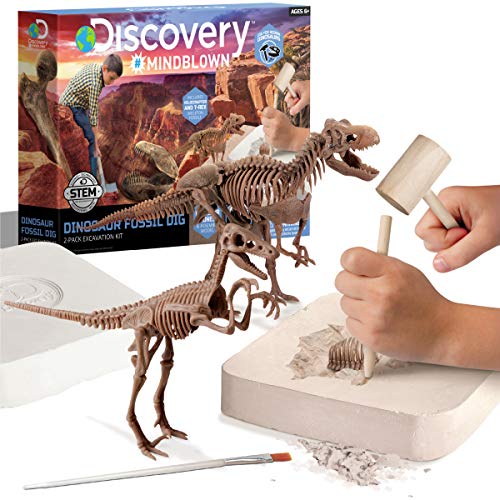
Discovery™ Dinosaur Fossil Dig Kit – Excavate & Assemble T-Rex & Velociraptor Skeletons| 3D Dino Bones Puzzles| Jurassic Paleontology Toy for Kids| STEM Science Activity Set| Girls & Boys Gift Ages 6+
- Excavate Dinosaur Skeletons: Uncover T-Rex and Velociraptor fossils
- Assemble and Display: Build 3D dinosaur skeletons for display
- Includes Real Dig Tools: Chisel, brush, mallet, goggles included
As an affiliate, we earn on qualifying purchases.
As an affiliate, we earn on qualifying purchases.
Details Still Uncertain About the Bones’ Age and Origin
While initial dating suggests the bones are from approximately 20,000 to 30,000 years ago, precise dating results are pending. It is also unclear whether the bones represent a single individual or multiple animals, and whether they show evidence of human interaction. Further analysis is required to confirm these details and assess the bones’ significance fully.

U. S. Toy Assorted Mini Ice Age Animal Action Figures – Set of 12 Plastic Mammoth and Prehistoric Creatures
- Set of 12 Mini Ice Age Figures: Includes various prehistoric creatures
- Detailed Prehistoric Animal Designs: Accurate features of Ice Age animals
- Sized for Small Hands: Perfect for young children and play
As an affiliate, we earn on qualifying purchases.
As an affiliate, we earn on qualifying purchases.
Ongoing Analysis and Future Excavations in the Danube
Researchers will conduct detailed radiocarbon dating and DNA analysis to determine the bones’ exact age and species confirmation. Additional excavations along the Danube are planned to uncover more fossils and contextual artifacts. The findings will be published in scientific journals as studies progress.

PNSO Prehistoric Animal Models: Patton the Megalodon 6.2" Shark
- Model Size: 6.2-inch Megalodon shark model
- Educational Content: Includes illustrated manual and poster
- Realistic Reconstruction: Represents 14-meter prehistoric shark
As an affiliate, we earn on qualifying purchases.
As an affiliate, we earn on qualifying purchases.
Key Questions
How significant is this discovery for paleontology?
This find is considered significant because well-preserved woolly mammoth bones are rare in Central Europe, providing valuable data on Ice Age ecosystems and species distribution.
What methods will scientists use to date the bones?
Scientists will employ radiocarbon dating and possibly DNA analysis to determine the bones’ age and origin more precisely.
Could these bones be linked to ancient human activity?
At this stage, there is no direct evidence of human interaction with the bones, but further research may clarify this possibility.
When will more findings be announced?
Additional excavations and analyses are ongoing, with further results expected within the next year.
Source: google-trends