Cooking techniques rely on three main types of heat transfer: conduction, convection, and radiation. Conduction happens through direct contact, like searing a steak in a hot pan. Convection circulates hot air or liquids to cook food evenly, as in baking or boiling. Radiation uses electromagnetic waves to quickly brown or sear food, seen in grilling or broiling. Understanding these methods helps you cook better and achieve perfect results every time; explore further to master each technique.
Key Takeaways
- Heat transfer in cooking occurs mainly through conduction, convection, and radiation, each affecting how food heats and cooks.
- Conduction involves direct contact, like searing a steak, transferring heat from pan to food.
- Convection circulates hot air or liquids around food, promoting even cooking, as in baking or boiling.
- Radiation uses electromagnetic waves, such as in broiling or grilling, for quick surface browning and searing.
- Understanding these methods helps choose the right technique, control heat, and achieve better cooking results.
What Is Heat Transfer in Cooking and Why Is It Important?
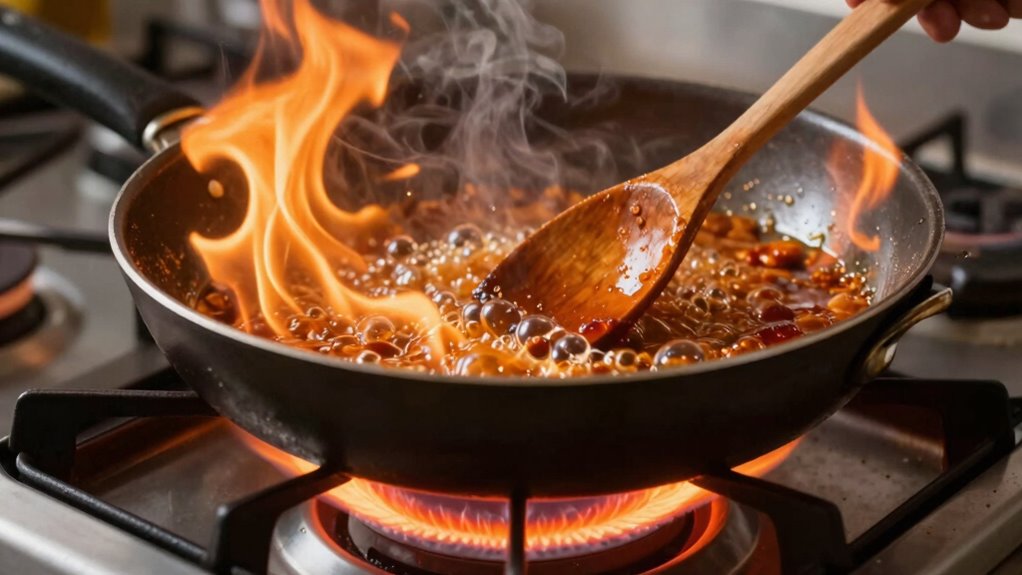
Have you ever wondered how heat moves from your stove to your food? Heat transfer is the process that makes this happen, and it’s essential for cooking food evenly and safely. When heat flows, it moves from areas of higher temperature to lower temperature, creating temperature gradients. Proper heat transfer ensures that all parts of your dish reach the desired temperature without overcooking or undercooking. Good thermal insulation slows this process, helping food stay warm longer or preventing heat loss. Understanding heat transfer helps you control cooking; for example, knowing how heat spreads through your pan ensures your food cooks evenly. Heat conduction is a key method by which heat moves through solid cookware and into your food. Without proper heat transfer, you might end up with burnt edges or undercooked centers. It’s the unseen force behind every successful meal, making sure heat reaches every part of your food at the right rate. Additionally, mastering heat transfer principles allows you to choose the right cookware and techniques for different recipes. Recognizing how different materials conduct heat can significantly improve your cooking outcomes. Moreover, understanding the role of thermal conductivity helps in selecting cookware with optimal heat distribution properties, leading to more consistent results.
The Three Main Types of Heat Transfer in Cooking: Conduction, Convection, and Radiation
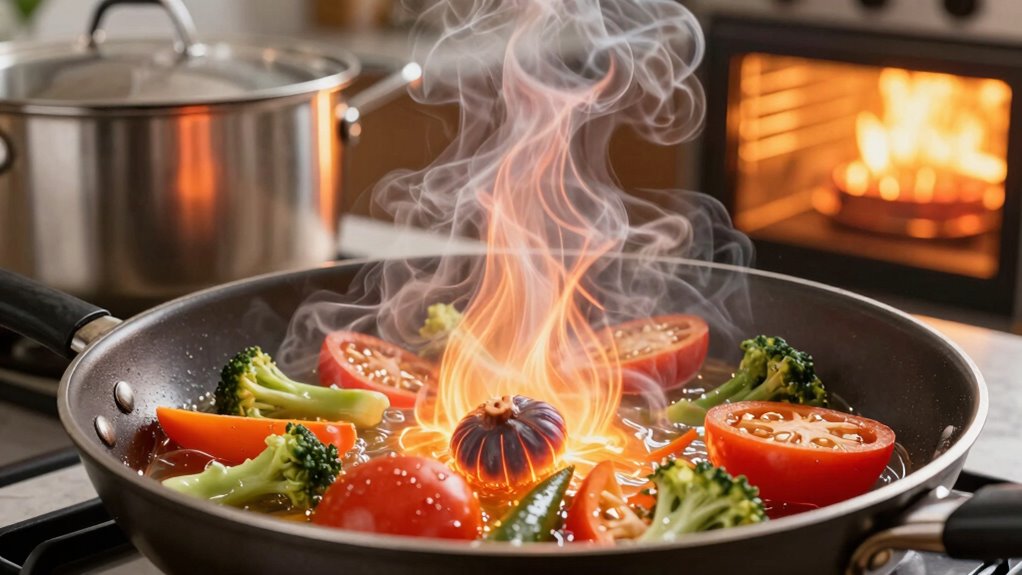
Heat moves through food in different ways during cooking, and understanding these methods helps you control the process better. The three main types of heat transfer are conduction, convection, and radiation, each based on heat transfer principles fundamental to cooking science concepts. Conduction occurs when heat moves directly through contact, like in a skillet. Convection involves heat circulating in liquids or gases, like boiling water. Radiation transfers heat through electromagnetic waves, like in an oven’s infrared rays. To imagine this:
| Method | Example | Heat Transfer Principle |
|---|---|---|
| Conduction | Searing a steak | Direct contact transfer |
| Convection | Boiling soup | Circulating hot fluids |
| Radiation | Toaster heating bread | Electromagnetic waves |
Knowing these helps you predict how heat moves, improving your cooking precision. Recognizing how heat transfer methods influence cooking outcomes can help you make better culinary choices. This understanding is especially useful for cooking techniques, where controlling heat transfer directly impacts the final dish.
How Conduction Sear Your Steak Perfectly
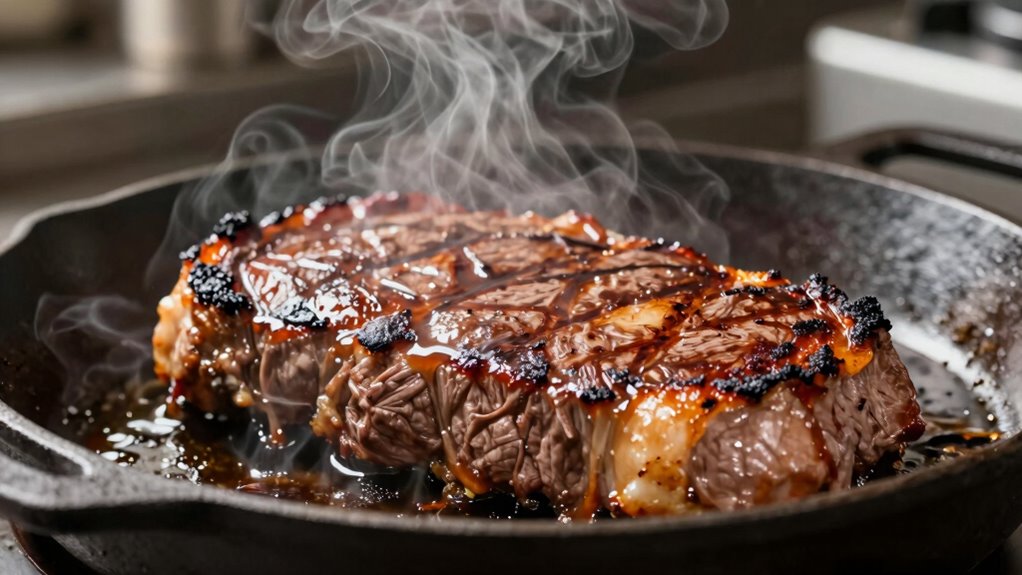
To achieve a perfect steak sear, you need to understand how conduction transfers heat directly from the hot skillet to the meat’s surface. Searing temperature, usually between 400°F and 450°F, is essential for a good crust.
When your skillet heats up, heat moves through the metal and into the steak’s surface through conduction. As the surface reaches the ideal searing temperature, the Maillard reaction occurs, creating that rich, brown crust. This chemical process develops complex flavors and aromas, making your steak irresistible.
To guarantee even heat transfer, preheat your skillet thoroughly and avoid overcrowding. The direct contact maximizes conduction, giving you a beautifully seared exterior while locking in juices. Understanding heat transfer is crucial for mastering consistent results in cooking. Additionally, ensuring proper temperature control helps maintain the right heat levels for optimal conduction. Proper cooking techniques can also enhance the overall quality of your sear and prevent burning. Recognizing the importance of material properties of your cookware can further improve heat conduction efficiency. A solid grasp of heat conduction principles can make all the difference in achieving a perfect sear every time.
Mastering conduction is key to achieving that perfect, flavorful crust.
How Convection Helps You Cook Evenly and Save Time

Convection ovens circulate hot air around your food, helping it cook more evenly. This airflow guarantees every part gets consistent heat, preventing hot spots. Additionally, the circulating air can improve ventilation and heat distribution, much like proper ventilation considerations in a sauna helps maintain a safe and comfortable environment. As a result, your meals cook faster and more uniformly, saving you time and effort. Proper temperature control also ensures precision in cooking, further enhancing efficiency and results. Understanding heat transfer principles can help you optimize your cooking techniques for better outcomes. Recognizing the role of thermal behavior in your oven can further improve your ability to control and adapt heat distribution effectively, especially when considering energy efficiency in modern appliances.
Circulates Hot Air
When your oven circulates hot air around your food, it guarantees everything cooks evenly and quickly. The key is proper air circulation, which is achieved by oven fans that move hot air throughout the chamber. These fans create a consistent temperature around your dishes, eliminating hot spots that can cause uneven cooking. Free Floating air circulation helps prevent hot and cold spots, ensuring a more reliable cooking process. Additionally, this process relies on principles of heat transfer to efficiently distribute warmth throughout the food. This movement of hot air enhances thermal conduction, allowing heat to penetrate deeper into the food for thorough cooking. As the hot air moves, it transfers heat directly to the food’s surface, ensuring thorough and uniform cooking. This process reduces cooking times and improves results, especially with baked goods and roasted dishes. Proper air flow is essential for optimal heat transfer and consistent cooking outcomes. Moreover, understanding convection currents can help optimize oven settings for better cooking efficiency.
Ensures Even Cooking
Because hot air circulates evenly around your food, convection ovens help you achieve consistent doneness on every part of your dish. This circulation promotes even cooking, reducing the risk of undercooked or overcooked spots. Proper ingredient preparation and cooking safety are essential to maximize results. When you prepare ingredients uniformly, heat transfers more efficiently, ensuring safety and flavor. Additionally, understanding heat transfer principles allows you to optimize cooking techniques. The table below shows how convection enhances cooking:
| Benefit | Explanation |
|---|---|
| Even heat distribution | Ensures all parts cook at the same rate |
| Reduced hot spots | Prevents uneven cooking and burning |
| Faster cooking times | Saves time without sacrificing safety or quality |
Using convection helps you cook more reliably, saving time and maintaining food safety standards. Recognizing the importance of consistent heat distribution can help you choose the right cooking method for your needs. For example, understanding heat transfer mechanisms can assist you in selecting the most effective cooking techniques for different dishes. Moreover, mastering heat transfer principles enables you to troubleshoot and improve your cooking results.
Reduces Cooking Time
Efficient heat circulation not only guarantees even cooking but also considerably reduces the overall cooking time. Convection ovens achieve this by moving hot air around food quickly, improving heat effectiveness. Heat transfer efficiency is a key factor that enhances overall cooking performance in convection appliances. Additionally, understanding the principles of fluid dynamics can help you better appreciate how heat is distributed during cooking. This rapid transfer of heat means your food reaches the desired temperature faster, shortening the cooking duration. Instead of relying solely on radiant heat, convection ensures that heat is evenly dispersed, preventing hot spots or uneven cooking. As a result, you save time without sacrificing quality. By optimizing heat transfer, convection technology speeds up the process, making meal preparation quicker. Whether you’re roasting vegetables or baking bread, the increased heat efficiency helps you get delicious results in less time, streamlining your cooking routine and ensuring consistent, evenly cooked dishes.
How Radiation Powers Broiling and Grilling

Radiation is the primary way heat is transferred in broiling and grilling, directly heating the food without warming the surrounding air. This process, called radiation cooking, relies on heat radiation from the heat source—whether a broiler flame or grill elements—to cook your food.
As the heat radiates outward, it hits the surface of your food, causing the surface to sear and brown quickly. You’ll notice that in broiling and grilling, the heat doesn’t need to warm the air around the food; instead, it transfers energy directly through electromagnetic waves.
This method creates the characteristic char and flavor associated with these techniques. Radiation powers these cooking styles because it delivers intense, focused heat, making them efficient for quick, high-temperature cooking.
Why Different Cooking Techniques Rely on Specific Heat Transfer Methods
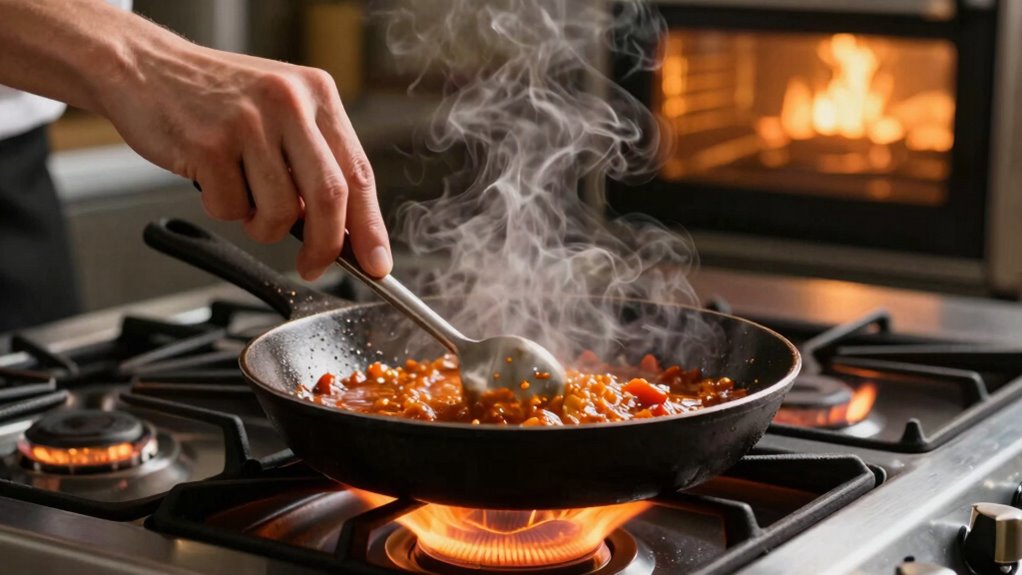
You’ll notice that pan frying relies on conduction, where heat moves directly from the pan to your food, creating even cooking.
In contrast, roasting depends on convection, as hot air circulates around the food to cook it thoroughly.
Understanding these methods helps you choose the right technique for different dishes and results.
Conduction in Pan Frying
Conduction is the primary heat transfer method in pan frying because it involves direct contact between the pan and the food. When you place food in a hot pan, heat conduction occurs through the pan surface, transferring heat directly to your ingredients.
This process ensures quick, even cooking and browning. The quality of heat conduction depends on the pan material—metal pans like copper or cast iron conduct heat better than thinner, less conductive surfaces.
To optimize conduction, make sure your food touches the pan surface fully and isn’t overcrowded. Proper heat conduction allows you to control the temperature effectively, preventing burning or uneven cooking.
- Use a heavy-bottomed pan for better heat conduction
- Keep the pan at a consistent temperature
- Ensure food makes full contact with the pan surface
- Avoid overcrowding to maintain even heat transfer
Convection in Roasting
Convection plays a crucial role in roasting because it involves the transfer of heat through moving hot air or liquids around the food. When you set your oven temperature, the hot air circulates evenly, guaranteeing consistent cooking.
Using a roasting rack helps elevate the food, allowing hot air to reach all sides and promoting even browning. The circulating air transfers heat more efficiently than static methods, making roasting faster and results more uniform.
Adjusting the oven temperature affects the rate of heat transfer, impacting the moisture and tenderness of your roast. Without proper airflow, parts of the food could cook unevenly or burn.
Convection guarantees your roast cooks thoroughly, with a nicely browned exterior and juicy interior, thanks to the efficient heat transfer through moving air.
Common Heat Transfer Mistakes to Avoid in Your Cooking

One of the most common heat transfer mistakes in cooking is using inconsistent or incorrect heat levels, which can lead to uneven cooking or burning. This often results in overcooked meat on the outside while remaining undercooked inside.
Poor heat control causes uneven heat distribution, making it hard to achieve perfect results. To avoid these pitfalls:
Uneven heat distribution hampers perfect results; control heat carefully to achieve consistent cooking.
- Use a thermometer to monitor temperature accurately
- Adjust heat gradually instead of sudden changes
- Preheat pans and ovens properly before cooking
- Avoid overcrowding cookware, which hampers heat flow
Simple Tips to Improve Heat Transfer and Boost Your Cooking Results
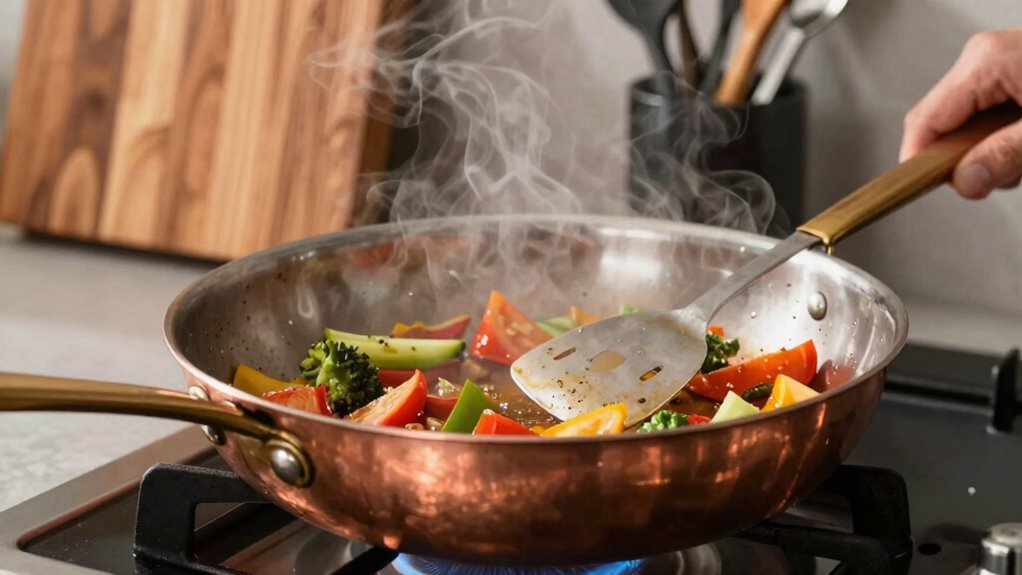
Improving heat transfer in your kitchen can make a noticeable difference in your cooking results. One simple tip is to choose cookware with high heat conductivity, like copper or aluminum, which evenly distributes heat and reduces hot spots.
Also, avoid using cookware with poor thermal insulation, such as thick handles or layered bases, as they can trap heat and slow down transfer.
Preheating your pan properly ensures efficient heat flow from the heat source to your food.
Covering pots and pans helps trap heat, increasing transfer efficiency and cooking speed.
Keep in mind that thin, flat cookware heats more uniformly, boosting overall results.
Understanding Heat Transfer to Master New Recipes and Techniques
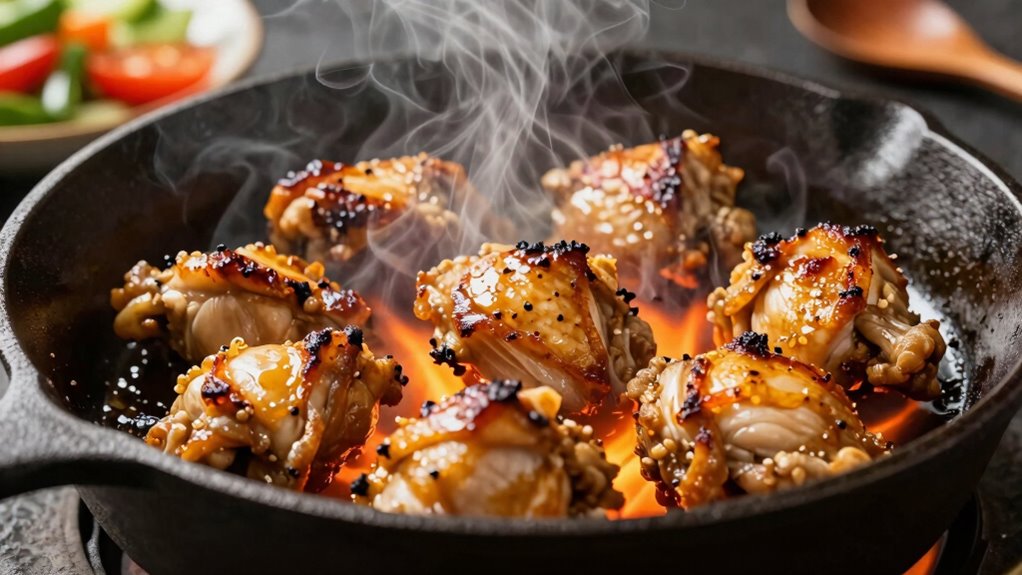
Understanding how heat moves through your cookware is essential for mastering new recipes and techniques. Grasping cooking science and heat dynamics helps you control cooking times and results more precisely.
When you understand how heat transfers—whether conduction, convection, or radiation—you can adapt your methods for better outcomes. For instance, knowing that cast iron heats evenly helps with browning, while non-stick pans require different heat management.
By studying heat transfer, you’ll improve your ability to cook complex dishes confidently.
- Recognize how different materials affect heat conduction
- Adjust heat levels based on transfer methods
- Anticipate how heat spreads during cooking
- Enhance your skills with precise temperature control
Frequently Asked Questions
How Does Altitude Affect Heat Transfer During Cooking?
Altitude effects your cooking because the boiling point drops as you go higher, making water boil at lower temperatures. This slows heat transfer during cooking, so foods take longer to cook thoroughly.
You might need to adjust your techniques, like increasing cooking time or pressure. Knowing this helps you adapt, ensuring your dishes turn out well despite the altitude effects on heat transfer and boiling points.
Can Cold Ingredients Influence Heat Transfer Efficiency?
Cold ingredients can slow down heat transfer during cooking because they absorb heat more slowly. When you add cold ingredients, they draw heat away from the cooking environment, reducing overall efficiency.
This means your dish might take longer to cook evenly. To improve heat absorption, consider warming ingredients slightly or adjusting your cooking temperature.
This way, heat transfer occurs more smoothly, ensuring your food cooks thoroughly and evenly.
What Role Does Humidity Play in Heat Transfer in the Kitchen?
Ever wonder how humidity impacts your cooking? Humidity plays a significant role in heat transfer by affecting moisture transfer between food and heat sources.
Higher humidity levels can slow down evaporation, making it harder for heat to penetrate evenly, while low humidity speeds up moisture loss. This impacts cooking times and texture.
How Do Cookware Materials Impact Heat Transfer Rates?
You should consider that cookware materials markedly impact heat transfer rates through their material conductivity and design.
For example, copper and aluminum have high conductivity, heating quickly and evenly, making them ideal for precise cooking.
Cast iron and stainless steel transfer heat more slowly but retain it longer.
The design, like flat or layered bases, also influences how efficiently heat moves, helping you control cooking temperatures better.
Is Microwave Heating Considered a Form of Radiation Transfer?
Yes, microwave heating is a form of radiation transfer. You’re using microwave radiation, a type of electromagnetic transfer, to heat your food.
When you turn on the microwave, it emits electromagnetic waves that cause water molecules in your food to vibrate rapidly. This vibration generates heat, cooking your food from the inside out.
Conclusion
Understanding heat transfer is key to becoming a better cook. Did you know that even heat distribution can cut cooking time by up to 20%? By mastering conduction, convection, and radiation, you’ll achieve perfect sears, even cooking, and flavorful results every time. Keep experimenting with different techniques and avoid common mistakes. With a little knowledge, you’ll confidently create delicious dishes and elevate your cooking skills to the next level.