
Emotional granularity is your ability to identify and label your feelings with specific words rather than broad terms like “angry” or “upset.” Developing this skill helps you better understand your emotions, leading to improved mental health and healthier relationships. When you’re precise about what you feel, you can regulate your reactions, communicate more clearly, and reduce stress. Keep exploring to discover how enhancing your emotional vocabulary can transform your well-being and connections.
Key Takeaways
- Emotional granularity is the ability to identify and label feelings with specific, nuanced words rather than broad categories.
- Developing emotional granularity improves emotional regulation, resilience, and mental health by fostering better understanding of feelings.
- It enhances communication and relationships by facilitating clearer expression and recognition of emotional states.
- Practicing emotional vocabulary expansion and mindfulness helps increase emotional granularity over time.
- Higher emotional granularity leads to more intentional responses, reducing impulsivity and emotional overwhelm.

QUOKKA 104 Flash Cards for Kids and Adults – Real-Life Large Preschool Flash Cards for Speech Therapy, ABA Therapy, ESL Teaching, Early Childhood Education, Emotions Vocabulary Building Cards
104 EMOTION FLASH CARDS FOR KIDS AND ADULTS: Focused on emotional understanding with real-life photos and bold-font words;…
As an affiliate, we earn on qualifying purchases.
As an affiliate, we earn on qualifying purchases.
Why Struggling to Understand Your Emotions Holds You Back

When you struggle to understand your emotions, it becomes difficult to respond effectively to life’s challenges. Without clear emotional expression, you might react impulsively or withdraw, missing opportunities to connect or solve problems. This lack of clarity also hampers your emotional intelligence—the ability to recognize, understand, and manage your feelings. When you can’t identify what you’re truly experiencing, it’s harder to communicate your needs or set healthy boundaries. Developing emotional granularity allows you to distinguish between different feelings, improving your emotional expression. This refinement helps you navigate situations more skillfully, build stronger connections, and handle stress more effectively, ultimately empowering you to respond with greater awareness and resilience. Recognizing the importance of emotional landscapes can lead to more nuanced and effective responses to various life situations. Building this skill also enhances your capacity to interpret subtle emotional cues, making interactions more meaningful and productive. Understanding the emotional landscape can significantly enhance your overall well-being and interpersonal skills. Cultivating emotional awareness enables you to better manage your reactions and foster healthier relationships. Recognizing the importance of emotional granularity can lead to more nuanced and effective responses to various life situations. Developing this skill further involves training your emotional perception, which can be achieved through mindfulness practices and reflective exercises.

The Emotional Intelligence Journal: A Guided Companion for Building Self-Awareness, Emotional Resilience, and Deeper Connections
As an affiliate, we earn on qualifying purchases.
As an affiliate, we earn on qualifying purchases.
Recognizing Your Current Emotional Vocabulary Level
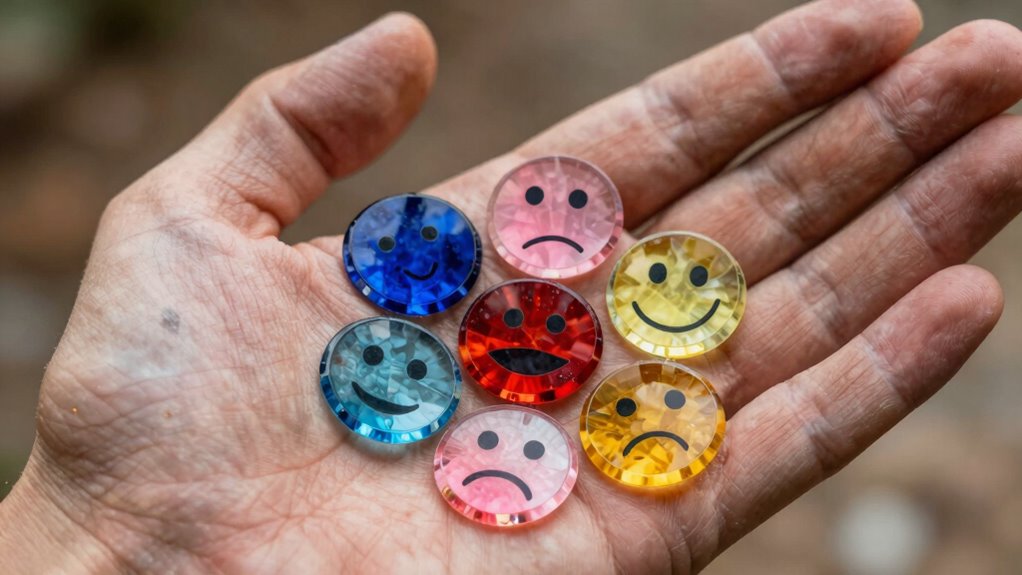
Have you ever stopped to contemplate how many different words you use to describe your feelings? Recognizing your current emotional vocabulary level is essential for developing emotional language. Take a moment to reflect on how precisely you identify your emotions—do you say “upset” or “angry,” or do you have more specific terms like “frustrated” or “resentful”? Evaluating your vocabulary development helps you understand where you stand now. Notice if you find it challenging to pinpoint your feelings or if you rely on broad terms. Being aware of your current emotional language gives you a starting point for expanding your vocabulary. This awareness empowers you to communicate more accurately, which is a critical step toward emotional granularity and better emotional understanding. Recognizing the emotional vocabulary level you are currently operating at allows you to target areas for growth effectively. Additionally, practicing mindful awareness can help you become more attuned to subtle emotional changes throughout your day. Developing a richer emotional lexicon, much like diversifying your investment portfolio in Gold IRA markets, can provide greater clarity and confidence in your emotional life. For example, understanding the different traits identified in 16PF and applying that nuanced vocabulary can deepen your emotional insights and relationships.

Omi The Elephant Meditation & Learning Toy – Mindfulness & Social Emotional Learning for Kids – Calm Down & Emotional Regulation Tool
STOP. BREATHE. RESET – Meet Omi, the fun, cuddly mindfulness elephant that teaches kids deep breathing, emotional regulation…
As an affiliate, we earn on qualifying purchases.
As an affiliate, we earn on qualifying purchases.
What Is Emotional Granularity and How Does It Work?

Emotional granularity refers to your ability to distinguish and label your feelings with specific words. It works through mechanisms that help you notice subtle differences between emotions, making your emotional responses more precise. Understanding how these processes function can improve your emotional awareness and regulation skills.
Defining Emotional Granularity
Understanding emotional granularity involves recognizing how precisely you can identify and label your feelings. It’s about developing emotional language that captures subtle differences between emotions, rather than using broad categories like “happy” or “sad.” With high affective precision, you can distinguish between feelings such as frustration, disappointment, or irritability, which helps you better understand your emotional experiences. This clarity allows you to respond more effectively to situations and manage your emotions more skillfully. Emotional granularity isn’t just about naming feelings; it’s about creating a nuanced vocabulary that reflects the complexity of your emotional world. By refining your emotional language, you enhance your ability to interpret your internal states accurately and foster healthier emotional regulation.
Mechanisms Behind Differentiation
The process of differentiating between emotions relies on your brain’s ability to activate specific neural pathways that encode subtle distinctions in feelings. When you experience an emotion, your brain engages neural pathways responsible for cognitive differentiation, allowing you to distinguish between similar sensations like frustration or disappointment. This activation sharpens your awareness of nuanced emotional states, making them clearer and more precise. Over time, practicing emotional granularity strengthens these neural pathways, enhancing your ability to label and understand your feelings accurately. This mechanism helps you move beyond broad categories like “good” or “bad” to more specific emotions, enabling better emotional regulation. Ultimately, the neural pathways and cognitive differentiation work together to refine your emotional awareness and foster healthier responses.
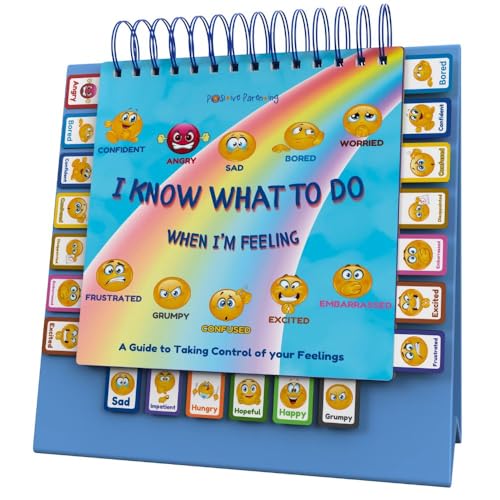
Thought-Spot I Know What to Do Flipbook | Emotions Wheel & Feelings Chart | Emotional Regulation Tool for Home, Class, or Calm Down Corner | Helps Kids Learn Coping Skills | Autism Must-Have
Understand & Express Everyday Feelings: Visually guides children ages 3–5 to recognize and name their emotions. This flipbook…
As an affiliate, we earn on qualifying purchases.
As an affiliate, we earn on qualifying purchases.
Why Emotional Granularity Matters for Your Mental Health
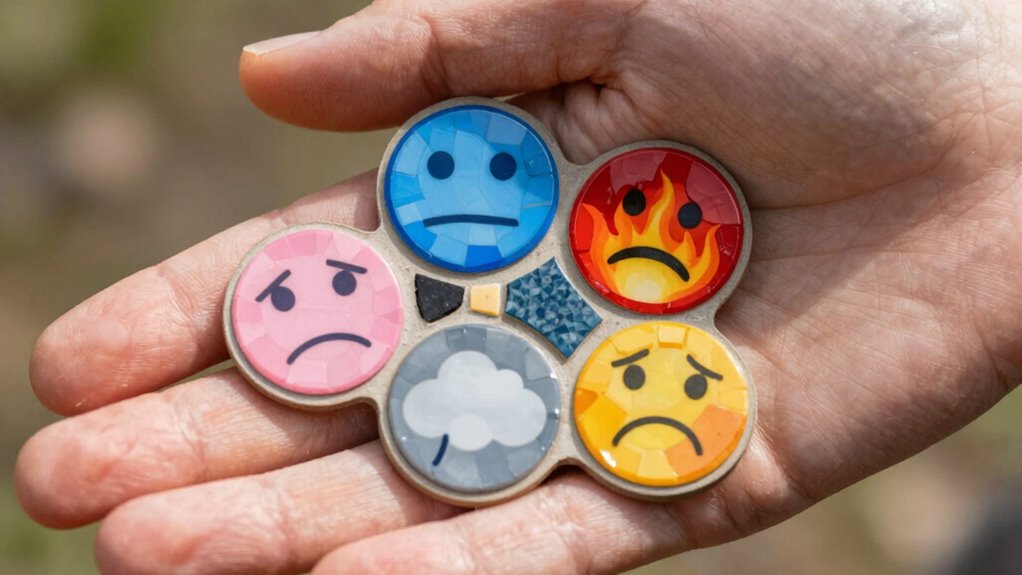
When you can distinguish between subtle differences in your feelings, you gain better control over your mental health. Emotional awareness helps you identify what you’re truly experiencing, rather than feeling overwhelmed by vague emotions. This clarity allows you to respond more thoughtfully instead of reacting impulsively. When you’re precise about your feelings, you can better recognize patterns and triggers that affect your well-being. Enhanced emotional granularity reduces confusion, leading to improved mental clarity. This clarity makes it easier to manage stress, anxiety, and depression since you’re more in tune with your emotional landscape. Developing emotional symbolism can deepen your understanding of your feelings and enhance your emotional vocabulary. Learning to label emotions accurately is a key component of emotional granularity, which further supports emotional regulation. Recognizing emotional triggers can help you develop strategies to cope with difficult feelings more effectively. For example, understanding your net worth fluctuations can help you manage financial stress more efficiently. Building emotional literacy can also improve your ability to communicate your feelings to others, fostering better relationships. Ultimately, developing emotional granularity empowers you to handle your emotions more effectively, fostering resilience and a healthier mental state.
Effective Techniques to Expand Your Emotional Vocabulary

Expanding your emotional vocabulary enhances your ability to pinpoint and articulate subtle feelings, making emotional granularity more accessible. To boost your emotional literacy, start by keeping a feelings journal. Write down daily emotions and look up new words that describe them more precisely. Reading widely, especially literature and psychology books, introduces you to a broader emotional vocabulary. Practice naming your feelings in specific terms rather than general labels like “bad” or “good.” Engage in conversations that encourage emotional sharing, and listen actively for nuanced language others use. Additionally, using apps or flashcards dedicated to emotional words can support vocabulary expansion. Regularly practicing these techniques helps you recognize and label emotions more accurately, strengthening your emotional literacy over time. Developing an understanding of emotional granularity can further improve your communication skills and emotional resilience. Recognizing emotional nuances in different situations can also help you respond more thoughtfully and empathetically in social interactions, especially when you become more aware of the subtle differences between emotions that often go unnoticed. Incorporating digital tools and resources can further enhance your learning process and make expanding your emotional vocabulary more engaging.
How Mindfulness Can Help You Become More Emotionally Aware

Practicing mindfulness sharpens your ability to notice your emotions as they happen, making you more aware of subtle feelings. By paying close attention to the present moment, you can recognize emotional nuances that often go unnoticed. This home-care technique enables you to better understand your emotions more clearly and respond thoughtfully. When you develop emotional awareness, you can better distinguish between different feelings and their underlying causes, leading to more intentional responses. Developing this skill can also improve your overall emotional granularity, allowing for a richer understanding of your emotional landscape. For example, research indicates that sound vibrations are believed to enhance cellular regeneration and overall health, which can contribute to emotional resilience. As you increase your cognitive clarity, you can make decisions with greater confidence and less confusion.
Mindfulness Enhances Awareness
Mindfulness sharpens your ability to recognize and understand your emotions as they arise. When you practice mindfulness, you improve your emotional literacy—your capacity to identify and label your feelings accurately. This heightened awareness allows you to notice subtle emotional shifts you might normally overlook. Using self-awareness techniques, such as paying close attention to your breath or bodily sensations, helps you stay present with your emotions without judgment. As a result, you become more attuned to what you’re experiencing in the moment, fostering a clearer understanding of your emotional landscape. This increased awareness lays a strong foundation for developing emotional granularity, enabling you to distinguish between similar feelings and respond more effectively to your emotional states.
Recognize Emotional Nuances
By sharpening your awareness through mindfulness, you can begin to notice the subtle differences between similar emotions. Developing a richer emotional vocabulary allows you to label nuanced feelings more accurately, rather than relying on broad categories like “happy” or “angry.” As you pay closer attention, you’ll see that emotions often have layers—feeling disappointed versus frustrated, or anxious versus overwhelmed. Recognizing these distinctions helps you understand your internal experiences better, making your emotional responses more precise. Mindfulness encourages you to slow down and observe your feelings without judgment, creating space for greater emotional awareness. Over time, this practice enhances your ability to identify and differentiate nuanced feelings, leading to improved emotional regulation and more authentic connections with others.
Practice Present Moment
When you focus on the present moment, you become more aware of your emotional experiences as they unfold. Practicing mindful breathing helps anchor your attention, keeping you grounded in the here and now. By cultivating present awareness, you notice subtle shifts in your feelings without judgment or distraction. This mindfulness allows you to observe emotions as they arise, rather than reacting impulsively. Regularly pausing to breathe mindfully creates space between stimulus and response, enhancing your emotional clarity. Over time, this practice deepens your understanding of your emotional landscape, making it easier to identify and label feelings accurately. Embracing the present moment empowers you to respond thoughtfully, fostering greater emotional intelligence and resilience.
How Can Emotional Granularity Help You Manage Stress and Anxiety?
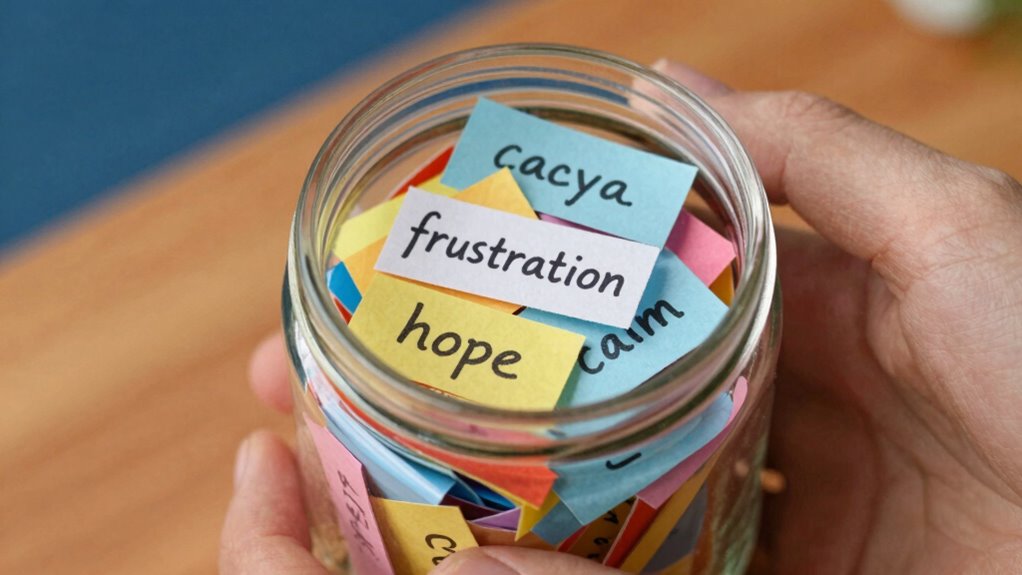
Have you ever noticed how labeling your emotions more precisely can make a difference during stressful moments? When you identify whether you’re feeling frustrated, overwhelmed, or anxious, it becomes easier to express those emotions clearly. This improved emotional expression helps you avoid bottling up feelings or reacting impulsively. Emotional granularity also enhances mood regulation, allowing you to adjust your reactions more effectively. Instead of simply feeling “bad,” recognizing specific feelings gives you tools to address them directly—like taking deep breaths when you’re anxious or seeking support when you’re sad. Over time, this precise understanding reduces the intensity of stress and anxiety, empowering you to stay calmer and more in control during challenging situations.
Real-Life Examples of How Emotional Vocabulary Improves Your Life
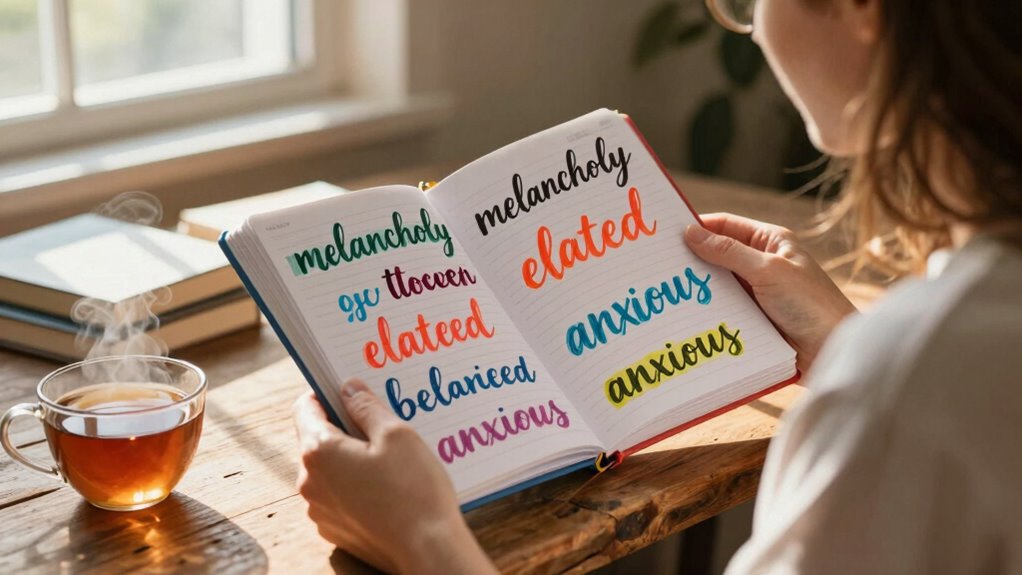
Using precise emotional words helps you express your feelings clearly, reducing misunderstandings. It also boosts your awareness of your emotions, making it easier to manage them effectively. When you choose your words carefully, resolving conflicts becomes smoother and more constructive.
Express Feelings Clearly
Clearly expressing your feelings can transform how you communicate and resolve conflicts. When you use precise emotional vocabulary, you gain feeling clarity, making it easier for others to understand your needs. For example:
- Instead of saying you’re “upset,” say you’re “frustrated” because of unmet expectations.
- Replace “angry” with “resentful” to specify lingering hurt.
- Swap “happy” for “excited” to convey a sense of enthusiastic anticipation.
Enhance Emotional Awareness
When you expand your emotional vocabulary, you become more aware of your feelings and how they influence your actions. This heightened awareness allows you to recognize subtle emotional shifts, making it easier to respond thoughtfully rather than react impulsively. Incorporating awareness exercises, like journaling or mindfulness, helps reinforce this understanding. For example, instead of just feeling “bad,” you might identify it as “disappointed” or “overwhelmed,” providing clarity. With a richer emotional vocabulary, you’re better equipped to understand your reactions and communicate them effectively. Over time, this improves your emotional awareness, leading to healthier relationships and better decision-making. Developing your emotional vocabulary isn’t just about labels; it’s about cultivating a deeper understanding of your inner world.
Improve Conflict Resolution
A richer emotional vocabulary can profoundly improve how you handle conflicts by helping you articulate your feelings more accurately and understand others better. By practicing emotional labeling, you can identify your emotions clearly, preventing misunderstandings. This skill also fosters empathy development, allowing you to see things from the other person’s perspective. For example:
- Instead of saying, “I’m angry,” you might say, “I’m frustrated because I feel unheard.”
- Recognizing subtle emotions like disappointment helps you respond calmly instead of reacting impulsively.
- When you label your feelings precisely, others feel acknowledged, making it easier to find common ground.
This approach reduces defensiveness, promotes open dialogue, and helps resolve conflicts more effectively. Developing emotional vocabulary isn’t just about self-awareness—it’s a powerful tool for better relationships.
Overcoming Obstacles in Developing Emotional Nuance

Developing emotional nuance often presents obstacles because it requires you to recognize and differentiate subtle feelings, which can be difficult amidst strong or conflicting emotions. One challenge is that intense emotions often overshadow finer emotional details, making it hard to use precise emotional language. To improve nuance development, you need to pause and reflect on your feelings, even when they feel overwhelming. Practice labeling emotions accurately, starting with basic ones and gradually adding complexity. Avoid the trap of black-and-white thinking, which limits emotional awareness. Instead, focus on subtle distinctions, such as feeling disappointed rather than just upset. Overcoming these obstacles involves patience and conscious effort, but with consistent practice, you’ll become more skillful at identifying and expressing nuanced emotions, enriching your emotional understanding.
Final Tips for Maintaining and Growing Your Emotional Awareness

To maintain and grow your emotional awareness, cultivating consistent reflection and practice is essential to making it a regular part of your routine. Building your emotional vocabulary through awareness exercises helps you identify and articulate your feelings more precisely. Here are some final tips:
- Dedicate a few minutes daily to awareness exercises, noting your emotions and their intensities.
- Expand your emotional vocabulary by learning new words to describe subtle feelings.
- Practice mindfulness to stay present and observe your emotions without judgment.
Regularly engaging in these activities strengthens your emotional granularity, making it easier to navigate complex feelings. Over time, you’ll develop greater emotional nuance, enhancing your self-awareness and improving your relationships. Consistent effort guarantees emotional growth becomes a natural, beneficial habit.
Frequently Asked Questions
How Can I Start Improving My Emotional Vocabulary Today?
To improve your emotional vocabulary today, start with emotion labeling during daily reflection. Pay close attention to how you feel in different situations, and try to identify specific emotions rather than broad categories like “bad” or “good.” Write them down to reinforce your understanding. Over time, this practice helps you recognize subtle feelings, making it easier to communicate and manage your emotions effectively.
Does Increasing Emotional Granularity Reduce Emotional Confusion?
Yes, increasing emotional granularity can reduce emotional confusion. Studies show people with better emotion identification and emotional differentiation report feeling more confident and less overwhelmed. When you recognize specific emotions instead of broad feelings like “bad,” you gain clarity, making it easier to handle your responses. Improving your emotional vocabulary helps you distinguish between similar emotions, leading to more precise reactions and less confusion during emotional experiences.
Can Emotional Granularity Help in Resolving Conflicts Better?
Yes, emotional granularity can considerably improve your conflict resolution skills. When you develop emotional awareness, you become better at identifying and understanding your feelings and those of others. This precision allows you to address conflicts more effectively, as you’re less likely to misinterpret emotions or react impulsively. By recognizing subtle emotional differences, you foster empathy and clarity, making it easier to find constructive solutions and maintain healthier relationships.
Is There a Link Between Emotional Vocabulary and Emotional Intelligence?
There’s strong evidence linking emotional vocabulary with emotional intelligence. When you expand your emotional language and develop your vocabulary, you become more aware of your feelings and better at understanding others’. This heightened awareness helps you manage emotions more effectively and navigate social situations with sensitivity. So, by enriching your emotional vocabulary, you’re fundamentally boosting your emotional intelligence, making you more empathetic, self-aware, and emotionally resilient.
How Long Does It Take to See Benefits From Expanding Emotional Awareness?
You can start noticing benefits from expanding your emotional awareness within a few weeks to a few months, depending on your commitment. Your emotional development accelerates as you practice identifying and labeling emotions more precisely, which improves your responses and relationships. While everyone’s awareness timeline varies, staying consistent with mindfulness and reflection helps you build emotional granularity faster, leading to greater emotional intelligence over time.
Conclusion
By mastering emotional granularity, you access a superpower that transforms your entire life. Suddenly, you’re not just feeling sad or angry—you’re experiencing a rich palette of nuanced emotions that give you clarity, control, and unstoppable resilience. It’s like upgrading from a dull, monochrome world to a vibrant, high-definition masterpiece. Embrace this skill fiercely, and watch as your mental health skyrockets, stress melts away, and your emotional intelligence becomes unstoppable—changing your life forever.