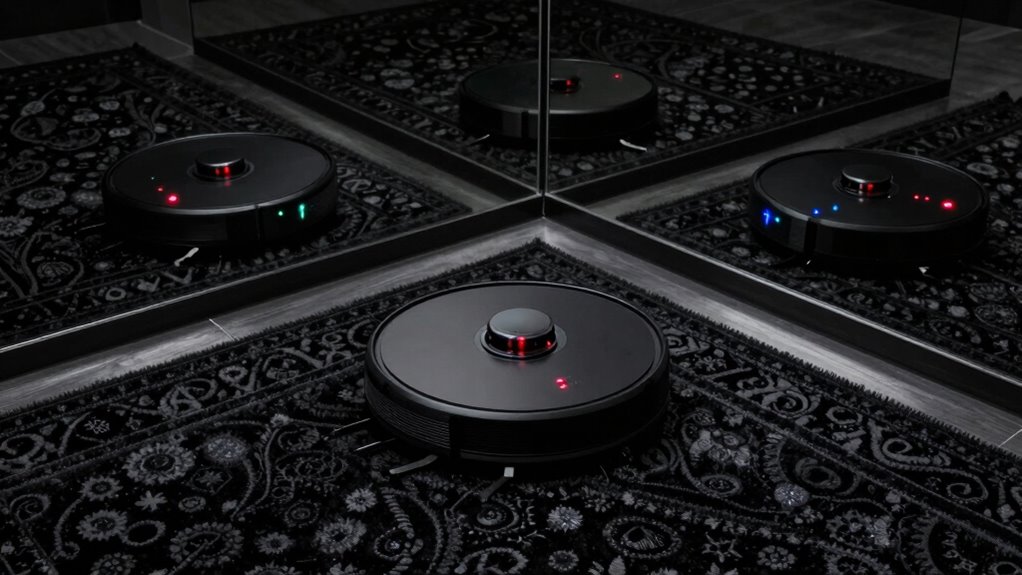

Robot vacuums get confused by dark rugs and mirrors because their sensors struggle to interpret these surfaces properly. Dark rugs reflect signals differently, causing the sensors to mistake them for obstacles or drop-offs, which makes the vacuum pause or change direction. Mirrors can create false signals or reflections, leading to navigation errors. Maintaining and calibrating your sensors can help, and if you keep exploring, you’ll discover more tips to improve your vacuum’s performance.

Prime made for students and young adults
- Fast, free delivery for dorm and study essentials
- Prime Video and Amazon Music included
- Member-only deals
Key Takeaways
- Dark rugs and mirrors reflect or absorb sensor signals, causing navigation sensors to misinterpret obstacles.
- Sensors struggle to differentiate dark surfaces from drops or obstacles, leading to avoidance behavior.
- Sensor interference from dark surfaces results in false obstacle detection, disrupting the robot’s path.
- Lack of surface detail on dark rugs or mirrors hampers accurate environmental mapping.
- Proper sensor calibration and maintenance can improve navigation over dark or reflective surfaces.
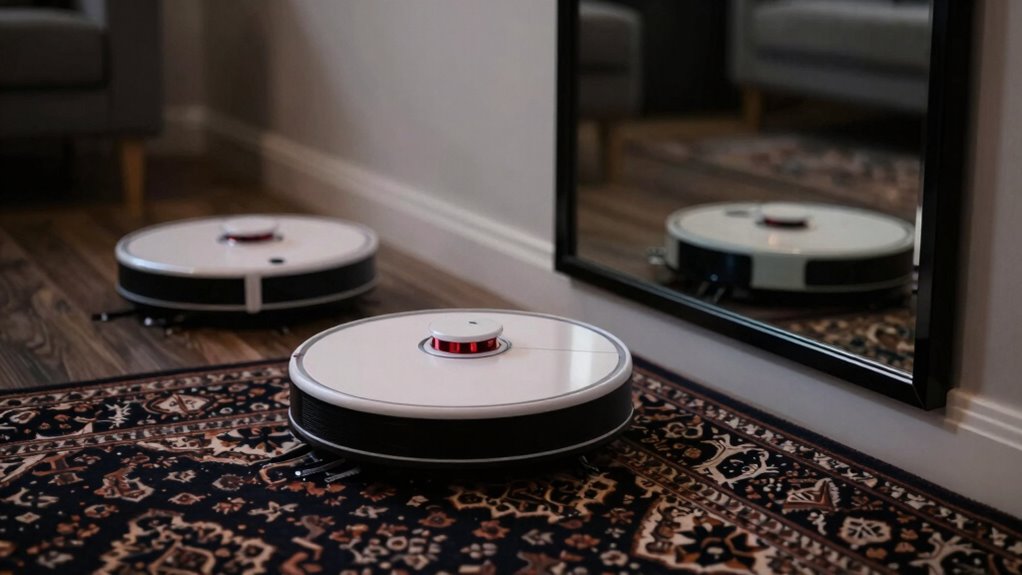
Many robot vacuums struggle to clean effectively when they encounter dark rugs or mirrors, often mistaking these surfaces for obstacles or drop-offs. This confusion happens because their navigation algorithms rely heavily on sensors to interpret the environment, and dark surfaces can interfere with these signals. When your vacuum encounters a mirror or a dark rug, its sensors may interpret the reflection or lack of surface detail as a ledge or an abyss, causing it to pause or change direction unexpectedly. This is frustrating because it leaves parts of your floor uncleaned and can make the cleaning process take longer than necessary.
Many robot vacuums struggle with dark surfaces, mistaking them for obstacles or drop-offs, which hampers cleaning efficiency.
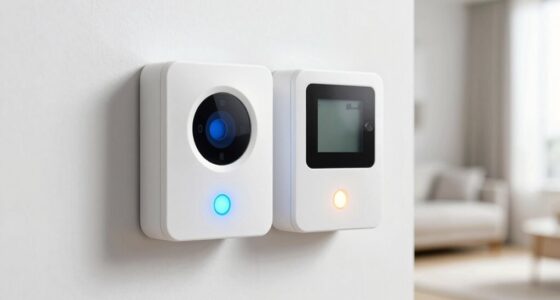
The core of this problem lies in how your robot’s navigation algorithms process sensor data. Typically, these algorithms depend on infrared or laser sensors to map out a room and detect obstacles. When the sensors send signals toward dark surfaces, they may fail to bounce back properly, giving the vacuum false information about the environment. This can result in the vacuum avoiding areas with dark rugs or mirrors altogether. Improving this issue starts with sensor calibration, which involves fine-tuning the sensors so they interpret reflected signals more accurately. When sensors are calibrated correctly, they are less likely to be fooled by dark surfaces, allowing your robot to distinguish between actual obstacles and reflective or dark areas.
Despite advances in navigation algorithms, many models still struggle with these surfaces because they haven’t been optimized for such scenarios. Some high-end models incorporate advanced navigation algorithms that adapt to different lighting conditions and surface types, reducing the chances of confusion. However, even these models benefit from proper sensor calibration. Regularly calibrating your robot’s sensors ensures they work as intended, especially when encountering problematic surfaces. Calibration can involve updating firmware, cleaning sensor lenses, or running specific calibration routines recommended by the manufacturer. Proper sensor maintenance can significantly enhance the accuracy of sensor data and improve navigation performance.
To further improve navigation, some models incorporate sensor calibration techniques that help adapt to various surface types and lighting conditions, making them more versatile in different environments. Ultimately, the key to preventing your robot vacuum from getting confused by dark rugs and mirrors is guaranteeing that its navigation system is well-calibrated and that its algorithms are sophisticated enough to interpret sensor data accurately. If your vacuum keeps hesitating or avoiding certain areas, it might be time to check for calibration issues or consider upgrading to a model with more advanced navigation algorithms. By understanding how these systems work and maintaining them properly, you can help your robot navigate your home more efficiently, ensuring every corner gets cleaned without unnecessary stops or missed spots.
robot vacuum sensor calibration kit
As an affiliate, we earn on qualifying purchases.
As an affiliate, we earn on qualifying purchases.
Frequently Asked Questions
Do Robot Vacuums Recognize Different Types of Flooring?
Yes, robot vacuums recognize different types of flooring through sensor calibration and carpet detection. They use sensors to distinguish between hard floors and carpets, adjusting their suction power accordingly. However, dark rugs and mirrors can confuse these sensors, causing the vacuum to misidentify surfaces. Proper sensor calibration improves their ability to navigate various flooring types, but reflective surfaces and dark colors may still pose challenges for accurate recognition.
Can Lighting Conditions Affect Robot Vacuum Navigation?
Yes, lighting conditions can affect your robot vacuum’s navigation. Lighting interference, such as overly bright or dim areas, can cause shadow effects that confuse sensors, making it harder for the vacuum to detect obstacles or the floor surface accurately. This may lead to missed spots or accidental bumps. To improve performance, guarantee consistent lighting and avoid placing strong light sources near the vacuum’s sensors.
Are There Specific Brands Better at Handling Dark Rugs?
Some brands excel at handling dark rugs, with advanced sensors for dark rug detection and better mirror recognition challenges. You’ll find brands like iRobot Roomba and Roborock often outperform others, thanks to their improved navigation systems and infrared sensors. These vacuums adapt better to dark surfaces and recognize mirrors more accurately. Choosing a model with these features helps reduce confusion, ensuring your cleaning is thorough without getting stuck or missing spots.
How Do Robot Vacuums Detect Obstacles Like Mirrors?
Robot vacuums detect mirrors through sensor calibration that helps distinguish reflective surfaces from obstacles. They use a combination of optical sensors, infrared, and ultrasonic sensors for obstacle avoidance. When the sensors pick up a highly reflective surface like a mirror, the vacuum adjusts its path to prevent confusion or collision. Regularly calibrating sensors guarantees better obstacle detection, especially around mirrors, so your robot can navigate smoothly without getting stuck or confused.
Can Software Updates Improve Vacuum Navigation Accuracy?
Imagine upgrading your phone’s GPS; software updates do the same for robot vacuums. They improve navigation accuracy by refining sensor calibration and enhancing mapping algorithms. I once saw a vacuum suddenly navigate around a dark rug after an update—like it found a new map. Regular updates guarantee your robot learns your space better, avoiding obstacles and cleaning efficiently. So, yes, software updates can markedly boost your vacuum’s performance.
As an affiliate, we earn on qualifying purchases.
Conclusion
Understanding why robot vacuums struggle with dark rugs and mirrors helps you troubleshoot and improve their performance. Did you know that over 30% of users report navigation issues caused by reflective surfaces or dark mats? By adjusting your cleaning area or using mapping features, you can minimize confusion and keep your floors spotless. With a little awareness, you’ll guarantee your robot vacuum works efficiently, avoiding those frustrating blind spots and maximizing its cleaning power.
robot vacuum mirror reflection avoidance
As an affiliate, we earn on qualifying purchases.
As an affiliate, we earn on qualifying purchases.
As an affiliate, we earn on qualifying purchases.
Fall Picks
fall essentials
As an affiliate, we earn on qualifying purchases.