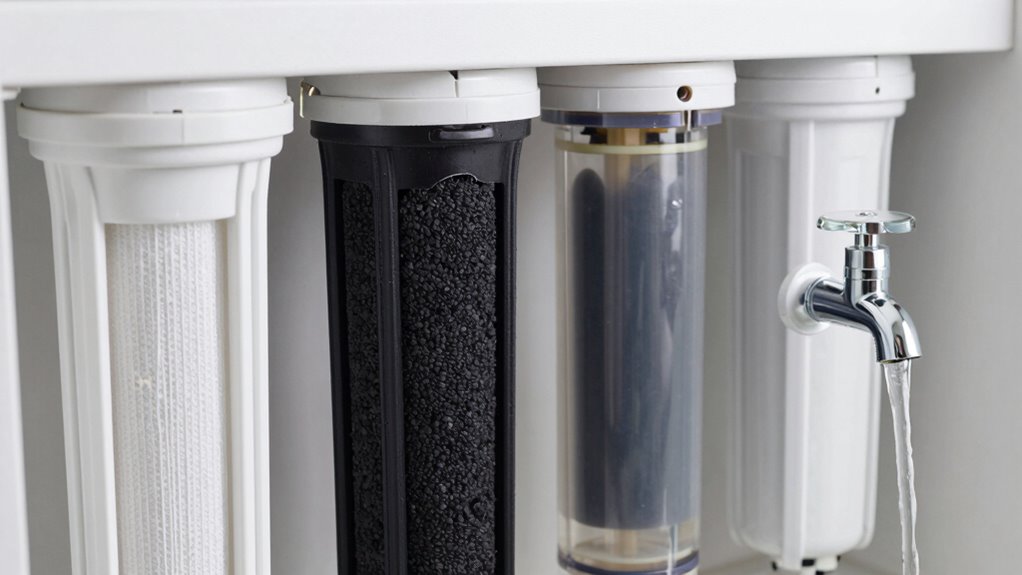

In a reverse osmosis system, water first passes through a sediment filter that traps dirt and debris, protecting the next stage. Then, a carbon filter removes chlorine, organic chemicals, and odors to improve taste and protect the membrane. The water is then pushed through a semi-permeable membrane that removes most dissolved contaminants, including heavy metals and bacteria. Some systems add mineral filters afterwards to enhance flavor and pH. Understanding each stage helps you see how clean, healthy water is produced—if you continue, you’ll discover more details about each step.
Key Takeaways
- Sediment filters remove large particles like dirt and rust, protecting downstream components.
- Carbon filters eliminate chlorine, chloramine, and organic compounds, improving taste and protecting the membrane.
- The reverse osmosis membrane filters out bacteria, viruses, heavy metals, and dissolved solids for safe drinking water.
- Post-filters and remineralization add beneficial minerals and improve water flavor and pH balance.
- The entire system relies on high pressure to push water through each stage, ensuring clean, mineral-balanced water.
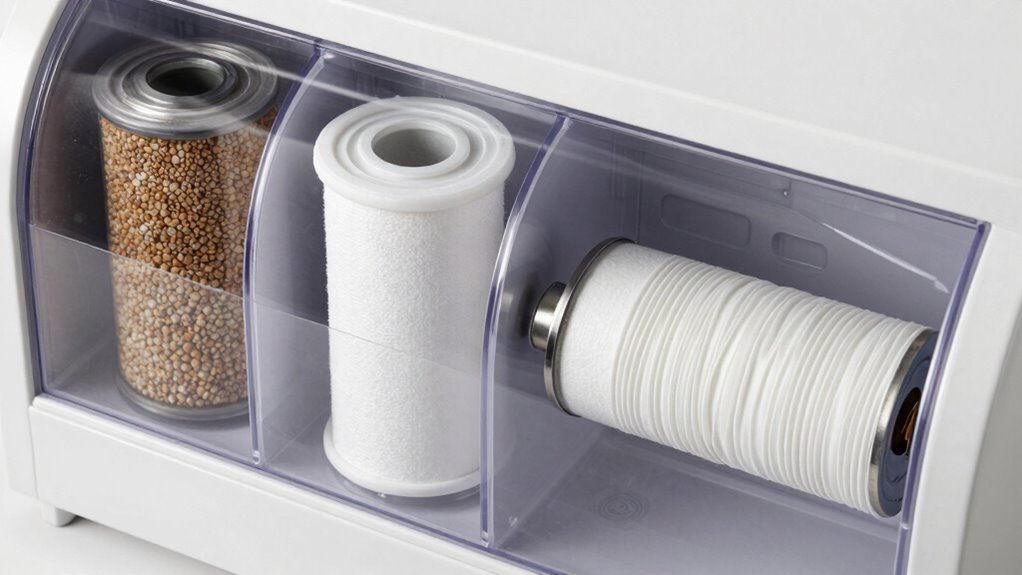
Are you curious about how reverse osmosis effectively purifies water? It all begins with membrane filtration, a process that plays a crucial role in removing contaminants. When water passes through the semi-permeable membrane, impurities like bacteria, viruses, heavy metals, and dissolved solids are rejected. This thin membrane acts like a sieve, allowing only clean water molecules to squeeze through while blocking unwanted particles. Because of this, reverse osmosis systems are renowned for their ability to produce pure, safe drinking water. But don’t think that the process strips away everything, including beneficial minerals. Many modern systems incorporate mineral enhancement stages, which add back essential minerals like calcium and magnesium after filtration. This means you get not just purified water but also water that retains some of its natural minerals, improving taste and health benefits. The first stage often involves a sediment filter that captures larger particles such as dirt, sand, and rust, preventing them from clogging the subsequent filters and membrane. Following this, a carbon filter usually comes into play, removing chlorine, chloramine, and organic compounds that could damage the membrane or affect water taste. Once these contaminants are eliminated, the water reaches the heart of the system: the reverse osmosis membrane. This stage is essential because it guarantees that the majority of dissolved solids, heavy metals, and microorganisms are effectively removed, giving you high-quality drinking water. After passing through the membrane, the water is stored in a clean tank until needed. Before dispensing, some systems include a remineralization filter, where beneficial minerals are added back to improve flavor and pH balance. This step is especially important if you prefer water that’s not only pure but also healthful and palatable. It’s worth noting that the entire process relies on high pressure to push water through the membrane, overcoming natural osmotic pressure and guaranteeing contaminants are left behind. This pressure-driven membrane filtration makes reverse osmosis a highly effective and reliable method for water purification. Additionally, understanding the importance of membrane filtration helps explain why reverse osmosis systems are so effective at removing a wide range of impurities. As you can see, each stage in a reverse osmosis system has a specific purpose, working together to produce water that’s safe, tasty, and mineral-balanced. From initial sediment removal to final mineral enhancement, these steps ensure that you get the best quality water possible. Understanding how each filter functions helps you appreciate the complexity behind clean drinking water and why reverse osmosis systems are so effective at providing it.
Top picks for "reverse osmosi stag"
Open Amazon search results for this keyword.
As an affiliate, we earn on qualifying purchases.
Frequently Asked Questions
How Often Should I Replace Each Reverse Osmosis Filter?
You should replace your reverse osmosis filters based on their filter lifespan, typically every 6 to 12 months, depending on your water quality and usage. Follow the maintenance schedule recommended by your system’s manufacturer to guarantee peak performance. Regular filter changes prevent buildup and maintain water purity. Keep an eye on water taste and flow rate as signs it’s time for replacements, ensuring your system continues to work efficiently.
Can I Skip Any Stages in the Reverse Osmosis Process?
You can’t skip any stages in the reverse osmosis process without risking catastrophic water quality failure. Bypassing a stage creates a filtration void, like leaving a critical filter out of a multi-layered defense system. Each stage adds essential redundancy, ensuring purified water free of contaminants. Skipping a stage compromises this safety net, making your water supply vulnerable to impurities, so stick to every step for safe, clean drinking water.
What Minerals Are Added Back After Filtration?
After filtration, mineral readdition or water remineralization typically adds back essential minerals like calcium, magnesium, and trace elements. These minerals improve water taste, enhance health benefits, and balance pH levels. You might choose a remineralization filter or add mineral drops manually. This process guarantees your water isn’t too pure and supports better hydration and mineral intake, making it more enjoyable and beneficial for your overall health.
How Does Temperature Affect Reverse Osmosis Efficiency?
Temperature impact profoundly influences reverse osmosis filtration efficiency. When the water temperature is higher, your system works more effectively because the increased temperature reduces water viscosity, allowing for faster flow and better filtration. Conversely, colder water increases viscosity, slows down flow rates, and decreases filtration efficiency. To maintain peak performance, you should guarantee your system operates with water within the recommended temperature range, usually between 45°F and 85°F.
Is Reverse Osmosis Effective Against Viruses?
Think of reverse osmosis as a mighty gatekeeper, blocking out even the tiniest intruders. It’s highly effective against viruses, providing impressive viral removal through its dense membrane. You can count on its filtration effectiveness to keep your water safe, as it filters out harmful microorganisms, including viruses. So, yes, reverse osmosis is a reliable method to protect your water from viral contamination, giving you peace of mind with every sip.
Conclusion
Understanding each reverse osmosis stage helps you appreciate how effectively it purifies your water. Did you know that RO systems can remove up to 99% of contaminants? This high efficiency means you’re drinking cleaner, safer water every day. By recognizing the role of each filter, you can better maintain your system and guarantee ideal performance. Ultimately, investing in proper filtration keeps your water pure and your health protected.