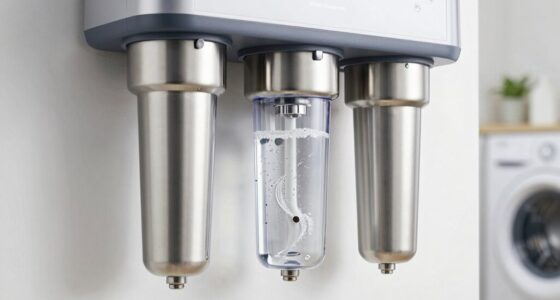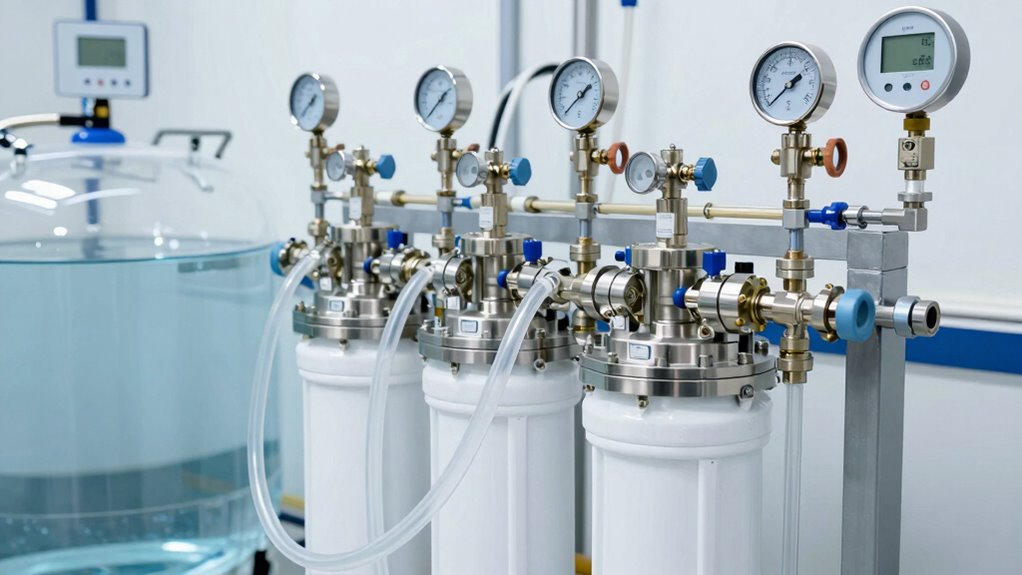

Reverse osmosis systems use multiple filtration stages to remove a wide range of impurities from your water. First, they filter out dirt, sand, and rust. Then, advanced filters remove chemicals like chlorine and chloramine. The main process forces water through a fine membrane that blocks dissolved solids such as salts, metals, and organic molecules. This technology guarantees safer, cleaner water. If you keep exploring, you’ll discover how this process works in detail and its many benefits.

Get school and study supplies delivered free — and shop member deals
- Fast, free delivery on millions of items
- Access to Prime Big Deal Days deals on October 6–7
- Prime Video, Amazon Music and more included
Key Takeaways
- Reverse osmosis uses a fine membrane to physically block dissolved solids like salts, heavy metals, and organic molecules.
- The process involves multiple filtration stages, removing large particles, chemicals, and microscopic contaminants.
- It operates as a pressure-driven system that ensures only purified water reaches the tap.
- Suitable for various water sources, it effectively removes contaminants like lead, arsenic, pesticides, and bacteria.
- The technology provides a higher level of water purity compared to traditional filtration methods.
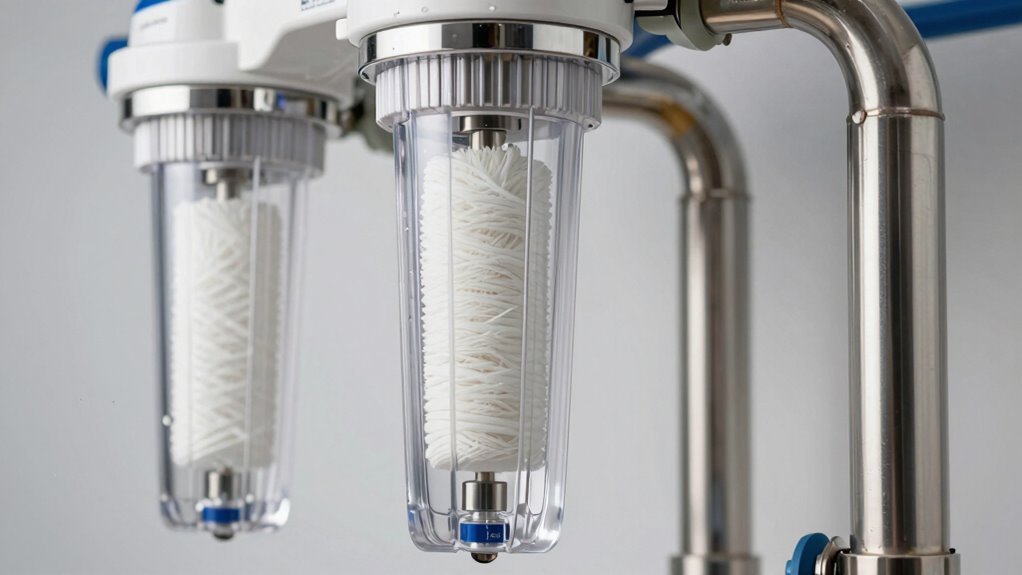
The filtration technology in reverse osmosis systems is designed to target a wide range of impurities. As water passes through multiple stages of filtration, larger particles like dirt, sand, and rust are eliminated first. Next, the water encounters more advanced filters that remove chlorine, chloramine, and other chemicals that can affect taste and odor. The key stage, however, is the membrane that performs the reverse osmosis process itself. This membrane is fine enough to block most dissolved solids, such as salts, heavy metals, and organic molecules, which often compromise water quality. By pushing water through this membrane under pressure, the system effectively separates contaminants and guarantees that only clean, pure water reaches your tap.
Reverse osmosis membranes filter out salts, heavy metals, and organic molecules, ensuring clean, pure water.
You might wonder why such a detailed filtration process matters. The answer lies in the importance of water quality. Contaminants like lead, arsenic, pesticides, or bacteria can pose health risks if ingested over time. Reverse osmosis systems help reduce these hazards by physically removing these dangerous substances. This kind of filtration technology provides a level of purity that’s difficult to achieve with traditional filtration methods, making it a reliable choice for clean drinking water. Additionally, understanding the role of dissolved solids in water quality underscores why reverse osmosis is so effective at improving drinking water safety.
Understanding the mechanics behind reverse osmosis also helps you appreciate its role in maintaining water quality in various settings. Whether you’re concerned about municipal water safety or sourcing well water, the technology adapts well to different levels of contamination. It’s not just about removing visible impurities but also about tackling microscopic pollutants that can’t be seen but impact your health and taste. Recognizing the importance of effective filtration can guide you in selecting the right system for your needs. Moreover, the pressure-driven process is what enables the membrane to efficiently separate contaminants from the water, ensuring optimal performance. Knowing how contaminant removal occurs can further inform your decision-making process when choosing a water treatment solution. Understanding water contaminant types can help you identify which system best addresses your specific concerns.
In essence, reverse osmosis systems leverage advanced filtration technology to profoundly improve water quality. They do so by systematically removing a broad spectrum of impurities, ensuring that the water you consume is safer, cleaner, and more enjoyable. Knowing how these systems operate allows you to make informed decisions about your water treatment options, emphasizing the importance of effective filtration in maintaining your health and well-being.
reverse osmosis water filter system
As an affiliate, we earn on qualifying purchases.
As an affiliate, we earn on qualifying purchases.
Frequently Asked Questions
How Often Should I Replace the Reverse Osmosis Membrane?
You should replace the reverse osmosis membrane every 2 to 3 years, depending on the membrane’s lifespan and your water quality. Regularly check your system’s performance; if you notice a drop in water flow or quality, it’s time for a replacement. The replacement frequency varies based on usage and water conditions, so stay attentive to any signs that indicate your membrane is reaching the end of its effective life.
Does Reverse Osmosis Remove Beneficial Minerals From Water?
You might worry that reverse osmosis (RO) removes beneficial minerals from water, but it actually retains some mineral content, depending on your system. While RO primarily filters out contaminants, it can reduce mineral levels, leading to concerns about water enrichment. To overcome this, you can add a mineral cartridge or supplement your water, ensuring you keep essential minerals like calcium and magnesium, which support your health and taste.
Can Reverse Osmosis Systems Be Used for Well Water?
Yes, you can use reverse osmosis systems for well water. They’re effective for well water filtration because they remove a wide range of contaminants, including bacteria, heavy metals, and chemicals. You’ll get cleaner, safer water by employing reverse osmosis for your well, ensuring contaminant removal while improving taste. Just make sure your system is properly maintained and suited for the specific impurities found in your well water.
What Maintenance Is Required for a Reverse Osmosis System?
You need to regularly change the pre-filters and post-filters to maintain filtration efficiency and guarantee your system lasts longer. Additionally, clean the membrane periodically to prevent buildup. Check for leaks and replace parts as recommended by the manufacturer. These simple steps help your reverse osmosis system operate at its best, providing clean water and extending its longevity. Staying on top of maintenance keeps your investment working effectively for years to come.
Is Reverse Osmosis Effective Against Viruses and Bacteria?
Yes, reverse osmosis is effective against viruses and bacteria. It provides virus filtration and bacterial removal by forcing water through a semi-permeable membrane that blocks pathogens. This process considerably reduces the presence of harmful microorganisms, making your drinking water safer. Keep in mind, proper maintenance guarantees the system stays efficient for virus filtration and bacterial removal, so regularly replacing filters is essential for peak performance.
under sink reverse osmosis purifier
As an affiliate, we earn on qualifying purchases.
As an affiliate, we earn on qualifying purchases.
Conclusion
So, next time you enjoy perfectly filtered water, remember—it’s all thanks to reverse osmosis. Ironically, this high-tech process that’s so essential for clean drinking water often flies under the radar, overshadowed by flashy filters and gimmicks. Yet, it quietly does the heavy lifting, proving that sometimes, the simplest, most efficient technology isn’t about bells and whistles but about doing the job right—without the sales pitch. Cheers to the unsung hero of your tap.
As an affiliate, we earn on qualifying purchases.
whole house reverse osmosis system
As an affiliate, we earn on qualifying purchases.
As an affiliate, we earn on qualifying purchases.
Fall Picks
fall essentials
As an affiliate, we earn on qualifying purchases.