
Proper salt timing is crucial because it influences how flavors develop, how ingredients tenderize, and the overall balance of your dish. Adding salt early helps deepen flavors and retain moisture, while timing it later can brighten and sharpen the taste. Mistakes like over- or under-salting often happen when you don’t consider what stage of cooking you’re at. Keep experimenting with these techniques, and you’ll discover how perfect seasoning transforms your cooking every time.
Key Takeaways
- Salt timing influences flavor depth, texture, and moisture retention, enhancing overall dish quality.
- Early salt addition promotes ingredient penetration and tenderization, creating a richer flavor base.
- Mid-stage salting ensures even seasoning, balancing flavors throughout the cooking process.
- Late or finishing salt adds brightness, texture, and a punch of flavor just before serving.
- Proper salt timing prevents over- or under-seasoning, ensuring a well-balanced, flavorful dish.
Why Salt Timing Is Key to Better Flavor
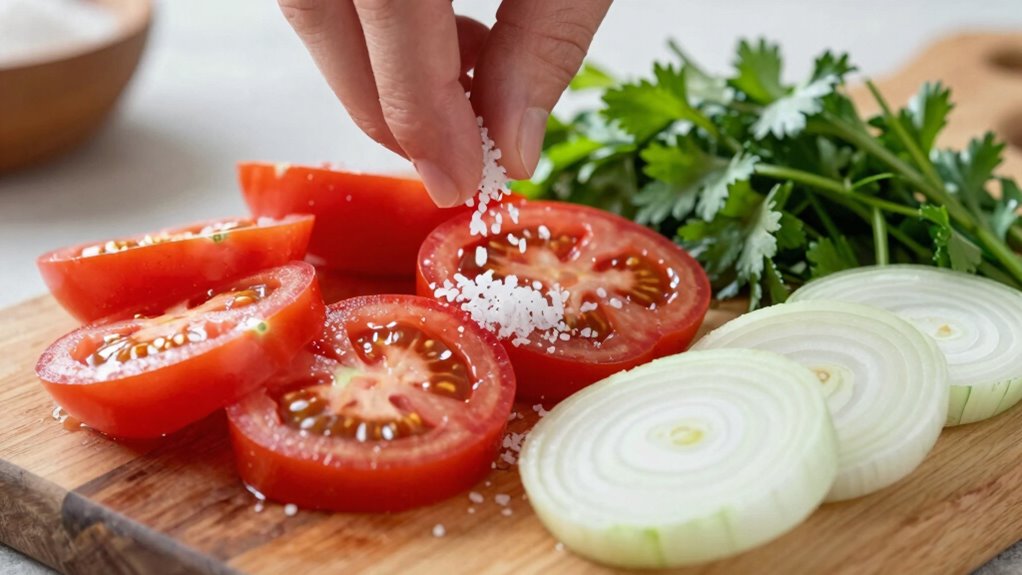
Timing your salt addition is essential because it directly impacts how flavors develop in your dish. When you add salt at different stages, it influences the overall taste and texture. For example, adding salt early allows it to penetrate ingredients, enhancing depth, while later additions can sharpen or balance flavors. Proper timing also matters if you’re considering ingredient substitution — using less salt initially can accommodate health considerations, like reducing sodium intake. By controlling when you salt, you avoid over-seasoning or under-seasoning, making your dish more flavorful and healthier. Understanding flavor development can help you fine-tune seasoning techniques for optimal results. Additionally, energy-efficient cooking methods can complement proper seasoning by enhancing flavor extraction while conserving resources, aligning with sustainable culinary practices. These techniques are supported by AI tools that can assist in optimizing cooking times and seasoning schedules for better flavor outcomes, especially for novice cooks. This strategic approach ensures you maximize flavor without relying solely on salt, which benefits your health and allows for tailored seasoning based on individual dietary needs. Incorporating seasoning timing into your cooking process is a simple yet effective way to elevate your dishes and achieve professional-level flavor.
How Salt Affects Taste and Texture at Different Stages
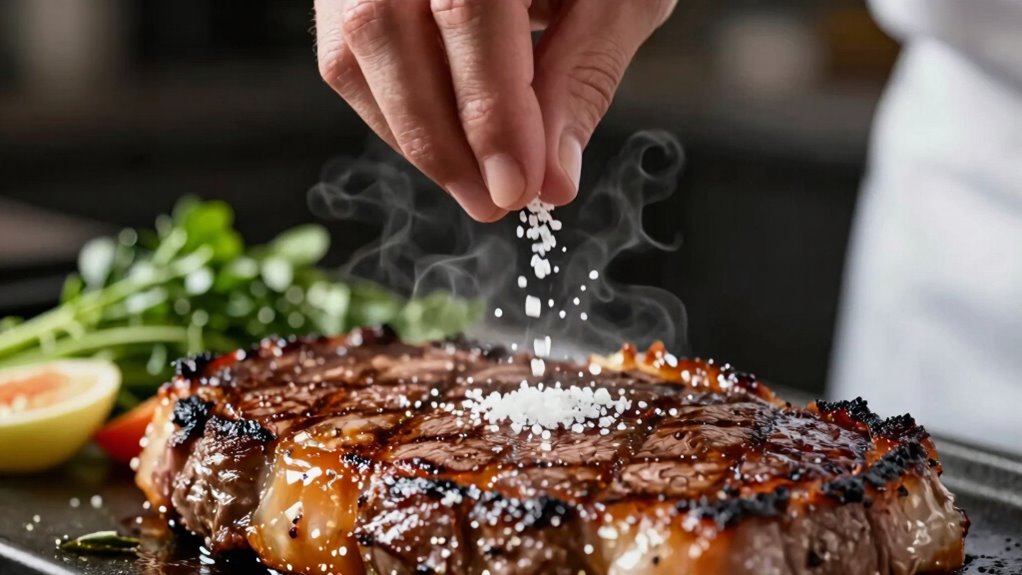
When you add salt at different stages, it helps develop deeper flavors and makes your dish more satisfying. Salt also improves texture and moisture, giving your food a better mouthfeel. Understanding when to salt can make a big difference in the final result. Proper salting timing influences how flavors are released and perceived during cooking.
Enhances Flavor Development
Salt plays an essential role in developing depth and complexity in your dishes by affecting both taste and texture at different stages of cooking. It influences seasoning chemistry, allowing flavors to meld and intensify.
When added at the right moments, salt enhances flavor synergy, making ingredients complement each other more effectively. Early seasoning helps to draw out natural flavors, creating a foundation of taste that develops as cooking progresses.
Proper timing guarantees that salt doesn’t overpower but instead amplifies subtle notes, resulting in a richer, more balanced dish. By understanding how salt interacts with other ingredients during various stages, you can reveal a new level of flavor development that elevates your cooking.
Understanding salt interactions is crucial for mastering flavor balance and achieving optimal results.
This strategic approach guarantees every bite offers a harmonious and satisfying experience.
Improves Texture and Moisture
By adding salt at different stages of cooking, you can considerably improve the texture and moisture of your dishes. Salt promotes texture enhancement by breaking down proteins, which results in a more tender bite. When added early, salt helps the food retain moisture, preventing it from drying out during cooking. This is especially useful for meats and vegetables, as it allows them to stay juicy and tender. Mid-cooking salting can reinforce moisture retention, ensuring even distribution of flavor and improved mouthfeel. Proper timing of salt also influences the structure of your dish, making it more satisfying. Additionally, understanding how filtration and appliance design impact salt distribution can help optimize seasoning for consistent flavor and at-home cooking precision.
When Is the Best Time to Salt Your Dishes?
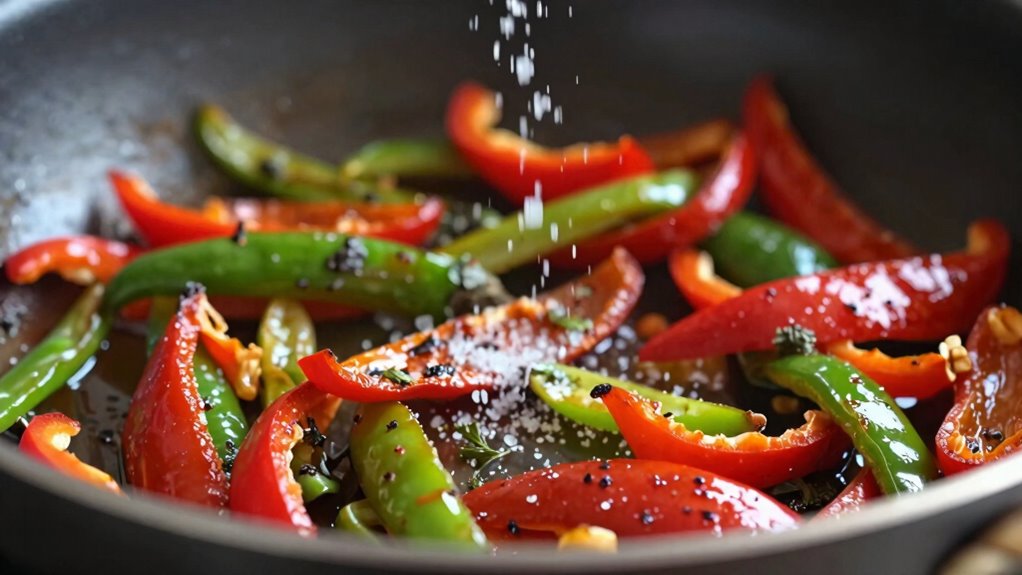
Knowing the right moment to add salt can make a significant difference in how your dishes turn out. Generally, salting early during cooking allows flavors to deepen and helps tenderize, especially when using marinade secrets that benefit from salt’s penetration.
For meats and vegetables, adding salt at the start can enhance moisture retention and flavor absorption. If you’re concerned about over-salting, salt substitutes can be useful, but they don’t always provide the same flavor boost as regular salt.
For delicate ingredients like fish or eggs, salting later or right before serving preserves their texture. Timing is key—salting too early or too late can alter the taste and texture, so consider the dish and ingredients to determine the best moment to season.
Common Salting Mistakes and How to Avoid Them
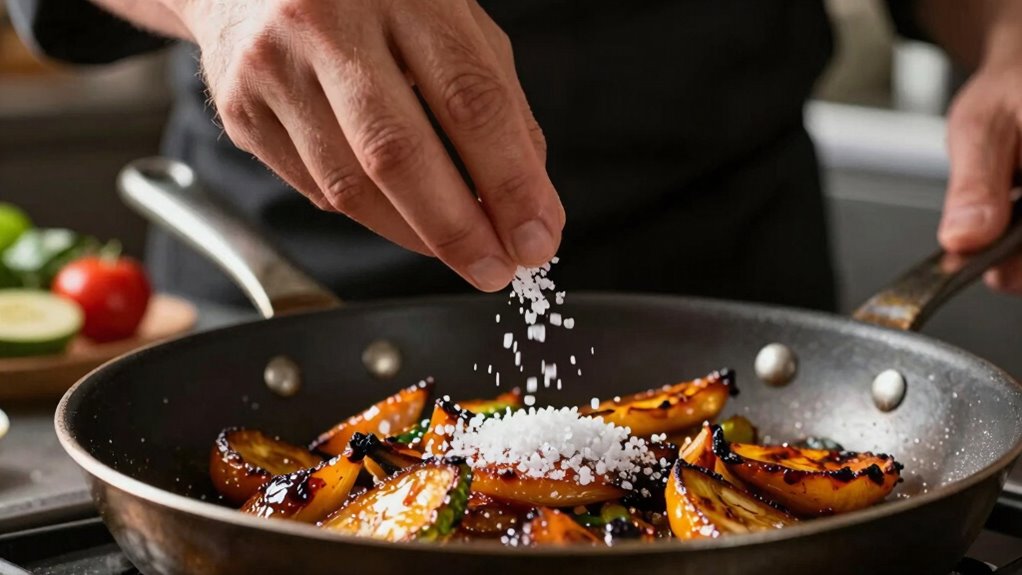
One common mistake cooks make is adding too much salt at once, which can quickly overpower a dish and ruin its balance. Over salting mistakes often happen when you don’t taste as you go or rely on guesswork. Similarly, under seasoning pitfalls occur when you add too little salt, leaving flavors flat. To avoid these issues, measure your salt carefully and taste frequently. Use this quick reference:
| Mistake | How to Avoid | Tip |
|---|---|---|
| Over salting | Add salt gradually, taste often | Start small, adjust as needed |
| Under seasoning | Season in stages, taste after each addition | Build flavor step-by-step |
| Inconsistent salting | Use a consistent measuring method | Keep track of amounts |
| Relying only on salt | Balance with other seasonings | Enhance overall flavor |
| Ignoring dish type | Adjust salt based on ingredients | Match salt to dish |
Incorporating a balanced approach to salting can greatly improve your dish’s overall harmony. Additionally, understanding the role of salt in enhancing flavors can help you make more informed seasoning choices. Recognizing the importance of timing when adding salt is crucial to achieve optimal flavor development.
A proper salting technique ensures that each ingredient’s flavor is optimized, creating a more delicious and well-rounded meal.
Tips for Perfectly Seasoned Food Every Time
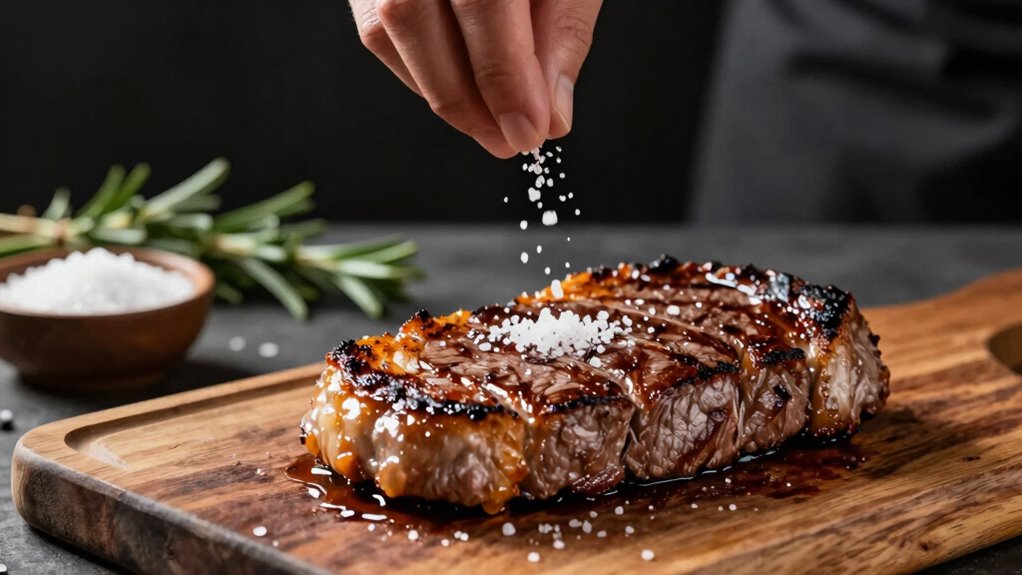
To guarantee your dishes are perfectly seasoned, timing is key—know when to salt during cooking, whether early or late. Layer flavors thoughtfully by adding ingredients at the right moments, building complexity with each step. Finish with a sprinkle of finishing salt to enhance texture and bring out the final flavor. Proper seasoning can elevate a simple meal into a memorable one, and understanding flavor layering is essential for achieving the desired taste profile. Recognizing the significance of cultural symbols can also inspire creative culinary presentations that reflect heritage and tradition. Additionally, mastering auditory feedback therapy techniques can help chefs improve their sensory awareness, ensuring optimal seasoning adjustments during cooking. Being aware of net worth and other personal achievements can also influence how chefs approach presentation and storytelling through food. Developing sensory awareness can further refine a chef’s ability to detect subtle flavor differences and make precise adjustments.
Salt Early or Late
The timing of salting your food can make a big difference in how flavorful it turns out. Salt application early in cooking allows the seasoning to penetrate deeper, enhancing overall flavor. Late salting preserves a crisp texture and bursts of saltiness at the end. To help you decide, consider this table:
| Timing | Effect on Flavor | Best For |
|---|---|---|
| Early | Even seasoning, tenderizing | Soups, stews, braises |
| Midway | Balanced flavor, even spread | Roasts, stir-fries |
| Late | Bright, punchy saltiness | Finishing dishes, salads |
| Just Before Serving | Intense bursts | Grilled meats, vegetables |
Using proper seasoning techniques, adjust your salt application based on the dish and desired outcome for perfectly seasoned food every time. Understanding seasoning methods can further improve your culinary results.
Layering Flavors Effectively
Layering flavors is essential for creating dishes that are rich, balanced, and deeply satisfying. To achieve this, focus on herb pairing—select herbs that complement each other and enhance the main ingredients.
Start with a base layer of seasoning, then build complexity by adding herbs and spices at different stages of cooking. This approach guarantees each layer contributes to a harmonious seasoning balance, preventing any one flavor from overpowering others.
Taste frequently and adjust as needed, adding herbs early for depth and finishing with fresh herbs for brightness.
Use of Finishing Salt
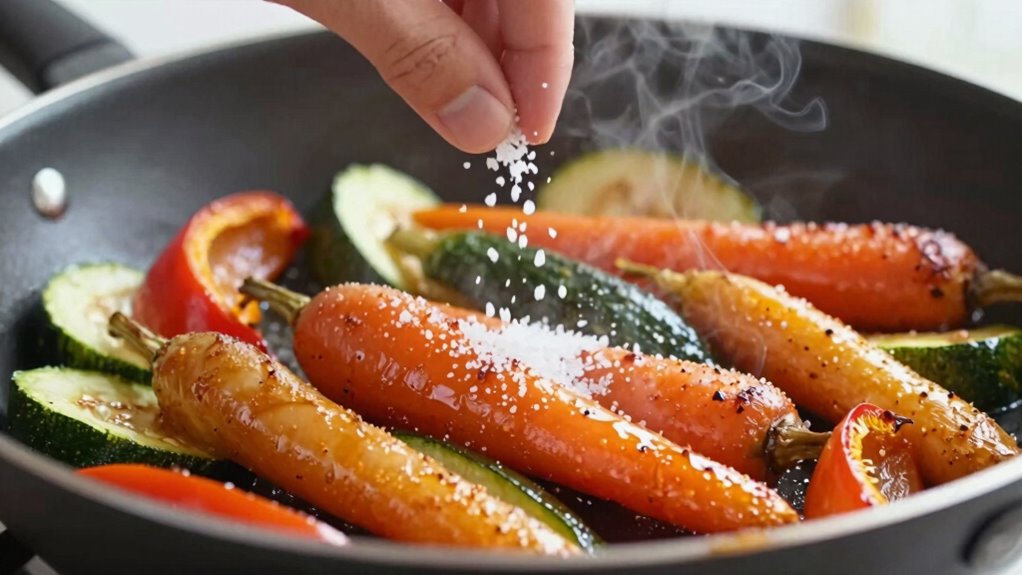
Ever wonder how a sprinkle of finishing salt can elevate a dish from good to exceptional? Finishing salt, such as flaky sea salt, is best added just before serving to maximize flavor enhancement. Its texture provides a delightful crunch, and its clean, mineral notes highlight the dish’s other flavors. This technique allows you to bring out the best in your culinary creations. Incorporating seasoning timing into your cooking process is a key element of professional presentation and flavor balance. Proper salt application ensures the right balance of taste and texture, preventing over-seasoning while enhancing overall flavor. Use finishing salt sparingly; a light sprinkle is enough to make a noticeable difference. It’s especially effective on roasted vegetables, grilled meats, or even desserts like chocolate and caramel.
Adding finishing salt at the end allows you to control saltiness precisely, avoiding over-seasoning during cooking. Remember, the goal is to enhance, not overpower.
A well-timed finishing salt transforms your dish, giving it a professional, polished touch that elevates the overall flavor experience.
Adjusting Salt Timing for Different Recipes
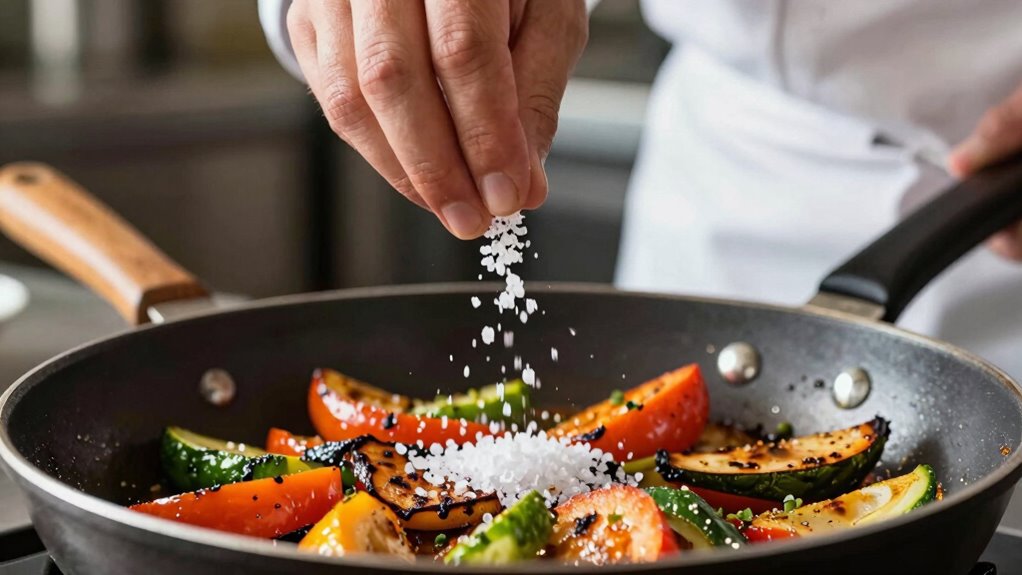
Adjusting when you add salt during cooking can especially impact the flavor and texture of your dish. For different recipes, you may need to modify salt timing based on ingredient substitutions or cultural variations.
For instance, when using ingredients like soy sauce or salted butter, you might add less salt upfront to prevent over-seasoning. Cultural recipes often have traditional timing—such as salting early in Indian curries to develop deeper flavors or adding salt later in delicate sauces to preserve brightness.
Experimenting with salt timing allows you to better control how flavors meld and how textures develop. By understanding these nuances, you can tailor your seasoning approach to suit the specific recipe, ingredients, and cultural context, resulting in a more balanced and authentic final dish.
Mastering Salt Timing: Practical Techniques for Flavor
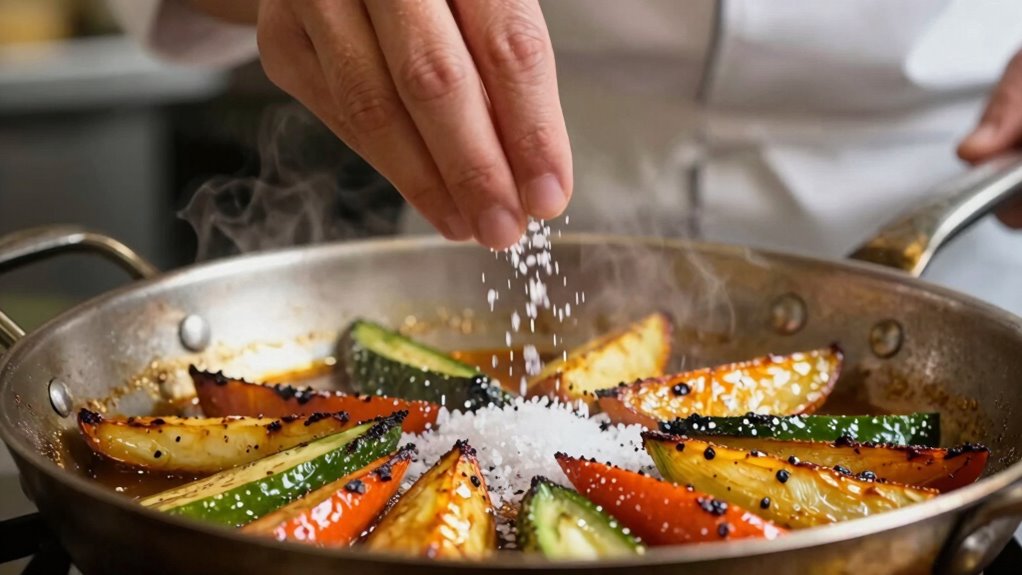
Mastering the timing of adding salt is essential for enhancing your dish’s flavor without overpowering it. By understanding seasoning science, you can achieve perfect flavor balance. When you salt at the right moments—whether during sautéing, simmering, or final tasting—you influence how flavors develop. Imagine the process like this:
| Stage | Technique | Effect |
|---|---|---|
| Early in cooking | Salt early to tenderize and blend | Deepens overall flavor |
| During cooking | Salt during simmering | Enhances complexity |
| Finish | Lightly salt at the end | Brightens and sharpens |
Using these techniques, you control how salt interacts with ingredients, shaping the dish’s overall flavor profile. Proper timing keeps your seasoning balanced and vibrant.
Frequently Asked Questions
Can Salt Be Added After Cooking Without Losing Flavor?
Yes, you can add salt after cooking without sacrificing flavor, but it’s best for post-cooking seasoning.
When you salt foods after cooking, you help with flavor retention and enhance taste without over-seasoning during the process. Just sprinkle a little and taste as you go to avoid oversalting.
This method preserves the food’s natural flavors and ensures your dish remains flavorful and well-balanced.
How Does Salt Influence the Preservation of Cooked Foods?
Salt is a superhero in food preservation, stopping microbial growth in its tracks. When you add salt to cooked foods, it creates an environment that discourages bacteria and mold, keeping your dishes fresh much longer.
Is There a Difference Between Adding Salt at the Beginning or End?
Yes, there’s a difference. Adding salt at the beginning enhances flavor and promotes better taste development by allowing it to penetrate the food as it cooks. If you add salt at the end, it mainly boosts surface flavor, providing a quick salty taste without deeply affecting the dish.
For ideal flavor enhancement, season early and adjust at the end to fine-tune taste.
How Does Salt Impact the Nutritional Value of Dishes?
They say, “You are what you eat,” and salt plays a key role in that. Salt impacts the nutritional value of dishes by contributing sodium, which is essential but can be harmful in excess.
Proper seasoning adds flavor enhancement and complexity, making meals more satisfying. Just remember, balancing salt helps you enjoy its benefits without overdoing it, supporting a healthier diet while elevating your dishes.
Can Salt Timing Enhance the Aroma of Food?
Yes, salt timing can enhance the aroma of your food. When you add salt at the right moment, it helps release and amplify the natural aromas, leading to better flavor enhancement.
Early salting allows flavors to meld and aroma compounds to develop, while late addition can boost the scent just before serving. By paying attention to when you salt, you can notably amplify the food’s enticing aroma and overall flavor.
Conclusion
Mastering salt timing can elevate your cooking, making flavors pop and textures shine. Did you know that properly timed salting can improve flavor perception by up to 40%? By paying attention to when and how you season, you’ll consistently create delicious, well-balanced dishes. So next time you cook, remember: small timing tweaks can make a big difference. Keep experimenting, and enjoy the richer, more satisfying flavors you’ll achieve every time.