
If you discover mold in your home, stay calm and don’t panic. Start by inspecting the affected area carefully to assess the extent and look for visible signs like patches or a musty smell. Improve airflow by opening windows and using fans, and fix any leaks or high humidity sources to prevent further growth. Wear protective gear when cleaning small patches with detergent or mold cleaner. Continuing with these steps will help you handle the situation effectively.
Key Takeaways
- Stay calm and avoid panicking; assess the affected area carefully.
- Identify visible mold or signs like a musty smell to determine the extent.
- Increase ventilation by opening windows and using fans to improve air quality.
- Wear protective gear and clean small mold patches with detergent or mold cleaner.
- Address underlying moisture issues, such as leaks or humidity, to prevent future growth.
Have you ever noticed a musty smell or visible spots on your walls? When you do, it’s natural to feel alarmed, but it’s important to stay calm and assess the situation carefully. Mold can affect your home’s air quality, leading to health issues like allergies or respiratory problems if left unchecked. The first step is to recognize that mold growth is a common problem, especially in areas with high humidity or poor ventilation. Instead of panicking, focus on understanding what you’re dealing with and taking effective action.
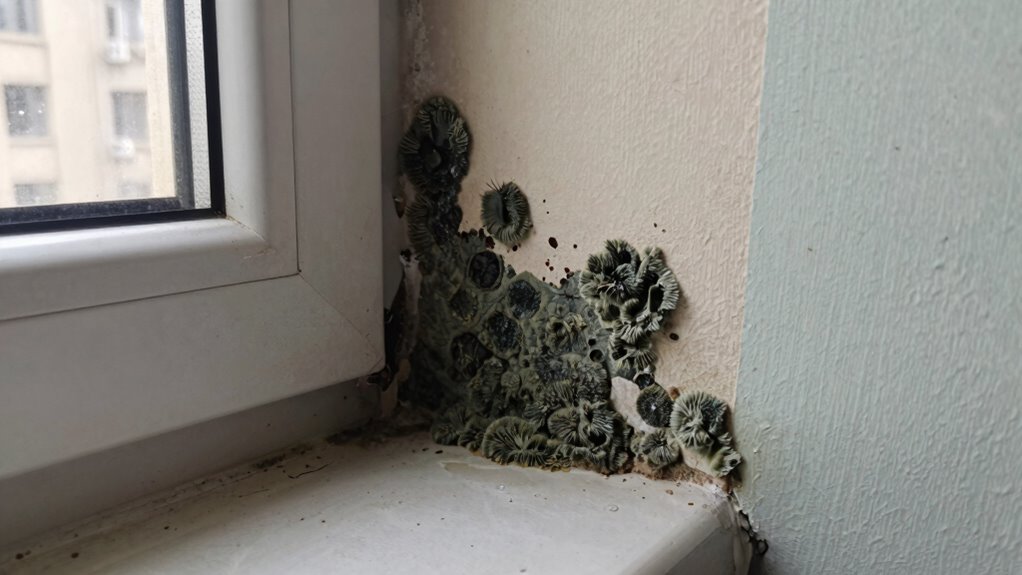
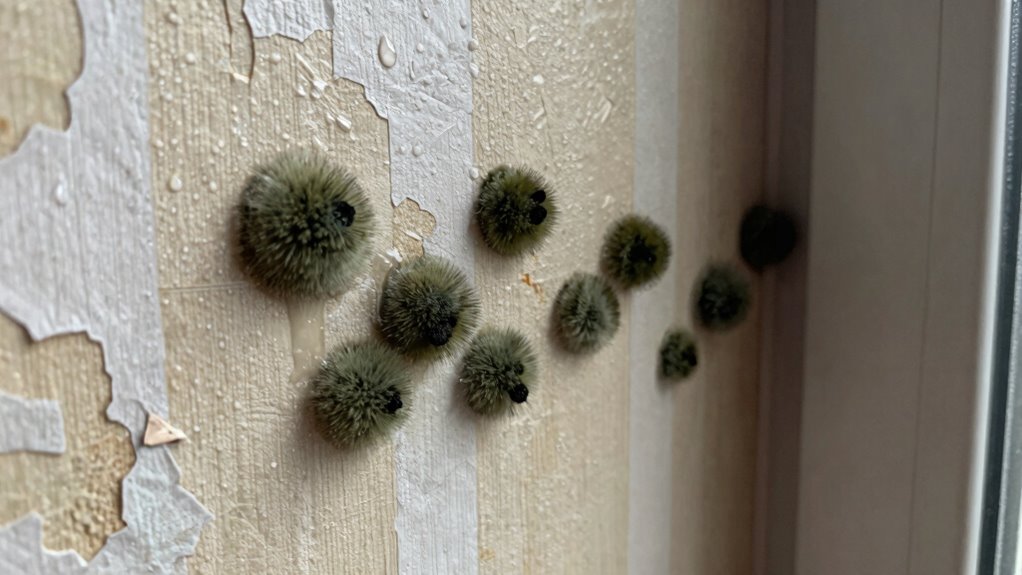
Start by inspecting the affected areas closely. Look for visible signs of mold, which often appear as fuzzy patches in shades of green, black, or white. Keep in mind that mold can grow behind walls or under flooring, so if you notice a persistent musty odor but no visible mold, it’s worth investigating further. Improving your home’s air quality is *vital* because mold spores can become airborne, spreading throughout your living space. To do this, increase ventilation by opening windows and using fans, which helps reduce moisture levels in the air.
When it comes to cleaning techniques, it’s essential to act promptly but carefully. For small patches of mold, you can wear gloves, a mask, and eye protection to avoid inhaling spores. Use a mixture of detergent and water or a commercial mold cleaner to scrub the affected surfaces thoroughly. Avoid using bleach on porous materials like drywall or fabric because it doesn’t penetrate deeply and can sometimes worsen the problem. Instead, focus on removing mold from non-porous surfaces such as tiles or metal. After cleaning, dry the area completely since moisture encourages mold regrowth.
Addressing underlying causes is equally important. Mold thrives in damp environments, so fix leaks, improve drainage, and use dehumidifiers if needed. Check that your home’s ventilation system is working properly, especially in bathrooms, kitchens, and basements. By controlling moisture, you’re actively improving your air quality and preventing future mold growth. Regularly monitoring humidity levels and maintaining good airflow are key strategies for preventing mold and ensuring a healthier living environment.
Top picks for "mold home first"
Open Amazon search results for this keyword.
As an affiliate, we earn on qualifying purchases.
Frequently Asked Questions
How Can I Prevent Mold Growth in My Home?
To prevent mold growth in your home, you should focus on ventilation improvements and moisture control. Make sure your rooms are well-ventilated, especially bathrooms and kitchens, by using exhaust fans or opening windows. Keep humidity levels low, ideally between 30-50%, using dehumidifiers if needed. Regularly fix leaks and dry out any damp areas promptly, as controlling moisture is key to stopping mold before it starts.
Are All Types of Mold Equally Harmful?
Think of mold like a garden—some types are harmless, while others are like weeds you need to pull. Not all mold is equally harmful; proper mold identification and mold classification help you understand the risks. Some molds produce allergens or toxins, so don’t ignore any growth. You should act quickly, clean properly, and consider professional help if you’re unsure about the mold type. Your safety depends on knowing what you’re dealing with.
When Should I Call a Professional for Mold Removal?
You should call a professional for mold removal if DIY inspections and mold testing kits reveal a large or hidden mold problem, or if you’re experiencing health issues like allergies or respiratory symptoms. When mold covers more than 10 square feet or is in hard-to-reach areas, it’s best to seek expert help. Professionals can guarantee thorough removal and proper remediation, preventing future growth and health risks.
Can Mold Cause Long-Term Health Issues?
Did you know that exposure to mold spores can lead to long-term health risks, especially if left untreated? Mold can cause respiratory issues, allergies, or asthma flare-ups over time. If you notice persistent symptoms or mold growth, it’s essential to address it promptly. Ignoring mold can worsen health problems. Regular inspection and professional removal help minimize these health risks, keeping you and your family safe from ongoing exposure.
What Are Natural Remedies to Eliminate Mold?
You can try DIY solutions with natural cleaning ingredients like white vinegar or baking soda to eliminate mold. Spray or scrub the affected area with vinegar, letting it sit for an hour before rinsing. Baking soda mixed with water creates a paste that helps scrub away mold. These natural cleaning methods are effective, safe, and eco-friendly, providing a practical way to tackle mold without harsh chemicals.
Conclusion
Remember, while mold can seem overwhelming, acting quickly and calmly is key. Some experts believe that small mold issues might not pose serious health risks if addressed promptly, as mold spores naturally occur in the environment. However, ignoring larger problems can lead to long-term damage and health concerns. Trust your instincts, investigate thoroughly, and don’t hesitate to seek professional help if needed. With proper action, you can keep your home safe and mold-free.