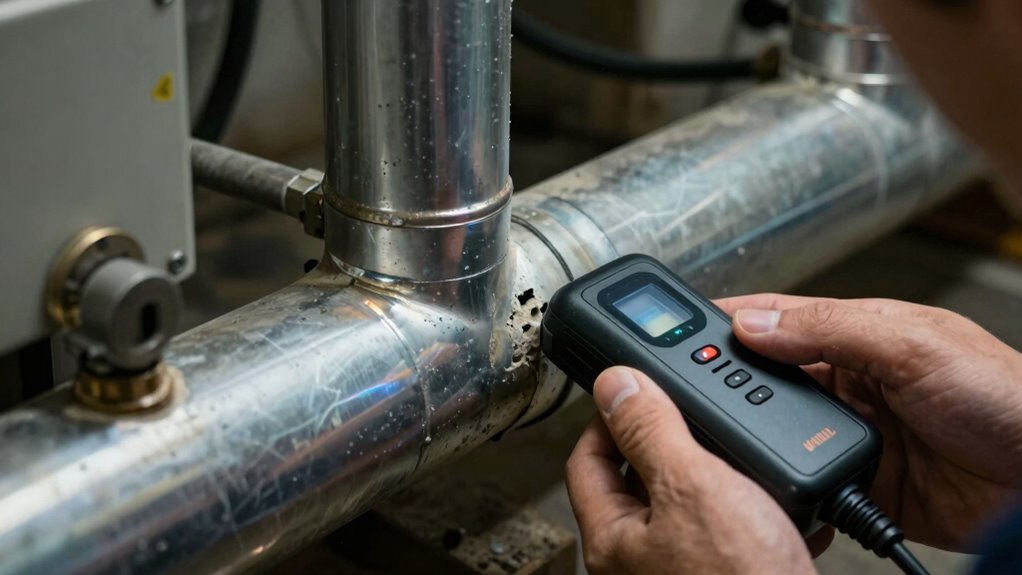
To catch leaks others miss, focus on less obvious spots like behind appliances, inside cabinets, and near joints or valves. Place detectors slightly above suspected leak points, especially where vapors tend to rise, and avoid areas with strong airflow or vents that can disperse vapors. Don’t forget to target corners and enclosed spaces where leaks can hide. Understanding airflow patterns helps you position detectors effectively. Keep exploring these hidden spots for smarter leak detection.
Key Takeaways
- Place detectors slightly above suspected leak points to catch rising vapors or gases effectively.
- Position sensors in enclosed or corner areas where leaks can accumulate unnoticed.
- Avoid placing detectors directly in airflow paths that disperse vapors away from sensors.
- Focus on less obvious spots like behind appliances or inside cabinets where leaks often go undetected.
- Regularly reassess airflow and environmental dynamics to optimize detector placement over time.
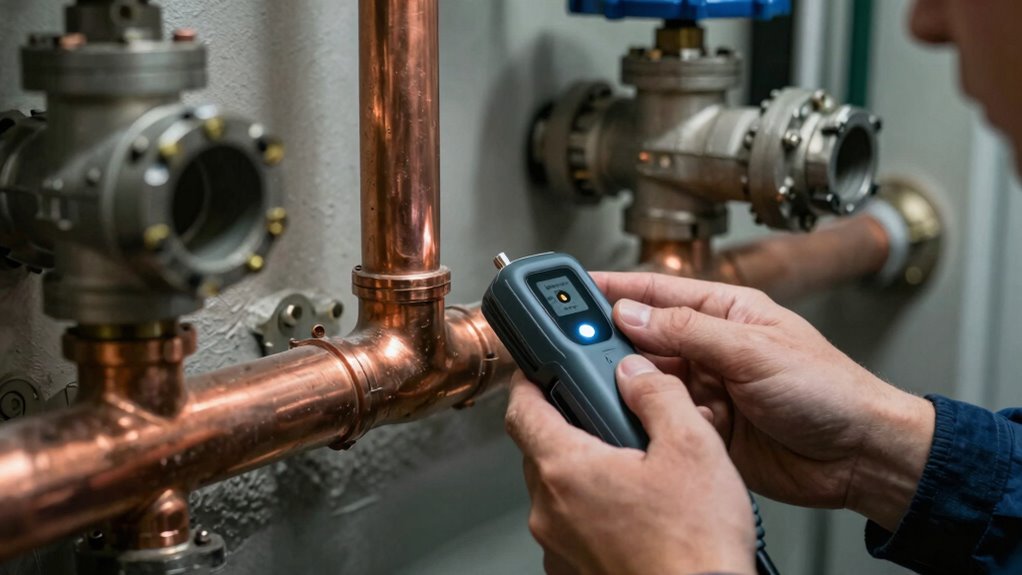
Where should you place a leak detector to guarantee it catches every leak? The answer lies in understanding the environment and the typical spots where leaks are most likely to occur. To maximize detection accuracy, you need to think beyond obvious locations and consider areas that often get overlooked. Proper placement is essential because even the most sensitive sensor calibration won’t help if the detector isn’t positioned correctly. You want it close enough to the source to pick up the smallest leaks but not so close that it’s obstructed or too far away to be effective.
Most leaks tend to happen near joints, connections, valves, or other fixtures where pressure fluctuations and material wear can cause vulnerabilities. Placing your leak detector near these points ensures it’s in the right spot to catch early signs of leakage. For example, installing it near plumbing joints, around compressor fittings, or close to pressure relief valves can notably improve detection accuracy. Also, don’t forget to check areas behind appliances or inside cabinets, as leaks often develop out of sight.
Another common mistake is ignoring elevation when placing the detector. Many leaks release vapors or gases that tend to rise, so positioning your detector at a height where it can effectively sense these emissions is wise. If you’re working with a system that leaks gases or vapors, installing the detector slightly above the suspected leak points can be more effective than placing it at floor level or in the ceiling. Remember, effective sensor calibration is essential here — the detector needs to be tuned for the specific type of leak you’re monitoring, whether it’s gas, liquid, or vapor. Additionally, understanding leak behavior and how vapors disperse can help optimize placement for early detection. Recognizing vapors dispersal patterns in the environment can further enhance your placement strategy.
You should also consider airflow patterns in the space. Drafts, fans, or ventilation systems can carry leaks away from typical detector locations, reducing detection accuracy. Position your leak detector in areas where airflow is minimal or where leaks are most likely to accumulate. For example, corners and enclosed spaces tend to trap leaks, making them prime spots for detection. It’s also beneficial to analyze airflow dynamics within the environment to determine optimal placement for improved sensitivity. Recognizing how vapors disperse in the space can further enhance your placement strategy. Taking into account air circulation can help prevent false alarms and ensure reliable leak detection.
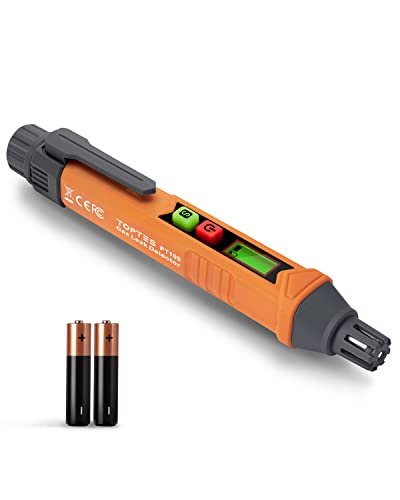
PT199 Natural Gas Leak Detector with Audible & Visual Alarm, Portable Gas Sniffer to Locate Combustible Sources Like Methane, Propane for Home(Includes Battery x2)-Orange
Combustible Gas Leak Detector: The TopTes PT199 detects natural gas, methane, propane, butane, LPG, and more, pinpointing leaks…
As an affiliate, we earn on qualifying purchases.
As an affiliate, we earn on qualifying purchases.
Frequently Asked Questions
How Often Should I Check Leak Detector Placement?
You should check your leak detector placement regularly, ideally once a month, to guarantee it’s functioning correctly. During these checks, verify sensor calibration and ensure the detector remains in the placement best practices, avoiding obstructions or extreme temperatures. Proper placement and consistent testing help catch leaks early, preventing costly damage. Regular inspections keep your leak detection system reliable and effective, giving you peace of mind.
Can Leak Detectors Be Hidden Behind Furniture?
Yes, leak detectors can be hidden behind furniture, but it’s not ideal. Furniture concealment might block airflow or make it harder to detect leaks quickly. For hidden placement, choose spots like behind cabinets or under sinks where they’re less visible but still able to monitor moisture effectively. Make certain the detector remains accessible for maintenance or testing, even if it’s out of plain sight.
What Signs Indicate a Leak Detector Needs Replacement?
Think of your leak detector like a trusty sidekick—if it’s showing signs of weakness, it’s time for a change. You’ll notice false alarms, inconsistent readings, or it no longer responds. Check if the sensor calibration is off or if the power source is failing. When these issues persist despite adjustments, it’s a clear sign you should replace your leak detector to keep your home safe and secure.
Are There Specific Tools Needed for Optimal Placement?
You don’t need special tools for critical leak detector placement, but following placement guidelines is vital. Use a level for accurate positioning and confirm the detector is at the right height, typically near potential leak sources. Sensor calibration is necessary before installation to guarantee accuracy. Carefully choose spots away from airflow disruptions or obstructions, and double-check the placement to maximize detection sensitivity and avoid false alarms.
How Does Temperature Affect Leak Detector Effectiveness?
Temperature fluctuation can subtly influence your leak detector’s accuracy, making it seem less reliable over time. To keep it performing at its best, you should regularly check sensor calibration, especially in environments with varying temperatures. When the temperature drops or rises unexpectedly, it might cause your detector to miss leaks or give false alarms. Proper calibration guarantees your device remains sensitive and precise, regardless of temperature changes.
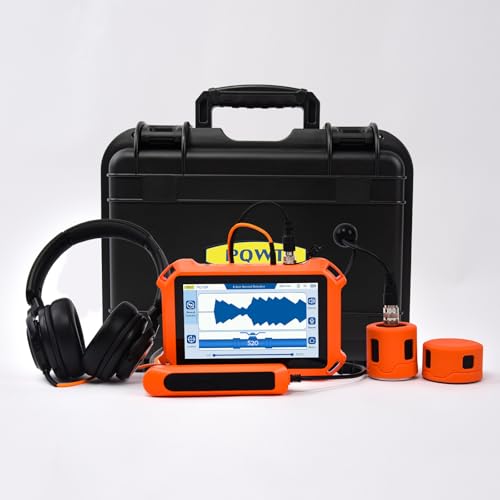
PQWT Underground Water Leak Detectors for Home PQ125A Wall Pipe Water Leakage Detection with Touchscreen Earphone and Carrying Case Multi Sensor Acoustic Pipeline Sound Intensifier
[Simple Operation] The PQ125A water leak detectors for home utilizes a factory-developed UI interaction system. Its touchscreen displays…
As an affiliate, we earn on qualifying purchases.
As an affiliate, we earn on qualifying purchases.
Conclusion
Think of your leak detector as a vigilant guardian, standing watch over hidden dangers. When placed wisely, it becomes a silent sentinel, catching whispers of trouble before they roar. Missed spots are like shadows slipping through your fingers—dangerous and unseen. So, be strategic, be thorough, and let your detector’s keen senses light the way. With the right placement, you turn a quiet hero into a fortress, safeguarding your home from leaks lurking in the dark.
PQWT Underground Water Leak Detectors for Home PQ125A Wall Pipe Water Leakage Detection with Touchscreen Earphone and Carrying Case Multi Sensor Acoustic Pipeline Sound Intensifier
[Simple Operation] The PQ125A water leak detectors for home utilizes a factory-developed UI interaction system. Its touchscreen displays…
As an affiliate, we earn on qualifying purchases.
As an affiliate, we earn on qualifying purchases.

Fieldpiece – DR58 Heated Diode Refrigerant Leak Detector – Ultra-Sensitive Leak Sniffer with Large, Backlite LCD Screen – Lightweight HVAC Tool
Detects Micro Leaks Fast: Ultra-sensitive heated diode finds <0.03 oz/yr leaks, 20x more sensitive than bubbles.
As an affiliate, we earn on qualifying purchases.
As an affiliate, we earn on qualifying purchases.