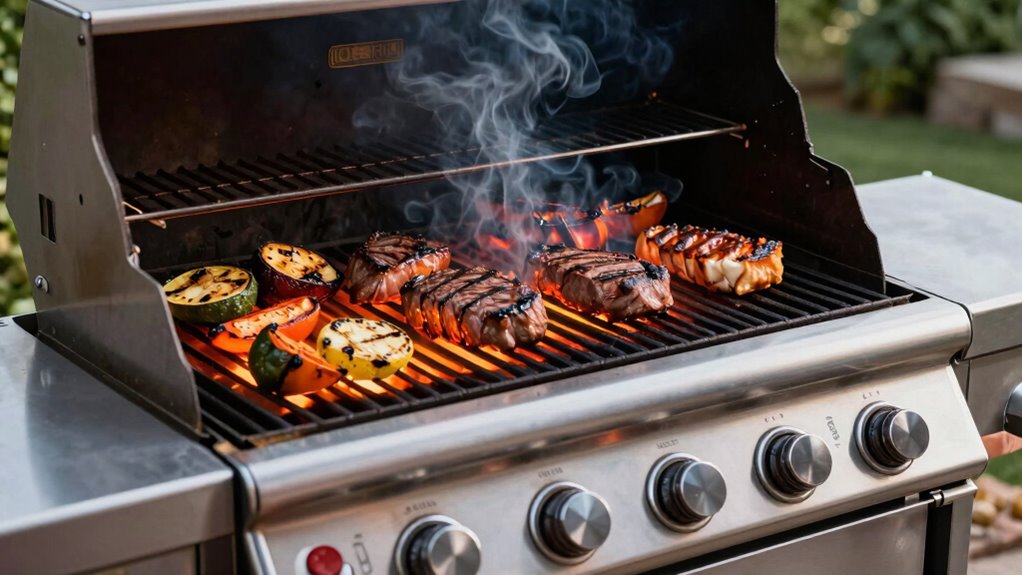

Mastering heat zones on your gas grill is the secret to perfect backyard cooking. By creating different temperature areas, you gain control over searing, finishing, and cooking a variety of foods simultaneously. Adjust burners or use accessories to manage heat flow, reducing the risk of burning or undercooking. This skill boosts your confidence and cooks consistently great results. Keep exploring how heat zones can transform your grilling game and make every barbecue a success.

Prime made for students and young adults
- Fast, free delivery for dorm and study essentials
- Prime Video and Amazon Music included
- Member-only deals
Key Takeaways
- Mastering heat zones allows precise control over cooking temperatures for different foods simultaneously.
- Creating distinct hot and cool areas enables perfect searing and gentle finishing without burning.
- Using accessories like dual-zone thermometers and cast iron grates enhances heat management.
- Manipulating burners strategically helps develop an intuitive sense of heat distribution.
- Proper heat zone control results in evenly cooked, flavorful, and professional-quality grilled dishes.
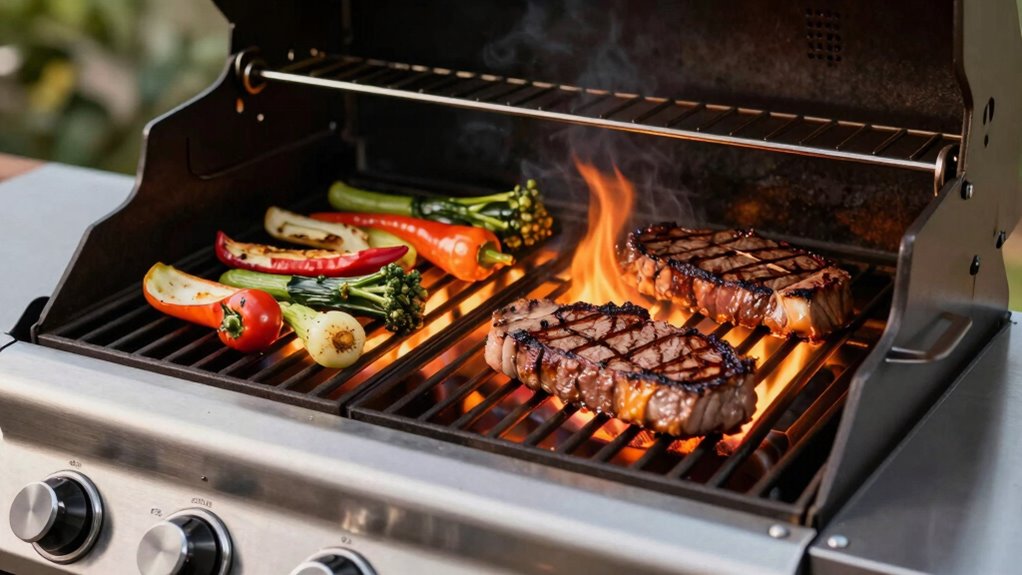
When you’re grilling with a gas grill, understanding heat zones can considerably improve your cooking results. This knowledge allows you to manage different areas of your grill for various cooking needs, giving you more control over the process. While many backyard chefs rely on gas grills for convenience, it’s worth noting that mastering heat zones is a skill that elevates your grilling game. It’s similar to how pitmasters approach charcoal grilling, where controlling the fire and airflow creates distinct temperature zones for searing, indirect cooking, or slow roasting. Incorporating this concept into your gas grill setup can make a significant difference in how your food turns out.
Using heat zones means intentionally creating hot and cooler areas on your grill surface. Most gas grills come with multiple burners, and you can turn some on high while leaving others off or on low. This setup allows you to sear steaks or burgers over direct, high heat, then move them to a cooler zone to finish cooking without burning. It’s a technique that’s just as effective as using charcoal grilling, where you manipulate the coals to produce different temperature zones. Whether you’re grilling vegetables, seafood, or thick cuts of meat, having these hot and cool zones at your fingertips improves your ability to cook everything evenly and precisely. Recognizing heat zone techniques can help you develop a more intuitive sense of heat management on your grill.
To optimize your heat zones, you should consider investing in the right grill accessories. Accessories like a dual-zone thermometer can help you monitor different parts of your grill in real-time, ensuring you maintain consistent temperatures. Grill mats and cast iron grates are also helpful; they distribute heat more evenly and can withstand high temperatures, making it easier to manage your zones. You might also add a side burner for indirect heat or a grilling stone to improve heat retention. These tools enhance your control, so you can switch between direct and indirect cooking seamlessly, much like how experienced charcoal grillers adjust their coals and airflow. Additionally, understanding heat zones in gas grills can help you better plan your cooking strategy and achieve professional-level results. Developing a good grasp of heat management is essential for grilling success.
As an affiliate, we earn on qualifying purchases.
Frequently Asked Questions
How Do I Identify Hot and Cool Zones on My Grill?
You can identify hot and cool zones by performing a quick grill temperature calibration. Turn on your grill and place a few sheets of foil or a thermometer on different areas. Watch how quickly each heats up. Hot zones will reach higher temperatures faster, ideal for searing, while cool zones are perfect for smoke flavor enhancement and gentle cooking. Adjust your food placement accordingly to maximize your grilling results.
Can Heat Zones Be Adjusted During Cooking?
Yes, heat zones can be adjusted during cooking. You can do this by tweaking the grill temperature calibration, which allows you to control the heat output of different burners. This enables heat zone customization, so you can increase or decrease heat in specific areas without disturbing the whole grill. Regularly monitoring your grill’s temperature helps maintain the desired zones, ensuring precise cooking and perfect results every time.
What Tools Help Manage Heat Zones Effectively?
You can manage heat zones effectively with tools like a two-zone fire setup or heat maps. Notably, proper heat distribution can cut cooking time by 20%. To do this, keep your grill clean—residue impairs heat transfer—and use a thermometer to monitor zones. A good quality grill brush and infrared thermometer are essential tools, helping you adjust heat precisely and ensure even cooking across all zones.
How Do Heat Zones Affect Cooking Times and Results?
Heat zones directly impact cooking times and results by shaping the temperature distribution across your grill. When you control heat zones effectively, you can cook different foods simultaneously at their ideal temperatures, preventing overcooking or undercooking. Proper heat control ensures even cooking and better flavor. By managing these zones, you can achieve consistent results, save time, and enhance the overall quality of your backyard grilling experience.
Are Certain Foods Better Suited for Specific Heat Zones?
Yes, certain foods are better suited for specific heat zones. For example, you can use high heat zones for searing steaks to lock in flavor infusion, while lower heat zones are ideal for gentle cooking or warming delicate items. By understanding these zones, you guarantee proper cook times, maintain grill safety, and enhance flavors. Always monitor food closely to prevent burning or overcooking, making your grilling experience safer and more delicious.
cast iron grill grates for gas grill
As an affiliate, we earn on qualifying purchases.
As an affiliate, we earn on qualifying purchases.
Conclusion
Mastering heat zones on your gas grill is like having a secret recipe—once you get it right, everything turns out perfectly. By controlling those zones, you guarantee each item cooks just right, whether you’re searing steaks or warming buns. Think of it as painting with different shades of heat, creating a flavorful masterpiece. With this simple trick, your backyard cookouts will become the stuff of legend, and every meal will taste as good as it looks.
dual zone grill temperature controller
As an affiliate, we earn on qualifying purchases.
As an affiliate, we earn on qualifying purchases.
grill mats for even heat distribution
As an affiliate, we earn on qualifying purchases.
As an affiliate, we earn on qualifying purchases.
Fall Picks
fall essentials
As an affiliate, we earn on qualifying purchases.