To choose the right dehumidifier, understand pint ratings—they indicate how much moisture it can remove in 24 hours. A 30-pint unit suits small to medium spaces, while larger areas may need 50 or 70 pints for effective moisture control. Over-sized units waste energy and can be noisy, so correct sizing is key. Keep in mind room size and humidity levels, and you’ll find the perfect match to keep your space comfortable and dry. There’s more to learn about optimizing your selection.
Key Takeaways
- Pint ratings indicate how much moisture a dehumidifier can extract in 24 hours, guiding proper size selection.
- Smaller spaces or low humidity areas typically need 30-pint units, while larger or damp spaces require 50-70 pints.
- Proper sizing prevents overworking or underperforming, ensuring energy efficiency and consistent moisture control.
- Larger pint units tend to be noisier; choose models with suitable decibel ratings for your environment.
- Correct dehumidifier sizing improves indoor air quality, reduces energy costs, and extends the unit’s lifespan.
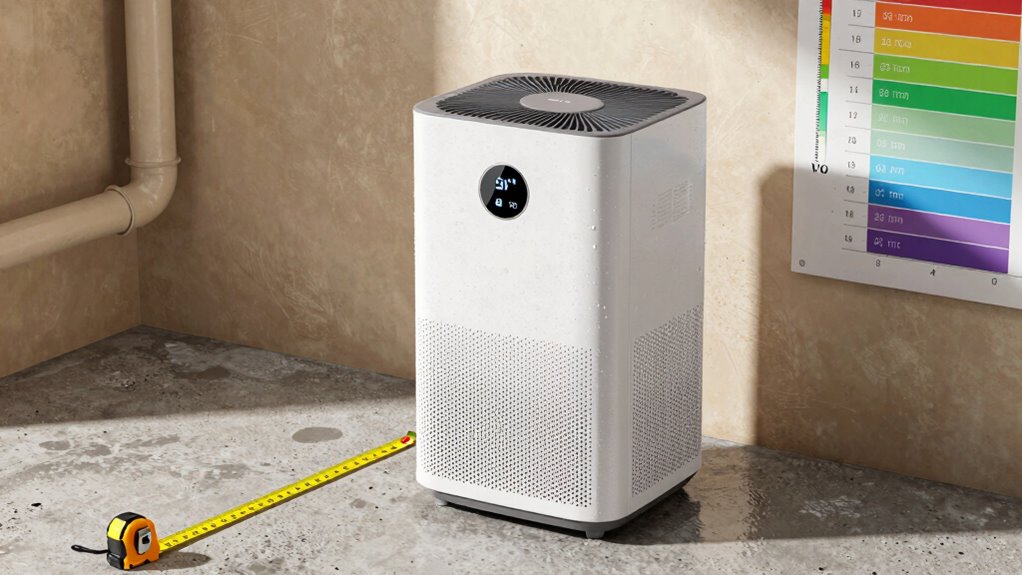
Choosing the right dehumidifier size is vital to effectively control moisture levels in your space. When you pick a unit that’s too small, it’ll struggle to keep humidity in check, leading to dampness, mold, and discomfort. On the other hand, a unit too large can waste energy, drive up costs, and produce unnecessary noise. Hence, understanding pint ratings and how they relate to your space is essential for peak performance and efficiency.
Choosing the right dehumidifier size ensures efficient moisture control and energy savings.
Pint ratings measure how much moisture a dehumidifier can extract from the air in a 24-hour period. For example, a 30-pint dehumidifier removes about 30 pints of water daily, suitable for small rooms or areas with moderate humidity. Larger areas or spaces with high humidity—like basements or laundry rooms—may require 50-pint or even 70-pint units to adequately control moisture. Choosing a unit with the correct pint rating ensures you aren’t overworking or underperforming your dehumidifier, which directly impacts its energy efficiency. A properly sized dehumidifier consumes less power because it runs only as much as needed, rather than constantly struggling to manage excessive humidity or cycling on and off too frequently.
Noise levels are another important consideration when sizing your dehumidifier. Smaller units tend to be quieter, making them ideal for bedrooms, offices, or living areas where noise can be disruptive. Larger models, especially those with higher pint ratings, often generate more noise because they operate more vigorously to remove moisture. If noise is a concern, opt for a model with a lower decibel rating and look for features like quiet operation modes. Balancing the pint rating with noise levels ensures you don’t sacrifice comfort for performance. Many modern dehumidifiers are designed with noise reduction in mind, so you can find models that effectively control humidity without disturbing your daily activities.
Getting the right size isn’t just about the pint rating; it’s about matching the unit’s capacity to the specifics of your space and needs. Measure the area and assess the typical humidity level. If you’re dealing with persistent dampness or mold, it’s better to go slightly larger than you think is necessary to ensure consistent moisture removal. Additionally, proper placement of the dehumidifier within your space can improve its efficiency and effectiveness. Investing in the appropriate size dehumidifier not only improves indoor air quality but also helps you save on energy costs over time. Proper sizing minimizes wear and tear on the unit, extends its lifespan, and keeps noise levels manageable. Ultimately, choosing the right dehumidifier size makes the difference between a quiet, efficient operation and one that’s noisy, costly, and ineffective.
Frequently Asked Questions
How Often Should I Run My Dehumidifier Daily?
You should run your dehumidifier daily until the moisture level reaches around 50-60%, which promotes energy efficiency and prevents excess humidity. If you prefer portable options, choose a unit that fits your space and runs efficiently. Keep an eye on the humidity gauge, and adjust the run time accordingly, especially during damp or humid weather. Regular use helps maintain a comfortable, mold-free environment while conserving energy.
Can I Oversize a Dehumidifier for My Space?
Yes, you can oversize a dehumidifier for your space, but it’s not always ideal. Oversized capacity can lead to frequent cycling, which reduces energy efficiency and may cause uneven humidity control. It also wastes electricity and shortens the unit’s lifespan. To maximize performance and save energy, choose a dehumidifier that matches your room size. Proper sizing guarantees effective humidity control and better energy efficiency.
Do Dehumidifiers Work Effectively in Low Temperatures?
Dehumidifiers can definitely deliver delicate humidity control in low temperatures, but temperature impacts their efficiency. Cold conditions cause refrigerant-based models to struggle, reducing moisture removal. You might find that desiccant dehumidifiers work better in chilly spaces, as they operate effectively regardless of temperature. So, if you’re battling dampness in colder climates, choose a dehumidifier designed for low-temperature performance to keep your environment comfortably dry and safe.
How Noisy Are Different Dehumidifier Models?
You’ll find noise levels vary across dehumidifier models, with decibel ratings ranging from around 40 to 55 dB. Quiet models operate almost silently, suitable for bedrooms or offices, while louder ones, up to 55 dB, are better for basements or utility rooms. Check the decibel rating to match your noise preference, and consider features like auto shut-off or fan speed controls to manage sound levels effectively.
What Maintenance Is Required for Optimal Performance?
Like maintaining a vintage radio, you need to keep your dehumidifier in top shape. Regularly replace the filter to guarantee efficient air flow and clean the unit of dust. Check and drain the water reservoir or hose to prevent overflow and mold growth. Also, clean the coils and vents periodically. Doing these simple tasks keeps your dehumidifier running smoothly, extending its lifespan and maintaining ideal performance.
Conclusion
Now that you understand how pint ratings relate to your space, you’re better equipped to choose the right dehumidifier. Remember, selecting the correct size guarantees comfort, efficiency, and longevity for your device. Don’t you want a home that feels just right, not overly dry or damp? By paying attention to these details, you’ll make smarter choices and create a healthier environment for yourself and your loved ones. Isn’t that worth the effort?