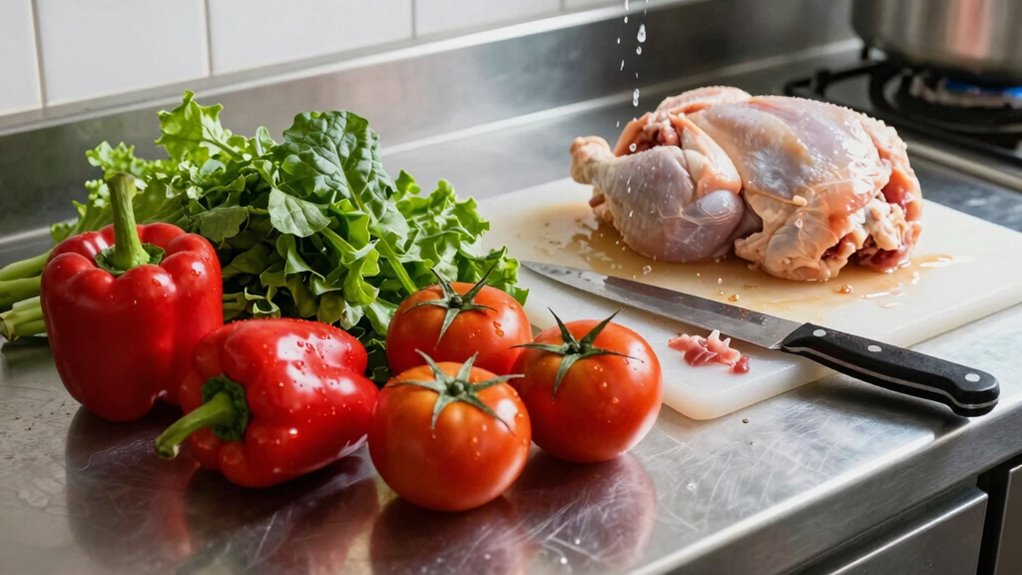
Cross-contamination in real kitchens happens when harmful bacteria from raw foods, like meat, move to cooked or ready-to-eat items without you noticing. It often occurs when you use the same utensils, cutting boards, or hands without cleaning them properly. These bacteria can survive on surfaces and cause foodborne illnesses like Salmonella or E. coli. To keep your kitchen safe, it’s important to understand how cross-contamination happens and how to prevent it, which you’ll discover next.
Key Takeaways
- Cross-contamination is the transfer of harmful bacteria from raw foods to cooked or ready-to-eat items.
- It often occurs silently through shared utensils, cutting boards, or surfaces during meal preparation.
- Touching raw meat and then handling other foods without handwashing spreads bacteria.
- Surfaces, tools, or containers contaminated with raw meat juices can transfer bacteria to other foods.
- Preventing cross-contamination involves proper storage, dedicated utensils, thorough cleaning, and good hand hygiene.
What Is Cross-Contamination and Why Is It Dangerous?
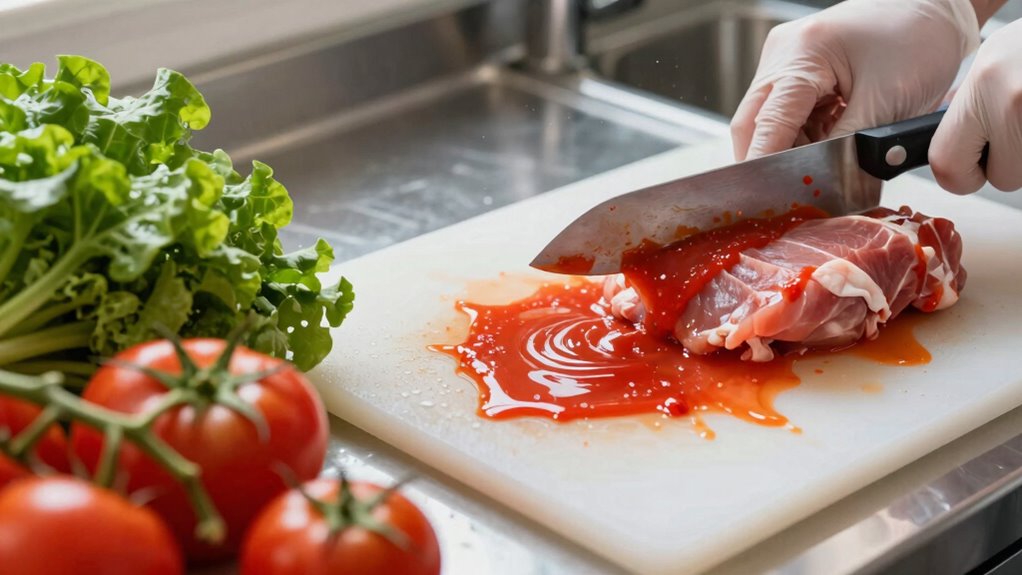
Have you ever considered how bacteria from raw meat can spread to cooked foods or surfaces in your kitchen? Cross-contamination occurs when harmful bacteria transfer from raw foods, like meat, to ready-to-eat items or surfaces. Proper food storage is essential; keep raw meat sealed and separate from cooked foods to prevent bacteria spread. Hand hygiene plays a critical role—always wash your hands thoroughly after handling raw meat to avoid transferring bacteria. This process can happen easily if you touch utensils, cutting boards, or other surfaces without cleaning your hands first. Cross-contamination is dangerous because it can cause foodborne illnesses, making you sick. Paying attention to food storage and practicing good hand hygiene helps protect you and your family from potential health risks. Using designated cutting boards for raw meat can further reduce the risk of bacteria transfer. Additionally, understanding the importance of food safety practices can help minimize the chances of cross-contamination in your kitchen. Implementing proper kitchen hygiene routines is also vital to maintaining a safe cooking environment.
How Does Cross-Contamination Happen in Your Kitchen?
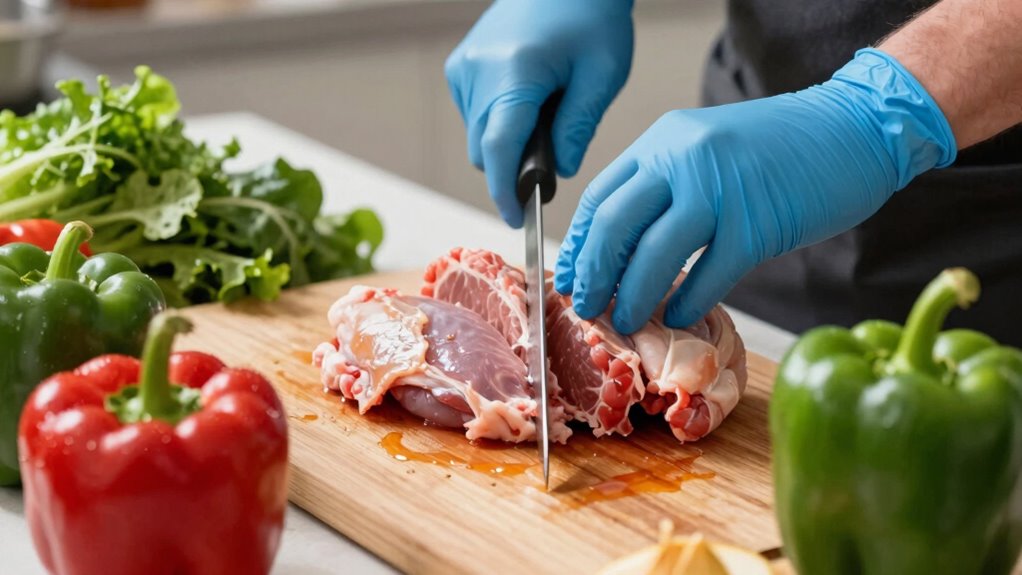
Cross-contamination often happens quietly as you go about preparing meals. You might not notice it, but odor transfer can occur when you use the same utensils or cutting boards for different foods without cleaning them in between. For example, cutting raw chicken and then slicing vegetables with the same knife can transfer bacteria and odors. Utensil sharing is a common mistake that allows germs to spread from raw meats to ready-to-eat foods. Even touching raw meat and then handling cooked or fresh ingredients without washing your hands or utensils can cause cross-contamination. Be mindful of how you handle different foods, clean utensils thoroughly, and avoid mixing raw and cooked items to prevent the silent spread of bacteria in your kitchen. Additionally, understanding floating on water can remind us of the importance of keeping surfaces dry and sanitized to prevent bacterial growth.
How Cross-Contamination Can Spread Bacteria and Cause Illnesses
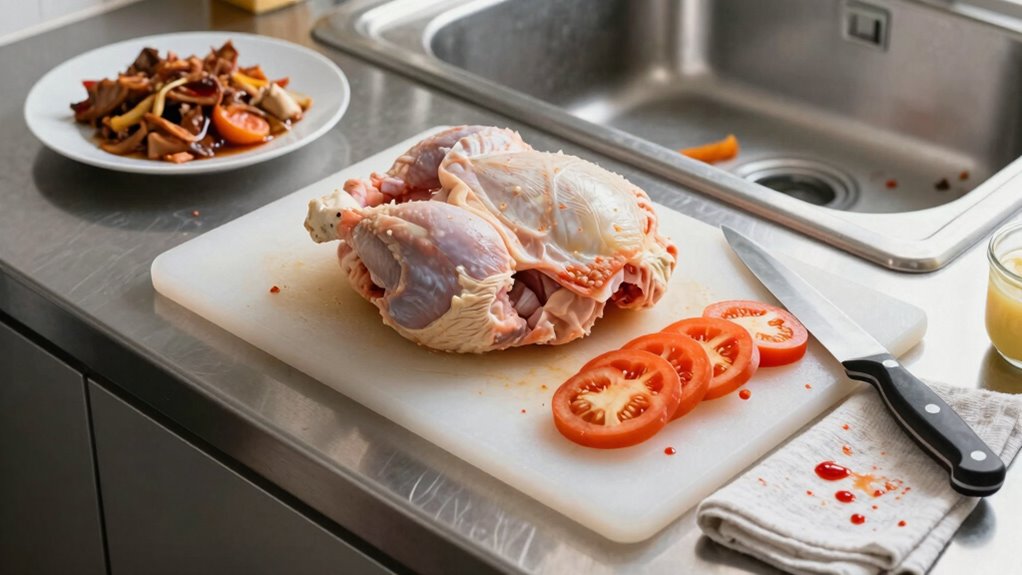
When bacteria from raw foods like meat or seafood are transferred to cooked or ready-to-eat items, they can quickly multiply and cause illnesses. This bacteria transfer compromises food safety, making even small cross-contamination incidents risky. If you handle raw meats and then touch utensils, cutting boards, or other foods without washing your hands thoroughly, you’re enabling bacteria to spread. The bacteria can thrive on surfaces and in foods that seem safe, leading to foodborne illnesses like Salmonella or E. coli. Proper food safety practices, such as cleaning surfaces and changing gloves, help prevent bacteria transfer. Understanding how cross-contamination spreads emphasizes the importance of vigilant hygiene during food prep. Paying attention to Youngster Choice can also provide insights on safe handling practices. Staying aware of these risks helps you protect yourself and others from preventable illnesses.
How to Spot Cross-Contamination Signs While Cooking

As you cook, keep an eye out for visible food crossovers, like raw meat touching cooked items. Check your utensils for signs of dirt or residue that could spread bacteria. Also, look at surfaces for any dirty spots or leftover spills that might indicate contamination risks. Remember to regularly sanitize kitchen tools to prevent the spread of bacteria and ensure food safety. Additionally, adopting best practices in food handling can significantly reduce the risk of cross-contamination in your kitchen. Be aware that improper handling of certain ingredients can also contribute to bacteria transfer, so handle all foods with care.
Visible Food Crossovers
You can spot visible signs of food crossovers by paying close attention to how ingredients and utensils are handled during cooking. Look for instances where raw meats or seafood are placed near ready-to-eat foods or where utensils are used interchangeably without cleaning. A cluttered kitchen layout can increase the risk of cross-contamination, especially if food storage areas aren’t well separated. Keep an eye on these signs:
- Raw ingredients touching cooked or prepared foods
- Utensils used for raw meat placed directly on cutting boards for vegetables
- Crossed spills or drips from raw meats onto other ingredients
- Food containers stored in close proximity, causing accidental transfers
- Proper food handling techniques help prevent the spread of bacteria throughout your kitchen. Ensuring that proper food storage practices are followed, such as using separate containers for raw and cooked items, is crucial in preventing cross-contamination. Properly organized kitchen layout can further reduce the risk of accidental contact and contamination.
Being aware of storage practices such as proper refrigeration and separation of raw and cooked items is also essential in preventing cross-contamination. Ensuring that food safety standards are maintained can significantly reduce the risk of bacterial transfer. Identifying these signs helps you prevent cross-contamination and maintain a safe cooking environment. Proper food storage and organized kitchen layout are key.
Unclean Utensil Signs
Unclean utensils are a common warning sign of cross-contamination that can occur during cooking. When you see unclean utensil signs, it indicates bacteria or pathogens might be transferred between foods. For example, using the same knife or spatula without cleaning can spread contaminants from raw meats to cooked dishes. Contaminated cutting boards also serve as a red flag; if a cutting board has visible residue or an unusual odor, it’s likely harboring bacteria. Always inspect your utensils and cutting boards before use. If they appear dirty or have been used for different food types without proper cleaning, replace or thoroughly sanitize them. Recognizing these signs helps you prevent cross-contamination and keep your kitchen safe. Additionally, proper cleaning and maintenance of your kitchen tools and surfaces is essential to minimize residual bacteria and ensure a hygienic cooking environment. Regularly disinfect kitchen surfaces to further reduce the risk of bacterial transfer during meal preparation. Being aware of food safety practices can also help you avoid potential health hazards associated with cross-contamination. Incorporating temperature control during storage and cooking can further reduce bacterial growth and ensure food safety.
Dirty Surface Indicators
One of the clearest signs of cross-contamination during cooking is discovering dirty surfaces. If you notice a dirty sponge lingering on the sink or an unwashed cutting board used for raw meat, it’s a red flag. These surfaces can transfer bacteria onto other foods or utensils. Keep an eye out for:
- A sponge that looks grimy or hasn’t been rinsed properly
- An unwashed cutting board with visible food residue or stains
- Countertops with leftover food debris or spills
- Utensils that haven’t been cleaned between uses
If you spot any of these, it’s time to clean and sanitize immediately. Dirty surfaces are prime spots for bacteria transfer, making your cooking environment unsafe. Regularly inspecting and maintaining clean surfaces helps prevent cross-contamination and keeps your food safe. Free Floating environments can increase the risk of contamination, so always ensure your workspace is properly organized and cleaned. Using proper cleaning techniques and designated cutting boards for different food types can further reduce contamination risks. Implementing effective surface sanitation practices can significantly lower the chance of bacterial transfer during meal preparation.
Easy Ways to Prevent Cross-Contamination at Home
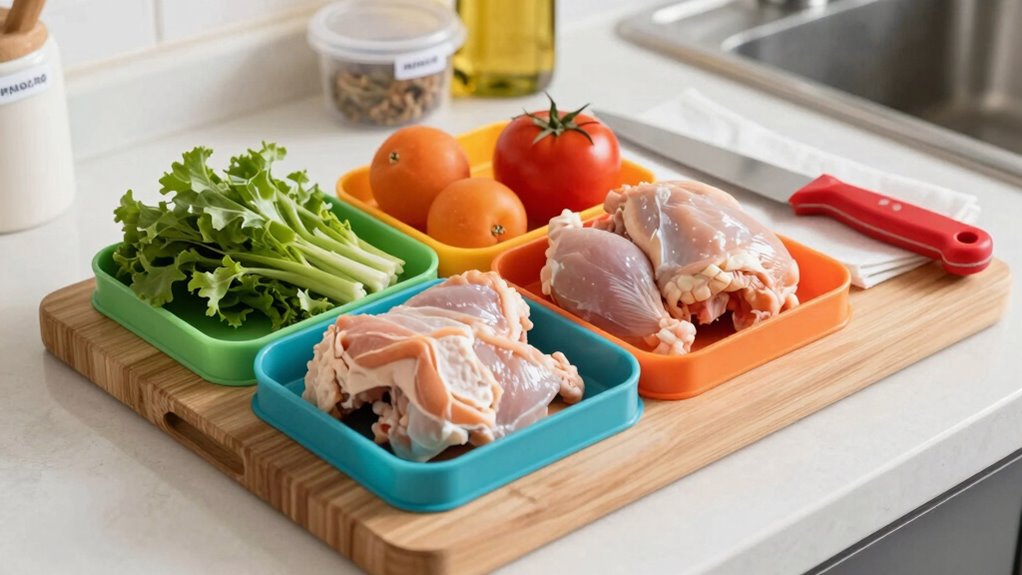
Preventing cross-contamination at home is simpler than many realize. Start with good kitchen organization by designating separate areas for raw meats, produce, and cooked foods. Use different cutting boards and utensils for each to avoid spreading bacteria. Proper food storage also makes a difference—store raw meats on the bottom shelf of the fridge to prevent drips onto other foods. Keep perishable items refrigerated promptly and avoid leaving leftovers out for too long. Regularly clean and sanitize countertops, cutting boards, and utensils after preparing different foods. Always wash hands thoroughly before and after handling raw ingredients. Incorporating proper ventilation considerations can help reduce airborne bacteria in the kitchen environment. Ensuring proper food storage practices can further minimize contamination risks. Using the right kitchen tools also helps prevent cross-contact between different ingredients. Additionally, maintaining good personal hygiene while preparing meals is essential to prevent the transfer of bacteria. By maintaining organized food storage and keeping your kitchen surfaces clean, you considerably reduce the risk of cross-contamination and keep your home safer. Proper air quality management through effective ventilation can further limit airborne bacteria, creating a healthier kitchen environment.
How to Handle Raw Meats and Produce Safely
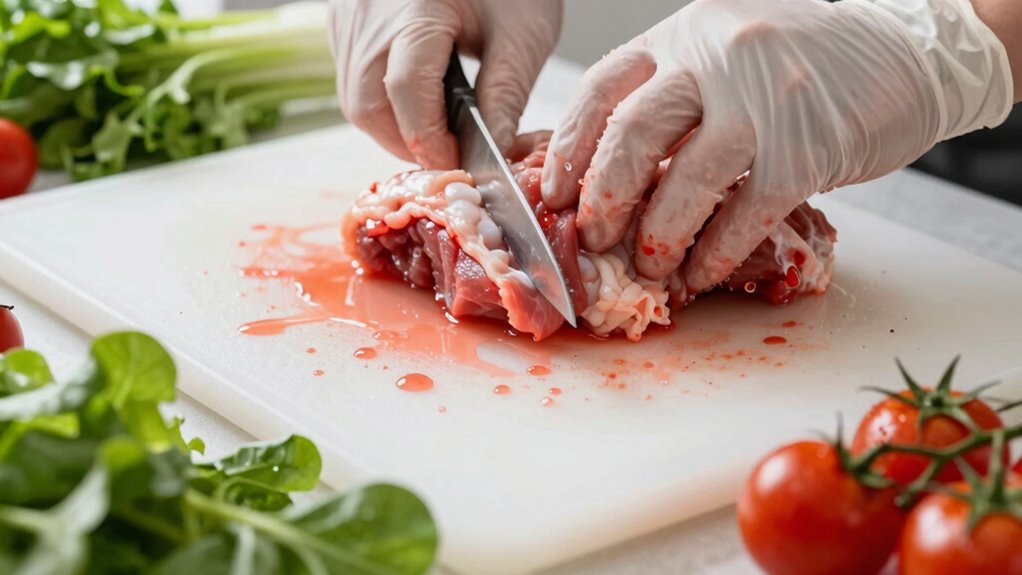
Handling raw meats and produce safely starts with proper preparation and storage. Keep raw meats separate from produce by storing them in sealed containers on the bottom shelf of your fridge to prevent drips. Always practice good hand hygiene by washing your hands thoroughly with soap and water before and after handling raw foods. Use separate cutting boards for meats and produce to avoid cross-contamination. When prepping, wash produce under running water and scrub firm items with a brush. Remember, proper storage prevents juices from contaminating other foods, and clean hands reduce the risk of spreading bacteria. By following these simple steps, you’ll minimize cross-contamination and keep your kitchen safe for everyone.
How to Clean and Sanitize Your Kitchen Tools and Surfaces
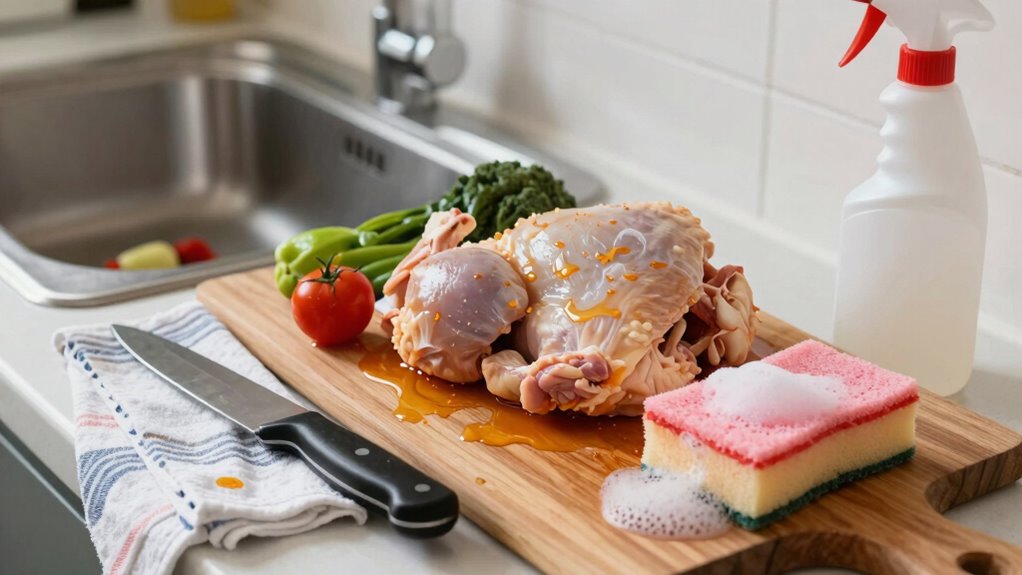
To effectively reduce bacteria and prevent cross-contamination, you need to regularly clean and sanitize your kitchen tools and surfaces. Start by practicing proper handwashing techniques—wash your hands with soap and warm water for at least 20 seconds before and after handling food, especially raw meats. Clean surfaces with hot, soapy water to remove visible dirt and food particles. Then, follow sanitizing practices by applying a food-safe sanitizer or a diluted bleach solution to kill lingering germs. Use separate cutting boards for raw meats and produce, and wash all utensils thoroughly after each use. Regular cleaning and sanitizing create a safer environment, minimizing the risk of bacteria transfer. Consistency is key to maintaining a hygienic kitchen and preventing cross-contamination.
Common Mistakes That Increase Cross-Contamination Risks and How to Avoid Them
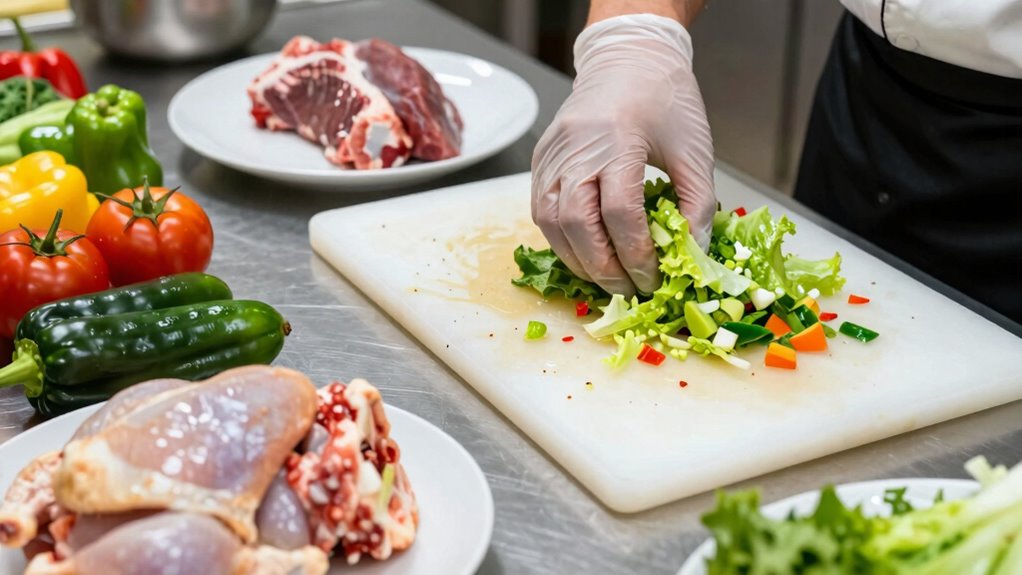
One common mistake that increases cross-contamination risks is using the same cutting board or utensils for raw meats and ready-to-eat foods without washing them thoroughly in between. This can transfer bacteria and other pathogens, especially if you neglect cleaning after handling raw meat. Additionally, poor practices like leaving food out in the open or improper storage can attract pests, which spread germs further. Be mindful of these mistakes:
- Using unclean utensils or cutting boards for different foods
- Storing raw meat above ready-to-eat items in the fridge
- Ignoring pest infestations that can introduce bacteria
- Failing to clean and sanitize surfaces regularly
Avoid these pitfalls by practicing proper cleaning, storing foods correctly, and addressing pest issues promptly. These steps notably reduce cross-contamination risks in your kitchen.
Quick Tips for Keeping Your Kitchen Safe From Cross-Contamination
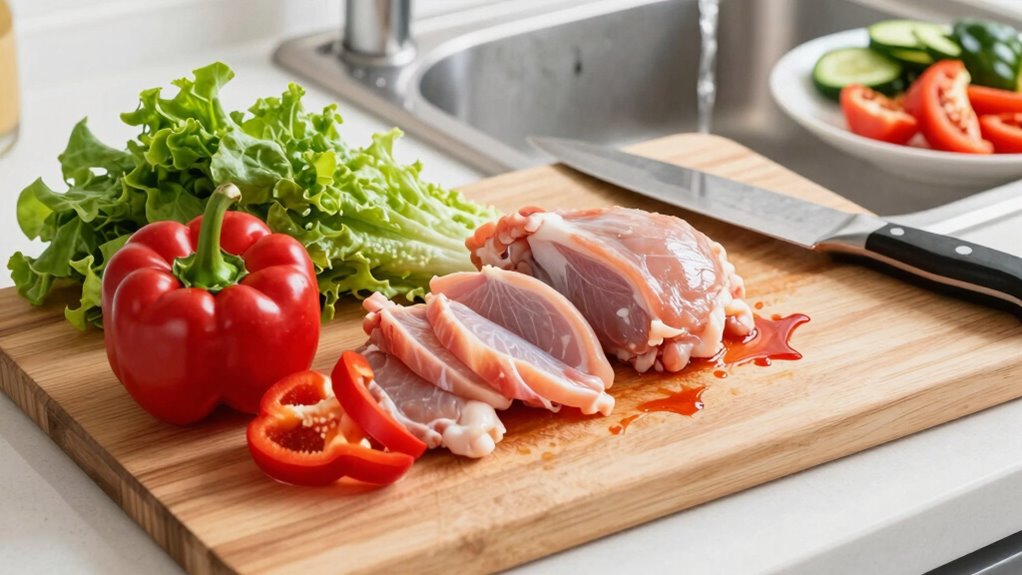
Keeping your kitchen safe from cross-contamination is easier when you follow a few simple, proactive tips. Start by washing your hands thoroughly with soap and water before handling food, and do so frequently throughout cooking. Use separate cutting boards and utensils for raw meats, vegetables, and cooked foods to prevent the spread of bacteria. Keep raw meat, poultry, and seafood separate from ready-to-eat items in your shopping cart and fridge. Maintain good kitchen hygiene by cleaning surfaces, sponges, and cloths regularly with hot, soapy water. Store food at proper temperatures to inhibit bacterial growth. These small steps help ensure food safety and reduce cross-contamination risks, keeping your kitchen a safe environment for everyone.
Frequently Asked Questions
Can Cross-Contamination Occur With Cooked Foods?
Yes, cross-contamination can happen with cooked foods if you’re not careful. During cooking safety, you might transfer bacteria or other contaminants from raw foods or contaminated surfaces onto cooked items. Always use separate utensils and cutting boards, and wash your hands thoroughly. When handling cooked foods, avoid touching raw ingredients or surfaces to reduce contamination risks, ensuring your meal stays safe to eat.
What Are the Best Storage Practices to Prevent Cross-Contamination?
Did you know improper storage can cause 80% of foodborne illnesses? To prevent cross-contamination, always practice proper storage by keeping raw meats separate from cooked foods. Use sealed containers and store raw items on the bottom shelves to avoid drips. Implement separation techniques, like color-coded bins, to organize your kitchen. These simple steps help guarantee your food stays safe and contamination-free during storage.
How Often Should Kitchen Surfaces Be Sanitized?
You should sanitize kitchen surfaces daily, especially after preparing raw foods. Maintain good hand hygiene by washing your hands thoroughly before and after handling different ingredients. Avoid utensil sharing to prevent cross-contamination, and clean utensils after each use. Regularly disinfect countertops, cutting boards, and sinks to keep bacteria at bay. Staying consistent with these practices ensures a safe, hygienic environment and reduces the risk of foodborne illnesses.
Are There Specific Cleaning Products Recommended for Preventing Cross-Contamination?
Think of your cleaning products as knights guarding your kitchen kingdom. Use antibacterial sprays and food-safe disinfectants to battle germs effectively. These specific products are designed to prevent cross-contamination by targeting bacteria without risking food safety. Always choose cleaning agents labeled safe for kitchen use, and apply them correctly to surfaces, utensils, and cutting boards. This way, you keep your kitchen protected and your meals safe from harmful germs.
Does Using the Same Cutting Board for All Foods Increase Risk?
Yes, using the same cutting board for all foods increases your risk of cross-contamination. It compromises food safety and kitchen hygiene by transferring bacteria and allergens between different ingredients. To keep your kitchen safe, always use separate cutting boards for raw meats, vegetables, and cooked foods. Regularly sanitize them with appropriate cleaning products. This simple step helps prevent foodborne illnesses and maintains a hygienic, safe cooking environment.
Conclusion
By staying vigilant and practicing good hygiene, you create a clean, safe haven in your kitchen—where bacteria are kept at bay like shadows retreating from the dawn. Visualize your countertops gleaming, utensils sparkling, and raw meats kept apart, forming a fortress against unseen threats. With mindful habits, you turn your cooking space into a sanctuary of health, ensuring every meal is prepared with confidence and care, protecting those you love from invisible dangers lurking in plain sight.