
When blending hot liquids, always guarantee your lid is securely in place to prevent steam and pressure buildup, which can cause spills or burns. Avoid overfilling and let liquids cool slightly before blending to reduce risks. Start slow, hold the lid firmly, and use vents or special lids if available. Carefully manage steam release and take your time when pouring. For more tips on avoiding accidents and blending safely, keep exploring these essential safety steps.
Key Takeaways
- Always secure the lid firmly and use vent features to prevent pressure buildup from hot liquids.
- Avoid overfilling the blender to reduce the risk of spills and sudden lid ejections.
- Start blending at low speed and gradually increase to control turbulence and splashes.
- Allow hot liquids to cool slightly before blending or opening the lid to prevent burns and pressure release.
- Use proper pouring tools and handle hot mixtures carefully to avoid spills and injuries.
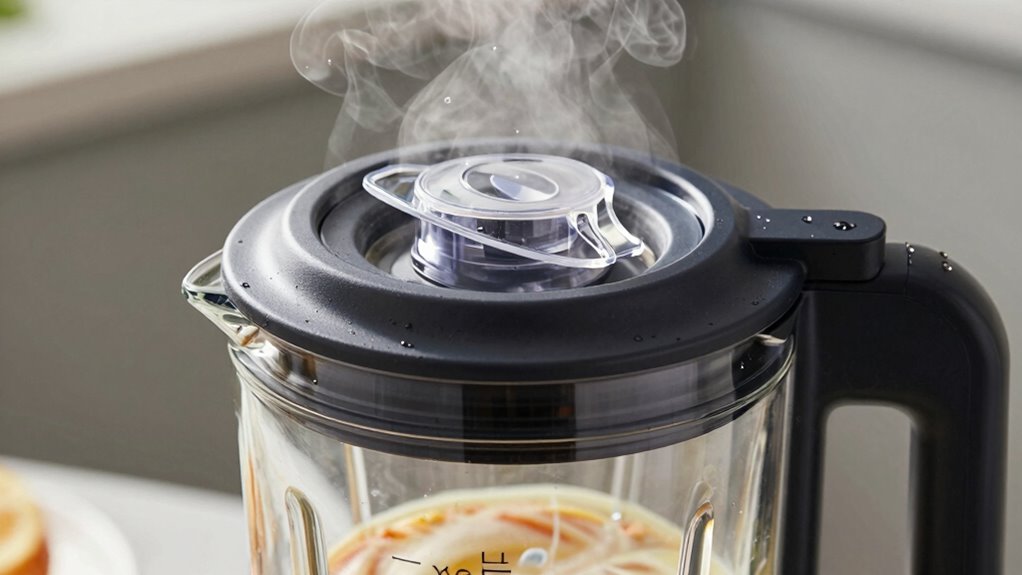
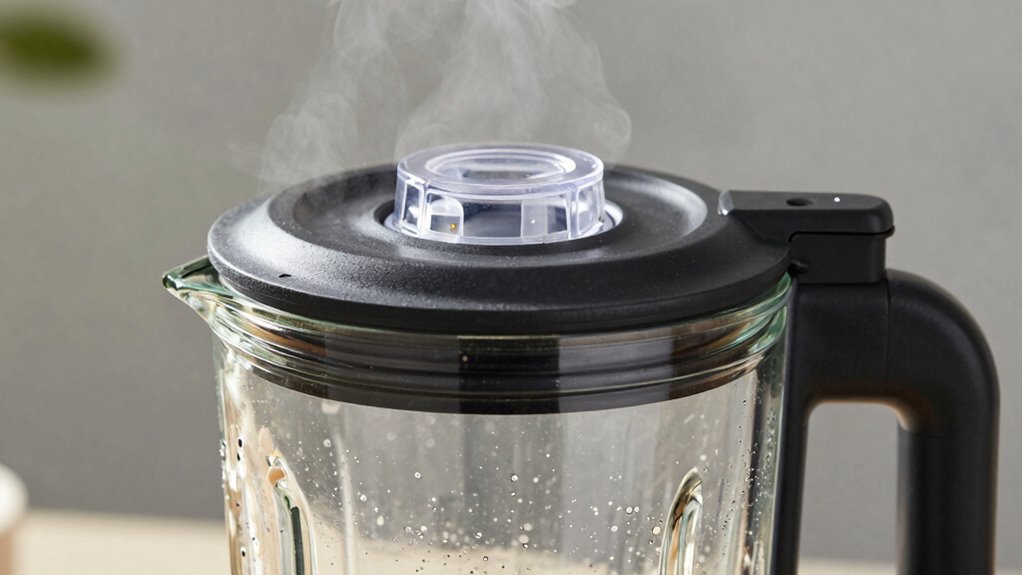
Using a blender safely is vital to prevent accidents and injuries in the kitchen. When working with hot liquids, the significance of blender lid security cannot be overstated. Hot liquids tend to produce steam and pressure that build quickly inside the container, making it essential to ensure the lid is firmly secured before blending. A loose or improperly placed lid can cause hot splashes, which can burn your skin or cause a mess. Always double-check that your blender lid is securely in place, especially when blending hot ingredients. Many blenders come with a special lid or vent to allow steam to escape safely, reducing pressure buildup. If your blender has this feature, make sure it’s properly aligned and used as directed. When handling hot liquids, avoid overfilling the blender jar. Fill it only up to the recommended level, leaving enough space for expansion and steam. Overfilling increases the risk of spillage or sudden release of hot contents. Before blending hot liquids, it’s a good idea to let them cool slightly to lower the risk of pressure-related accidents. Proper lid security is crucial for safe blending, especially with hot ingredients. During hot liquid handling, keep a firm grip on the lid and hold it down with one hand while starting the blender with the other. This prevents the lid from popping off unexpectedly due to pressure. Start blending at a low speed to control the initial turbulence, then gradually increase speed as the mixture becomes more stable. If your blender has a pulse function, use it carefully to avoid sudden splashes. Also, avoid opening the lid immediately after blending hot liquids. Allow the contents to settle and cool slightly before removing the lid, which helps prevent steam burns or splashes. When pouring hot liquids from a blender, use a pitcher or a ladle to transfer the mixture carefully, avoiding spills and splashes.
Frequently Asked Questions
Can Hot Liquids Cause Blender Motor Damage?
Yes, hot liquids can cause blender motor damage if you’re not careful. Pouring hot liquids into your blender without proper precautions can lead to overheating, which affects blender maintenance and reduces motor longevity. Always let hot liquids cool slightly, use the vented lid, and avoid overfilling. Taking these steps helps prevent strain on the motor, ensuring your blender functions well and lasts longer.
How Do I Know if My Lid Is Secure?
To guarantee your lid is secure, simply press down firmly and twist until it clicks into place. Check for lid security by giving it a gentle tug—if it doesn’t budge, it’s properly sealed. Remember, pressure buildup can occur with hot liquids, so always confirm lid security before blending. Staying safe means stopping spills, spills, and possible pressure problems before they start!
Are There Specific Blender Models Safer for Hot Liquids?
Yes, some blender models are safer for hot liquids. Look for blenders with high-quality, heat-resistant materials like tempered glass or sturdy plastic. Pay attention to lid design—models with locking lids or secure sealing mechanisms prevent spills and pressure buildup. These features guarantee safe blending when handling hot liquids, giving you peace of mind and reducing the risk of accidents. Always check the manufacturer’s guidelines for hot liquid use.
What’s the Best Way to Cool Hot Liquids Before Blending?
To cool hot liquids before blending, start with cooling techniques like letting the liquid sit for a few minutes or placing the container in an ice bath. Use temperature indicators, such as a thermometer, to make certain the liquid has cooled to a safe blending temperature, ideally below 140°F (60°C). This prevents pressure buildup and reduces the risk of accidents, keeping you safe while blending hot liquids.
Can Overfilled Blenders Increase Pressure Risks?
Overfilling hazards can definitely increase pressure risks when you blend hot liquids. When you overfill your blender, the liquid has less space to expand, making it easier for pressure to build up. To prevent this, always use proper lid sealing techniques, ensuring the lid is secure and vents are open if necessary. Keep your fill levels below the maximum line to stay safe and avoid spills or accidents.
Conclusion
So, next time you’re tempted to ignore that warning about hot liquids or forget to loosen the lid, remember: your blender isn’t just a pretty appliance. It’s a tiny, temperamental volcano waiting to erupt. Treat it with respect, or risk becoming the unfortunate star of your own slapstick show. Safety isn’t just a suggestion; it’s your ticket to avoiding kitchen chaos. Stay cautious, stay clever, and keep the explosions on the big screen, not in your blender.