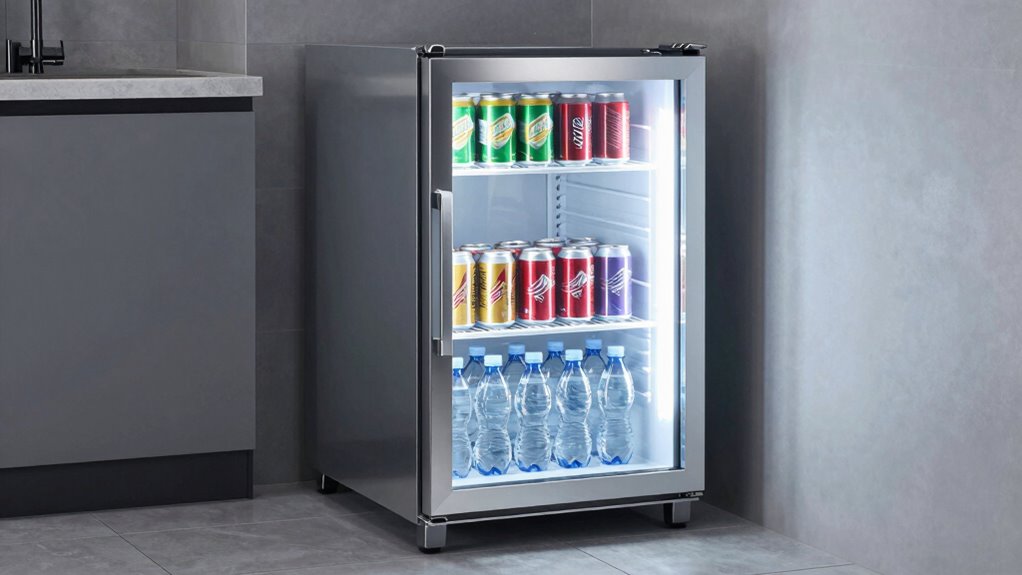
To avoid overheating and noise, choose a cool, shaded spot with good airflow away from heat sources like stoves or direct sunlight. Make sure your beverage fridge is on a stable, level surface and leave enough space around it for proper ventilation. Keep it away from high-traffic areas to reduce vibrations and disturbances. Proper placement helps the fridge operate quietly and efficiently. For more tips on ideal placement, continue exploring effective setup solutions.
Key Takeaways
- Place the fridge in a cool, shaded area away from direct sunlight and heat sources.
- Ensure ample clearance around the appliance for proper airflow and ventilation.
- Keep the fridge on a level, stable surface to reduce vibrations and operational noise.
- Position it away from high-traffic zones to minimize disturbances and vibration-related noise.
- Maintain easy access for maintenance and cleaning, preventing dust buildup and overheating.

Choosing the right spot for your beverage fridge can make a big difference in its performance and convenience. When you place it thoughtfully, you’ll improve energy efficiency and maximize space optimization, making your setup more streamlined and cost-effective. First, avoid spots with direct sunlight or near heat sources like stoves, radiators, or ovens. Excess heat forces the compressor to work harder, increasing energy consumption and risking overheating. Instead, find a cool, shaded area with good air circulation. Proper ventilation is key—don’t jam it into tight corners or cabinets that trap heat, as this can cause the fridge to overheat and noise levels to rise.
Choose a cool, shaded spot with good air circulation for optimal beverage fridge performance.
Next, consider your space carefully. You want enough room around the fridge to allow airflow, which helps keep it cool and quiet. If your beverage fridge is too cramped against walls or other appliances, it won’t dissipate heat efficiently, leading to higher energy use and potential overheating. Use the space optimization principle by leaving a few inches of clearance on all sides. This not only ensures better cooling but also reduces noise, since the compressor won’t be working against restricted airflow. A well-ventilated spot also minimizes vibrations and rattling sounds that can become bothersome over time.
Placement on an even surface is another critical factor. A wobbly or uneven floor can cause vibrations, leading to excess noise and potential wear on internal components. Make sure your beverage fridge sits on a level, sturdy surface. If you’re placing it on uneven flooring, consider adding small shims or pads to stabilize it. This simple step preserves the appliance’s longevity and keeps noise levels down. Avoid placing the fridge near high-traffic areas where door openings and vibrations from foot traffic can cause disturbances. A quieter, more stable location will help keep operational noise to a minimum.
Finally, think about accessibility and visibility. Position the fridge at a height and location that’s easy to reach without stretching or bending excessively. This reduces the risk of accidental bumps or knocking, which can cause noise or damage. Keeping it in a dedicated, well-ventilated spot also makes maintenance easier, helping you spot issues before they escalate. Additionally, understanding proper ventilation techniques can help prevent overheating and excess noise during operation. When you choose your placement wisely, your beverage fridge will operate more efficiently, stay cooler, and run quieter, all while fitting seamlessly into your space.
Frequently Asked Questions
Can Placing the Fridge Near Windows Cause Overheating?
Yes, placing your beverage fridge near windows can cause overheating. Sunlight exposure from direct window placement increases the ambient temperature around the fridge, forcing it to work harder. Avoid positioning your fridge where it gets direct sunlight or near windows with strong sunlight exposure. Instead, choose a shaded, cool spot away from heat sources to keep it running efficiently and prevent overheating or excessive noise.
Is It Safe to Put the Beverage Fridge Outdoors?
Placing your beverage fridge outdoors isn’t generally safe unless it’s specifically designed for outdoor use. Weather considerations, like rain, extreme heat, or cold, can damage the unit, cause overheating, or increase noise. If you want outdoor placement, choose a weatherproof model and guarantee it’s protected from direct sunlight and moisture. Otherwise, keep it indoors where temperature and humidity levels are controlled for ideal performance and safety.
How Does Ambient Temperature Affect Fridge Noise Levels?
Ambient temperature impacts your fridge’s noise levels because higher temperatures cause the compressor to work harder, increasing noise. When the surrounding environment is hot, your fridge’s thermal insulation struggles to keep internal temperatures stable, making the compressor run more frequently and loudly. Conversely, cooler ambient temperatures reduce strain on the compressor, leading to quieter operation. To keep noise low, place your fridge in a well-ventilated area with moderate ambient temperature and good thermal insulation.
Should I Use a Thermal Insulator Around the Fridge?
Think of insulation benefits as a shield for your fridge, preventing unnecessary heat exchange. Using a thermal insulator around your beverage fridge acts as a thermal barrier, keeping the cool in and the heat out. It reduces the workload on the compressor, minimizes noise, and maintains consistent temperatures. So, yes, adding insulation can improve efficiency, cut noise levels, and protect your appliance from overheating, making your setup quieter and more reliable.
What Are the Signs of a Malfunctioning Beverage Fridge?
You’ll notice your beverage fridge malfunctioning if the fridge temperature isn’t consistent or it’s too warm. Check if the door seals are intact; damaged seals cause temperature fluctuations. Listen for unusual noises, like rattling or buzzing, which indicate mechanical issues. Also, if the compressor runs constantly or the fridge struggles to cool, these signs point to a malfunction. Regularly inspecting these aspects helps keep your fridge working efficiently.
Conclusion
Proper placement of your beverage fridge is key to preventing overheating and noise. Keep it in a well-ventilated spot away from heat sources, and make certain there’s enough space around it for airflow. Did you know that a poorly ventilated fridge can increase energy consumption by up to 25%? By following these tips, you’ll enjoy a quieter, more efficient fridge that keeps your drinks perfectly chilled without the hassle of overheating or noise.