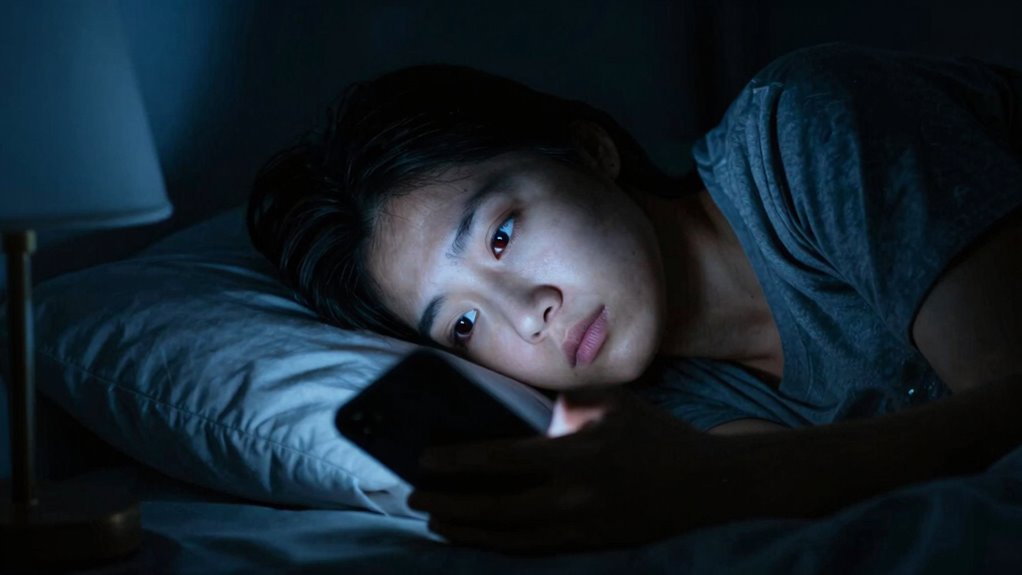

When you use screens at night, blue light signals your brain that it’s daytime, making it harder to wind down. It suppresses melatonin, the hormone that helps you fall asleep, which delays your sleep cycle and reduces sleep quality. This keeps your mind alert, leaving you feeling restless and more anxious. Over time, this disrupts your natural rhythms, leaving you exhausted yet wired. If you want to understand how to protect yourself, there’s more to discover below.

Prime made for students and young adults
- Fast, free delivery for dorm and study essentials
- Prime Video and Amazon Music included
- Member-only deals
Key Takeaways
- Blue light at night increases alertness and restlessness, making it harder to relax.
- Exposure suppresses melatonin, delaying sleep onset and reducing sleep quality.
- Nighttime screen use disrupts the natural circadian rhythm, confusing the brain’s sleep signals.
- High brain activity from screens leaves you feeling energized yet exhausted.
- Using screens late at night interferes with the body’s natural winding-down process.
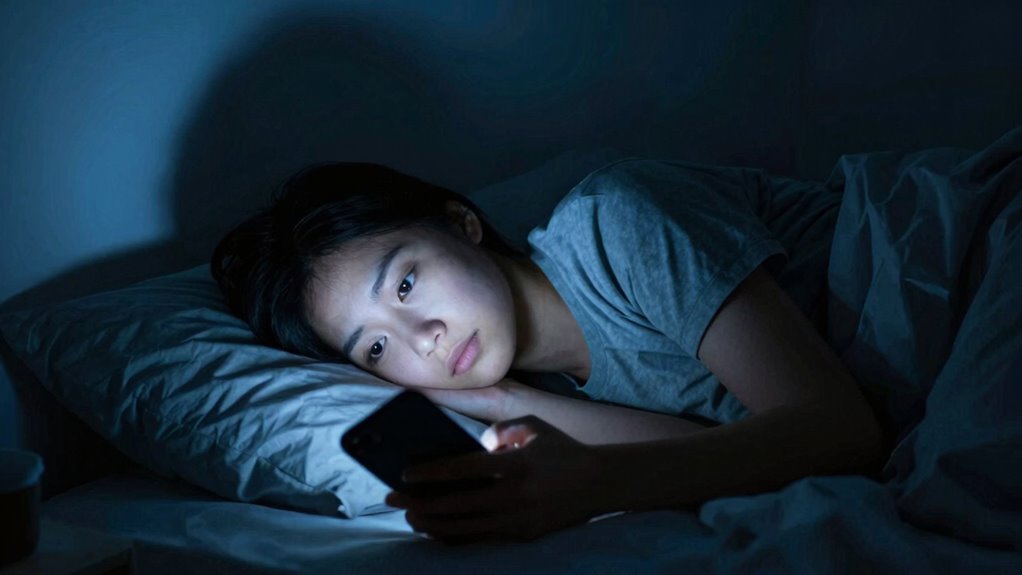
Many people notice that screen time tends to feel more intense and disruptive at night, and this isn’t just in your head. When you scroll through your phone or binge-watch shows in the evening, you might feel more alert, restless, or even anxious, unlike during the day. This heightened effect is largely due to how screens emit blue light, which has a direct impact on your circadian rhythm—the internal clock that regulates your sleep-wake cycle. Blue light signals to your brain that it’s daytime, tricking your body into staying awake longer. As a result, your natural sleep signals get disrupted, making it harder to fall asleep or enjoy restful sleep afterward.
Blue light from screens at night disrupts your sleep cycle, making it harder to fall asleep and stay rested.
Your circadian rhythm is finely tuned to the natural cycle of daylight and darkness. When it’s dark outside, your body produces melatonin, the hormone that helps you feel sleepy. But exposure to blue light from screens interferes with this process. The more blue light you’re exposed to at night, the more your body suppresses melatonin production. This suppression can delay your sleep onset, reduce sleep quality, and leave you feeling groggier the next day. You might not realize it, but even a few minutes of screen time before bed can throw off your internal clock and make you feel more wired and less ready for sleep.
Additionally, blue light doesn’t just affect your sleep. It also influences alertness, mood, and cognitive function. That’s why scrolling through social media or watching videos at night can leave you feeling more energized, yet exhausted at the same time. Your brain remains active, and your body struggles to wind down, creating a cycle where you feel both restless and drained. This cycle can make nighttime screen time seem especially overwhelming, as it interferes with your natural tendency to relax and prepare for sleep. Recognizing how blue light and your circadian rhythm interact can help you understand the importance of managing your evening screen exposure and protecting your sleep patterns. Incorporating blue light filters or setting a screen curfew can be effective strategies to minimize these effects. Understanding the role of indoor lighting and its impact on your circadian rhythm can further help optimize your sleep environment.
blue light blocking glasses for sleep
As an affiliate, we earn on qualifying purchases.
As an affiliate, we earn on qualifying purchases.
Frequently Asked Questions
How Does Screen Brightness Affect Sleep Quality?
Higher screen brightness increases blue light exposure, which suppresses melatonin production. When you keep your screen bright at night, it tricks your brain into thinking it’s daytime, making it harder to fall asleep. Lowering your screen brightness reduces blue light, helping melatonin levels stay normal. This improves your sleep quality, helping you fall asleep faster and enjoy more restful, restorative sleep after your screen time.
Can Using Screens Late at Night Cause Long-Term Health Issues?
Using screens late at night can cause long-term health issues, as studies show that blue light exposure disrupts your circadian rhythm. Nearly 70% of adults report difficulty sleeping due to screen use, which over time increases risks for obesity, diabetes, and heart disease. Blue light hampers melatonin production, leading to circadian disruption, and can impact your overall health if you keep this habit long-term.
Are There Specific Types of Screens More Disruptive at Night?
Yes, blue light from screens like smartphones and tablets is more disruptive at night because it suppresses melatonin, making it harder to fall asleep. Content engagement, especially with stimulating or emotionally intense material, can also keep your brain active, delaying rest. So, you should limit exposure to blue light and avoid highly engaging content before bed to improve your sleep quality and reduce feelings of restlessness.
How Does Screen Time Impact REM Sleep Stages?
Did you know that excessive screen time can reduce REM sleep by up to 25%? When you use screens at night, the blue light causes circadian disruption and suppresses melatonin, the hormone that signals sleep readiness. This interference can delay your REM sleep stages, which are crucial for memory and emotional health. As a result, your sleep quality drops, leaving you feeling groggy and less refreshed in the morning.
What Are the Best Strategies to Reduce Nighttime Screen Exposure?
To reduce nighttime screen exposure, you should limit your use of devices at least an hour before bed. Use blue light filters or glasses to decrease blue light’s impact, which can cause eye strain and disrupt sleep. Consider setting a device curfew, engaging in relaxing activities instead. This helps your eyes rest and improves sleep quality, making bedtime more comfortable and less disruptive.
blue light filter screen protector
As an affiliate, we earn on qualifying purchases.
As an affiliate, we earn on qualifying purchases.
Conclusion
So, next time you’re up late scrolling, remember—your screen isn’t just stealing your sleep; it’s also secretly judging your life choices. It’s basically saying, “Hey, you could be sleeping, but no, you’d rather binge that last episode or scroll through memes.” But hey, who needs rest when you can enjoy the thrilling, guilt-laden adventure of late-night screen time? Just don’t be surprised when you wake up feeling like a zombie—your screen’s little joke at your expense.
As an affiliate, we earn on qualifying purchases.
As an affiliate, we earn on qualifying purchases.
Halloween Picks
halloween
As an affiliate, we earn on qualifying purchases.