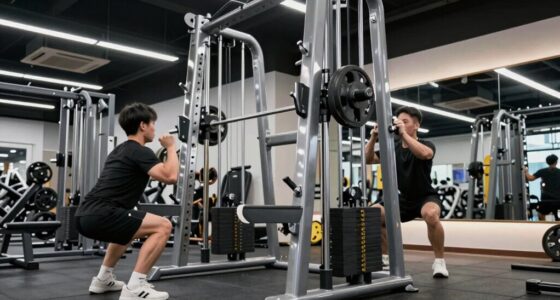
If you want a workout that’s easier on your joints, rowing is the better choice. It’s low-impact, meaning it minimizes stress and pounding on your knees, hips, and ankles, unlike running which involves weight-bearing and repetitive impact. Rowing’s smooth, controlled motion and water resistance help protect your joints from wear and tear. To discover how each activity affects your body and which suits your goals best, keep exploring the details.

Prime made for students and young adults
- Fast, free delivery for dorm and study essentials
- Prime Video and Amazon Music included
- Member-only deals
Key Takeaways
- Rowing is low-impact and minimizes joint stress, making it easier on joints compared to running.
- Running involves repetitive pounding, increasing joint wear over time, whereas rowing’s smooth motion reduces this risk.
- Water resistance in rowing provides a natural, adaptable load that protects joints, unlike the high-impact load from running.
- Rowing is suitable for those with joint sensitivities or injuries, offering a safer, joint-friendly exercise option.
- Running may worsen joint issues due to impact, while rowing offers a controlled, gentle workout for joint preservation.

When choosing between rowing and running, you’re faced with two highly effective cardiovascular workouts that target different aspects of fitness. Both offer excellent ways to boost your endurance and burn calories, but they do so with different impacts on your joints. If joint health is a concern, understanding how each activity interacts with your body can help you make an informed decision.
Rowing is often praised for its low-impact nature, making it a popular choice for those with joint sensitivities or previous injuries. The water resistance generated by the rowing machine or actual water-based rowing provides a smooth, controlled resistance that adapts to your effort. This means you can increase or decrease intensity without putting excessive strain on your knees, hips, or ankles. Because water resistance offers a natural, continuous load, you engage multiple muscle groups—legs, core, back, and arms—without the jarring impact associated with running. This muscle engagement is key to building strength and endurance while minimizing joint stress. The fluid motion of rowing reduces the pounding that running often causes, which is why many physical therapists recommend it for rehab or ongoing joint preservation.
Rowing is a low-impact workout that engages multiple muscle groups with water resistance, reducing joint stress and risk of injury.
Running, on the other hand, is a weight-bearing activity that naturally involves more impact on your joints. The repetitive pounding on hard surfaces can lead to wear and tear over time, especially if you run on concrete or asphalt. While running effectively engages your leg muscles, it also places a significant load on your knees and hips. If you have existing joint issues or are prone to injuries like shin splints or stress fractures, this impact can exacerbate those problems. However, running can still be a great cardio workout if done carefully—shoes with proper cushioning, softer surfaces like trails or tracks, and mindful pacing all help reduce strain. But compared to rowing, it’s more likely to cause discomfort or aggravate joint conditions, especially with high mileage or improper technique.
Ultimately, if your goal is to protect your joints, rowing offers a compelling advantage. Its water resistance and full-body muscle engagement deliver an effective workout while maintaining low impact. Running, while excellent for cardiovascular health and bone density, demands more from your joints and can lead to discomfort if not managed carefully. Your choice should consider your current joint health, injury history, and fitness goals. If joint preservation is a priority, rowing might be the safer, more sustainable option for long-term exercise.
As an affiliate, we earn on qualifying purchases.
Frequently Asked Questions
How Do Age and Weight Affect Joint Impact in Rowing Versus Running?
Age and weight play a big role in joint impact during rowing and running. With age, joint cushioning decreases, making impact absorption more difficult, especially in running. Heavier individuals experience greater stress on joints, increasing impact forces. Rowing offers low-impact exercise with better impact absorption, easing joint strain. Running, however, can cause more joint stress due to higher impact forces, particularly for older or heavier people.
Can Combining Rowing and Running Reduce Overall Joint Stress?
Combining rowing and running can markedly reduce overall joint stress, especially since cross-training offers exercise synergy. Did you know that alternating low-impact rowing with running can decrease joint impact by up to 30%? This approach allows you to enjoy cardiovascular benefits while minimizing repetitive joint strain. By diversifying your workouts, you give your joints time to recover, creating a more sustainable exercise routine that keeps you active and injury-free.
Which Exercise Is Safer for Individuals With Pre-Existing Joint Conditions?
If you have pre-existing joint conditions, rowing is generally safer because it’s low-impact and helps prevent joint deterioration. Running can put more stress on your joints, increasing injury risk. To prevent injury and protect your joints, focus on exercises that minimize impact, like rowing, and always warm up properly. Consult your healthcare provider before starting new activities, and listen to your body to avoid overloading your joints.
Does Technique Influence Joint Safety in Rowing and Running?
Your technique is the compass that guides your joint safety in rowing and running. When you make technique adjustments and prioritize safety training, you steer clear of the rocky shoals of injury. Proper form acts like a shield, distributing impact evenly and protecting your joints. Pay attention to your posture, stride, and movement patterns—these small adjustments can turn your workout into a smooth sail rather than a rough voyage.
Are There Differences in Joint Impact for Men and Women?
Gender differences in joint impact stem from variations in joint biomechanics between men and women. Men typically have greater muscle mass, which can absorb more impact, potentially reducing joint stress. Women often have wider hips and different joint alignment, possibly increasing stress on knees and hips during activities. Recognizing these differences helps you tailor your exercise choices and techniques to minimize joint strain and prevent injury for your body type.
As an affiliate, we earn on qualifying purchases.
Conclusion
Ultimately, choosing between rowing and running comes down to your joints’ needs. Rowing is gentler and offers a low-impact workout, making it easier on your joints. Running, while effective, can take a toll over time. Remember, “An ounce of prevention is worth a pound of cure.” Listen to your body, and pick the activity that keeps you moving without pain. Prioritize your joints today for a healthier tomorrow.
As an affiliate, we earn on qualifying purchases.
As an affiliate, we earn on qualifying purchases.
Fall Picks
fall essentials
As an affiliate, we earn on qualifying purchases.