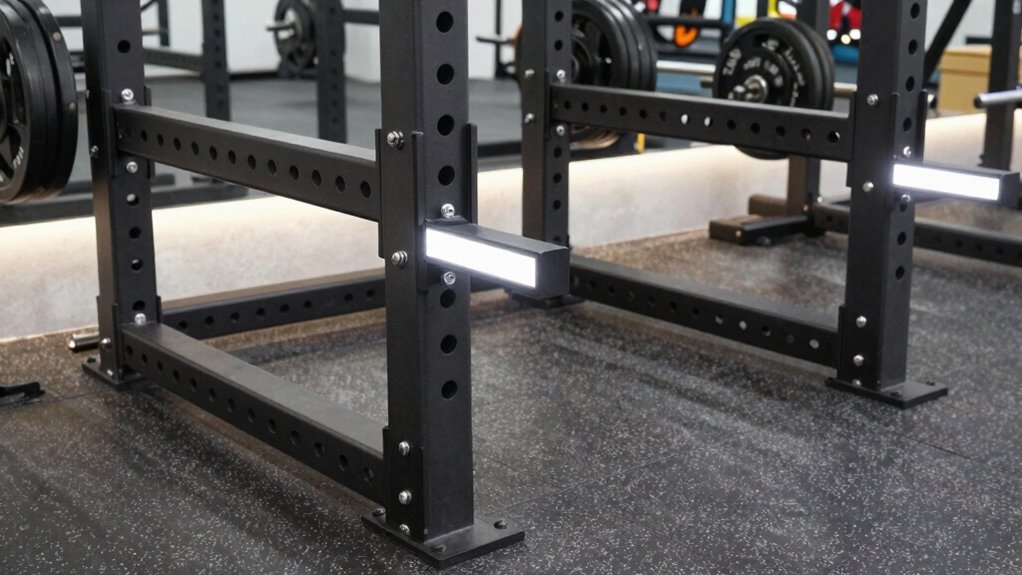

To guarantee power rack safety, you must properly position your spotter arms and safety pins before lifting. Set the arms just below your safest lift point, like below your chest or above your hips, depending on the exercise. Verify the pins are secure and stable by gently tugging them. Always double-check your setup before each session. By mastering these steps, you’ll build confidence and prevent accidents—all essential safety tips await those who want to learn more.

Prime made for students and young adults
- Fast, free delivery for dorm and study essentials
- Prime Video and Amazon Music included
- Member-only deals
Key Takeaways
- Set spotter arms just below the safe failure point, level with or slightly below the chest for bench presses.
- Adjust safety pins to a comfortable height through test lifts without weights, ensuring they catch the bar before a fall.
- Secure safety pins firmly, and give safety arms a gentle tug to verify stability before each workout.
- Always recheck safety features after changing weights or exercises to maintain optimal safety.
- Use quality power racks with reliable safety components for enhanced protection during heavy lifts.
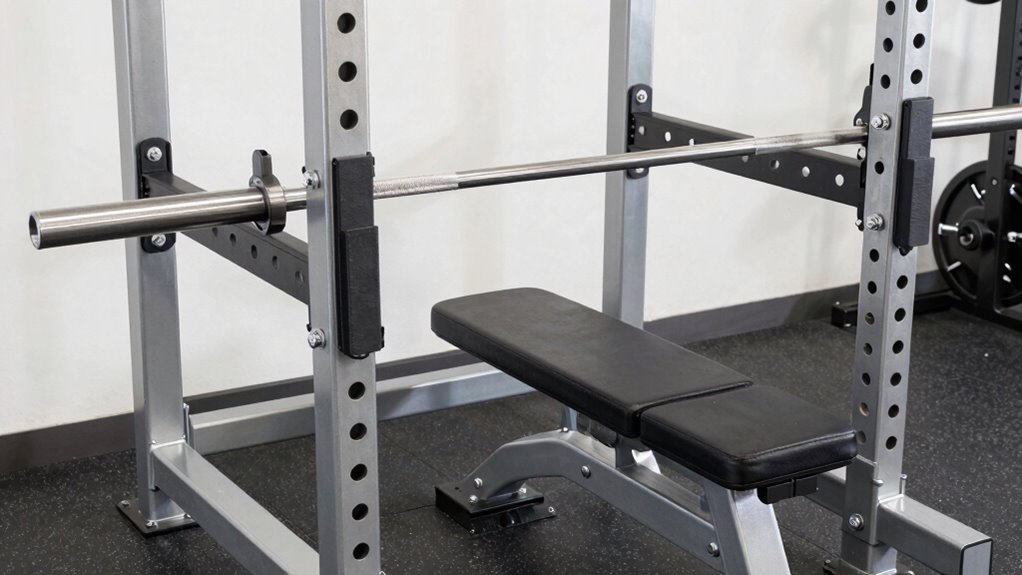
Using a power rack safely is essential to prevent injuries and guarantee effective workouts. One of the most important aspects of safety within a power rack involves proper spotter arm placement and adjusting the safety pin height correctly. When you set up your rack, take the time to position the spotter arms at the right height, as this will serve as your primary safety feature during heavy lifts. The spotter arms should be just below your safest point of failure—meaning, if you can’t lift the weight anymore, the arms will catch the bar before it drops onto you. To determine the correct safety pin height, perform a test without weights or with a lighter load, and lower the bar until it’s at a position where you feel comfortable and secure. The safety pin should be level with or just slightly below your chest or upper torso, ensuring it can catch the bar if needed without restricting your movement or range of motion.
Positioning the spotter arms at the correct height is a straightforward but critical step. If the safety pins are too high, they won’t provide adequate protection when you fail during a lift, risking injury if the bar descends beyond the safety points. Conversely, if they’re too low, you might find it difficult to rack or unrack the bar safely, especially during heavy lifts. Always double-check the placement before each session—your safety depends on it. When adjusting, make sure the spotter arms are securely locked into place and won’t shift during your workout. Stability is key, so give them a gentle tug after setting to confirm they’re firmly secured. Additionally, choosing a quality power rack with reliable safety features can significantly enhance your workout safety. Furthermore, consider your workout type when setting the safety pin height. For bench presses, position the safety arms just below your chest level so they can catch the bar if you can’t complete the lift. For squats or overhead presses, set the safety pins at a height that will stop the bar before it reaches your ankles or head, respectively. Remember, safety is a continuous process: always check the placement before lifting, especially when switching between different exercises or weights.
As an affiliate, we earn on qualifying purchases.
Frequently Asked Questions
How Often Should I Inspect Spotter Arms for Wear?
You should inspect your spotter arms for wear at least once a month, following your inspection schedule. Check wear indicators closely, looking for cracks, bends, or corrosion that could compromise safety. If you notice any signs of excessive wear or damage, replace them immediately. Regular inspections help guarantee your spotter arms remain secure and effective during heavy lifts, keeping you safe during every workout session.
Can I Customize Spotter Arm Height for Different Exercises?
Yes, you can customize the spotter arm height for different exercise variations. Most power racks have adjustable height features that let you easily set the spotter arms at the right level for squats, bench presses, or other lifts. By adjusting the height, you guarantee safety during varied exercises, accommodating your form and load. Always verify the spotter arms are securely locked after adjustments to prevent accidents.
What Materials Are Best for Durable Spotter Arms?
Ever wondered what makes spotter arms last through intense workouts? You should choose high-quality steel or heavy-duty metal for maximum durability. These materials excel in metal strength and withstand impact, weight, and repeated use. Are you willing to compromise safety for cheaper materials? Opt for durable metals, like steel, to guarantee your spotter arms stay reliable and safe over time, giving you peace of mind during every lift.
Are There Safety Guidelines for Using Multiple Spotters?
Yes, there are safety guidelines for using multiple spotters. You should establish clear spotter communication, ensuring everyone knows their role during lifts. Make sure each spotter understands emergency procedures, like how to safely assist or take over if needed. Always coordinate your signals, maintain visual contact, and stay alert. Properly trained spotters working together help prevent accidents and provide effective support during heavy lifts, keeping you safe.
How Do I Prevent Pinching Injuries With Spotter Pins?
Ever wondered how to avoid painful pinch point hazards with spotter pins? To prevent pinching injuries, always make certain the pins are correctly positioned and secure before lifting. Use protective padding around the pins and moving parts to cushion any accidental contact. Keep your hands clear of potential pinch points during setup and adjustment. Regularly inspect the pins and rack for wear or damage, and stay alert to avoid harmful pinch incidents.
As an affiliate, we earn on qualifying purchases.
Conclusion
Remember, investing a little time to properly set up your power rack with spotter arms and safety pins isn’t just about safety—it’s about confidence. Some might think it slows you down, but in reality, it allows you to push your limits safely and focus on your form. Don’t overlook these simple precautions; they’re your best defense against injury. With the right setup, you can train hard and stay safe every step of the way.
adjustable safety spotter arms for power rack
As an affiliate, we earn on qualifying purchases.
As an affiliate, we earn on qualifying purchases.
heavy duty power rack safety accessories
As an affiliate, we earn on qualifying purchases.
As an affiliate, we earn on qualifying purchases.
Fall Picks
fall essentials
As an affiliate, we earn on qualifying purchases.