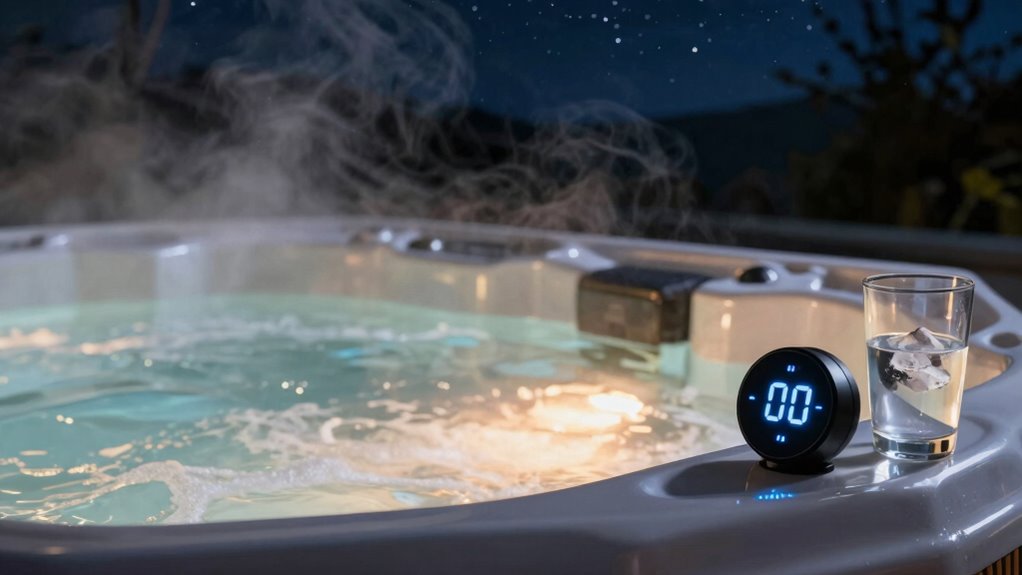

To stay safe in a hot tub, keep the water temperature between 100-104°F and check it regularly with a thermometer. Limit your time to 15-20 minutes to prevent overheating and dehydration. Stay hydrated by sipping water often, and avoid alcohol. Watch for signs of feeling too hot or dizzy, and exit immediately if needed. For more tips on hot tub safety, learn how proper heat management, timed sessions, and hydration work together.
Key Takeaways
- Maintain water temperature between 100-104°F to ensure safety and prevent burns or heat-related illnesses.
- Limit hot tub sessions to 15-20 minutes to avoid overheating and dehydration.
- Regularly check water temperature with a reliable thermometer to keep conditions within safe limits.
- Stay hydrated by sipping water frequently, and avoid alcohol to reduce dehydration risks.
- Monitor for signs of overheating, such as dizziness or discomfort, and exit immediately if they occur.
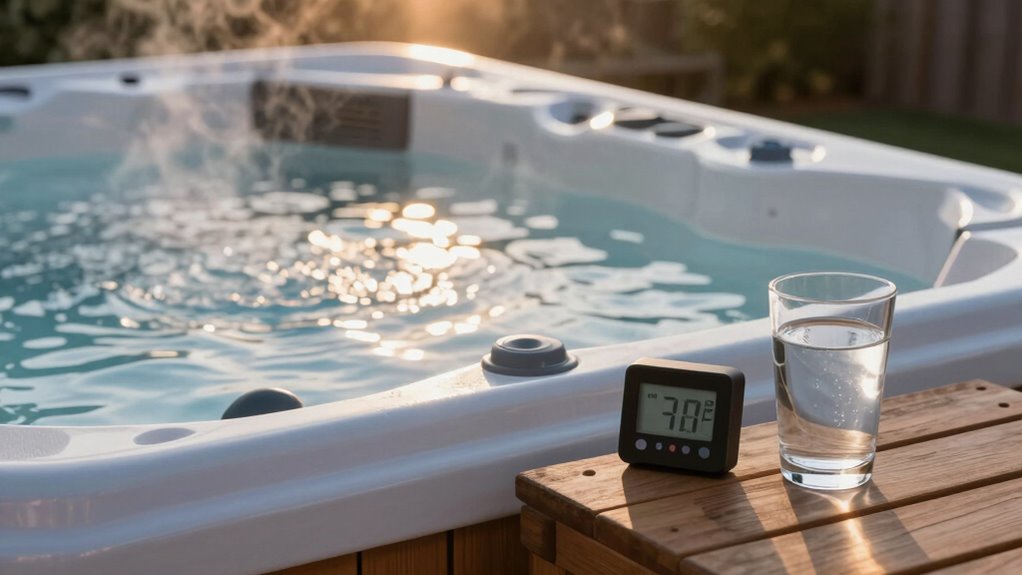
A hot tub can be a relaxing retreat, but safety should always come first. One of the most important aspects of safe hot tub use is proper temperature regulation. You want to keep the water at a comfortable, safe level—typically between 100 and 104 degrees Fahrenheit. Staying within this range helps prevent overheating, which can lead to heat exhaustion or heat stroke. If you notice the water feeling too hot or if you’re feeling dizzy or uncomfortable, it’s essential to get out immediately. Regularly check the temperature with a reliable thermometer to guarantee it remains within safe limits. Proper temperature regulation isn’t just about comfort; it’s a key factor in injury prevention. Overly hot water can cause rapid increases in body temperature, leading to fainting or even burns if you’re exposed for too long. Maintaining a safe temperature also reduces the risk of dehydration and other heat-related health issues. Monitoring the water temperature regularly is especially important for vulnerable populations such as children or seniors.
Time limits are equally significant when it comes to hot tub safety. Even if the water temperature feels perfect, spending too long immersed can be harmful. Experts generally recommend limiting sessions to 15-20 minutes, especially if the water is at the higher end of the temperature range. Staying in longer can cause your body to overheat, which increases the risk of dizziness, nausea, and fainting. To prevent this, set a timer and stick to it. Remember to take breaks by stepping out of the hot tub periodically, allowing your body to cool down and rehydrate. If you’re feeling lightheaded or uncomfortable, it’s best to exit immediately, regardless of your time limit.
Hydration is another essential component of hot tub safety. The heat causes you to sweat, which can quickly lead to dehydration if you’re not drinking enough fluids. Keep a bottle of water nearby and make it a habit to sip regularly while enjoying the hot tub. Proper hydration not only helps regulate your body temperature but also supports overall injury prevention. Dehydration can impair your judgment and coordination, increasing your chances of accidents or falls. If you’re consuming alcohol, be extra cautious, as it can intensify dehydration and impair your ability to recognize when you need to exit the hot tub. Being aware of precise temperature control can significantly help in maintaining safe conditions during your hot tub session.

TempPro Waterproof Wireless Pool Thermometer Easy Read, Digital Pool Thermometer Floating for Swimming Pool, Hot Tub, Cold Plunge, Pond, Upgraded IPX8 Water Temperature Monitor (Previously ThermoPro)
This sensor/transmitter is specially designed for measuring the water temperature in swimming pools, hot tubs, spas and so…
As an affiliate, we earn on qualifying purchases.
As an affiliate, we earn on qualifying purchases.
Frequently Asked Questions
Can Children Safely Use Hot Tubs With Adult Supervision?
Children can use hot tubs safely if you provide constant child supervision and enforce strict hot tub rules. Keep the water temperature low, limit their time in the hot tub, and guarantee they stay hydrated. Always watch them closely, and never leave children unattended. Following these guidelines helps prevent accidents and ensures a safe, enjoyable experience for your kids while they’re in the hot tub with adult supervision.
What Are the Signs of Overheating or Dehydration in Hot Tub Users?
If you’re feeling dizzy, nauseous, or excessively sweaty, you’ve probably hit the overheating jackpot. Watch out for dehydration symptoms like dry mouth, headache, or feeling faint—those are your hot tub’s way of saying, “Hey, maybe step out.” Ignoring these signs can turn a relaxing soak into a trip to the emergency room. Stay vigilant, hydrate often, and listen to your body before it screams “enough!”
How Does Alcohol Consumption Affect Hot Tub Safety?
Drinking alcohol while in a hot tub impairs your judgment and coordination, increasing the risk of drowning. Alcohol impairs your ability to recognize signs of overheating or dehydration, making you more vulnerable to heat-related issues. It also dulls your awareness of your physical state, so you may not realize you’re becoming intoxicated or unwell. To stay safe, avoid alcohol consumption when using a hot tub, especially for extended periods.
Are There Specific Health Conditions That Restrict Hot Tub Use?
If you have certain health conditions, hot tub use might be risky. Conditions like cardiovascular issues, skin infections, or respiratory problems can be worsened by heat exposure. You should also consider medication interactions that could cause dizziness or low blood pressure. Pregnant women need to be cautious, as high heat can affect fetal development. Always consult your healthcare provider before enjoying a hot tub, especially if you have underlying health concerns or are pregnant.
What Are the Best Practices for Post-Hot Tub Hydration?
Your body needs serious hydration after a hot tub session—think of it as refueling a spaceship! To do this, prioritize electrolyte replenishment through sports drinks or mineral waters, which help restore lost minerals. Herbal teas are a soothing way to hydrate without caffeine. Drinking plenty of fluids guarantees you recover quickly and stay healthy, preventing dehydration from the heat and relaxing soak.

Hot Tub Timer Limit is 15 Minutes Sign, 10×7 Inches, Rust Free .040 Aluminum, Fade Resistant, Made in USA by Sigo Signs
Premium Aluminum Quality – Crafted from high-grade, rust-free aluminum to deliver a strong, professional-looking sign that resists wear,…
As an affiliate, we earn on qualifying purchases.
As an affiliate, we earn on qualifying purchases.
Conclusion
Staying safe in a hot tub is like tending a gentle fire—keep an eye on heat, time, and hydration to prevent mishaps. Remember to limit your soak sessions, stay hydrated like a well-watered plant, and never ignore how your body feels. By following these simple rules, you’ll enjoy your hot tub experience as smoothly as a calm lake at sunset. Prioritize safety, and your relaxation will always be worry-free.

HomeTop Premium Classic Rubber Hot or Cold Water Bottle with Soft Fleece Cover (2 Liters, Blue/Blue Polka Dot)
Package included: 1 Rubber Hot Water Bottle, 1 Soft Fleece Cover (Approx. Size: 7.5 inch wide x 13…
As an affiliate, we earn on qualifying purchases.
As an affiliate, we earn on qualifying purchases.
TempPro Waterproof Wireless Pool Thermometer Easy Read, Digital Pool Thermometer Floating for Swimming Pool, Hot Tub, Cold Plunge, Pond, Upgraded IPX8 Water Temperature Monitor (Previously ThermoPro)
This sensor/transmitter is specially designed for measuring the water temperature in swimming pools, hot tubs, spas and so…
As an affiliate, we earn on qualifying purchases.
As an affiliate, we earn on qualifying purchases.