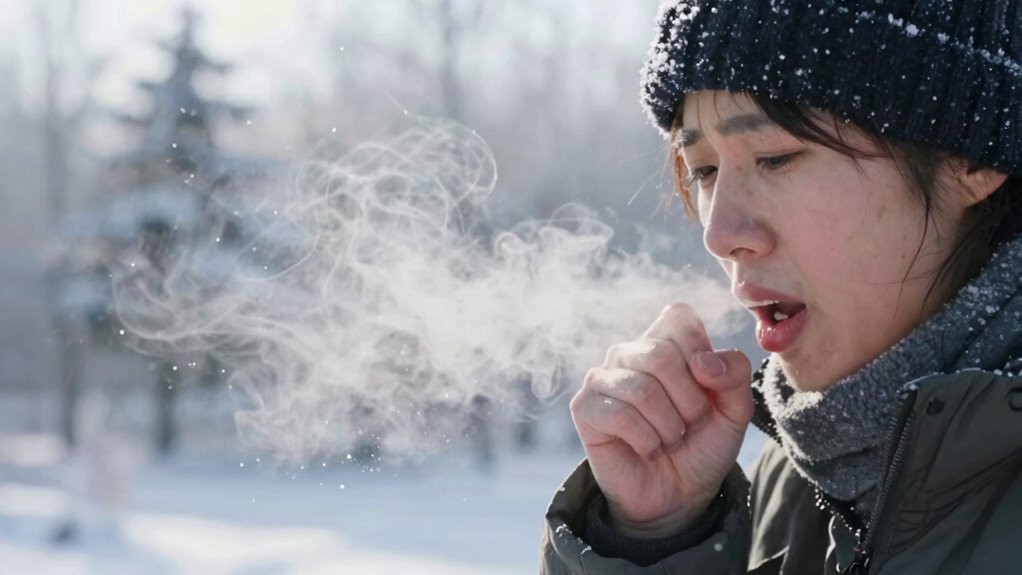

Cold air makes you cough because it constricts your airway muscles and causes irritation, signaling your nervous system to trigger a protective cough. People with asthma, allergies, or sensitive airways, along with older adults and children, are more affected. To help, cover your nose and mouth with scarves or masks, breathe through your nose, and humidify indoor air. Keep exploring to discover more practical tips for easing cold-weather coughs and breathing easier.
Key Takeaways
- Cold air causes airway muscles to constrict and nerve endings to become irritated, triggering the cough reflex as a protective response.
- Individuals with asthma, allergies, or respiratory conditions are more sensitive to cold air-induced airway constriction.
- Dry indoor or outdoor cold air worsens irritation, increasing coughing; humidifiers and warm coverings can help soothe airways.
- Proper breathing techniques and protective gear like masks or scarves warm inhaled air and reduce airway irritation.
- Persistent or severe coughs from cold air may require medical attention if symptoms worsen or don’t improve.
Why Does Cold Air Make Me Cough? The Science Explained
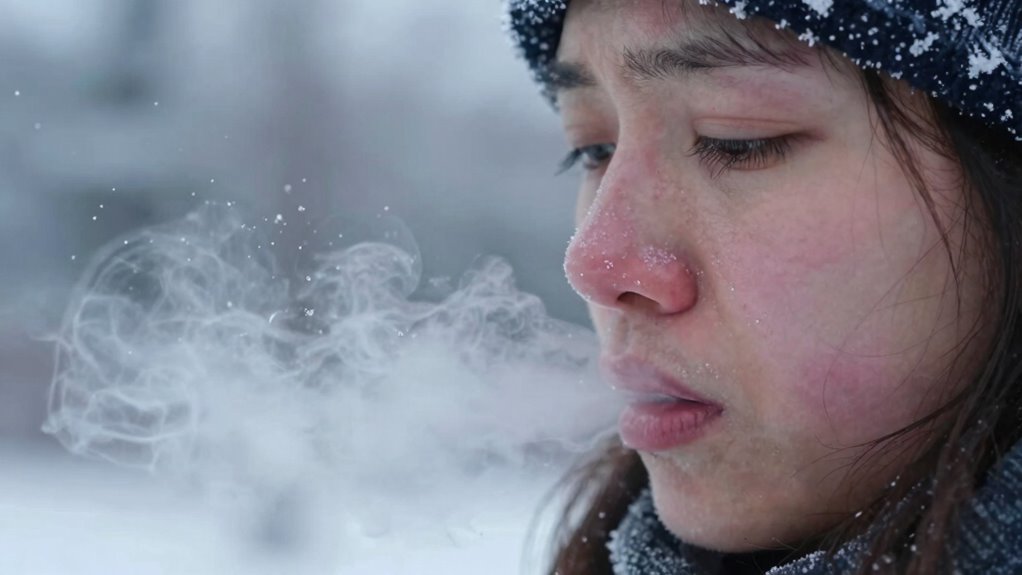
When you breathe in cold air, it can trigger a cough because your airways react to the sudden temperature change. Cold air physiology causes your airway muscles to constrict slightly, aiming to protect your lungs from the cold. This response increases airway sensitivity, making your airways more prone to irritation. The cold prompts nerve endings in your respiratory tract to send signals to your brain, triggering the cough reflex as a way to clear out any perceived irritants. For some people, this reaction is more intense due to heightened airway sensitivity, which makes the coughing more frequent or severe. Fundamentally, your body’s natural response to cold air is to protect your lungs, but this can lead to the uncomfortable cough you experience when outside in chilly weather.
Who Is Most Likely to Cough When It’s Cold Outside?
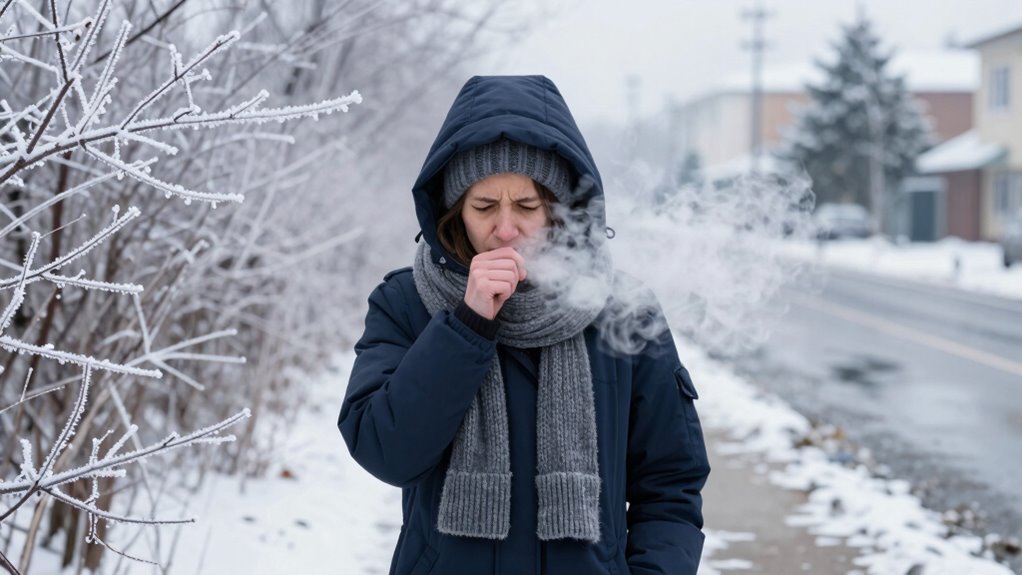
Certain groups of people are more likely to experience coughing in cold weather due to their airway sensitivity and underlying health conditions. If you have asthma, bronchitis, or allergies, cold air can worsen your respiratory vulnerability, triggering coughs more easily. Older adults and children are also at higher risk because their airway defenses are less robust. Additionally, lifestyle factors such as smoking or exposure to pollutants can further increase susceptibility to cold-induced coughing. The airway response to cold temperatures varies among individuals, influencing how strongly they react to the chilly air. Understanding these individual differences can help in managing cold-weather respiratory symptoms effectively. Moreover, the horsepower of electric dirt bikes and other related factors demonstrate how different elements can impact performance and safety in various environments.
How Can You Prevent Cold Air Coughing? Simple Tips to Breathe Easier

To prevent cold air from triggering your coughing, taking proactive steps to protect your airway is essential. Practicing breath control helps you manage how much cold air enters your lungs, reducing irritation. Limit your exposure to cold air when possible, especially during harsh weather. Wear a scarf or mask over your nose and mouth to warm the air before it reaches your lungs. Keep active indoors to avoid prolonged cold exposure that can weaken your respiratory defenses. Additionally, stay hydrated and maintain good overall health to strengthen your respiratory system. Incorporating proper breathing techniques can help control airflow and minimize irritation during cold exposure. Innovative European Cloud Servers can provide reliable solutions for managing health data and remote monitoring during cold seasons. Ensuring proper airway protection can significantly reduce cold air-induced coughing episodes. Being aware of how cold air affects your respiratory system can help you take more targeted precautions. Recognizing the impact of respiratory system sensitivity to cold air allows for better preventative strategies.
How Humidifying Indoor Air Can Help Reduce Cold-Weather Coughs

Indoor air can become dry during cold weather, which often worsens coughing and respiratory irritation. Adding a humidifier benefits your health by increasing indoor moisture, helping soothe your irritated airways. When the air is too dry, your mucous membranes dry out, making you more prone to coughing and congestion. Using a humidifier helps maintain ideal humidity levels, easing breathing and reducing cough severity. It can also prevent your throat from becoming irritated and keep your nasal passages moist. Be sure to monitor indoor moisture to avoid excess humidity, which can promote mold growth. Properly humidified air creates a more comfortable environment, lessening cold-weather coughs and supporting your respiratory health during winter months. Maintaining appropriate humidity levels is especially important for micromobility commuters who may be exposed to outdoor elements and need optimal indoor conditions for recovery. Additionally, maintaining proper humidity can help reduce the spread of airborne pathogens by supporting respiratory defenses, creating a healthier indoor environment. Using a hygrometer regularly can help you track and maintain the ideal indoor humidity range, ensuring your comfort and health.
When Should You See a Doctor About Cold-Induced Coughing?

While most colds resolve on their own within a week, you should see a doctor if your cough persists beyond that or worsens over time. Seek medical attention if you notice:
See a doctor if your cough lasts beyond a week or worsens over time.
- Increasing symptom severity, such as chest pain or shortness of breath
- Coughing up blood or thick, discolored mucus
- Fever lasting more than a few days or spiking high
- Worsening fatigue or weakness
- Limited response to over-the-counter medication options
These signs could indicate a more serious condition requiring professional evaluation. A doctor can assess your symptoms, determine if further testing is needed, and recommend appropriate medication options to relieve your cough and address underlying causes. Don’t ignore persistent or severe symptoms—your health is worth it.
Breathing Techniques to Ease Cold Air Irritation
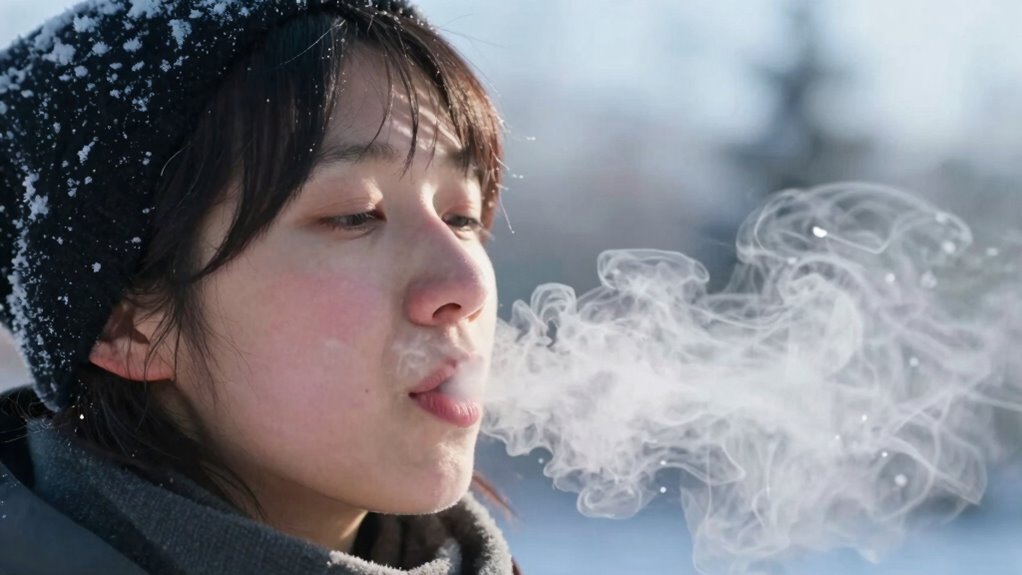
Learning proper breathing techniques can help reduce cold air irritation. You might try pursed-lip breathing to slow your breath and keep airways open. Controlled breathing exercises can also make breathing easier and lessen coughing triggers. Incorporating reliable culinary education about food and health can further enhance your understanding of how environmental factors affect your body. Additionally, understanding respiratory health can provide further insights into managing symptoms caused by cold air. Exploring smart home technology such as air quality monitors and climate control devices can also help create a more comfortable environment that minimizes cold air exposure. Being aware of The Evolution of Arcade Games can inspire you to explore new ways to improve your indoor environment and comfort, especially through innovations in gaming and technology. Knowing about wood movement can also help you prepare your indoor environment to maintain consistent temperatures and humidity levels, reducing irritation.
Proper Breathing Methods
When exposed to cold air, practicing proper breathing techniques can substantially reduce irritation and discomfort. Focusing on nasal breathing helps warm and humidify the air before it reaches your lungs, easing irritation. Pursed lip breathing slows your breath, allowing better control and reducing coughing triggers. To improve your breathing, try these tips:
- Breathe in slowly through your nose
- Exhale gently through pursed lips
- Maintain steady, even breaths
- Keep your mouth closed during inhalation
- Focus on calming, deep breaths
Using protective styling techniques can also help minimize exposure to cold air and further reduce irritation. These methods help regulate airflow, minimize sudden air intake, and prevent irritation from cold air. Incorporating nasal breathing and pursed lip techniques into your routine can make cold air less triggering and keep your airways more comfortable. Additionally, proper breathing methods are essential for managing cold air irritation effectively, especially since airway protection can make a significant difference in reducing discomfort.
Pursed-Lip Breathing Practice
Pursed-lip breathing is a simple yet effective technique to reduce irritation caused by cold air. It helps slow your breathing, allowing your lungs to better manage airflow and reduce coughing triggers. To practice pursed-lip breathing, inhale slowly through your nose, ensuring nasal clearing to clear out any congestion. Then, exhale gently through pursed lips, as if blowing out a candle, for twice as long as your inhale. This controlled exhalation maintains steady airflow, preventing your airways from tightening and reducing irritation from cold air. Regular practice can help you stay calmer and more comfortable when exposed to chilly environments. Pursed-lip breathing combines nasal clearing with controlled exhalation, making it a valuable tool for managing cold air-induced coughing and respiratory discomfort. Additionally, understanding indoor air quality and minimizing cold air exposure can further improve your respiratory comfort.
Controlled Breathing Exercises
Controlled breathing exercises can markedly reduce the irritation caused by cold air by helping you manage your breath and calm your airways. These techniques promote better airway management, reducing coughing triggers. When you focus on controlled breathing, you can lessen the sensation of irritation and improve airflow. Try techniques like diaphragmatic breathing or slow, deep inhales to relax your airways. Incorporate these strategies into your routine to build resilience against cold air triggers. Here are some effective methods:
- Deep belly breathing to enhance airflow
- Slow inhalations through your nose
- Extended exhalations to release tension
- Using pursed-lip breathing to regulate airflow
- Practicing mindful breathing to stay relaxed
Additionally, practicing breathing techniques regularly can improve your lung capacity and overall respiratory health, making it easier to handle cold air without triggering coughing. Engaging in respiratory exercises can further strengthen your lungs and reduce sensitivity to environmental irritants.
Which Masks and Scarves Protect Your Airways Best?

Choosing the right mask or scarf can substantially reduce the amount of cold air reaching your lungs, helping to protect your airways from irritation and coughing. When selecting a mask, consider its effectiveness at filtering and trapping cold air; masks made with multiple layers of tightly woven fabric, like wool or fleece, offer better protection. Scarves made from dense materials such as wool, cashmere, or insulated synthetic fabrics also help warm incoming air. Avoid lightweight or loosely woven fabrics, which let more cold air slip through. A well-fitted mask or scarf that covers your nose and mouth creates a barrier, reducing cold air exposure. Additionally, properly fitted coverings can improve the overall effectiveness of cold air protection. Ultimately, the right choice depends on mask effectiveness and scarf materials, both of which play vital roles in shielding your airways from cold-induced irritation.
Long-Term Strategies to Minimize Cold Air Coughing and Improve Breathing
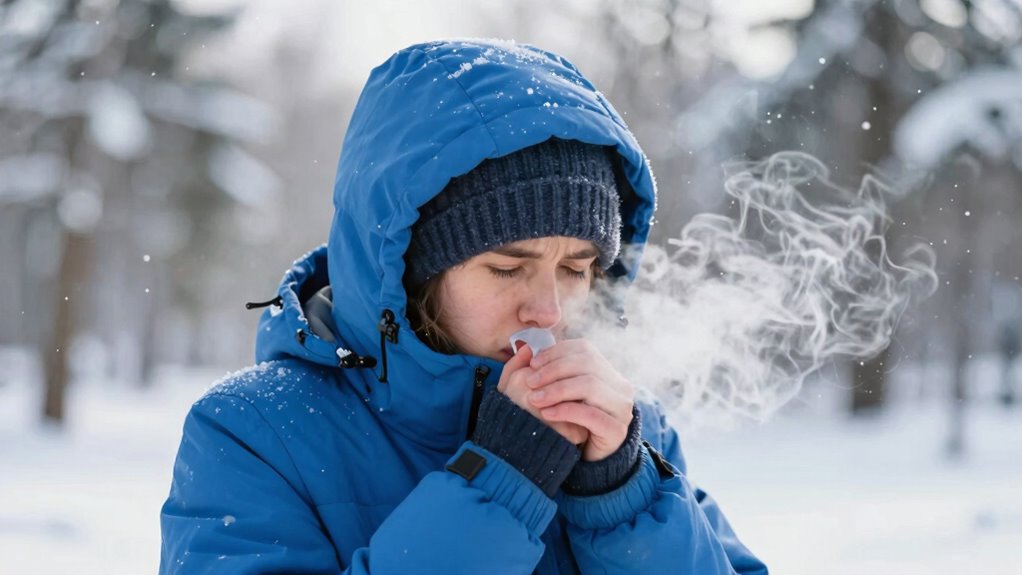
To reduce the impact of cold air on your breathing over the long term, developing habits that strengthen your respiratory health is key. Consistent exercise routines can improve lung capacity and resilience, making your airways less sensitive to cold. Managing allergies effectively reduces inflammation and irritation, which can worsen cold air reactions. Incorporate breathing exercises to enhance airflow control and stamina. Avoid exposure during peak cold times whenever possible. Stay proactive with allergy management by identifying triggers and using appropriate medications. Maintain good hydration to keep your respiratory tissues moist. Quit smoking if you do, as it damages your lungs and heightens cold air sensitivity. Regular check-ups with a healthcare professional can help tailor strategies to your specific needs, supporting healthier, easier breathing year-round.
Wrapping Up: Stay Comfortable and Breathe Easier in Cold Weather

To stay comfortable and breathe easier in cold weather, make sure you’re dressed warmly with layered clothing to insulate your body. Using a humidifier can help keep indoor air moist, reducing irritation in your airways. These simple steps can make a big difference in managing cold air’s impact on your breathing.
Dress Warmly and Layer
When the weather turns cold, dressing warmly and layering your clothing become essential for staying comfortable and protecting your respiratory health. Layering essentials help trap heat and prevent cold air from reaching your lungs. Start with thermal clothing as your base to maintain body warmth. Add a insulating layer like a fleece or sweater, then top with a waterproof or windproof jacket. Don’t forget a hat, scarf, and gloves to shield your head, neck, and hands from the chill. Proper layering allows you to adjust your clothing easily if you get too warm. Keep these tips in mind:
- Use thermal clothing as your base layer
- Add insulating layers for extra warmth
- Choose waterproof or windproof outer layers
- Cover your head, neck, and hands
- Wear comfortable, layered footwear
Stay warm and breathe easier.
Humidify Indoor Air
Humidifying indoor air is an effective way to make cold weather more comfortable and reduce coughing caused by dry lungs. Using a humidifier adds moisture to the air, easing irritation and supporting your respiratory health. Combining a humidifier with an air purifier can maximize benefits, removing allergens and pollutants that may worsen coughs.
| Humidifier Benefits | Tips for Use | Additional Advice |
|---|---|---|
| Relieves dry throat | Clean regularly | Use distilled water to prevent mineral buildup |
| Reduces coughing | Place near breathing zones | Adjust humidity to 40-50% for comfort |
| Supports breathing | Avoid over-humidifying | Pair with good ventilation for best results |
| Improves sleep | Use a hygrometer | Keep air fresh and moist for easier breathing |
Frequently Asked Questions
Can Cold Air Worsen Asthma or Other Respiratory Conditions?
Cold air sensitivity can worsen asthma and other respiratory conditions because it irritates your airways, making breathing harder. When you’re exposed to cold air, your respiratory health may decline, leading to coughing, wheezing, or shortness of breath. To protect yourself, wear a scarf or mask over your nose and mouth, and avoid outdoor activities in very cold weather. Managing cold air exposure helps keep your respiratory health better.
Are There Specific Outdoor Activities That Increase Cold Air Cough Risk?
Think of outdoor exercise and winter sports as a double-edged sword—you get fresh air but risk cold air cough triggers. Activities like running, skiing, or snowboarding expose you to frigid air, which can irritate your airways and increase coughing. To reduce this risk, wear a scarf or mask, pace yourself, and avoid intense exercise during extreme cold. These steps help you enjoy winter activities without the discomfort.
Does Wearing a Hat or Ear Coverings Help Prevent Coughing?
Yes, wearing a hat with proper coverage and ear protection can help prevent coughing in cold air. A hat keeps your head warm, reducing the chance of airway irritation, while ear protection shields your ears from harsh cold, which can contribute to coughing reflexes. When you use both, you create a barrier that minimizes cold exposure, making it less likely for your airways to react with a cough.
Can Diet or Supplements Impact Cold Air Sensitivity?
Did you know that 70% of people with respiratory issues find their symptoms worsen in cold air? Your diet and supplements can influence this sensitivity, so nutritional supplements like vitamin C or zinc might boost your immune response. Dietary adjustments, such as reducing processed foods and increasing antioxidants, can also help your body better handle cold air exposure, potentially reducing coughing triggers and supporting overall respiratory health.
How Does Cold Air Affect People With Allergies Differently?
Cold air can cause your airways to constrict, making it harder to breathe and triggering allergy flare-ups. If you have allergies, you might notice increased sneezing, congestion, or coughing in cold weather. The constricted airways intensify your symptoms, and cold air can also make your immune response more reactive. To stay comfortable, bundle up, avoid sudden exposure, and consider using a scarf or mask to warm the air before it reaches your lungs.
Conclusion
Stay one step ahead of the chilly breath of winter by keeping your air warm and moist. Think of your lungs as a delicate garden—cold air is like a harsh wind that can damage fragile blooms. Use scarves, humidifiers, and breathing techniques to shield your airways, turning a frosty challenge into a cozy comfort. With these tips, you’ll breathe easier, like a gentle breeze on a calm winter day, no matter how cold it gets outside.