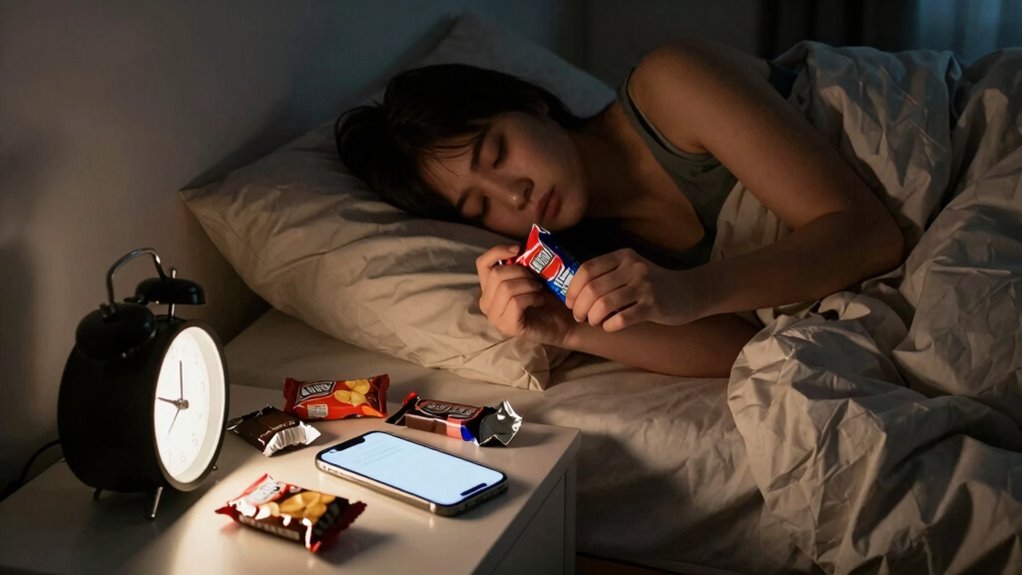

When you don’t get enough sleep, it messes with your hunger hormones—making ghrelin spike and leptin drop—so you feel hungrier and less satisfied after eating. Your brain’s decision-making weakens, and emotional centers become more reactive, pushing you to crave sugary and fatty foods. Plus, poor sleep impacts your metabolism, prompting quick energy searches through comfort foods. Keep going to uncover how fixing sleep habits can help you take control of those cravings.

Prime made for students and young adults
- Fast, free delivery for dorm and study essentials
- Prime Video and Amazon Music included
- Member-only deals
Key Takeaways
- Sleep deprivation raises hunger hormones like ghrelin and lowers fullness hormones like leptin, increasing cravings.
- Reduced prefrontal cortex activity impairs decision-making, making resisting tempting foods harder.
- Sleep loss heightens emotional responses, amplifying desires for comfort foods such as sugar and carbs.
- Poor sleep disrupts metabolism, prompting the body to seek quick energy sources like fatty and sugary foods.
- Consistent sleep helps regulate hormones, reducing cravings and supporting healthier eating habits.
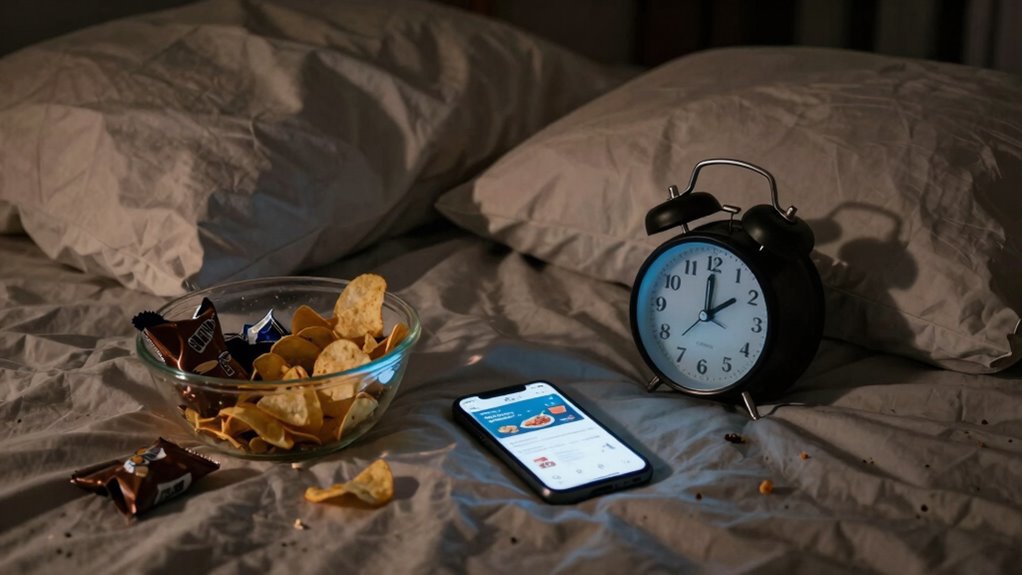
Getting enough quality sleep isn’t just about feeling rested—it also plays a crucial role in controlling your cravings. When you don’t get enough sleep, your body experiences a cascade of changes that can make resisting tempting foods much harder. One major factor behind this is sleep deprivation, which disrupts your hormonal balance. Without enough rest, your body produces more of the hormones that stimulate hunger, like ghrelin, while decreasing levels of leptin, the hormone that signals fullness. This hormonal imbalance leaves you feeling hungrier and less satisfied after eating, increasing the likelihood that you’ll reach for high-calorie, sugary foods.
Poor sleep disrupts hunger hormones, increasing cravings for sugary and high-calorie foods.
As your sleep suffers, your brain’s ability to regulate impulses diminishes. The prefrontal cortex, responsible for decision-making and self-control, becomes less active when you’re sleep-deprived. Meanwhile, the amygdala, which processes emotions and reward, becomes more reactive. This imbalance amplifies cravings for comfort foods, especially those rich in carbs and sugar. You might find yourself craving chips, chocolate, or fast food more often after a poor night’s sleep, even if you weren’t hungry initially. Additionally, chronic sleep deprivation can lead to long-term changes in brain function that make it even more difficult to manage cravings over time.
Beyond the immediate impact on hunger hormones, sleep deprivation also affects your metabolism. When your sleep cycle is off, your body struggles to process and store nutrients properly, leading to increased fat storage and insulin resistance. The result is a higher tendency to seek out quick energy sources, like sweet or fatty foods, to compensate for the energy deficit caused by poor sleep. These cravings are your body’s way of trying to restore balance but often end up working against your health goals. Understanding the hormonal impact of sleep deprivation can help you recognize how vital sleep is for maintaining balanced hunger signals and overall health, especially considering how sleep deprivation impacts metabolic regulation.
It’s easy to underestimate how much sleep influences your eating habits, but the connection is clear. Disrupted sleep patterns and hormonal imbalances don’t just leave you feeling groggy; they make it harder to resist cravings that can sabotage your diet and overall health. If you want to keep those cravings in check, prioritizing quality sleep is essential. Establish a consistent sleep schedule, create a calming bedtime routine, and avoid screens before bed. Additionally, understanding the hormonal impact of sleep deprivation can help you make more informed choices to support your health. The benefits go beyond feeling rested—they help keep your hormones in check, curb unnecessary hunger, and support better food choices overall. Recognizing the role of sleep in metabolic regulation emphasizes the importance of good sleep habits for long-term health and wellness.
As an affiliate, we earn on qualifying purchases.
Frequently Asked Questions
Can Improving Sleep Habits Reduce Overall Calorie Intake?
Yes, improving your sleep habits can reduce overall calorie intake. By practicing good sleep hygiene, you help regulate hunger hormones, making you less prone to overeating. Additionally, paying attention to meal timing—like avoiding late-night snacking—supports better sleep quality and prevents unnecessary calorie consumption. When you prioritize quality sleep, you’re more likely to make healthier food choices and control your appetite, leading to a more balanced diet overall.
Does Sleep Deprivation Affect Different Types of Food Cravings?
Sleep deprivation stirs your food preferences like a restless composer, with sleep hormones playing the tune. When you’re sleep-deprived, your body craves more indulgent, high-calorie foods, especially sweets and carbs, as if led by an insistent melody. These hormonal imbalances heighten cravings, steering you toward comfort foods. So, missing sleep doesn’t just leave you tired; it redirects your taste buds toward less nutritious choices, amplifying your desire for certain foods.
How Quickly Can Cravings Change After Improving Sleep Quality?
Cravings can start to change within days of improving your sleep quality. When you focus on dream enhancement and stabilize your sleep patterns, your body begins to reset its hunger signals. You’ll likely notice a decrease in cravings for unhealthy foods after just a few nights of consistent, restful sleep. Over time, better sleep helps balance your appetite, making it easier to choose healthier options and reduce impulsive eating.
Are There Specific Nutrients That Influence Sleep and Cravings?
Did you know that magnesium deficiency affects over 50% of adults and can disrupt sleep? Nutrients like magnesium, tryptophan, and melatonin play crucial roles in hormonal regulation, influencing both sleep quality and cravings. When you’re deficient in these nutrients, your body struggles to balance hunger hormones like leptin and ghrelin, leading to increased cravings. Ensuring proper intake supports better sleep and helps curb those irresistible urges.
Can Sleep Aids Help Manage Cravings Effectively?
Sleep aids can help manage cravings by improving your sleep quality, which influences your sleep hormone balance. When you get better rest, your appetite regulation improves, reducing the likelihood of overeating. These aids may temporarily support your sleep hormone levels, helping you resist unhealthy cravings. However, it’s crucial to combine sleep aids with healthy habits, as relying solely on them might not address underlying issues affecting your appetite and sleep quality.
blue light blocking glasses for sleep
As an affiliate, we earn on qualifying purchases.
As an affiliate, we earn on qualifying purchases.
Conclusion
Getting enough quality sleep isn’t just about feeling rested; it’s about mastering your cravings and maintaining your health. When you neglect sleep, your desire for unhealthy foods skyrockets, making it harder to make good choices. Remember, “A good laugh and a long sleep are the best cures in the doctor’s book.” Prioritize your rest, and you’ll find it easier to stay on track with your wellness goals. Sleep well, and crave less.
As an affiliate, we earn on qualifying purchases.
As an affiliate, we earn on qualifying purchases.
Fall Picks
fall essentials
As an affiliate, we earn on qualifying purchases.