To verify almost anything and trust the information you find, follow a simple 3-step method. First, assess the source by checking its credibility, credentials, and reputation. Next, cross-verify claims with trusted, independent outlets to confirm accuracy. Finally, analyze how the content lines up with established facts and consider any bias. Mastering these steps will help you identify trustworthy information—if you’re curious, you’ll discover more effective techniques ahead.
Key Takeaways
- Evaluate the credibility and reputation of the source thoroughly.
- Cross-verify facts with multiple independent and trusted sources.
- Analyze the content for consistency with established facts and look for bias or sensational language.
- Check credentials, author expertise, and transparency to assess trustworthiness.
- Question assumptions and consider potential agendas to prevent misinformation.
Why Trust Is Crucial When Verifying Information
Trust is the foundation of verifying information because without it, you can’t determine whether the sources you rely on are accurate or credible. When you conduct a credibility assessment, trust helps you evaluate if the information is reliable. It also makes bias detection easier, as you can identify potential skewed perspectives or hidden agendas that might distort facts. Without trust, you might dismiss useful sources or accept falsehoods, undermining your ability to form sound judgments. Developing trust involves checking credentials, understanding the context, and recognizing consistent accuracy over time. Proper trust ensures that your verification process is effective, guiding you to rely on reputable sources and avoid misinformation. Recognizing the role of content authenticity is essential in establishing trustworthy information. Additionally, assessing source credibility helps ensure that the information you gather is based on verified facts, which is vital for sound decision-making. Building a sense of reliable sources enhances your confidence in the information you verify and helps prevent misinformation from influencing your conclusions. Ultimately, trust is essential for making informed decisions based on verified, credible information.
How to Spot Fake News and Misinformation
How can you tell if the information you encounter online is genuine or just false? The key lies in your media literacy and ability to apply critical analysis.
Start by examining the source: is it reputable and transparent? Check the author’s credentials and look for signs of bias or sensationalism. Recognizing source credibility is fundamental to evaluating information accurately. Additionally, understanding the benefits and risks of screening helps in assessing health-related information critically. Knowing how to identify reliable sources enhances your ability to filter trustworthy content from misinformation.
Question the content itself—are the claims supported by credible evidence? Be wary of emotional language or headlines designed to provoke strong reactions. For example, some claims may be exaggerated or based on misleading data, which is a common tactic in fake news. Cross-reference the information with trusted outlets to see if it’s reported elsewhere. Developing media literacy skills helps you recognize common tactics used in fake news, like misleading images or manipulated data.
Pay attention to details such as product authenticity, especially when reviews or descriptions seem overly promotional or inconsistent with known facts. These details can often reveal whether a product or claim is legitimate or fabricated. With critical analysis, you become better at filtering out misinformation and trusting only verified, accurate information.
Use This Simple 3-Step Method to Verify Anything

When you come across information that seems questionable, applying a simple three-step verification method can quickly help you determine its accuracy. First, examine the source carefully; check its credibility and reputation. Be aware of potential bias—consider who benefits from the information and whether there’s an agenda. Next, verify the facts by cross-referencing with reputable, independent sources to confirm consistency. Additionally, evaluate the content’s credibility by considering how the information is presented and whether it aligns with established facts. Finally, analyze the content critically, questioning assumptions and looking for signs of source skepticism. This process helps you recognize bias awareness and avoid falling for misinformation.
Best Tools and Sources for Fact-Checking
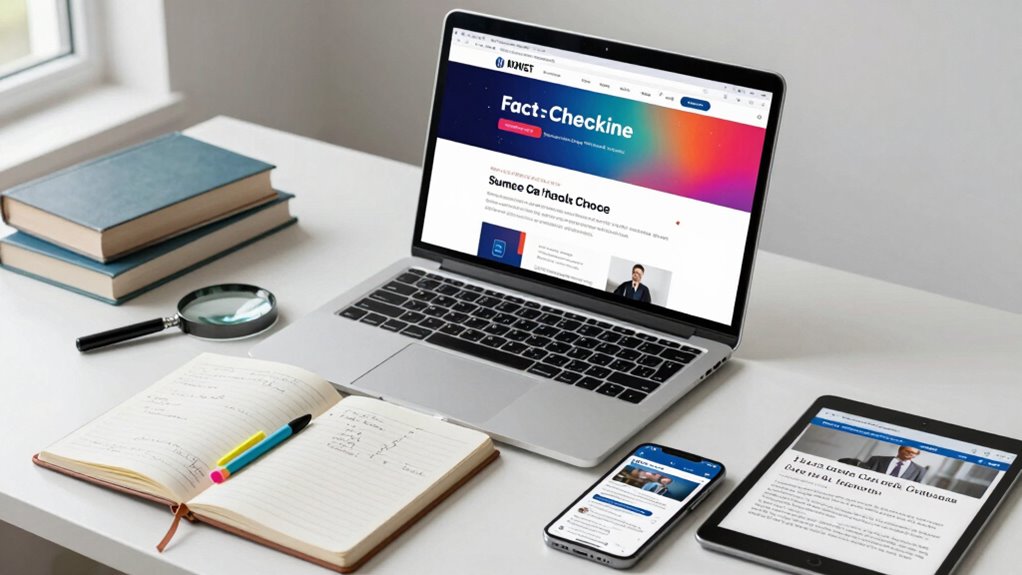
Are you wondering which tools can help you quickly verify the accuracy of information? Reliable fact checking websites and credible sources are essential in this process. To streamline your research, consider using:
- Snopes for urban legends and viral stories
- FactCheck.org for political claims
- PolitiFact for evaluating political statements
- Google Scholar for academic research
- Media Bias/Fact Check for source credibility
These tools enable you to cross-reference facts efficiently and identify trustworthy sources. Additionally, understanding accurate information practices can significantly improve your ability to distinguish fact from fiction. Recognizing the importance of source credibility is crucial when evaluating the reliability of your information. By relying on reputable fact checking websites, you can avoid misinformation and ensure your information comes from credible sources. Developing skills in source evaluation can further enhance your fact-checking effectiveness. Staying updated on AI detection methods can also help you discern genuine content from AI-generated material.
Tips to Become Better at Detecting Fake Content
To become better at detecting fake content, cultivating a skeptical mindset and questioning the information presented to you is vital. Developing media literacy helps you recognize biases, sources, and intent behind content. Critical thinking sharpens your ability to analyze claims, spot inconsistencies, and evaluate evidence. Use these tips to improve your skills:
| Question the Source | Check for Evidence | Analyze Language | Cross-Verify Information |
|---|---|---|---|
| Is it reputable? | Are claims supported? | Is language sensational? | Compare with other sources |
Applying Verification Skills in Your Daily Life
Applying verification skills in your daily life requires you to stay vigilant and intentional about evaluating the information you encounter. To do this effectively, focus on source evaluation by considering the credibility, authoritativeness, and recency of the sources you consult. Incorporate the importance of content relevance and authority to ensure your information is trustworthy and aligned with current knowledge. Recognizing bias by questioning your assumptions and identifying potential agendas behind the information is also vital, especially given cybersecurity challenges that can lead to misinformation or malicious tactics. You can incorporate these practices easily:
- Check the source’s reputation and expertise
- Cross-reference information across multiple outlets
- Look for signs of bias or emotional language
- Question the motives of the information provider
- Stay open to adjusting your opinions based on new, verified facts
- Be aware of information credibility to distinguish between trustworthy and misleading content
- Consider the source’s reputation and how it influences the reliability of the information presented
- Remember that understanding electric dirt bike specifications can help verify technical claims and ensure accurate knowledge.
Frequently Asked Questions
How Can I Build Long-Term Trust in Information Sources?
To build long-term trust in information sources, you should consistently perform credibility assessments and source evaluations. Always check the author’s expertise, publication date, and the source’s reputation.
Cross-reference information with multiple trusted sources, and stay updated on current facts. By actively verifying information before accepting it, you develop confidence in reliable sources, ensuring you rely on accurate, trustworthy data over time.
What Are Common Biases That Affect Fact-Checking?
Did you know that confirmation bias affects about 70% of people? When fact-checking, cognitive biases like confirmation bias make you seek information that supports your beliefs, ignoring evidence to the contrary.
This skews your judgment and hampers objective verification. Being aware of these biases helps you stay open-minded, question assumptions, and evaluate all evidence critically—key steps to guarantee you’re trusting accurate, unbiased information.
How Does Cultural Context Influence Verification Processes?
Cultural context markedly influences your verification process by shaping your perceptions and introducing cultural biases. When you consider cultural biases, you better understand how certain information might be interpreted differently based on cultural norms.
Developing contextual understanding helps you avoid misjudgments, ensuring you evaluate sources more objectively. By recognizing these influences, you improve your ability to verify information across diverse cultural settings, leading to more accurate and trustworthy conclusions.
Can AI Tools Replace Human Judgment in Verification?
AI tools can’t fully substitute human judgment in verification because algorithm bias can skew results, and automation ethics demand careful oversight.
While they speed up data analysis, you still need your critical thinking to interpret findings accurately.
Trusting AI blindly risks misinformation, so use these tools as aids, not authorities.
Your judgment remains essential to ensure verifications are fair, unbiased, and ethically sound.
What Ethical Considerations Should I Keep in Mind When Sharing Verified Info?
Sharing verified info is like planting seeds in a garden—you must tend to them responsibly. Be transparent about your sources so others can see the roots of your facts.
Respect privacy concerns, shielding sensitive details like a protective shield.
Conclusion
By mastering this simple 3-step verification method, you’ll become a nearly invincible detective against misinformation. Trust me, once you get the hang of it, fake news won’t stand a chance—your ability to spot falsehoods will be sharper than a razor! Remember, staying vigilant and questioning what you see online is your best weapon in a world overflowing with misleading content. Keep practicing, and you’ll be the ultimate guardian of trustworthy information everywhere you go.