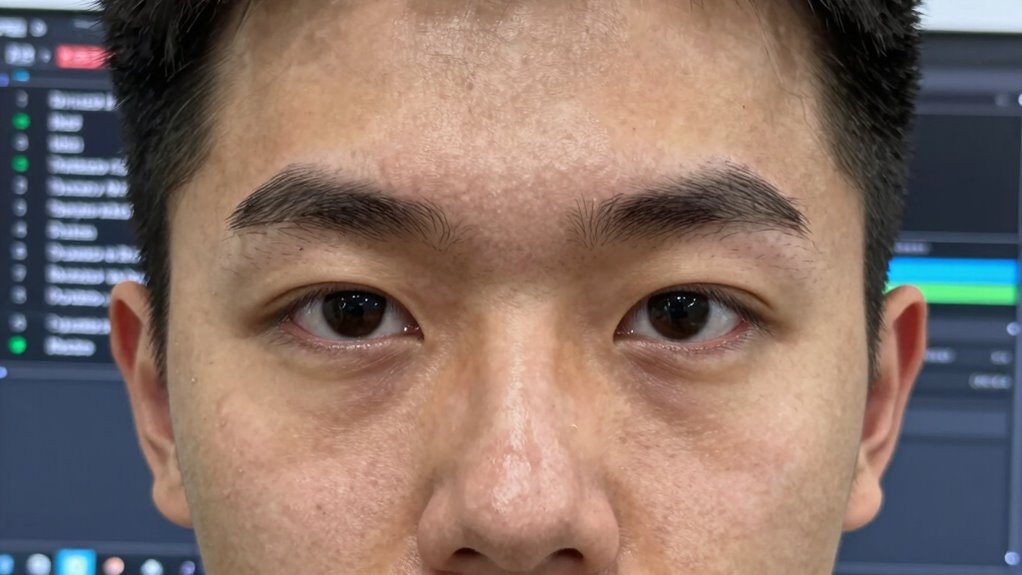

As deepfakes improve, subtle clues still betray them. Look closely for unnatural facial movements, like stiff expressions or odd blinking. Pay attention to mismatched eye reflections, inconsistent lighting, and irregular shadows. Watch for lip movements that don’t sync perfectly with speech and digital artifacts such as blurriness or smooth skin that lack natural texture. These small hints can reveal manipulated videos, and exploring further will help you sharpen your detection skills.

Prime made for students and young adults
- Fast, free delivery for dorm and study essentials
- Prime Video and Amazon Music included
- Member-only deals
Key Takeaways
- Inconsistencies in eye movements, blink patterns, and reflections often reveal deepfakes despite visual improvements.
- Subtle artifacts around facial edges, such as blurriness and unnatural skin textures, persist as telltale signs.
- Mismatched audio-visual cues, including lip sync errors and unnatural mouth movements, remain detectable indicators.
- Unnatural or stiff facial expressions and microexpressions continue to distinguish fake videos from genuine ones.
- Lighting mismatches and irregular shadows around the face highlight digital manipulation even in advanced deepfakes.
As an affiliate, we earn on qualifying purchases.
What Are Deepfakes and How Can You Spot Them?
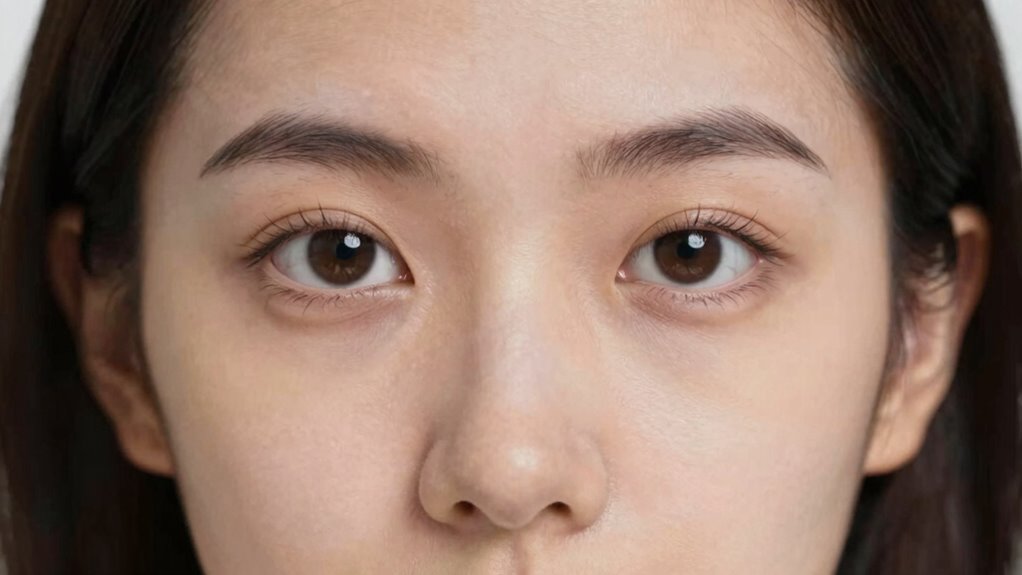
Have you ever wondered how some videos seem almost too perfect or convincingly real but are actually fake? That’s where fake video techniques play a significant role. Deepfakes use advanced AI to swap faces or mimic voices, creating realistic yet deceptive content. To spot them, you can use deepfake detection tools, which analyze videos for inconsistencies and signs of manipulation. These tools scan for subtle flaws, like unnatural blinking or mismatched audio and visuals, helping you identify fakes. Recognizing common visual artifacts and inconsistencies can further enhance your ability to detect fakes. Understanding what deepfakes are and how they’re made is your first step in recognizing them. While technology improves, awareness of these techniques and the availability of detection tools can help you stay vigilant against deceptive videos. Additionally, European cloud infrastructure supports the development of secure and innovative tools for detecting such digital forgeries. Continuous advancements in deepfake detection algorithms are making it easier to identify even the most sophisticated fakes. Incorporating AI-powered analysis techniques into detection strategies can significantly improve accuracy. Recognizing these signs early can prevent misinformation from spreading.
As an affiliate, we earn on qualifying purchases.
Visual Clues That Help Detect Deepfakes
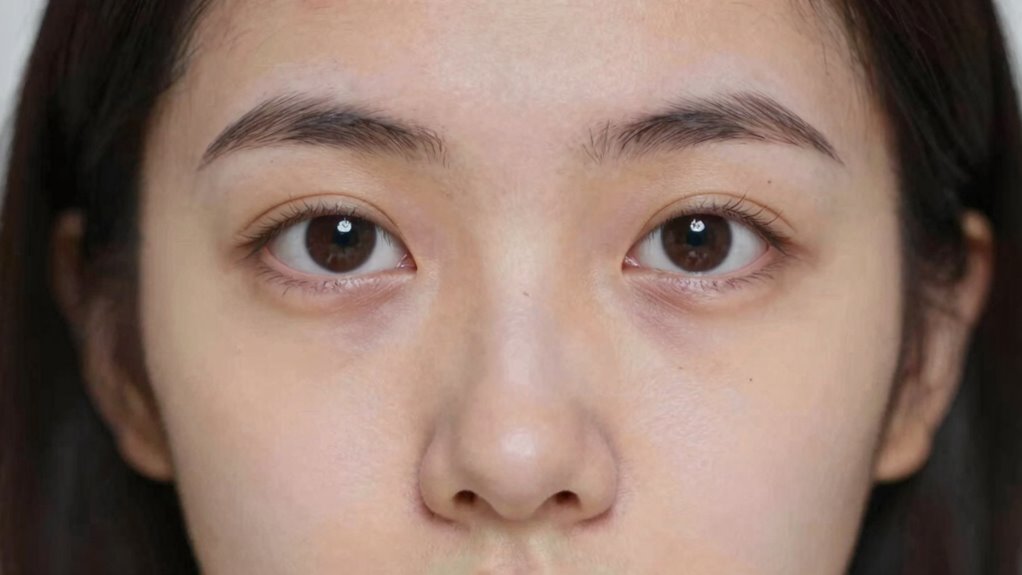
Despite advances in deepfake technology, certain visual clues can help you spot fakes more easily. One key indicator is inconsistencies in facial recognition. Deepfakes often struggle with perfectly replicating subtle facial details, like uneven skin tones or mismatched lighting around the eyes and mouth. Cultural influences also play a role; unfamiliar or exaggerated facial features, or mismatched cultural cues, can reveal synthetic origins. Pay attention to artifacts around the face, such as blurriness or unnatural edges, which often indicate manipulation. Additionally, watch for subtle differences in skin texture or reflections that don’t align with real-world physics. Recognizing these visual clues requires careful observation, but they remain some of the most reliable signs that a video or image might be a deepfake. Factors like color accuracy and contrast ratios can also be manipulated, making it essential to scrutinize these elements closely. Techniques like analyzing lighting consistency can further aid in distinguishing fakes from genuine footage. Incorporating depth perception cues can also reveal discrepancies, as deepfakes sometimes lack proper spatial relationships. Moreover, texture irregularities are often overlooked but can provide vital hints in identifying synthetic media. Being aware of real-world physics and how visual elements interact can significantly improve detection accuracy.
facial recognition anomaly detector
As an affiliate, we earn on qualifying purchases.
As an affiliate, we earn on qualifying purchases.
Unusual Facial Movements and Expressions
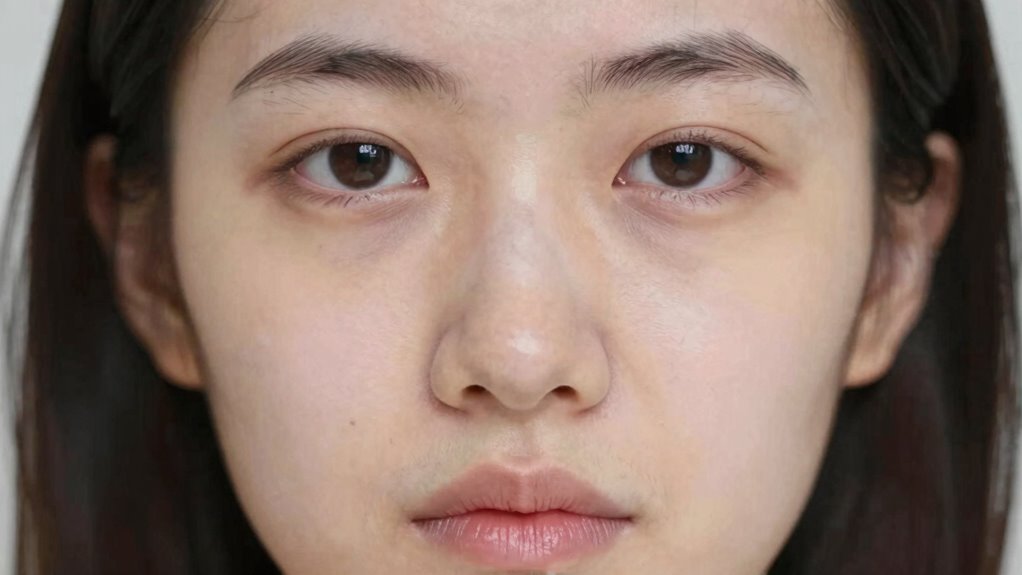
Unusual facial movements and expressions can be a telltale sign of deepfakes because AI-generated videos often struggle to mimic natural muscle control. You might notice stiff or jittery facial muscles, or moments where expressions appear slightly delayed or mismatched with speech. These inconsistencies stem from AI’s difficulty in capturing the nuanced coordination of facial muscles and precise expression timing. Additionally, natural muscle control remains a challenge for AI, leading to these subtle but revealing signs. Some advanced detection methods also analyze facial muscle movement patterns to identify irregularities that are hard to replicate authentically. Furthermore, the variety of expressions that humans naturally display are often simplified or absent in deepfake videos, making them easier to detect. Researchers are also exploring how microexpressions—brief, involuntary facial expressions—can help distinguish real from fake videos. Improving AI’s ability to replicate these subtle facial cues is an ongoing area of research in deepfake detection.
video authenticity verification device
As an affiliate, we earn on qualifying purchases.
As an affiliate, we earn on qualifying purchases.
Spotting Eye Contact and Blink Pattern Irregularities
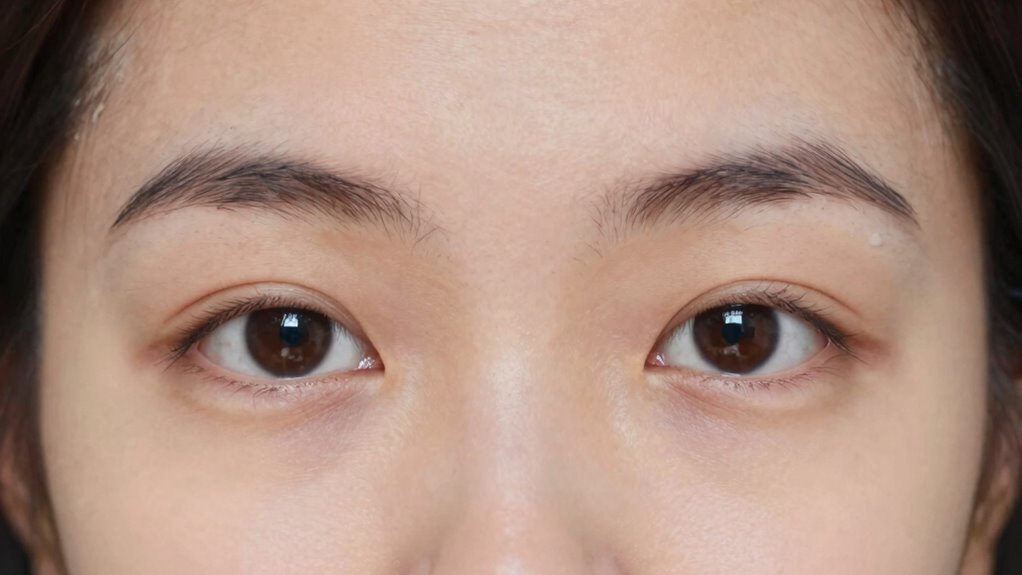
You can often spot deepfakes by noticing inconsistent eye contact that doesn’t match the conversation flow. Abnormal blink rates or irregular timing between blinks also reveal synthetic videos. Paying attention to these subtle cues helps you identify fakes more effectively. Additionally, visual artifacts common in manipulated media can further enhance your ability to detect discrepancies. Techniques from auditory processing assessment can also inform detection strategies by highlighting inconsistencies in audio cues. Incorporating spatiotemporal inconsistencies analysis can further improve accuracy in identifying deepfakes. Furthermore, understanding herbal tea benefits can help you stay alert and focused when analyzing media for authenticity.
Inconsistent Eye Gaze
One of the most noticeable signs of a deepfake is inconsistent eye gaze, which can reveal a manipulated face. If the person’s eye contact seems unnatural or their gaze shifts oddly, it’s a red flag. Deepfakes often struggle with maintaining gaze consistency, making their eyes appear unfocused or misaligned. Look closely at how the eyes follow or avoid objects and people; irregularities often stand out. To help identify these signs, consider this table:
| Gaze Pattern | Deepfake Indicator | How to Spot |
|---|---|---|
| Eye contact | Inconsistent | Eyes don’t follow movement naturally |
| Gaze shifts | Unnatural | Sudden or awkward changes in focus |
| Blink timing | Irregular | Eyes may look fixed or blink unnaturally |
Pay attention to these cues to detect deepfakes effectively. Additionally, understanding the gaze pattern can improve your ability to spot subtle irregularities that might otherwise go unnoticed. Being aware of visual cues is crucial because deepfakes often struggle with accurately replicating natural eye movements and expressions. Recognizing these facial movement irregularities can make a significant difference in detection. Developing familiarity with authentic facial behavior can also aid in distinguishing real from manipulated footage.
Abnormal Blink Rate
While inconsistent eye gaze can reveal deepfakes, irregular blinking patterns also serve as a telltale sign. Deepfake technology often struggles to mimic natural eye movement and facial cues accurately, leading to abnormal blink rates. You might notice someone’s eyes blinking too infrequently or too rapidly, which can seem unnatural. These irregularities stem from the AI’s difficulty replicating the subconscious patterns of genuine human eye behavior. Recognizing these signs requires attentiveness to subtle facial cues and eye movements that feel off. By observing the rhythm and frequency of blinking, you can better identify synthetic videos.
- Eye movement doesn’t match facial expressions
- Blink rate is unnaturally fast or slow
- Eyes appear overly fixed or vacant
- Facial cues lack consistency with eye behavior
- Subtle irregularities highlight fake footage
Irregular Blink Timing
Irregular blink timing often reveals deepfakes because AI-generated videos struggle to replicate natural eye contact and consistent blinking patterns. Human eyes follow a regular blink rhythm, with eye closures lasting around 300 to 400 milliseconds, and these patterns remain fairly steady. Deepfakes often show irregular eye closure timing or unnatural gaps between blinks, making the eye contact seem off. You might notice that the person’s blinks are too quick, too slow, or inconsistent, breaking the flow of natural eye movement. These subtle irregularities in blink rhythm are difficult for AI to mimic perfectly, giving away the synthetic nature of the video. Spotting these tiny deviations can help you distinguish real footage from manipulated deepfakes.
Lip Sync and Audio Mismatches in Fake Videos
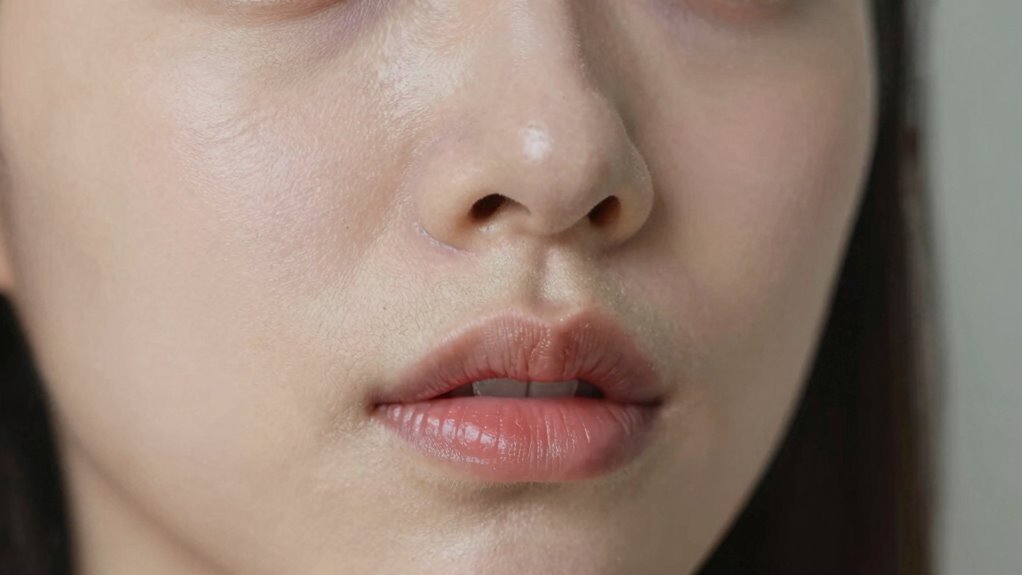
As deepfake technology advances, creating convincing lip sync and audio alignments has become increasingly challenging to detect. Fake videos often feature subtle audio mismatches or unnatural lip sync, making it harder to spot fakes at a glance. You might notice inconsistent mouth movements that don’t match spoken words or slight delays between audio and visual cues. These discrepancies can reveal the artificial nature of the video. To better understand this, consider these points:
- Minor audio mismatches disrupt the illusion of realism
- Poorly synchronized lip movements betray deepfakes
- Audio quality inconsistencies signal manipulation
- Mismatched speech patterns reveal artificial voices
- Subtle timing errors expose fake videos
Recognizing these signs helps you differentiate genuine content from deepfakes more effectively.
Digital Artifacts and Flaws That Reveal Deepfakes
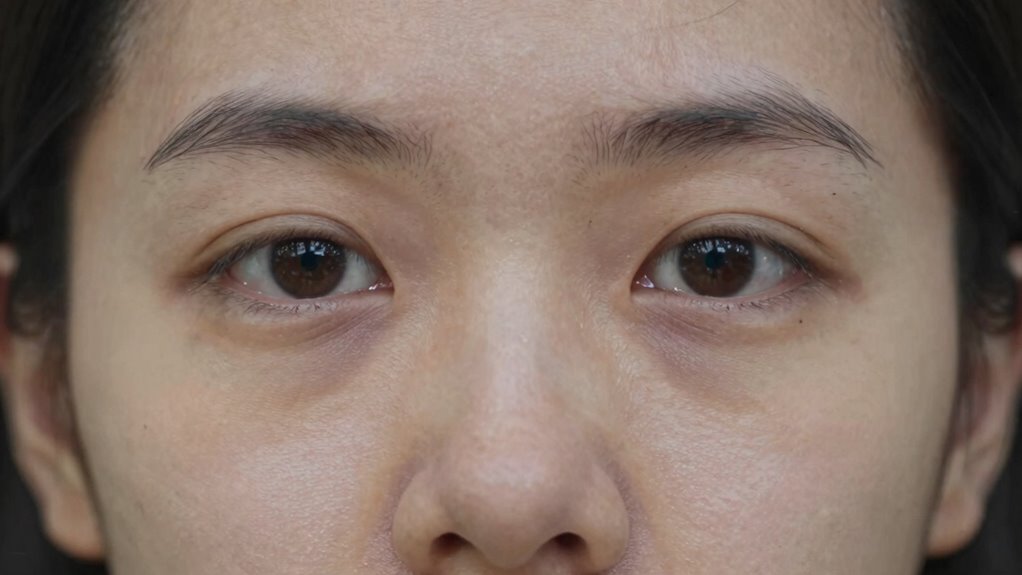
You can often spot deepfakes by noticing subtle digital artifacts like inconsistent blink patterns or uneven skin textures. Irregular eye reflections and unnatural movements reveal flaws that the technology hasn’t fully mastered. Paying attention to these details helps you distinguish real footage from manipulated videos.
Inconsistent Blink Patterns
Inconsistent blink patterns are a telltale sign that a deepfake might be at play. Unlike real humans, deepfake models often struggle to replicate natural blinking, resulting in irregular or unnaturally timed closures. These inconsistencies can disrupt facial symmetry and draw attention to subtle digital artifacts. You might notice the eyes blinking out of sync with overall facial movements or remaining open too long. Background inconsistencies around the eyes or forehead can also highlight digital flaws. Recognizing these clues helps you detect fakes more effectively.
- Blink timing doesn’t match natural rhythms
- Eyes stay open longer than normal
- Facial movements appear misaligned
- Background inconsistencies near the eyes
- Subtle asymmetries in blinking patterns
Uneven Skin Textures
Uneven skin textures often reveal deepfakes because digital editing tools struggle to replicate the natural complexity of human skin. You might notice areas where the skin appears overly smooth or unnaturally uniform, giving away the artificiality. These digital artifacts become more apparent when the deepfake fails to mimic subtle variations like pores, fine lines, or uneven pigmentation. Facial hair inconsistencies can also stand out, as synthetic videos often struggle to accurately reproduce facial hair’s density, direction, or texture. When the skin lacks the irregularities typical of real skin, it becomes a clear indicator of manipulation. Spotting these imperfections requires careful observation, especially around the forehead, cheeks, and jawline, where authentic skin exhibits genuine variation that deepfakes often miss.
Irregular Eye Reflections
Irregular eye reflections often betray deepfakes because synthetic videos struggle to accurately replicate the complex way light interacts with the eyes. The eye reflection may appear unnatural or inconsistent, revealing the artificial nature of the footage. Deepfakes tend to lack the subtle iris details and the nuanced reflections that naturally occur in real eyes. These digital artifacts can include mismatched highlights or reflections that don’t align with the environment. Recognizing these flaws requires careful observation of the eye reflection and iris detail, which are difficult to perfectly imitate.
- Light reflections don’t match the environment’s lighting
- Iris details appear blurred or overly smooth
- Reflection angles are inconsistent between eyes
- Highlights aren’t synchronized with surrounding objects
- Tiny imperfections in eye reflections reveal the manipulation
Tools and Tips to Improve Your Deepfake Detection Skills

To effectively spot deepfakes, you need to develop a keen eye for subtle anomalies and stay updated on the latest detection tools. Enhancing your media literacy helps you critically evaluate content, recognizing inconsistencies or unnatural cues. Familiarize yourself with AI ethics debates surrounding deepfake creation, which can inform your understanding of common manipulation methods. Use specialized software and online platforms designed to analyze videos for signs of tampering, such as inconsistencies in lighting, audio mismatches, or irregular blinking patterns. Keep practicing by comparing genuine footage with known deepfakes, sharpening your detection skills. Staying informed through reputable sources ensures you’re aware of emerging deepfake techniques. By combining technological tools with a critical mindset, you’ll be better equipped to identify and question suspicious content effectively.
Frequently Asked Questions
How Quickly Are Deepfake Detection Technologies Evolving?
You’ll find that artificial intelligence-driven deepfake detection tech is evolving rapidly to combat increasingly sophisticated media manipulation. New algorithms and tools are developed constantly, improving real-time detection and accuracy. While deepfakes get more convincing, these advancements help you detect fakes faster. Staying updated with the latest AI breakthroughs is essential, as it guarantees you can better identify manipulated media and protect yourself from deception in a digital world.
Can Deepfakes Be Used for Positive or Educational Purposes?
While deepfakes often raise ethical concerns, you can harness their power for positive and educational purposes. Imagine using deepfakes to recreate historical figures or simulate complex scientific concepts, opening new educational opportunities. However, you must consider ethical implications, such as consent and misinformation. When used responsibly, deepfakes can enhance learning experiences, inspire creativity, and foster understanding, transforming a controversial technology into a valuable tool for education and engagement.
Are There Legal Consequences for Creating or Sharing Deepfakes?
You face potential legal repercussions if you create or share deepfakes without consent, as laws increasingly target malicious use. Regulatory challenges make it tricky to enforce rules globally, but many regions have enacted statutes against defamation, fraud, or privacy violations involving deepfakes. It is crucial to understand that, even with these laws, sharing harmful or deceptive deepfakes can lead to fines, lawsuits, or criminal charges, so always exercise caution and responsibility.
How Effective Are Current Tools at Identifying Advanced Deepfakes?
Current tools for detecting advanced deepfakes are fairly effective but not foolproof. They analyze synthetic media for inconsistencies, like unnatural facial reenactment or irregular eye movements, which often reveal synthetic media. You can still spot subtle signs if you’re vigilant. However, as deepfake technology improves, these tools need updates to stay ahead, making detection a continuous challenge. Stay cautious and use multiple methods to verify authenticity.
What Role Does AI Play in Both Creating and Detecting Deepfakes?
You might think AI only creates synthetic media, but it’s also your best tool for detection. Ironically, the same technology powers both sides—making fake videos and spotting them. AI helps identify subtle inconsistencies that reveal deepfakes, but it also raises ethical questions about privacy and manipulation. So, in this high-stakes game, AI’s role is double-edged, challenging us to balance innovation with responsibility and consider the ethical implications of this digital arms race.
Conclusion
Staying vigilant is like sharpening your senses in a foggy world—deepfakes may be getting smarter, but your ability to spot the clues keeps you ahead. By paying attention to unnatural movements, blinking patterns, and digital glitches, you become a detective in your own right. Remember, the truth often hides in the details, so trust your instincts and use the tools available. Stay sharp—you’re the frontline in spotting deception before it spreads.
Fall Picks
fall essentials
As an affiliate, we earn on qualifying purchases.