
Signs of hard water in your home include discolored fixtures, such as orange or yellow stains, and cloudy water that looks dirty. You’ll notice soap scum and film on sinks, tubs, and shower doors, making surfaces slippery and hard to clean. Appliances may work harder, and you might see spots on glassware. Skin and hair may become dry or itchy, hinting at mineral buildup. Keep going to discover more clues that show hard water trouble.

Prime made for students and young adults
- Fast, free delivery for dorm and study essentials
- Prime Video and Amazon Music included
- Member-only deals
Key Takeaways
- Visible discoloration, stains, or rust-colored water in faucets and fixtures.
- Soap scum buildup and film on sinks, tubs, and shower doors.
- Mineral deposits causing spots on glassware and fixtures.
- Reduced water flow or clogged pipes due to mineral buildup.
- Dry, itchy skin and dull hair after bathing.
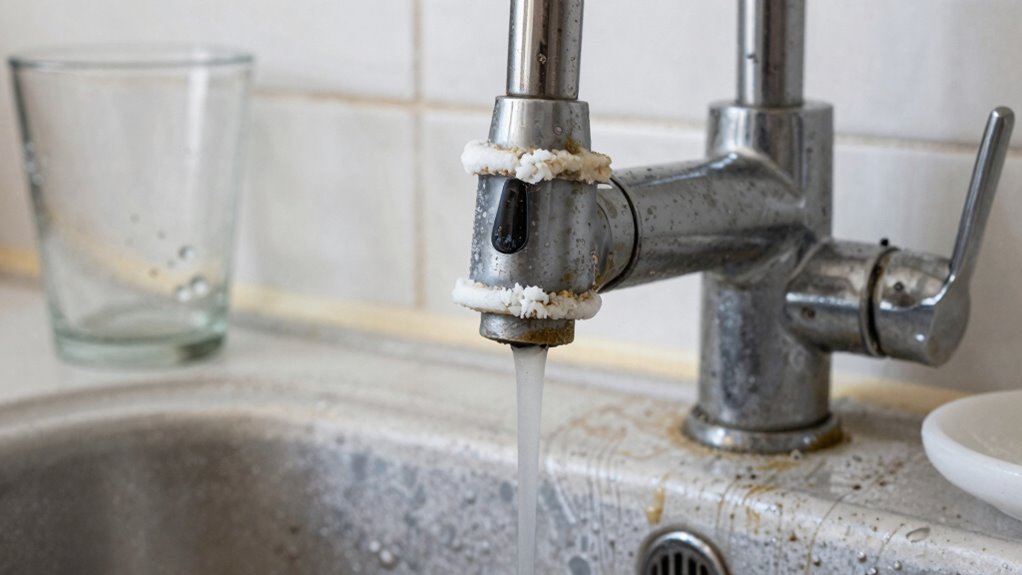
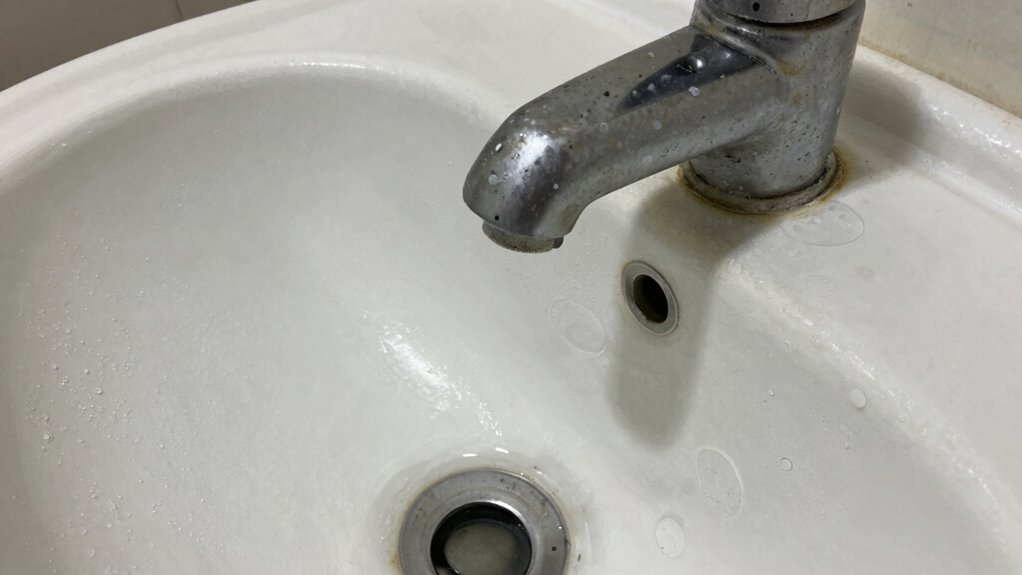
Hard water can cause a range of noticeable symptoms that often go unnoticed until they become bothersome. One of the most visible signs is water discoloration, which might appear as a cloudy or rust-colored tint in your faucets, sinks, or bathtubs. This discoloration results from mineral deposits like iron and manganese, which settle out of the water and leave stains on surfaces over time. If you notice your white fixtures developing orange or yellowish stains, chances are you’re dealing with hard water. These mineral deposits can also give your water a strange taste or smell, making your everyday routines less pleasant.
Water discoloration and stains on fixtures indicate hard water presence.
Another common household sign is soap scum buildup, especially around your sinks, tubs, and shower doors. Hard water reacts with soap, creating a stubborn film that’s difficult to rinse away. Instead of forming a rich lather, soap tends to leave behind a film that accumulates quickly, leading to a slippery, filmy surface. This soap scum isn’t just unsightly; it can also trap dirt and bacteria, creating a less hygienic environment. You might find yourself using more soap or cleaning products to get rid of this buildup, which proves how persistent and damaging hard water can be. Over time, the soap residue can also cause your soap dishes and shower curtains to develop mold or mildew, further complicating cleaning efforts.
Beyond these visible signs, hard water can cause damage to your plumbing and appliances. Mineral buildup inside pipes narrows their diameter, reducing water flow and increasing the risk of clogs. Your appliances—like dishwashers and water heaters—must work harder, which can lead to higher energy bills and premature failure. You might notice your dishes aren’t coming out as clean, or your clothes feel dingy and rough after washing. Additionally, mineral deposits can leave spots on glassware and fixtures, creating a generally unkempt look that’s hard to ignore. Using specialized water softening systems can help mitigate these issues and extend the lifespan of your plumbing and appliances.
You may also experience dry, itchy skin and brittle hair because hard water strips away natural oils. The cumulative effect of mineral buildup can make your skin feel irritated or flaky, especially after bathing. The persistent soap scum and water discoloration are usually the first clues that your household has a hard water issue. Recognizing these signs early can help you take steps to treat the problem before it causes more extensive damage or requires costly repairs.
water softener system for hard water
As an affiliate, we earn on qualifying purchases.
As an affiliate, we earn on qualifying purchases.
Frequently Asked Questions
Can Hard Water Damage My Plumbing Over Time?
Yes, hard water can damage your plumbing over time. The mineral deposits from scaling buildup can clog pipes and reduce water flow, while the increased corrosion from mineral interactions can weaken pipe integrity. You might notice slower water pressure or frequent leaks as signs. Regular maintenance, such as installing a water softener, can help prevent this damage and extend the lifespan of your plumbing system.
Does Hard Water Affect My Skin and Hair Health?
They say, “Prevention is better than cure,” and that’s true for your skin and hair health with hard water. Yes, it can cause skin irritation and hair dryness. Hard water leaves mineral deposits that strip moisture and irritate your skin, leading to itchiness. It also makes your hair dry, brittle, and harder to manage. To protect yourself, consider using water softeners or gentle skincare and haircare products.
Are There Specific Household Appliances Vulnerable to Hard Water?
You should know that household appliances like your dishwasher, washing machine, and water heater are vulnerable to hard water. It causes appliance corrosion and mineral buildup, which can reduce their efficiency and lifespan. Over time, these minerals clog pipes and damage internal components. Regularly using water softeners or descaling treatments helps protect your appliances from these issues, ensuring they run smoothly and last longer.
How Can I Test if My Water Is Hard at Home?
You can test your water hardness easily at home by using home testing kits, which are affordable and straightforward. Simply follow the instructions to test water hardness, check the color change, and interpret the results. Testing water hardness helps you identify potential issues early, protect appliances, and assure water quality. Regularly using home testing kits empowers you to monitor your water, prevent damage, and maintain a healthy household environment.
What Are the Long-Term Health Effects of Drinking Hard Water?
Drinking hard water over a long period can lead to mineral buildup in your body, potentially causing kidney stones and other health issues. Chronic exposure to high mineral content may also strain your cardiovascular system and impair nutrient absorption. While occasional consumption isn’t usually harmful, consistently drinking hard water might contribute to these health risks, so it’s wise to contemplate water softening options if you’re concerned about long-term effects.
hard water stain remover for fixtures
As an affiliate, we earn on qualifying purchases.
As an affiliate, we earn on qualifying purchases.
Conclusion
If you notice signs like soap scum buildup or dry skin, chances are you have hard water. It’s more common than you think—about 85% of households in the U.S. experience it. Recognizing these symptoms early can save you money and prevent damage to appliances. Keep an eye out for these signs, and consider testing your water. Taking action now guarantees a smoother, more comfortable household experience in the long run.
soap scum remover for shower doors
As an affiliate, we earn on qualifying purchases.
As an affiliate, we earn on qualifying purchases.
As an affiliate, we earn on qualifying purchases.
Halloween Picks
halloween
As an affiliate, we earn on qualifying purchases.