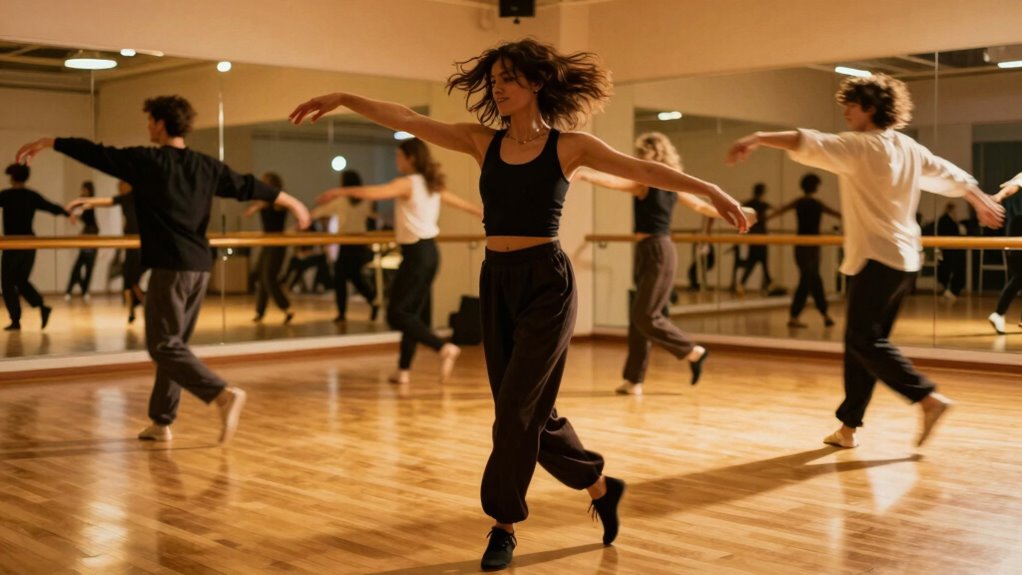

Your body prefers rhythm over motivation because it relies on internal cues and ingrained patterns to keep you active, even when motivation fades. By tuning into your natural heart rate variability and muscle memory, you can create a seamless movement flow that feels effortless and sustainable. Recognizing and respecting these internal signals helps you stay consistent without needing constant external motivation. Keep exploring, and you’ll discover how to align with your body’s natural rhythms for lasting fitness.
Key Takeaways
- The body naturally thrives on internal rhythms, making movement easier and more sustainable than relying solely on fleeting motivation.
- Muscle memory automates exercises, reducing mental effort and dependence on external motivation.
- Heart Rate Variability (HRV) signals when the body is ready for activity or needs rest, guiding workouts aligned with natural rhythms.
- Recognizing and respecting internal patterns fosters consistency and prevents burnout more effectively than motivation alone.
- Internal bodily cues create a sustainable, enjoyable fitness routine rooted in rhythm rather than temporary motivation.

When it comes to sticking with a workout routine, relying solely on motivation often falls short. Motivation can fade quickly, leaving you feeling unmotivated or discouraged. That’s where your body’s natural rhythms come into play. Your body thrives on rhythm, and once you tap into it, maintaining consistency becomes much easier. Instead of waiting for motivation to strike, you can harness the power of muscle memory and understanding your heart rate variability to keep yourself on track.
Muscle memory is a game-changer because it allows your body to perform movements almost automatically after repeated practice. When you engage in regular workouts, your muscles learn the pattern, making the exercises feel more natural over time. This means you don’t have to consciously think about every movement; your body remembers what to do. As a result, missing a workout isn’t as daunting because your body’s ingrained patterns can help you pick up where you left off without a mental struggle. This built-in familiarity acts as an internal rhythm, reducing the reliance on external motivation to push through each session. Recognizing these ingrained patterns can also help you develop a sense of bodily awareness that enhances your workout experience.
Muscle memory helps workouts feel natural, reducing reliance on motivation and easing the path to consistency.
Heart rate variability, or HRV, offers another way to sync your workouts with your body’s natural tempo. HRV measures the fluctuations in your heartbeats, giving you insight into your recovery and readiness. On days when your HRV indicates high variability, your body is more adaptable and better prepared for intense activity. Conversely, lower HRV suggests you need rest or gentle activity. By paying attention to these signals, you can tailor your workouts to match your body’s current state, aligning activity with your internal rhythm. This approach helps prevent burnout and injury, making exercise feel less like a chore and more like a natural extension of your day. Incorporating biological signals into your routine further reinforces your connection to your body’s rhythm, promoting a more intuitive approach to fitness.
Together, muscle memory and HRV create a rhythm that your body follows, whether you realize it or not. Over time, this internal rhythm becomes a reliable guide, helping you stay consistent without relying solely on fleeting motivation. When you recognize and respect these bodily signals, you foster a deeper connection with your body, promoting mindfulness and balance. Respecting your body’s natural patterns also encourages a more sustainable and enjoyable approach to fitness. In the end, your body’s love for rhythm is what keeps you moving forward, long after motivation has waned.
As an affiliate, we earn on qualifying purchases.
Frequently Asked Questions
How Does Rhythm Influence Long-Term Habit Formation?
Rhythm influences long-term habit formation through musical entrainment and neurological synchronization. When you sync your actions with a steady rhythm, your brain naturally aligns its neural activity, making routines feel more automatic and enjoyable. This synchronization reinforces the habit, reducing reliance on motivation. By consistently following a rhythm, you create a neural pathway that supports sustained behavior, making habits stick longer and feel less effortful over time.
Can Rhythm Replace Motivation Entirely for Consistent Exercise?
Rhythm can largely replace motivation for consistent exercise because of musical synchronization and emotional resonance. When you sync your movements to a beat, your body naturally aligns with the music, making exercise feel effortless. The emotional resonance of music also boosts your mood, encouraging you to stick with your routine. While motivation can fade, rhythm creates an automatic, enjoyable connection, helping you stay committed without relying solely on willpower.
What Types of Activities Benefit Most From Rhythmic Movement?
Activities like dancing, running, and aerobics benefit most from rhythmic movement because they leverage musical synchronization and dance coordination. When you sync your motions to a beat, your body naturally stays engaged and motivated, making exercise feel more enjoyable and sustainable. Rhythmic activities help your body stay in sync, improve coordination, and boost endurance, proving that rhythm can be a powerful tool for maintaining consistent activity.
How Does Individual Perception of Rhythm Vary?
You might think everyone perceives rhythm the same, but personal rhythm varies widely due to perceptual differences. Your brain processes timing cues uniquely, influenced by factors like your musical background, mood, and neurological makeup. This means what feels naturally rhythmic to you might differ from someone else’s perception. Embracing these differences helps you understand why some struggle with rhythm, while others find it effortless, highlighting the importance of personalized approaches to rhythmic activities.
Are There Specific Techniques to Develop a Better Sense of Rhythm?
You can develop a better sense of rhythm by practicing specific techniques like tapping along to musical timing or dancing regularly. Focus on counting beats aloud and syncing your movements with the music. Using a metronome or rhythm app helps improve timing. Engaging in dance coordination exercises also sharpens your ability to stay in sync. Consistent practice enhances your natural feel for rhythm and boosts your confidence in musical timing.
As an affiliate, we earn on qualifying purchases.
Conclusion
So, don’t just rely on motivation to move your body—let rhythm be your guiding star. When you sync your movements with a beat, it’s like your body dances to its own natural tune, turning exercise into a joyful melody rather than a chore. Remember, rhythm is the secret that turns a challenging climb into a dance floor. Embrace it, and watch your motivation flow effortlessly, carrying you forward like a river finding its way to the sea.
As an affiliate, we earn on qualifying purchases.
As an affiliate, we earn on qualifying purchases.