
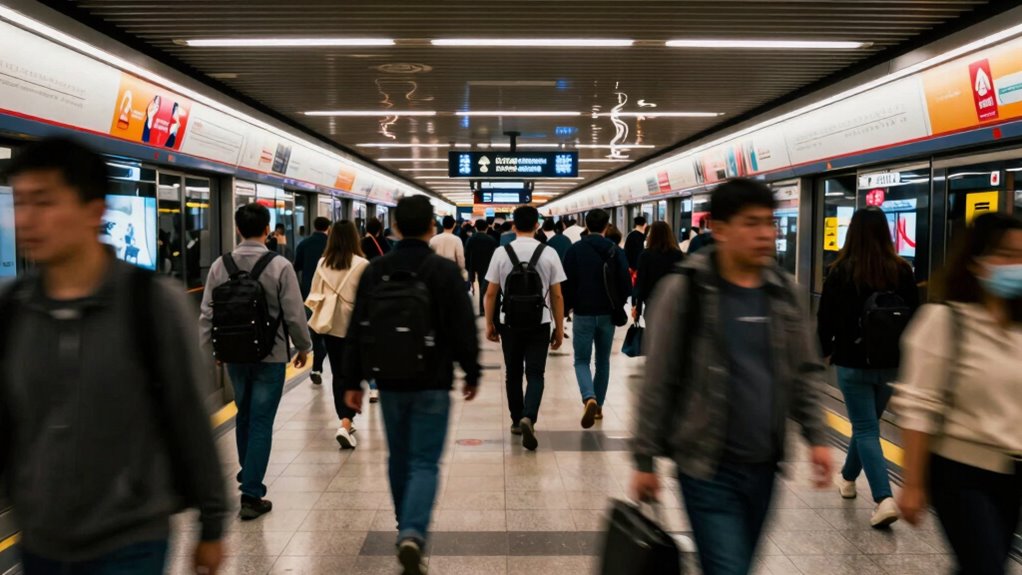
In a crowded space, sound waves bounce off surfaces like walls, furniture, and even people, creating echoes and layered noises that make hearing unclear. Hard surfaces reflect more sound, amplifying noise and making the environment seem louder. Soft furnishings can help absorb some sound, reducing reflections. Understanding how acoustics influence noise can help you manage your environment better. Keep exploring to discover how you can improve your sound experience in such spaces.
Key Takeaways
- Increased noise levels due to multiple sound sources amplifying overall loudness.
- More sound reflections from crowded surfaces create echoes and layered soundscapes.
- Hard surfaces in crowded areas intensify acoustic reflections, making sounds seem louder.
- People’s conversations and movements generate additional ambient noise.
- The environment’s acoustics influence sound clarity, often causing confusion or difficulty hearing.
To cope with this, you might seek out quieter corners or put on noise-canceling headphones. Noise cancellation technology works by using microphones to pick up ambient sounds and then generating opposing sound waves that effectively neutralize the noise. This process reduces the overall sound level around you, allowing you to hear more clearly and reduce the strain on your ears. When you activate noise cancellation, the constant barrage of acoustic reflections becomes less intrusive, helping you to regain some sense of calm amidst the chaos. Additionally, understanding how acoustic reflections influence sound behavior can help you make better decisions about your environment and your auditory comfort. Recognizing the importance of sound behavior in different settings enables you to adapt more effectively. However, even with noise cancellation, the physical environment itself influences how sound behaves. For example, in a space with hard, reflective surfaces like glass or concrete, sound waves bounce more aggressively, intensifying acoustic reflections. This means that even with advanced noise reduction, some echoes still reach your ears, especially if you’re close to reflective surfaces. Conversely, spaces with soft furnishings, carpets, and curtains absorb sound, diminishing reflections and making the environment feel less noisy. Understanding how sound interacts with the environment helps you better manage noisy situations. Being aware of the environmental acoustics can further improve your auditory experience. Sound absorption techniques, such as adding acoustic panels or soft furnishings, can significantly reduce unwanted reflections and echoes. By positioning yourself away from reflective surfaces and using noise-canceling devices, you can create a more comfortable auditory experience. Recognizing the role of acoustic reflections also explains why some spaces seem louder than others, despite similar noise levels. When sound reflects repeatedly, it can create a confusing, layered soundscape that’s difficult to parse. In essence, the way sound behaves in crowded spaces hinges on the environment’s acoustics and your ability to employ noise cancellation tools. These elements work together to either amplify the noise through reflections or diminish it, depending on the environment and your choices. An understanding of acoustic properties can help you better anticipate and control your auditory environment, making crowded places more manageable. By understanding these dynamics, you can better navigate noisy environments, protect your hearing, and find moments of clarity even in the most overwhelming crowds.

Soundcore by Anker Q20i Hybrid Active Noise Cancelling Headphones, Wireless Over-Ear Bluetooth, 40H Long ANC Playtime, Hi-Res Audio, Big Bass, Customize via an App, Transparency Mode (Black)
Hybrid Active Noise Cancelling: 2 internal and 2 external mics work in tandem to detect external noise and…
As an affiliate, we earn on qualifying purchases.
As an affiliate, we earn on qualifying purchases.
Frequently Asked Questions
How Do Different Materials Affect Sound Absorption in Crowded Areas?
Different materials markedly affect sound absorption in crowded areas through their properties. Soft, porous materials like foam or fabric absorb sound waves effectively, providing better acoustic treatment. Hard surfaces such as glass or metal reflect sound, increasing noise levels. When selecting materials, consider their density and porosity, as these influence sound absorption efficiency. Properly choosing and combining materials helps control acoustics, making crowded spaces more comfortable and reducing noise pollution.
Can Crowd Density Change the Way Sound Travels Over Long Distances?
Yes, crowd density can change how sound travels over long distances. In echo corridors, for example, dense crowds can amplify sound, creating echoes and increasing sound distortion. As more people gather, sound waves bounce off bodies and surfaces, which can cause muffling or amplification. This makes it harder to hear clearly over long distances, as the increased crowd density alters the way sound propagates and blends in the environment.
What Role Does Background Noise Play in Crowded Environments?
Imagine background noise as an uninvited guest at your gathering, subtly influencing conversations. In crowded spaces, it acts like sound masking, making it harder to focus. Your microphone placement becomes essential—positioning it carefully helps cut through the noise. You can also use sound masking techniques to reduce distractions, ensuring your voice remains clear. Managing background noise allows you to communicate effectively despite the lively environment.
How Do Individual Hearing Differences Impact Perception in Crowded Spaces?
Your hearing sensitivity varies, so in crowded spaces, some sounds might seem louder or more overwhelming to you, while others could be harder to hear. You might experience auditory fatigue faster, making it difficult to focus or enjoy conversations. These individual differences affect how you perceive the noise, potentially leading to discomfort or difficulty in understanding speech amid the chaos. Recognizing your hearing limits can help you manage these environments better.
Are There Technological Solutions to Improve Sound Clarity in Busy Venues?
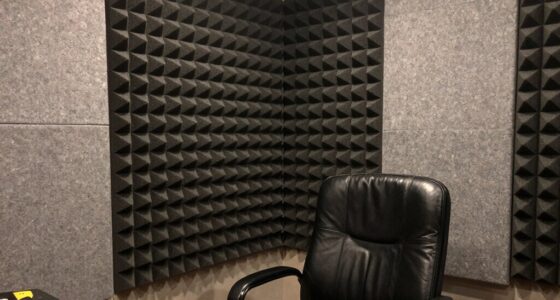
Imagine turning down the volume of chaos in a bustling venue—tech can make that happen! Sound masking systems cleverly drown out background noise, making conversations clearer. Acoustic panels also work wonders by absorbing excess sound, transforming the noisy din into a manageable hum. Together, these innovations dramatically improve sound clarity, helping you focus and enjoy conversations without shouting, even in the loudest, busiest places.

Focusound 52 Pack Acoustic Foam Panels 1" x 12" x 12" Sound Proof Foam Panles Soundproofing Noise Cancelling Wedge Panels for Home Office Recoding Studio with 300PCS Double-Side Adhesive
Soundproofing – Acoustic foam panels triangular grooves structure for better noise absorption, helps to reduce and absorb unwanted…
As an affiliate, we earn on qualifying purchases.
As an affiliate, we earn on qualifying purchases.
Conclusion
So, next time you’re in a crowded space and can’t hear yourself think, remember—it’s just your ears throwing a tantrum over all the noise. The chaos isn’t just annoying; it’s nature’s way of reminding you that silence is truly golden. Maybe, just maybe, we should cherish quiet moments instead of drowning ourselves in a never-ending symphony of clamor. After all, who needs clarity when you can have a free concert of chaos?
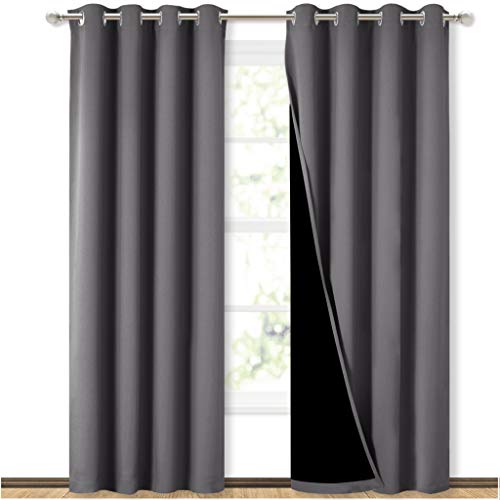
NICETOWN Grey Full Shade Curtain Panels, Pair of Energy Smart & Noise Blocking Out Blackout Drapes for Dining Room Window, Thermal Insulated Guest Room Lined Window Dressing(Gray, 52 x 84 inch)
Complete blackout curtains block light and reduce noise for better sleep – 2 layer construction with blackout lining
As an affiliate, we earn on qualifying purchases.
As an affiliate, we earn on qualifying purchases.

Decibel Meter, TopTes TS-501B Sound Level Meter with 2.25” Backlit LCD Screen, Portable SPL Tester with A/C Weighted, Range 30-130dB, MAX/MIN, Data Hold, Use for Home, Noisy Neighbor, Factory – Orange
2.25-inch LCD Screen with Backlight: This TS-501B sound level meter is measured noise levels are expressed in decibels…
As an affiliate, we earn on qualifying purchases.
As an affiliate, we earn on qualifying purchases.