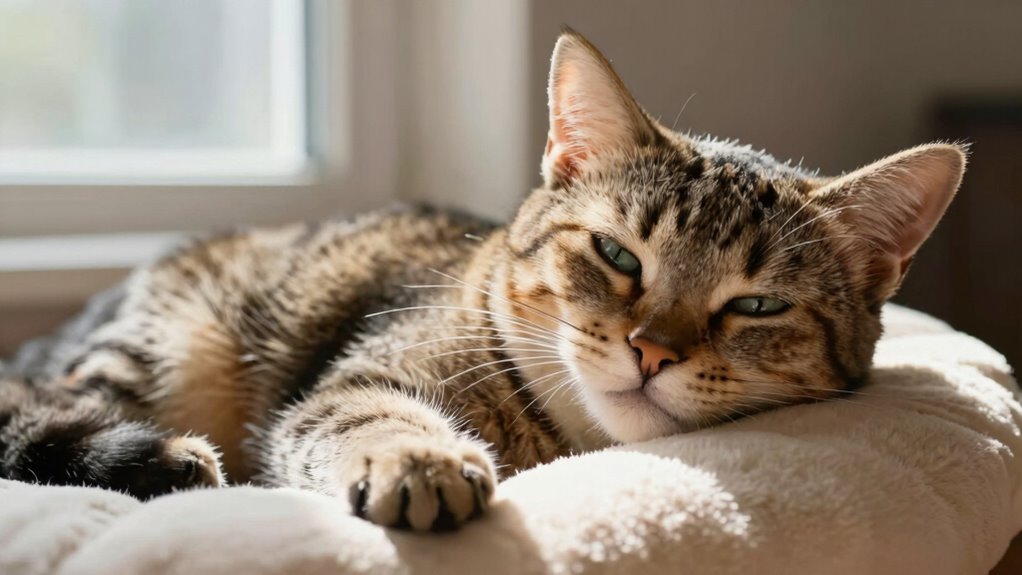

Cats purr for many reasons, including feeling relaxed, safe, or content. Scientists believe purring isn’t just a sign of happiness; it also helps cats heal and manage stress through vibrations that promote tissue repair, bone growth, and reduce inflammation. Purring can occur during cuddling or when they’re hurt, serving as a calming signal or a self-healing tool. If you’re curious about how purring impacts health and communication, you’ll find more interesting details ahead.
Key Takeaways
- Cats purr mainly to relax, communicate contentment, and self-soothe, signaling safety and reducing stress.
- Purring involves neural oscillators that produce vibrations, which can promote healing, tissue regeneration, and inflammation reduction.
- It serves as a versatile communication tool, indicating relaxation, pain, or distress to humans and other animals.
- The vibrational frequencies of purring may activate biological processes that support bone growth and tissue repair.
- Scientists analyze purring sounds to understand its role in relaxation, social bonding, and physical health benefits for cats.

Catstages Calming Kitty Pal Cat Toy – Plush with Purring, Heartbeat, Warmth & Vibration for Anxiety Relief in Kittens and Cats
Comforting Warmth & Security – Buckwheat-filled pouch gently warms, providing cozy comfort for cats who crave a safe,…
As an affiliate, we earn on qualifying purchases.
As an affiliate, we earn on qualifying purchases.
Why Do Cats Purr? The Science Behind the Sound
Cats purr for a variety of reasons, and scientists have uncovered some intriguing details about how this soothing sound is produced. Purring is a unique form of cat vocalizations that plays a significant role in feline communication. When your cat purrs, a repetitive neural oscillator sends signals to the voice box muscles, causing them to twitch at a rate of 25 to 150 vibrations per second. This rapid movement creates the purring sound, which is amplified by the vocal cords and resonating chambers in the cat’s body. Unlike other vocalizations, purring often serves as a gentle, non-verbal way for cats to communicate their state—whether they’re content, seeking attention, or trying to soothe themselves.

Senior Cat Joint Supplement Crunchy Creamy Hip + Joint for Cats – Ease Mobility Stiffness with Glucosamine Chondroitin, Green Lipped Mussel, Flexibility + Joint Support Chews (30-Day Supply)
POUNCE ON + ON: Help your senior cat stay playful, agile, and active at any stage of life….
As an affiliate, we earn on qualifying purchases.
As an affiliate, we earn on qualifying purchases.
What Are the Main Reasons Cats Purr? Relaxation, Healing, and Communication

Many cats purr primarily to relax and feel safe, using the soothing sound to calm themselves in stressful or unfamiliar situations. Purring is a key part of cat communication, helping them signal their mood to others and reduce tension. It’s also an essential aspect of feline behavior, serving as a self-soothing mechanism that promotes healing by releasing endorphins. Cats often purr when they’re content, but they also use it to comfort themselves or communicate with humans and other animals. This versatile vocalization plays a crucial role in maintaining their emotional balance and social bonds. Understanding these reasons reveals how purring goes beyond simple relaxation—it’s an indispensable tool for survival, social interaction, and overall well-being. Additionally, research into projector technology shows that the vibrations produced during purring may have beneficial effects on bone growth and healing, supporting the idea that purring has physical health benefits beyond emotional comfort. Recent studies also suggest that the frequency of purring vibrations aligns with therapeutic sound waves, which might further enhance healing and recovery processes in cats. Moreover, the vibration frequency of purring could potentially influence cellular regeneration, highlighting its importance in feline health. Furthermore, the specific sound frequencies generated during purring are being studied for their potential to promote tissue regeneration in medical applications.

Sentry Calming Collar for Cats, Long-Lasting Pheromone Collar Helps Calm Cats for 30 Days, Reduces Stress, Anxiety, Loud Noises and Separation, 1 Count
Reduce Fear of Loud Noises: Sentry calming collars for cats are scientifically proven to reduce the fear of…
As an affiliate, we earn on qualifying purchases.
As an affiliate, we earn on qualifying purchases.
How Do Researchers Study Cat Purring and Its Effects?

Researchers study cat purring by analyzing its acoustic properties and observing behavioral responses. By examining the sound waves, frequency, and patterns, scientists gain insights into how purring functions within feline communication. They also observe how cats react to different purring sounds or stimuli, noting changes in behavior or physiological responses. Using specialized microphones and recording devices, researchers capture detailed cat vocalizations, helping them distinguish purring from other sounds. Additionally, they study the context in which cats purr, whether during relaxation, social interactions, or distress. This combined approach allows scientists to better understand how purring fits into feline communication and what effects it might have on both cats and humans. The research helps uncover the complex ways cats use their purring to connect and communicate, which can contribute to creating calmer, more organized homes by understanding feline behavior more deeply. Furthermore, advancements in acoustic analysis technology enable more precise identification of different purring types and their specific functions. For example, analyzing variations in purring frequency can reveal whether a cat is seeking comfort, asserting dominance, or signaling contentment. Exploring how different purring patterns influence human responses can also provide insights into the therapeutic benefits of purring for human well-being, as some studies suggest that certain sounds may promote relaxation and reduce stress.

Sound Oasis Pet Bluetooth Sound Machine, 20 Dr Developed Calming Sounds to Soothe, Relax, Separation, Anxiety, Stress Relief, Sleep for Canine, Puppy, Dog, Cat for Storms, Fireworks, Barking, Travel
20 SOUNDS HELP YOUR PET SLEEP BETTER AND REDUCES ANXIETY. 20 built-in, made for pet sounds create a…
As an affiliate, we earn on qualifying purchases.
As an affiliate, we earn on qualifying purchases.
How Does Purring Help Cats Heal and Relax?

When your cat purrs, it actually stimulates healing cells in their body, helping injuries recover faster. Purring also promotes relaxation, which lowers their stress levels and supports overall health. Understanding how these vibrations benefit cats can deepen your appreciation for their soothing nature. Additionally, the calming effects of lavender oil are known to help reduce anxiety and support relaxation in both humans and animals.
Purring Stimulates Healing Cells
Purring emits vibrations at a frequency that can stimulate the growth of healing cells in a cat’s body. These low-frequency vibrations are a remarkable aspect of feline behavior, influencing more than just sound. As you observe your cat’s vocalizations, you might notice how these vibrations promote tissue regeneration and reduce inflammation. Scientific studies suggest that purring can:
- Enhance bone density and repair
- Accelerate recovery from injuries
- Boost circulation in damaged tissues
- Promote the production of growth factors
- Support the immune response
This natural mechanism underscores how purring is not only a communication tool but also a powerful biological process. The specific vibrational frequencies emitted during purring have been shown to influence cellular activity and tissue healing. Recent research indicates that these vibrations can also stimulate healing cells in ways that support overall health and resilience. Additionally, the vibrational frequencies produced during purring are similar to those used in some biomedical therapies, highlighting their potential in medical applications. Understanding these vibrational effects reveals how your cat’s vocalizations serve a crucial role in their healing and overall health. Pinball machines showcase advanced technology and design, which could inspire future innovations in biomedical devices used for healing.
Relaxation Reduces Stress Levels
The vibrations produced by a cat’s purr don’t just promote healing—they also create a calming effect that helps reduce stress. When your cat purrs, it’s a form of feline communication that signals comfort and safety, which can ease your own tension. Purring acts as a natural stress management tool, encouraging relaxation for both cats and humans. This soothing sound triggers a calming response in your nervous system, lowering your heart rate and reducing anxiety. Vetted – Flat Iron Bike The physical vibrations from purring can also promote bone density and healing in cats, demonstrating the tangible health benefits of this behavior. By engaging in this mutual calming process, you help strengthen your bond with your feline friend. Interestingly, stress reduction has been shown to contribute positively to overall health, reinforcing the importance of these behaviors. Additionally, the calming effects of purring may stimulate collagen production, which can support tissue repair in cats. Research indicates that the intricate craftsmanship involved in creating a purr requires precise muscular control, highlighting the complex physiology behind this behavior. Ultimately, purring plays a crucial role in helping cats relax and manage stress, which contributes to their overall well-being and creates a peaceful environment for you both.
Can Purring Benefit Humans? Exploring the Emotional and Physical Effects
Many people find that a cat’s purr can have a calming effect, and recent studies suggest that the benefits go beyond simple comfort. Purring may offer therapeutic benefits by reducing stress and promoting relaxation. It also strengthens your emotional connection with your feline companion, fostering feelings of trust and security. The gentle vibrations from a cat’s purr can positively influence your mood and even lower blood pressure. Additionally, purring can:
- Ease anxiety and promote mental well-being
- Enhance feelings of companionship and attachment
- Support physical healing through vibration therapy
- Encourage mindfulness and present-moment awareness
- Improve overall emotional resilience
- Stimulate physiological responses that can aid in recovery and health maintenance. These vibrations are thought to activate therapeutic processes within the body, potentially accelerating healing and recovery. Scientific research indicates that the specific frequencies of purring vibrations may stimulate cell regeneration and promote tissue repair, further supporting physical health. Moreover, understanding these biological effects can help us appreciate the full scope of how purring benefits both cats and humans. Recent studies also suggest that the vibrations produced by purring may influence autonomic nervous system responses, enhancing relaxation and healing processes.
What Are Common Myths About Why Cats Purr?
Many people believe that a cat’s purr always means it’s happy, but that’s not always true. Cats also purr when they’re in pain or feeling unwell, which can be confusing. Understanding these myths helps you better recognize what your cat’s purring really signals.
Purring Means Happiness
Is it true that cats purr solely when they’re happy? Not quite. While many believe purring indicates contentment, feline behavior experts know it’s more complex. Purring can signal relaxation, but also stress or even self-healing. Many myths surround this behavior, including the idea that cats only purr to show happiness. In reality, purring plays a role in cat communication and emotional regulation.
Consider these points:
- Cats often purr during grooming or cuddling, indicating comfort.
- Purring can be a self-soothing response in stressful situations.
- Some cats purr when they’re frightened or unwell.
- Purring may serve a social function, communicating friendliness.
- It’s a versatile form of feline behavior, not solely linked to happiness.
Purring Indicates Pain
While purring is often associated with contentment, it can also be a sign that your cat is in pain. Many people mistakenly believe that all cat vocalizations indicate happiness, but cats sometimes purr when injured or unwell. Recognizing this behavior is essential for your feline’s health. Purring doesn’t always mean relaxation; it can be a self-soothing response or a way to communicate distress.
| Purring as Comfort | Purring as Pain |
|---|---|
| Cats purr when relaxed, happy, or seeking attention. | Cats may purr when injured, in discomfort, or anxious. |
| Purring helps calm and bond. | Pain-related purring signals that your cat needs help. |
| Usually a positive sign of feline behavior. | Often a sign of underlying health issues. |
How Can Pet Owners Support and Respond When Their Cat Purrs?
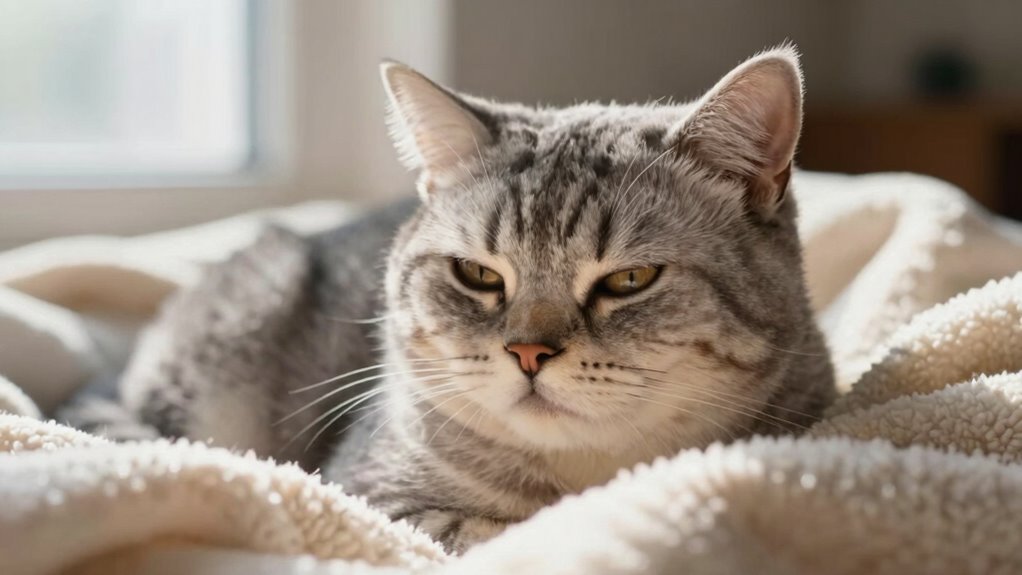
When your cat starts to purr, responding in a calm and gentle manner encourages this soothing behavior and helps strengthen your bond. By recognizing purring as a form of cat communication, you can better support your pet’s comfort. Respond with soft words, gentle petting, or a calming voice to reinforce trust. Observe your cat’s body language for cues on whether it’s seeking affection or relaxation. You can also:
- Maintain a relaxed posture to promote pet comfort
- Avoid sudden movements that might startle your cat
- Use a soothing tone to reinforce calmness
- Provide a cozy space for your cat to relax
- Respect their signals if they stop purring or move away
Supporting your cat’s purring helps deepen your understanding of their needs and fosters a secure environment.
Frequently Asked Questions
Do All Cats Purr, or Only Specific Breeds?
Not all cats purr, as breed differences influence purring behavior. Most domestic cats, regardless of breed, purr, but some breeds may purr more frequently or loudly than others. For example, Siamese cats tend to purr more often, while some wild or exotic breeds might purr less or not at all. Your cat’s purring frequency varies based on its breed and individual personality, but generally, purring is common across the feline spectrum.
Can Cats Purr Intentionally to Manipulate Humans?
Yes, cats can purr intentionally to influence your emotions. They often use purring as behavioral manipulation, aiming to garner your attention, affection, or treats. By producing calming vibrations, they tap into your emotional sensitivity, making you more likely to respond positively. This purposeful purring helps them strengthen bonds and achieve their needs through emotional influence, demonstrating how cats can use their purring as a strategic tool in their interactions with you.
Is Purring a Sign of Happiness or Stress?
Purring can signal both happiness and stress in cats, making it a complex part of feline communication. When your cat purrs, it might be showing contentment, but it could also be a self-soothing response to discomfort or anxiety. As part of feline behavior, purring helps cats communicate their emotional state, so pay attention to their body language and environment to better understand whether they’re happy or stressed.
How Does a Cat’s Age Affect Its Purring Patterns?
As your cat ages, its purring patterns change due to aging effects on vocalization. You might notice older cats purr more softly or less frequently, reflecting changes in muscle strength or health. Younger cats tend to have more consistent, vigorous purring. These shifts are natural and can indicate health status. Paying attention to these vocalization changes helps you understand your cat’s well-being as it ages.
Are There Health Issues Linked to Excessive Purring?
They say “too much of a good thing can be bad,” and excessive purring can be linked to health issues. If your cat’s vocalizations include unusually high purring frequency, it might indicate pain or discomfort. While purring usually signals contentment, persistent or intense vocalizations could suggest underlying problems. Keep an eye on your cat’s behavior and consult a vet if you notice abnormal purring patterns to make certain their health stays in check.
Conclusion
So, when your cat purrs, remember it’s not just a cute sound—it’s a powerful miracle of nature. This tiny creature’s purr can heal wounds, soothe your soul, and even communicate love and comfort. By simply listening and supporting their purring, you discover a world of extraordinary magic that transforms your bond into something truly legendary. Embrace their purrs, because in that gentle hum lies the secrets to happiness and healing beyond imagination.